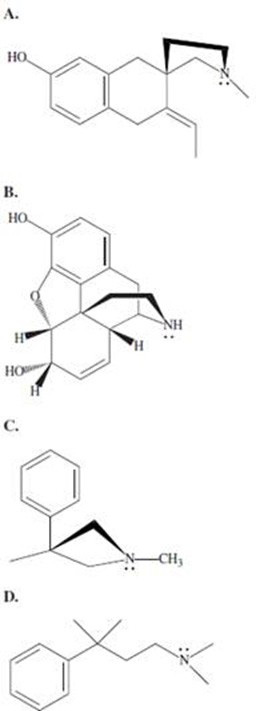
Morphine alkaloids derived from the opium poppy have long been used as analgesics. Codeine, the methyl ether of morphine, is a naturally occurring alkaloid with medicinal properties very similar to those of morphine. Thousands of derivatives of morphine have been synthesized and tested for their biological effects. For example, the diacylated derivative of morphine, heroin, is a highly addictive drug. Much effort has gone into understanding how morphine and its derivatives function.
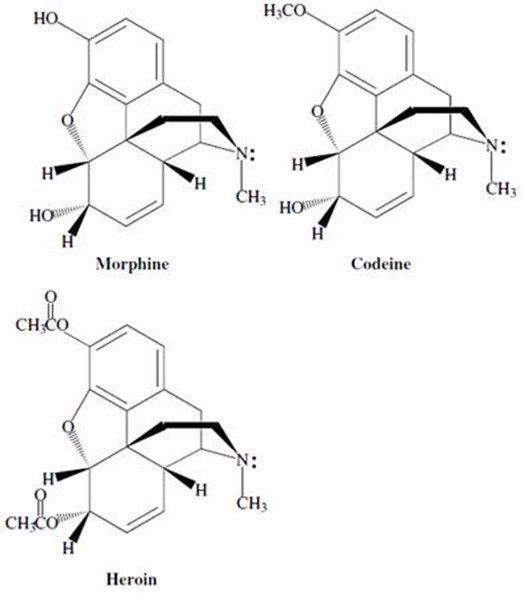
Studies have shown that certain common structural features of alkaloids are required for the compound to exhibit biological activity. These structural requirements are summarized by the so called "morphine rule": Demerol and methadone, shown in Figure 2, are two synthetic alkaloids designed to satisfy the "morphine rule." Synthetic alkaloids such as these have been found to mimic certain physiological properties of morphine and its derivatives, and have found pharmacological application due to other, more desirable biological effects. Methadone has been used widely in the United States and Great Britain as a treatment
for heroin addiction; it reduces the physical symptoms accompanying withdrawal without producing many
of the other effects of heroin.
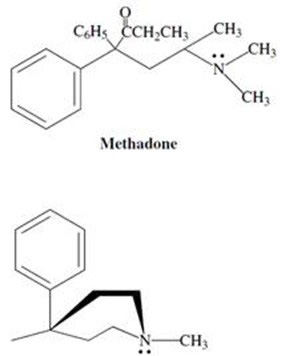
Meperidine
(demerol)
Figure 2
Which of the following compounds would be most likely to have morphine-like biological effects?