The process of depolarization triggers the cardiac cycle. The electronics of the cycle can be monitored by an electrocardiogram (EKG). The cycle is divided into two major phases, both named for events in the ventricle: the period of ventricular contraction and blood ejection, systole, followed by the period of ventricular relaxation and blood filling, diastole.
During the very first part of systole, the ventricles are contracting but all valves in the heart are closed thus no blood can be ejected. Once the rising pressure in the ventricles becomes great enough to open the aortic and pulmonary valves, the ventricular ejection or systole occurs. Blood is forced into the aorta and pulmonary trunk as the contracting ventricular muscle fibers shorten. The volume of blood ejected from a ventricle during systole is termed stroke volume.
During the very first part of diastole, the ventricles begin to relax, and the aortic and pulmonary valves close. No blood is entering or leaving the ventricles since once again all the valves are closed. Once ventricular pressure falls below atrial pressure, the atrioventricular (AV) valves open. Atrial contraction occurs towards the end of diastole, after most of the ventricular filling has taken place. The ventricle receives blood throughout most of diastole, not just when the atrium contracts.
Figure 1: Electronic and pressure changes in the heart and aorta during the cardiac cycle.
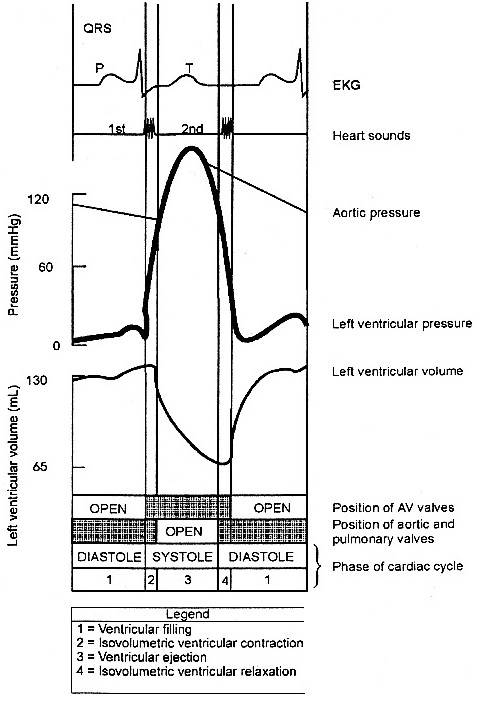
The first heart sound represented in Fig. 1 is probably made when: