Aski jump is an inclined track from which a ski jumper takes off through the air. After traveling down the track, the skier takes off from a ramp at the bottom of the track. The skier lands farther down on the slope.
Figure 1 shows a ski jump, in which the ramp at the lower end of the track makes an angle of 30° to the horizontal. The track is inclined at an angle of to the horizontal and the slope is inclined at an angle of 45° to the horizontal. A ski jumper is stationary at the top of the track. Once the skier pushes off, she accelerates down the track, and then takes off from the ramp. The vertical height difference between the top of the track and its lowest point is 50 m, and the vertical height difference between the top of the ramp and its lowest point is 10 m.
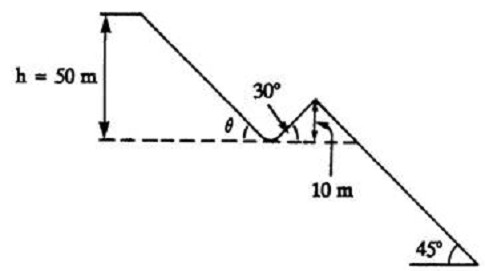
Figure 1
The distance traveled by the skier between leaving the ski jump ramp and making contact with the slope is called the jump distance. In some cases, in order to increase the jump distance a skier will jump slightly upon leaving the ramp, thereby increasing the vertical velocity. Unless otherwise stated, assume that friction between the skis and the slope is negligible, and ignore the effects of air resistance.
How would the work done by gravity on the skier when she skis down the track compare with the work done by gravity on the skier if she fell the same vertical height?