USMLE USMLE-STEP-3 Online Practice
Questions and Exam Preparation
USMLE-STEP-3 Exam Details
Exam Code
:USMLE-STEP-3
Exam Name
:United States Medical Licensing Step 3
Certification
:USMLE Certifications
Vendor
:USMLE
Total Questions
:804 Q&As
Last Updated
:Jul 29, 2026
USMLE USMLE-STEP-3 Online Questions &
Answers
Question 271:
A 24-year-old male presents to the office for evaluation of a nodule on his left testicle. He noticed the mass while washing in the shower. He has had no pain, no weight loss, no change in sexual functioning, and no blood in his semen. Examination reveals the presence of a firm, nontender, 1 cm nodule on the testicle. No other masses and no inguinal adenopathy are noted. Ultrasound of the scrotum confirms that the mass is on the testicle.
What would be the next step in management?
A. 30-days of antibiotic for possible epididymitis followed by repeat examination B. radical inguinal orchiectomy C. needle biopsy of the mass D. trans-scrotal orchiectomy E. semen analysis and cytology for malignant cells
B. radical inguinal orchiectomy
Explanation
A painless, firm testicular mass is a classic presentation of testicular cancer, although some men have pain or scrotal swelling as well. When such a mass is found on examination, ultrasound is the next indicated study to confirm whether the mass is truly located on the testicle or if it is associated with another structure, most commonly the epididymis. Once the presence is confirmed, an inguinal orchiectomy is the procedure of choice for both diagnostic and therapeutic purposes, as the vascular and lymphatic drainage of the testis is through the inguinal canal. Antibiotic therapy may play a role if the enlarged area is in the epididymis and not the testicle. Semen cytology plays no role in the work-up of suspected testicular malignancy
Question 272:
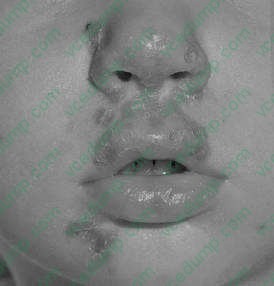
A 4-year-old girl is brought in to the office by her mother. She developed chicken pox about 6 days ago. She appeared to be recovering well but mother became concerned because she was persistently scratching at several of the lesions and they were not healing. On examination, the child is afebrile and generally well appearing. On examination of her skin you see the following image
What would be the most appropriate treatment?
A. topical triamcinolone 0.1% cream B. topical nystatin cream C. oral acyclovir D. oral cephalexin E. no treatment is necessary as this is a self-limited condition
D. oral cephalexin
Explanation
The image provided shows a classic case of impetigo. This is a common skin infection of childhood. It frequently occurs following a case of chickenpox and is due to the child picking or scratching at the varicella lesions, resulting in a secondary bacterial infection. GAS infection is the most common cause of impetigo associated with varicella infections. It is markedly more prevalent than the next most common infectious agent, S. aureus. Tinea corporis, often due to T. rubrum, is also known as ringworm. It classically is a circular lesion with a red, raised border, and central clearing. Contact dermatitis, from exposure to an irritant such as poison ivy, often causes plaques of erythema and edema with superimposed vesicles. This is also frequently secondarily infected with GAS from scratching. Warts, caused by the human papilloma virus, do not typically appear as the lesions in the image. Of the options listed, oral cephalexin would be the most appropriate initial therapy. Most GAS isolates are sensitive to first- generation cephalosporins, such as cephalexin. Topical steroids are useful for inflammatory or allergic conditions, topical nystatin for a fungal infection (such as tinea corporis) and oral acyclovir can be used early in the course of a varicella infection
Question 273:
A 48-year-old man with no prior psychiatric history is seen in the acute care clinic because of concerns over having a sexually transmitted disease. He denies any dysuria, penile discharge, or lesions. His physical examination is unremarkable. When informed of this information, he insists on being tested. When inquiries are made regarding his sexual history, he claims to be monogamous with his wife, who happens to be Senator Hilary Clinton. When confronted with the fact that she is already married to someone else and living in another state, he states that he married her 2 years ago in a "secret" ceremony. He adds that she flies in on weekends to have "conjugal visits," but he is afraid that she has been unfaithful to him and has given him a venereal disease. He has no medical problems and is not taking any medications currently. Further history reveals that he holds a steady job as a security guard. He lives alone in an apartment. He denies alcohol or illicit drug use. On MSE, he appears well-dressed and groomed. He is cooperative overall. His mood and affect are anxious. His thoughts are logical. He denies any suicidal or homicidal ideation, or any perceptual disturbances.
Which of the following is his most likely diagnosis?
A. bipolar disorder, manic B. delusional disorder C. paranoid personality disorder D. schizoaffective disorder E. schizophrenia
B. delusional disorder
Explanation
Bipolar disorder usually has its onset in late adolescence or early adulthood. A manic episode consists of symptoms such as decreased need for sleep, increased energy, talkativeness, and an elevated or irritable mood. Individuals with paranoid personality disorder are chronically mistrustful and suspicious. Although they can distort reality, they are not overtly delusional as in the above case. Both schizoaffective disorder and schizophrenia display overt psychotic symptoms, including delusions, hallucinations, and disorganization. Patients with schizoaffective disorder additionally have either a major depressive or manic episode, while patients with schizophrenia require significant social or occupational impairment. Neither of these criteria is present in the above case. The patient demonstrates delusional disorder, which consists of a nonbizarre delusion (i.e., one that could actually exist) without significantly impaired function, odd behavior, or the presence of a major mood disorder. The age of onset
for delusional disorder is commonly during middle age, whereas evidence of the other disorders is generally present at a much earlier age (DSM IV-TR).
Question 274:
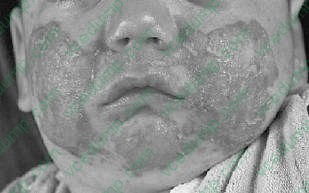
A 9-month-old male infant is brought to your office for evaluation of new skin lesions. The mother tells you that she recently had to return to work, and the child is now in day care. He has since developed new erythematous facial plaques. She also reports that the child has been irritable with chronic diarrhea. On examination, the child has dry scaly plaques symmetrically distributed in the perianal and perioral areas.
Which deficiency does this child likely have?
A. calcium B. zinc C. iodine D. iron E. vitamin C
B. zinc
Explanation
The absence, or malabsorption, of zinc from the diet will result in zinc deficiency. The clinical entity is called acrodermatitis enteropathica. Symptoms may manifest during the transition from breast milk to cow's milk. The typical dermatologic manifestations of this are symmetrically distributed perianal and perioral (in a horseshoe pattern) dermatitis. The skin lesions are eczematous, dry, scaly, or psoriasiform. Children with vitamin C deficiency present with petechial hemorrhages of the skin and mucus membranes. Hypocalcemia does not include specific dermatologic changes. Tetany is a classic manifestation of hypocalcemia. Skin pallor is the most important sign of iron deficiency. Children with inadequate iodine in their diet may develop hypothyroidism.
Question 275:
A38-year-old married woman presents to her urgent care clinic complaining of "crying spells" for several weeks since the termination of her employment. She admits to feeling "down all the time." She also has difficulty falling asleep, poor energy, decreased appetite, and is "not able to enjoy anything." She fears that her condition will never improve. She has begun to feel that "it wouldn't matter if I died," but she denies any suicidal plan or intent. She drinks one to two mixed drinks per week and denies any drug use. It is decided to begin antidepressant therapy with paroxetine (Paxil) 20 mg at bedtime.
Which of the following side effects would be most likely to emerge after several months of treatment?
A. headache B. inhibited orgasm C. loose stools D. nausea E. vivid dreams
B. inhibited orgasm
Explanation
This woman likely suffers from major depressive disorder. Treatment with a SSRI is considered to be first- line therapy. Although the neurovegetative symptoms of depression (e.g., insomnia, change in appetite, anergia, poor concentration) can sometimes improve after several days of initiating pharmacotherapy, the feelings of depression and hopelessness may take up to 46 weeks to significantly improve. As long as she is tolerating the SSRI, the urge to quickly increase the dose should be avoided so as to minimize side effects. Upon initiation of a SSRI, education and reassurance should be provided to the patient regarding the expected time until remission. Although there are characteristic side effects, most patients tolerate treatment with SSRIs. Many of these side effects, such as headaches, gastrointestinal disturbances, and vivid dreams, transpire at the start of treatment and may resolve over days to weeks. Sexual dysfunction, such as impotence or inhibited orgasm, not uncommonly occurs after several weeks to months of treatment with SSRIs and can continue with ongoing treatment.
Question 276:
A30-year-old female presents to your office for the evaluation of a rash on her back. It has been present and growing for about a week. Along with this rash, she has had a fever, headache, myalgias, and fatigue. Her symptoms started about a week after returning from a camping trip to New England. She denies having any bites from ticks or other insects and exposure to poison ivy and has had no wounds to her skin. On examination, her temperature is 99.5 and her v ital signs are otherwise normal. Her rash is shown in Figure. Her examination is otherwise unremarkable.
What is the most likely cause of her rash?
A. contact dermatitis secondary to plant exposure B. infection transmitted by tick bite C. infection transmitted by mosquito bite D. group A Streptococcus suprainfection of small puncture wound E. allergic reaction to ingested (i.e., food) allergen
B. infection transmitted by tick bite
Explanation
Lyme disease is the most common vector-borne disease in the United States. It is caused by infection with B. burgdorferi, a spirochete that is transmitted to humans through the bite of ticks of the Ixodes family. These ticks are very small, so frequently the victim is unaware of having been bitten. After an incubation of 330 days, a red macule or papule develops at the site of the bite, which expands to form a large annular lesion with partial central clearing or several red rings within an outside ring. The lesion, erythema migrans, is often said to resemble a "bull's-eye" target. Within a few days or weeks of this, the patient often complains of flu-like symptoms fever, chills, myalgias, headache, fatigue caused by the hematogenous spread of the spirochete. Lyme disease has been found in most of the United States, but is most common in the New England states, where over 20% of Ixodes ticks are infected with the spirochete. Left untreated, patients may progress to develop multiple complications, including neurologic, musculoskeletal, or cardiac involvement. Lyme disease is usually diagnosed by recognition of the symptoms and signs, along with serologic testing. However, serologic tests may be negative for several weeks after infection. IgG and IgM should be tested in acute and convalescent samples. Only 2030% of exposures will have positive acute antibody responses, whereas 7080% will have positive convalescent titers. Samples that are positive by ELISA assay should be confirmed by Western blot testing. Empirical antibiotic therapy, preferably with doxycycline, is recommended for patients with a high probability of Lyme disease--such as those with erythema migrans. Doxycycline is the preferred antibiotic for treatment of early stage Lyme disease in adults because of its effectiveness against Lyme disease and other infections, such as human granulocytic ehrlichiosis, which is also transmitted by Ixodes ticks. Waiting to treat until convalescent titers become positive would not be recommended in this patient, who has a high likelihood of having Lyme disease, as it may result in more complications developing and the need for longer and more intensive treatment. For more advanced stages of disease, such as the presence of nervous system involvement or third-degree heart block, parenteral antibiotic treatment is necessary. Ceftriaxone is the treatment of choice in this setting.
Question 277:
A 64-year-old male has been suffering from lower back pain for over 10 years. You have been following him for this period. You have prescribed stretching exercises and, occasionally, an anti- inflammatory medication to alleviate his pain. Although he has had no neurologic deficits in the past, today he has shown up in your office unexpectedly, complaining of bilateral lower back pain with numbness and tingling over the dorsal aspect of both feet. His symptoms have become progressively worse over the past 2 weeks and he is now unable to stand for more than 5 minutes without developing extreme pain and numbness. His symptoms are much improved by sitting down or kneeling over a chair. Climbing stairs seems to be tolerated well, but walking greatly exacerbates the pain. He denies bladder or bowel incontinence or retention, point tenderness or anesthesia in the lower back along the spinal cord or in the saddle area.
Which of the following imaging studies would be most helpful to confirm the diagnosis?
A. an MRI of the lumbosacral spine B. an x-ray of the lumbosacral spine C. an indium-tagged WBC scan D. a bone scan of the sacrum E. nerve conduction study of the legs bilaterally
A. an MRI of the lumbosacral spine
Explanation
Although all of the given diagnoses could produce similar symptoms, there are distinct findings which suggest a diagnosis of spinal stenosis. Spinal stenosis is a degenerative disorder of the spine which normally presents after the age of 50. Neurologic symptoms, including dysesthesias and paraesthesias, and pain are often bilateral and not localized, since it commonly affects multiple vertebrae. The symptoms are improved with flexion of the spine (sitting or climbing stairs) and worsened by straightening the spine (standing). There is no localized pain in the sacrum and no bowel or bladder incontinence, so a diagnosis of cauda equina syndrome or spondyloarthopathy is less likely. Muscle spasms and early DJD should not produce such neurologic findings. The most sensitive and specific imaging study in the diagnosis of spinal stenosis, among those given above, is an MRI of the spine at the affected area. Although x-rays of the spine have been frequently used in the past in the evaluation of lower back pain, they have been shown to be of limited value in diagnosing pathology. Bone scans may detect malignancy or infection before radiography does, but are of no value in spinal stenosis. Indium scans would be useful in occult inflammatory pathology and nerve conduction studies would suggest a neuropathic deficit, but would not help in localizing the defect.
Question 278:
You are consulted by a 55-year-old asymptomatic postmenopausal woman who has been on tamoxifen for 2 years following a diagnosis of breast cancer. She has no other risk factors for endometrial cancer but she was searching the Internet and found information about the risks of tamoxifen therapy. She inquires about endometrial cancer screening. You tell her that for asymptomatic woman on tamoxifen, the screening recommendations for endometrial cancer are which of the following?
A. yearly pelvic ultrasounds B. yearly endometrial biopsies C. yearly gynecologic examinations D. yearly pelvic CT scans E. yearly hysteroscopy
C. yearly gynecologic examinations
Explanation
The current American College of Obstetricians and Gynecologists guidelines for screening women on tamoxifen for endometrial cancer state that no screening except for routine yearly gynecologic examinations should be performed in asymptomatic women. In symptomatic women with vaginal bleeding on tamoxifen therapy, endometrial biopsy is recommended. Tamoxifen directly affects the endometrium, and a pelvic ultrasound will reveal a thickened endometrium in 75% of asymptomatic women. The most common changes to the endometrium include benign cystic glandular dilation, stromal edema, endometrial hyperplasia, and polyps. Approximately 2030% of women will develop benign endometrial and endocervical polyps. Women on tamoxifen have a two- to threefold increased risk for endometrial cancer. Given the high rate of benign changes in the endometrium from tamoxifen, the usefulness of TVUS and endometrial biopsy is drastically diminished. In the setting of tamoxifen, ultrasound has only a 9% positive predictive value. However, the negative predictive value is 99%, meaning that if the ultrasound is normal, you may be 99% certain that there is no disease present. CT scans in general are less effective than ultrasound at evaluating the endometrial cavity, and they are not recommended for screening. Hysteroscopy will allow direct visualization with directed biopsy of the abnormal endometrium. However, again, the majority of lesions in women on tamoxifen will be benign, and a large number of hysteroscopies would be performed with the detection of very few cancers. Thus, this is not cost-effective and is a low yield diagnostic procedure in this group of women. Also, there is some debate as to whether hysteroscopy in the presence of endometrial cancer increases the risk for positive cytology and leads to a seeding of the peritoneal cavity with endometrial cancer cells by efflusing cancer cells from the endometrium out through the Fallopian tubes into the abdominal cavity.
Question 279:
An autopsy is performed on an 82-year-old female diagnosed with Alzheimer disease. Which of the following is most likely to be found on evaluation of her brain?
A. fibrosis B. necrosis C. senile plaques D. calcifications E. neuronal vacuolization
C. senile plaques
Explanation
Senile plaques are the most conspicuous histologic lesion also known as neuritic plaque, constitute a spherical deposit of A fragments (amyloid beta fragments) of variant degree length. They are surrounded by reactive astrocytes, microglia, and display alpha-synuclein immunoreactive neuronal process.
Question 280:
Which of the following is regulated by the parathyroid gland?
A. calcium B. zinc C. iodine D. iron E. vitamin B12
A. calcium
Explanation
Parathormone (PTH), with vitamin D, is a major regulator of the serum levels of calcium. PTH is made in the chief cells of the four parathyroid glands and exerts effects mainly on the bone and kidneys to maintain adequate serum levels of calcium.
Nowadays, the certification exams become more and more important and required by more and more
enterprises when applying for a job. But how to prepare for the exam effectively? How to prepare
for the exam in a short time with less efforts? How to get a ideal result and how to find the
most reliable resources? Here on Vcedump.com, you will find all the answers.
Vcedump.com provide not only USMLE exam questions,
answers and explanations but also complete assistance on your exam preparation and certification
application. If you are confused on your USMLE-STEP-3 exam preparations
and USMLE certification application, do not hesitate to visit our
Vcedump.com to find your solutions here.