MCAT-TEST Exam Details
-
Exam Code
:MCAT-TEST -
Exam Name
:Medical College Admission Test: Verbal Reasoning, Biological Sciences, Physical Sciences, Writing Sample -
Certification
:Medical Tests Certifications -
Vendor
:Medical Tests -
Total Questions
:812 Q&As -
Last Updated
:Jul 08, 2026
Medical Tests MCAT-TEST Online Questions & Answers
-
Question 791:
The anthropomorphic bias of those who would relegate marsupials to an inferior evolutionary status is most apparent in their recourse to data on brain structure and behavior. Unlike humans and other placentals, marsupials lack the corpus callosum, which facilitates inter-hemisphere transfer of data acquired through the senses. Yet it cannot be inferred that marsupials are thus deprived of such function. Didelphis Virginiana, one of the opossums, makes use of the anterior commissure, an adaptation that is also found in reptiles and monotremes. Diprodontons, including kangaroos and koalas, supplement the anterior commissure with the fasciculus aberrans. While the modes of neocortical interconnection may be diverse, the work of Johnson, Heath and Jones points to the conclusion that, functionally speaking the cortices and neocortices of both groups of mammals exhibit parallel connections. Parker also notes "a similar range of brain size to body weight ratios and of neocortical expansion". Another stigma borne by marsupials is the consensus that they are less intelligent than placentals. Yet Williams argues that, all else being equal, natural selection will favor instinctive over learned behavior as being more biologically efficient and that it is the accidental death of the young that is the prime selective pressure for the evolution of intelligence. Seen in this light, marsupials have a competitive edge; their gestation period is brief and the young remain in the pouch for an extended period exposed only to those dangers which also affect the mother. There they are directly exposed to the mother's food supply and can observe her behavior at leisure. Placentals, on the other hand, not only have a longer gestation period but, once their young are born, must often leave while foraging. Such absences increase the risk of mortality and decrease the opportunity to learn. Thus, among placentals, selection would favor the apparent intelligence in the young and protective behavior in the mother. Marsupials are not known to exhibit maternal protective behavior. In fact, Serventy has reported that frightened female kangaroos will drop their pouch-young as they flee, drawing a predator's attention to the less able offspring while the adult escapes. This behavior, whether purposeful or accidental, instantaneously relieves the female marsupial of the mechanical difficulties of pregnancy with which her placental counterpart would be burdened, while marsupials can replace any lost young quickly. Thus, in the absence of any need for close maternal supervision, sacrificing their offspring in this manner may well have been favored in selection. Pointing to the absence of the "virtue" of maternal protectiveness in marsupials is an instance of how mistaken are those theorists who see similarities with humans as marks of evolutionary sophistication.
The author's primary purpose in this passage is to:
A. correct some common misconceptions about marsupials.
B. argue against the view that marsupials represent a less developed evolutionary stage than placentals.
C. provide support for the proposition that marsupials have adapted more successfully to the environment.
D. determine the place of marsupials in the evolutionary hierarchy. -
Question 792:
The equation of state of an ideal gas is given by the ideal gas law:
PV = nRT
where P is the pressure, V is the volume, n is the number of moles of gas, R is the ideal gas constant, and T is the temperature of the gas. The gas particles in a container are constantly moving at various speeds. These speeds are
characterized by the Maxwell shown in the figure below.
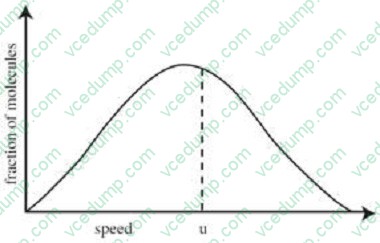
If two particles collide, their velocities change. However, if the gas is in thermal equilibrium, the velocity distribution of the gas as a whole will remain unchanged by the collision. The average kinetic energy (E) of a gas particle is given by:
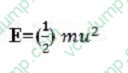
Equation 1
where m is the mass of one particle and u is the root mean square speed (rms speed) of the gas particles:
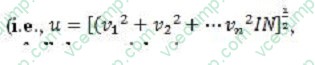
where N is the number of gas particles; this is different from the average speed). For an ideal gas, the kinetic energy of all the particles is:

Equation 2
where n is the number of moles of gas. Combining these equations gives:
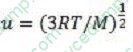
Equation 3
where M is the molar mass of the gas particles.
The average distance a particle travels between collisions is known as the mean free path l. Intuitively, the mean free path (mfp) could be expected to be larger for gases at low pressure, since there is a lot of space between particles.
Similarly, the mfp should be larger when the gas particles are small. The following expression for the mfp shows this to be correct.
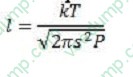
Equation 4 In this equation, s is the atomic diameter (typically on the order of 10?), k is the Boltzmann constant, and P is the pressure. In addition to colliding with one another, gas particles also collide with the walls of their container. If the container wall has a pinhole that is small compared to the mfp of the gas, and a pressure differential exists across the wall, the particles will effuse (or escape) through this pinhole without disturbing the Maxwellian distribution of the particles. The rate of effusion can be described by:
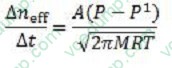
Equation 5
Where neff is the number of moles of effusing particles, A is the area of the pinhole, p and p1 are the pressures on the inside and outside of the container wall respectively, and p>p1.
The average kinetic energy of an ideal gas can be directly related to the:
A. rms speed.
B. temperature.
C. Boltzmann constant.
D. universal gas constant. -
Question 793:
When softball players take batting practice, they often use a machine called an "automatic pitcher," which is essentially a cannon that uses air pressure to launch a projectile. In a prototype automatic pitcher, a softball is loaded into the barrel of the cannon and rests against a flat disk. That disk is locked into place, and a high air pressure is built up behind it. When the disk is released, the softball is pushed along the barrel of the cannon and ejected at a speed of V0. Figure 1 shows the batter and automatic pitcher. The angle of the barrel to the horizontal is V0. The unit vectors I and j point in the horizontal and vertical directions respectively.
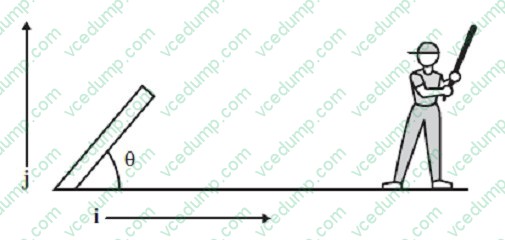
Figure 1
The height above the ground y of the softball as a function of time t is shown in Figure 2, where t = 0 at Point A, t = tB at Point B, and t = tC at Point C. The softball is ejected from the barrel of the cannon at Point A; it reaches its maximum height at Point B; and the batter hits the softball at Point C. (Note: Assume that the effects of air resistance are negligible unless otherwise stated.)
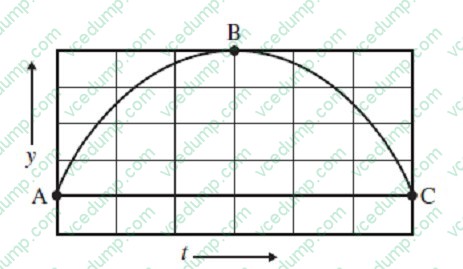
Figure 2
What is the acceleration of the softball t seconds after it exits the barrel?
A. Option A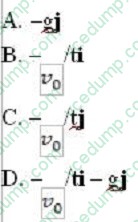
B. Option B
C. Option C
D. Option D -
Question 794:
When Gwendolyn Brooks published her first collection of poetry A Street In Bronzeville in 1945 most reviewers recognized Brooks' versatility and craft as a poet. Yet, while noting her stylistic successes few of her contemporaries discussed the critical question of Brooks' relationship to the Harlem Renaissance. How had she addressed herself, as a poet, to the literary movement's assertion of the folk and African culture, and its promotion of the arts as the agent to define racial integrity? The New Negro poets of the Harlem Renaissance expressed a deep pride in being Black; they found reasons for this pride in ethnic identity and heritage; and they shared a common faith in the fine arts as a means of defining and reinforcing racial pride. But in the literal expression of this impulse, the poets were either romantics, or realists and, quite often within the same poem, both. The realistic impulse, as defined best in the poems of McKay's Harlem Shadows (1922), was a sober reflection upon Blacks as second class citizens, segregated from the mainstream of American socio-economic life, and largely unable to realize the wealth and opportunity that America promised. The romantic impulse, on the other hand, as defined in the poems of Sterling Brown's Southern Road (1932), often found these unrealized dreams in the collective strength and will of the folk masses. In comparing the poems in A Street in Bronzeville with various poems from the Renaissance, it becomes apparent that Brooks brings many unique contributions to bear on this tradition. The first clue that A Street In Bronzeville was, at its time of publication, unlike any other book of poems by a Black American is its insistent emphasis on demystifying romantic love between Black men and women. During the Renaissance, ethnic or racial pride was often focused with romantic idealization upon the Black woman. A casual streetwalker in Hughes' poem, "When Sue Wears Red," for example, is magically transformed into an Egyptian Queen. In A Street In Bronzeville, this romantic impulse runs headlong into the biting ironies of racial discrimination. There are poems in which Hughes, McKay and Brown recognize the realistic underside of urban life for Black women. But for Brooks, unlike the Renaissance poets, the victimization of poor Black women becomes not simply a minor chord but a predominant theme. ...Brooks' relationship with the Harlem Renaissance poets, as A Street in Bronzeville ably demonstrates, was hardly imitative. As one of the important links with the Black poetic tradition of the 1920s and 1930s, she enlarged the element of realism that was an important part of the Renaissance world-view. Although her poetry is often conditioned by the optimism that was also a legacy of the period, Brooks rejects outright their romantic prescriptions for the lives of Black women. And in this regard, she serves as a vital link with the Black Arts Movement of the 1960s that, while it witnessed the flowering of Black women as poets and social activists as well as the rise of Black feminist aesthetics in the 1970s, brought about a curious revival of romanticism in the Renaissance mode.
The passage suggests that the author would be most likely to agree with which one of the following statements about the poetry of the Harlem Renaissance?
A. The movement was inspired by a revival of folk and African culture.
B. The Harlem Renaissance poets portrayed a common heritage in different ways.
C. The movement has been widely criticized for its lack of realism.
D. Brooks was more technically accomplished than other Harlem Renaissance poets. -
Question 795:
A psychologist conducts an experiment in which subjects are asked to learn a series of "facts" which are actually statements that have been fabricated by the research team. The subjects consist of undergraduate students at the university where the experiment is being conducted. The subjects are randomly assigned to groups that are compensated either $10 or $20 for their participation, are given either 15 minutes or 30 minutes to learn the facts, and are asked to recall the facts either in the same room in which they learned the facts or in a very different, unfamiliar setting.
Which of the following are dependent variables in this experiment?
I. The amount the subjects were compensated.
II. The room in which the subjects were asked to recall facts.
III. The number of facts the subjects can recall.
IV.
The time the subjects were given to learn the facts.
A. II only
B. III only
C. I and IV only
D. I and III and IV only
I. The amount the subjects were compensated. II. The room in which the subjects were asked to recall facts. III. The number of facts the subjects can recall. IV. The time the subjects were given to learn the facts. -
Question 796:
Early experimentation on the single-celled organism Acetabularia led to important discoveries about the role of the nucleus in regulating cell function. Acetabularia is an enormous single cell with three distinct regions: a cap, a root-like rhizoid,
and a stalk which connects the two. The following experiments were conducted to study the development of the cell:
Experiment 1
The stalk of an Acetabularia was cut, fragmenting the cell. The fragment which included the cap died shortly afterwards while the fragment containing the rhizoid regenerated to form a complete Acetabularia.
Experiment 2
The nucleus from Acetabularia mediterranea, which has a flat cap, was transplanted into Acetabularia crenulata, which has a tufted cap, following removal of the Acetabularia crenulata nucleus. The Acetabularia crenulata cap eventually
assumed the flat shape.
Experiment 3
The nucleus of Acetabularia mediterranea was removed from the young cell before it first formed a cap. A normal cap formed several weeks later. The cell proved to be inviable and died shortly thereafter.
Experiment 4
A young Acetabularia was fractioned into a number of portions before it first formed a cap. Several weeks later, both the portion containing the nucleus and the portion containing the apical tip of the stalk formed caps. The other portions did
not form caps.
The differences in cap structure between Acetabularia mediterranea and Acetabularia crenulata are caused by differences in:
A. genotype.
B. phenotype.
C. genus.
D. phylum. -
Question 797:
The chemical reaction "CaCO3 (g) CaO (g) + CO2 (g)" shows:
A. reduction.
B. oxidation.
C. no change in oxidation state.
D. both oxidation and reduction. -
Question 798:
Which level of protein structure indicates the amino acid sequence of the protein?
A. tertiary
B. quaternary
C. primary
D. secondary -
Question 799:
Slight gaps are intentionally left between blocks of a building:
A. to drain water accumulated on the roof.
B. to avoid cracks due to temperature impacts.
C. to allow light to internal of room.
D. None of them. -
Question 800:
What is the structure associate with BF3 molecule?
A. Linear
B. Triangle
C. Trigonal Pyramidal
D. Tetrahedron
Related Exams:
Tips on How to Prepare for the Exams
Nowadays, the certification exams become more and more important and required by more and more enterprises when applying for a job. But how to prepare for the exam effectively? How to prepare for the exam in a short time with less efforts? How to get a ideal result and how to find the most reliable resources? Here on Vcedump.com, you will find all the answers. Vcedump.com provide not only Medical Tests exam questions, answers and explanations but also complete assistance on your exam preparation and certification application. If you are confused on your MCAT-TEST exam preparations and Medical Tests certification application, do not hesitate to visit our Vcedump.com to find your solutions here.