MCAT-TEST Exam Details
-
Exam Code
:MCAT-TEST -
Exam Name
:Medical College Admission Test: Verbal Reasoning, Biological Sciences, Physical Sciences, Writing Sample -
Certification
:Medical Tests Certifications -
Vendor
:Medical Tests -
Total Questions
:812 Q&As -
Last Updated
:Jul 16, 2026
Medical Tests MCAT-TEST Online Questions & Answers
-
Question 531:
Compounds containing a hydroxyl group attached to a benzene ring are called phenols. Derivatives of phenols, such as naphthols and phenanthrols, have chemical properties similar to those of phenols, as do most of the many naturally-occurring substituted phenols. Like other alcohols, phenols have higher boiling points than hydrocarbons of similar molecular weight. Like carboxylic acids, phenols are more acidic than their alcohol counterparts. Phenols undergo a number of different reactions; both their hydroxyl groups and their benzene rings are highly reactive. A number of chemical tests can be used to distinguish phenols from alcohols and carboxylic acids.
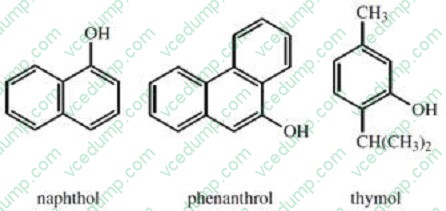
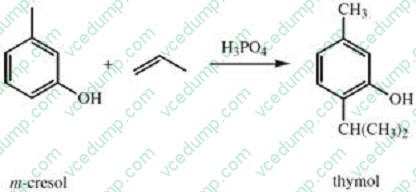
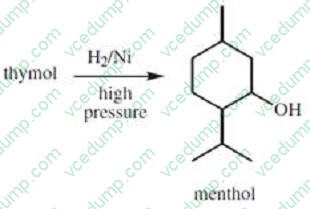
Thymol, a naturally occurring phenol, is an effective disinfectant that is obtained from thyme oil. Thymol can also be synthesized from m-cresol, as shown in Reaction A below. Thymol can then be converted to menthol, another naturally-occurring organic compound; this conversion is shown in Reaction B.
Reaction A
Reaction B
Reaction A is an example of:
A. a free radical substitution.
B. an electrophilic aromatic substitution.
C. an electrophilic addition.
D. a nucleophilic aromatic substitution. -
Question 532:
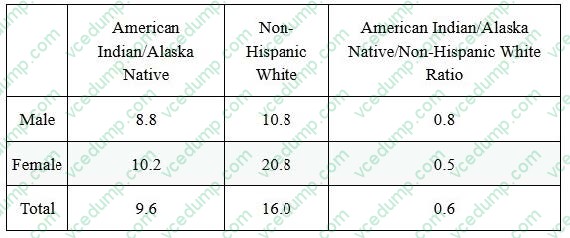
The process by which individuals decide and choose to seek assistance for health or mental health problems is called help-seeking. Table 1 displays the percentage of American Indian/Alaska Native and non-Hispanic White adults who received mental health or counseling treatment in 2008
Help-seeking is a complex process and individuals will choose to obtain treatment for a variety of reasons. One of the strongest individual-related help-seeking predictors amounts to perceiving the need to do so. Other individual-related factors are the educational and the socioeconomic status. There may also be systematic factors that prevent people from doing so, such as general mistrust of health, mental health, and social service institutions, particularly among racial and ethnic minorities. It has been speculated that some of the mistrust stems from research studies, sponsored by medical establishments, where racial and ethnic minorities express concerns of being recruited for the purpose of serving as guinea pigs. Focus groups with African Americans and Chinese immigrants confirmed this anxiety and fear.
Thus, cultural factors also play a role in the help-seeking process. Western cultural norms about medicine are premised on norms of individualism. However, individuals from other cultures and racial and ethnic minority groups tend to be both more collectivistic and fatalist. Disease, both medical and mental, is believed to occur because of fate. It is not something where one should spend much time and effort fighting; the needs of the family and even of the extended family are to come first.
Table 1 Access to health care: Percentage of adults who received mental health treatment or counseling in the past year, 2008 Source: Adapted from U.S. Department of Health and Human Services,"Mental Health and American Indians/ Alaska Natives"
A practitioner using the theory of planned behavior to inform mental health educational programs would most likely:
A. identify cognitive schemas and their influence on the execution of behaviors.
B. determine the level of dissonance or tension created by attitudes and beliefs.
C. explore levels of self-efficacy in individuals' planning.
D. take into account individuals' intentions, attitudes toward behavior, and subjective norms. -
Question 533:
The simple harmonic motion of a mass suspended from vertical springs is investigated in two experiments. The springs used in both experiments have a spring constant k and a natural length L0. The material used to make the springs has a
Young's modulus of 2 x 10¹¹ Pa.
In the first experiment a mass m is suspended from a spring. The mass stretches the spring to a new length L, called the equilibrium length.
In the second experiment the mass m is suspended from two identical springs as shown in Figure 2 below. When the mass m is in equilibrium, each spring is stretched from its natural length by the same amount xe.
In both experiments the masses of the springs are negligible, and the elastic limits of the springs are never exceeded.
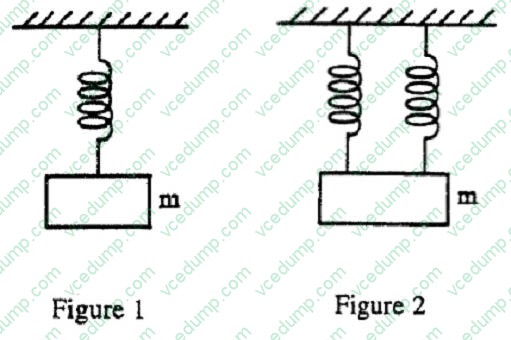
In the first experiment, when a 5-kg mass is oscillating, the frequency of oscillation is 2 Hz. What is the value of the spring constant?
A. 5/2 N/m
B. 20 N/m
C. 402 N/m
D. 802 N/m -
Question 534:
Today's new urban Asia is just as sophisticated and in many ways more exciting than Western cities. Urban Asian consumers are knowledgeable, modern, and keen to embrace the global lifestyle. Young, urban Asians have grown up accustomed to many things that originated in the West. They have, for example, completely embraced pizza, some even claiming that it is a part of their heritage. The story is told about a young Singaporean boy who was taken by his father to Rome. "Hey, look, Dad," the little boy exclaimed, "they have pizza here too!" On sampling the product, the boy decided that it was not as good as the original back home. Nury Vitachi, who writes for the South China Post and the Far Eastern Economic Review, describes the Asian middle-class phenomenon: "Executives in Asia have become rich at warp speed by taking full control of their own lives. They invest a great deal of time in their work, they use strategy to scramble up the corporate ladder, and they demand payment in cash -- so they can make their money work as hard as they do." Signs of affluence are everywhere, but don't get carried away. Traveling around Asia, no matter how rich the Asians become, signs of their frugal nature are still apparent. And they are very cost-conscious. Shopkeepers in many Asian cities, most notably in Hong Kong, demand payments for discounted merchandise in cash instead of plastic, and many Asians are accustomed to that. Most people save the increases in their income, and many prefer to put it into fixed or other income-generating assets. Stock, land, and property are their favorites. Many affluent Asians still regard financial security as the most important form of security, and they are confident that Asia is the place to be to achieve that. While many have begun to savor the good life, they are not letting go of their top priority of education for their children. Education is looked upon as the most important contributing factor to success in life. And in many of Asia's competitive urban centers, there is a rush to acquire a second degree and other forms of professional qualification to ensure personal competitiveness in the workplace. There are extraordinary opportunities in Asia for education and training programs from language to software programming. Despite the rise in their assertiveness, Asians still look to the United States and not so much to Europe for ideas and trends. In general, except for those in Hong Kong and Japan, they are not particularly concerned with being fashionable. For today's Asia, Japan and Hong Kong are the sources of Asian fashion ideas, but as Asia becomes more affluent, there is a great opportunity to develop an indigenous fashion industry. For example, a huge market potential exists in introducing new materials and simplified but fashionable designs for countries in tropical Asia with a hot humid climate throughout the year. The population density and lack of space in urban areas has prohibited Asians from exercising frequently and few indulge in outdoor activities. This is changing. Most Asians consider themselves in good health. Compared with Americans, few are overweight -- largely as a result of their Asian diet. But now health clubs are becoming popular among younger Asians. Potential for indoor exercise equipment holds great promise. It is also important to dress for the gym, and younger Asians are serious about looking good, complete with makeup, sunglasses, designer exercise shoes and outfits, and a gym bag. In trying to hit Asia's moving targets, regardless of what you are selling, it is a good idea to stick with market density -- not country by country, but, mostly, city by city. Asian markets can be a marketer's dream in that their densities are among the highest in the world. Java, Indonesia's main island, has 115 million people. On Nanjing Road, Shanghai's busiest street, businesses are open twelve hours a day almost every day of the year. More than 1.5 million people visit the shops there and spend more than $50 million every day. Someone said that you can only become rich if you sell to the rich. I would add that you can become rich faster if you sell to the new rich. For investors in the West, watch for Western companies that are preparing a big push in Asia. The world has not yet seen anything like it before, and you can reap handsome dividends if you back those stocks that are going eastward.
The quote by Vitachi (lines 15?0) is used by the author to illustrate that:
A. Asians have an economic environment much different than the rest of the global economy.
B. Asian executives are becoming wealthy by adopting patterns similar to Western executives.
C. Asia is developing a middle class that has characteristics similar to those of Westerners.
D. Asian executives' efforts to become rich are proving fruitful. -
Question 535:
Many nutrients required by plants exist in soil as basic cations:

A soil's cation-exchange capacity is a measure of its ability to adsorb these basic cations as well as exchangeable hydrogen and aluminum ions. The cation-exchange capacity of soil is derived from two sources: small clay particles called micelles consisting of alternating layers of alumina and silica crystals, and organic colloids.

Replacement of + and + by other cations of lower valence creates a net negative charge within the inner layers of the micelles. This is called the soil's permanent charge. For example, replacement of an atom of aluminum by calcium within a section where the net charge was previously zero, as shown below, produces a net charge of ?, to which other cations can become adsorbed.

Figure 1
A pH-dependent charge develops when hydrogen dissociates from hydroxyl moieties on the outer surfaces of the clay micelles. This leaves negatively-charged oxygen atoms to which basic cations may adsorb. Likewise, a large pH-
dependent charge develops when hydrogen dissociates from carboxylic acids and phenols in organic matter.
In most clays, permanent charges brought about by substitution account for anywhere from half to nearly all of the total cation-exchange capacity. Soils very high in organic matter contain primarily pH-dependent charges. In a research study,
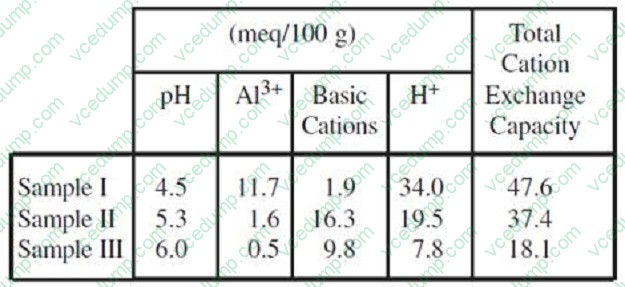
three samples of soil were leached with a 1 N solution of neutral KCl, and the displaced A13+ and basic cations measured. The sample was then leached again with a buffered solution of BaCl2 and triethanolamine at pH 8.2, and the
displaced H+ measured. Table 1 gives results for three soils tested by this method.
Table 1
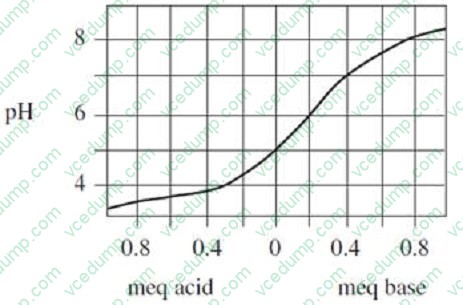
Due to the buffering effect of the soil's cation exchange capacity, just measuring the soil solution's pH will not indicate how much base is needed to change the soil pH. In another experiment, measured amounts of acid and base were added to 10-gram samples of well-mixed soil that had been collected from various locations in a field. The volumes of the samples were equalized by adding water. The results were recorded in Figure 2.
Figure 2.
Which soil from Table 1 most likely has the highest percentage of organic matter?
A. Sample I
B. Sample II
C. Sample III
D. Cannot be determined -
Question 536:
The equation of state of an ideal gas is given by the ideal gas law:
PV = nRT
where P is the pressure, V is the volume, n is the number of moles of gas, R is the ideal gas constant, and T is the temperature of the gas. The gas particles in a container are constantly moving at various speeds. These speeds are
characterized by the Maxwell shown in the figure below.
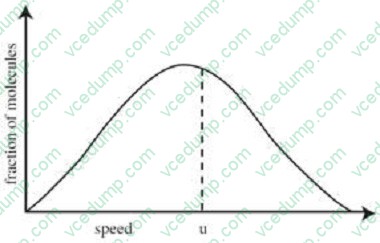
If two particles collide, their velocities change. However, if the gas is in thermal equilibrium, the velocity distribution of the gas as a whole will remain unchanged by the collision. The average kinetic energy (E) of a gas particle is given by:
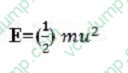
Equation 1 where m is the mass of one particle and u is the root mean square speed (rms speed) of the gas particles
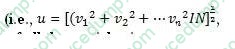
where N is the number of gas particles; this is different from the average speed). For an ideal gas, the kinetic energy of all the particles is:Z

Equation 2
where n is the number of moles of gas. Combining these equations gives:
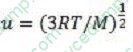
Equation 3
where M is the molar mass of the gas particles.
The average distance a particle travels between collisions is known as the mean free path l. Intuitively, the mean free path (mfp) could be expected to be larger for gases at low pressure, since there is a lot of space between particles.
Similarly, the mfp should be larger when the gas particles are small. The following expression for the mfp shows this to be correct.
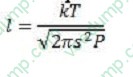
Equation 4 In this equation, s is the atomic diameter (typically on the order of 10?), k is the Boltzmann constant, and P is the pressure. In addition to colliding with one another, gas particles also collide with the walls of their container. If the container wall has a pinhole that is small compared to the mfp of the gas, and a pressure differential exists across the wall, the particles will effuse (or escape) through this pinhole without disturbing the Maxwellian distribution of the particles. The rate of effusion can be described by:
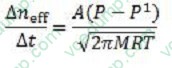
Equation 5 Where neff is the number of moles of effusing particles, A is the area of the pinhole, p and p1 are the pressures on the inside and outside of the container wall respectively, and p>p1. If a pinhole were made in a container containing a mixture of equal amounts of H2, O2, N2 and CO2, which gas would have the fastest effusion rate?
A. H2
B. O2
C. N2
D. Co2 -
Question 537:
The bonding that explains the variation of the boiling point of water from the boiling point of similarly structured molecule is:
A. van der Waals forces.
B. covalent bonding.
C. hydrogen bonding.
D. ionic bonding. -
Question 538:
The lead-acid battery, also called a lead storage battery, is the battery of choice for starting automobiles. It contains 6 cells connected in series, each composed of a lead oxide cathode "sandwiched" between 2 lead anodes. Insulating separators are placed between the electrodes to prevent internal short-circuits. Aqueous sulfuric acid is the electrolyte.
When the battery is being discharged, the following reaction takes place:

Reaction 1
The electrode reactions, both written as reductions, are shown in Table 1.
Table 1
Half-reaction
E?V)
PbO2(s) + SO42-(aq) + 4H+(aq) + 2ePbSO4(s) + 2H2O
PbSO4(s) + 2e-Pb(s) + SO42-(aq)
1.69
?.36
As a car operates, the battery is recharged by electricity produced by the car's alternator, an AC generator whose ultimate power source is the car's internal combustion engine. In spite of this, batteries eventually lose their power. The battery is said to be "dead" when Reaction 1 has proceeded completely to the right.
Which reaction takes place at the anode as the battery is discharging?
A. The first half-reaction, proceeding to the left
B. The first half-reaction, proceeding to the right
C. The second half-reaction, proceeding to the left
D. The second half-reaction, proceeding to the right -
Question 539:
Muzak, the intentionally unobtrusive music that most people associate with elevators and dentists' waiting rooms, represents the paradoxical success story of a product designed to be ignored. Although few people admit to enjoying its blandly melodic sounds, Muzak reaches over 100 million listeners in 14 countries and has played in the White House, the Apollo lunar spacecraft, and countless supermarkets, offices, and factories. This odd combination of criticism and widespread acceptance is not surprising, however, when one considers that Muzak is not created for the enjoyment of its listeners: rather, its purpose is to modify physiological and psychological aspects of an environment.
In the workplace, Muzak is credited with increasing both productivity and profitability. Research into the relationship between music and productivity can be traced to the earliest days of the Muzak Corporation. Developed by a military officer in 1922 as a way of transmitting music through electrical wires, Muzak blossomed in the 1930's following a study which reported that people work harder when they listen to certain kinds of music. Impressed by these findings, the BBC began to broadcast music in English munitions factories during World War II in an effort to combat fatigue. When workers assembling weapons increased their output by 6 percent, the U.S. War Production Board contracted the Muzak Corporation to provide uplifting music to American factories. Today, the corporation broadcasts its "Environmental Music" to countless businesses and institutions throughout the world. And while most people claim to dislike Muzak's discreet cadences, it seems to positively influence both productivity and job satisfaction.
Researchers speculate that listening to Muzak and other soft music improves morale and reduces stress by modifying our physiology. Physiological changes such as lowered heart rate and decreased blood pressure have been documented in hospital studies testing the effect of calming music on cardiac patients. In addition, certain kinds of music seem to effect one's sense of emotional, as well as physical, well being. It is just this sort of satisfaction which is thought to result in increased performance in the workplace. In a study of people performing repetitive clerical tasks, those who listened to music performed more accurately and quickly than those who worked in silence; those who listened to Muzak did better still. Moreover, while Muzak was conceived as a tool for productivity, it also seems to influence a business' profitability. In an experiment in which supermarket shoppers shopped to the mellow sounds of Muzak, sales were increased by as much as 12 percent. What makes Muzak unique is a formula by which familiar tunes are modified and programmed. Careful instrumentation adds to an overall sound that is neither monotonous nor rousing. But it is the precisely timed programming that separates Muzak from other "easy listening" formats. At the core of the programming is the concept of the "Stimulus Progression." Muzak programs are divided into quarter-hour groupings of songs, and are specifically planned for the time of day at which they will be heard. Each composition is assigned a mood rating between 1 and 6 called a stimulus value; a song with a rating of 2, for example, is slower and less invigorating than one with a value of 5. Approximately six compositions with ascending stimulus values play during any given quarter hour; each 15 minute segment ends in silence. Each segment of a 24-hour program is carefully planned. Segments that are considered more stimulating air at 11 a.m. and 3 p.m. (the times when workers typically tire), while more soothing segments play just after lunchtime and towards the end of the day, when workers are likely to be restless.
From the point of view of management, then, Muzak is a useful tool in the effort to maximize both productivity and profits. However, some people object to its presence, labeling it as a type of unregulated air pollution. Still others see it as an Orwellian nightmare, a manipulation of the subconscious. But Muzak's effectiveness seems to lie in the fact that most people never really listen to it. While it may be true that no one actually likes this carefully crafted aural atmosphere, many simply ignore it, allowing its forgettable sounds to soften the contours of the day.
According to the passage, a 15-minute segment of Muzak with an average stimulus value of 5 would most likely be broadcast at:
A. there is no known way to isolate the DNA responsible for hemoglobin.
B. naked hemoglobin tends to break down in the bloodstream.
C. non-globulating PFCs have significantly abbreviated oxygen-carrying capacities.
D. the use of PFCs may lead to blood clotting. -
Question 540:
The automobile airbag was designed to inflate upon impact and decrease the risk of injury to drivers and passengers. Among the challenges to its development was the need to find a reliable inflation mechanism that was sufficiently rapid, controllable, and nontoxic. Prototypes employing compressed gases failed to meet these criteria. Researchers thus turned their attention to chemical alternatives.
The ideal inflatant requires a chemical reaction in which the reactants are stable and relatively dense in the condensed phase while the products are mostly or completely gaseous at ambient temperature and pressure. Additionally, the ideal chemical reaction would require a low activation energy and have a high kinetic rate constant, without the large exothermicity characteristic of most such reactions. Traditional explosives such as nitroglycerin, C3H5N3O9(l), were rejected almost immediately because of the extremely exothermic nature of their conversion. Benign solids such as calcium carbonate, CaCO3 , were similarly rejected, because of their large activation requirements. The desired attributes were finally found in sodium azide, NaN3, a stable, dense, ionic solid which rapidly decomposes into elemental sodium and nitrogen gas when ignited by an electrical impulse.

Reaction 1
The gas generating mixture includes excess KNO3 which reacts with the sodium metal from Reaction 1 to produce additional N2 and potassium and sodium oxides (Reactions 2 and 3). These oxides react with SiO2 to produce a non-toxic and stable alkaline silica (glass).

Reaction 2

Reaction 3
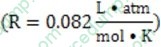
In order for the decomposition reaction to spread throughout the sodium azide after ignition, the H and G for Reaction 1 must be, respectively:
A. positive, negative
B. positive, positive
C. negative, negative
D. negative, positive

Related Exams:
Tips on How to Prepare for the Exams
Nowadays, the certification exams become more and more important and required by more and more enterprises when applying for a job. But how to prepare for the exam effectively? How to prepare for the exam in a short time with less efforts? How to get a ideal result and how to find the most reliable resources? Here on Vcedump.com, you will find all the answers. Vcedump.com provide not only Medical Tests exam questions, answers and explanations but also complete assistance on your exam preparation and certification application. If you are confused on your MCAT-TEST exam preparations and Medical Tests certification application, do not hesitate to visit our Vcedump.com to find your solutions here.