MCAT-TEST Exam Details
-
Exam Code
:MCAT-TEST -
Exam Name
:Medical College Admission Test: Verbal Reasoning, Biological Sciences, Physical Sciences, Writing Sample -
Certification
:Medical Tests Certifications -
Vendor
:Medical Tests -
Total Questions
:812 Q&As -
Last Updated
:Jul 16, 2026
Medical Tests MCAT-TEST Online Questions & Answers
-
Question 481:
A continuous spectrum of light, sometimes called blackbody radiation, is emitted from a region of the Sun called the photosphere. Although the continuous spectrum contains light of all wavelengths, the intensity of the emitted light is much greater at some wavelengths than at others. The relationship between the most intense wavelength of blackbody radiation and the temperature of the emitting body is given by Wien's law, = 2.9 x 10⁶ /T, where is the wavelength in nanometers and T is the temperature in kelvins.
As the blackbody radiation from the Sun passes through the cooler gases in the Sun's atmosphere, some of the photons are absorbed by the atoms in these gases. A photon will be absorbed if it has just enough energy to excite an electron from a lower energy state to a higher one. The absorbed photon will have an energy equal to the energy difference between these two states. The energy of a photon is given by E = hf = hc/ where h = 6.63 x 10⁻³⁴ Js, Planck's constant, and c = 3 x 10⁸ m/s, the speed of light in a vacuum.
The Sun is composed primarily of hydrogen. Electron transitions in the hydrogen atom from energy state n = 2 to higher energy states are listed below along with the energy of the absorbed photon:
Final Energy State Energy (x 10-19 J) n = 3
3.02
n = 4
4.08
n = 5
4.57 n = 6
4.84 n =
5.44
If a star suddenly doubles in size but remains at the same temperature, how does its continuous spectrum change?
A. The peak intensity occurs at the same wave-length.
B. The peak intensity occurs at a longer wave-length.
C. The peak intensity occurs at a shorter wave-length.
D. The intensity peak narrows. -
Question 482:
A student conducts a chemical analysis of the components of a popular soft drink. The beverage label shows that the drink contains carbonated water, phosphoric acid, caffeine, and caramel color, but does not indicate the concentrations of
these chemicals.
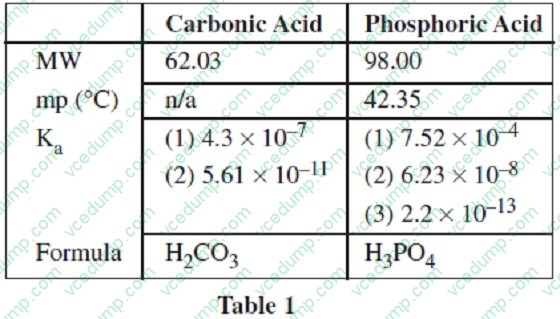
Dissolved carbon dioxide will react reversibly with water to form carbonic acid. In an attempt to analyze the beverage composition, the student conducts the following experiments on a one liter sample of the beverage.
Experiment 1
The sample is placed in a sealed beaker cooled to 10?C and a vacuum is created in the space above the beverage. The gas pumped from this space is passed through a solution of BaCl2, producing a white precipitate. The process
continues until no more precipitate forms. The precipitate is dried and found to have a mass of 9.5 grams.
Experiment 2
The remaining solution left in the sealed beaker is then titrated with 0.01 M NaOH to give the titration curve shown in Figure 1.
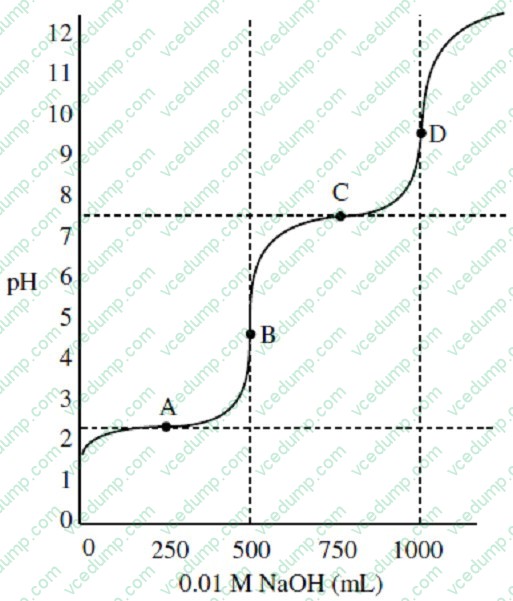
Figure 1
The student uses the data from Experiment 1 and Experiment 2 to calculate the initial pH of the beverage. If a significant quantity of precipitate was lost in the drying process of Experiment 1, the calculated pH:
A. would be less than the actual pH.
B. would be greater than the actual pH.
C. would be the same as the actual pH.
D. would differ from the actual pH in a random manner. -
Question 483:
According to Boyle's Law, if a gas expands in volume from 5 L to 10 L and has an initial pressure of 1 atm, what is the final pressure?
A. 5 atm
B. 2 atm
C. 0.5 atm
D. 1 atm -
Question 484:
Which of these is not a female sex hormone?
A. gastrin
B. follicle stimulating hormone
C. progesterone
D. estrogen -
Question 485:
In the early nineteenth century a large number of communal experiments, both secular and religious, sprang up in the northeastern United States. Perhaps the most famous secular commune was Brook Farm, founded by transcendentalists George Ripley and William H. Channing to promote the pursuit of leisure and culture through the proper application of time and labor. Its members (among the more notable were Nathaniel Hawthorne and Margaret Fuller) pursued field labor by day, art and philosophy by night. For a time the system worked so well that two afternoons a week were set aside for leisure and Brook Farm began outcompeting local farmers at the produce market. But by nature the Farm's members were thinkers, not workers; despite their success they remained mainly interested in the theoretical and philosophical implications of the experiment. Thus, when a devastating fire brought the community considerable financial burdens in its fifth year, the members felt little compunction about closing shop and returning to their comfortable Boston homes.
One of the most notable religious utopias was the Oneida community. Its founder, John Humphrey Noyes, believed that Christ's second coming had already occurred and that everyone alive was favored by Divine grace, which Noyes saw as an imperative to live a better life. Perhaps surprisingly, the Oneidans embraced industry and commerce, achieving success in fruit packing, trap making, and silk thread winding. They owned everything communally, and this principle extended to each other. The Oneidans saw monogamy as a selfish act and asserted that the men and women of the community were united in one "complex" marriage; sex between any two consenting members was perfectly acceptable. The Oneidans maintained order solely through "criticism"--anyone acting out of line was made to stand before the other members and hear his or her faults recounted. Oneida remained viable for some thirty years, until the leadership devolved on Noyes' son, an agnostic. The old religious fervor died out, and the dream degenerated into a joint stock company. Doubtless the most successful communalists were the Shakers, so called for the early propensity to tremble ecstatically during religious worship. Their guiding light, Mother Ann, espoused four key principles: Virgin Purity, Christian Communism, Confession, and Separation from the World. Though the Shakers were less adamant on the last point -- maintaining social relations and some commerce with heir neighbors -- they insisted on the other three, and renounced both personal property and sex. Men and women lived in a single large "Unitary Dwelling" and were considered complete equals, but they occupied separate wings and could speak together only if a third person were present. Despite their religious strictness, Shakers were known as simple, sincere, intelligent people, healthy and long-lived, producers of lovely books and hymns, and of furniture still prized for its quality and durability. In their eyday, six thousand Shakers lived in fifty-eight separate "families" throughout the Northeast. Later their celibacy, combined with their strict discipline, led to a decline in numbers, but even today a small number of elderly Shakers in two communities in Maine and New Hampshire continue to keep the faith.
If the passage were to continue, the next topic the author would discuss would probably be:
A. a comparison between nineteenth and twentieth century communal living experiments.
B. a theory explaining why communal living might become popular again.
C. an analysis of why early communes attracted intellectuals and artists.
D. an investigation into why the three communes discussed were successful to varying degrees. -
Question 486:
If a 5 k resistor and a 20 k resistor are connected in parallel, what is the resistance of the circuit?
A. 4 k
B. 4 m
C. 15 k
D. 10 k -
Question 487:
Hemophilia is a genetically inherited disease that causes the synthesis of an abnormal clotting factor. As a result, hemophiliacs bleed excessively from the slightest injury. The figure below is a partial pedigree for the hemophilia trait in Queen Victoria's descendants. The pedigree indicates no history of hemophilia for either parent prior to the F1 generation.
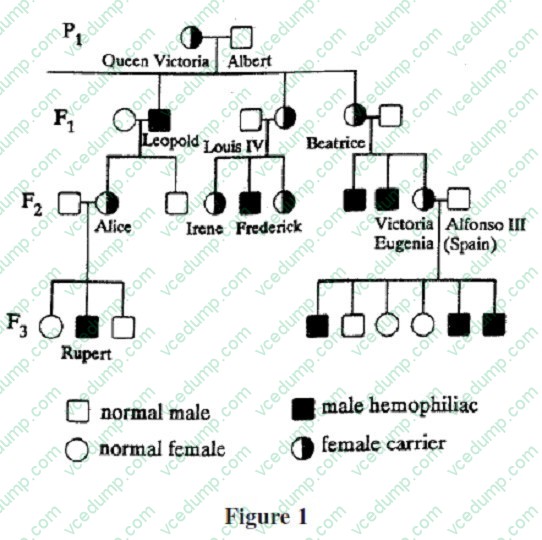
Theoretically, what percentage of Victoria Eugenia's sons should have been hemophiliacs?
A. 25%
B. 33%
C. 50%
D. 75% -
Question 488:
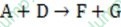
Several techniques have been developed to determine the order of a reaction. The rate of a reaction cannot be predicted on the basis of the overall equation, but can be predicted on the basis of the rate-determining step. For instance, the following reaction can be broken down into three steps.
Step 1

(Slow)
Step 2
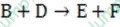
(fast)
Step 3

(fast)
Reaction 1 In this case, the first step in the reaction pathway is the rate-determining step. Therefore, the overall rate of the reaction must equal the rate of the first step, k1 [A] where k1 is the rate constant for the first step. (Rate constants of the different steps are denoted by kx , where x is the step number.)
In some cases, it is desirable to measure the rate of a reaction in relation to only one species. In a second-order reaction, for instance, a large excess of one species is included in the reaction vessel. Since a relatively small amount of this large concentration is reacted, we assume that the concentration essentially remains unchanged. Such a reaction is called a pseudo first-order reaction. A new rate constant, k', is established, equal to the product of the rate constant of the original reaction, k, and the concentration of the species in excess. This approach is often used to analyze enzyme activity.
In some cases, the reaction rate may be dependent on the concentration of a short-lived intermediate. This can happen if the rate-determining step is not the first step. In this case, the concentration of the intermediate must be derived from the equilibrium constant of the preceding step. For redox reactions, the equilibrium can be correlated with the voltage produced by two half-cells by means of the Nernst equation. This equation states that at any given moment:
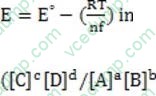
Equation 1 When

Reaction 2
Note: R = 8.314 J/K•mol; F = 9.6485 104 C/mol.)
What would be the cell emf of the following system at 298K?
A. 1.07 V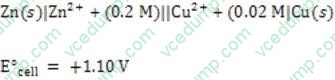
B. 1.10 V
C. 1.13 V
D. 1.20 V -
Question 489:
Which of the following are steroid-based molecules?
I. Testosterone
II. Triglycerides
III. Progesterone
IV.
DNA
A. I only
B. I, II, and III
C. I and III
D. I, III, and IV
I. Testosterone II. Triglycerides III. Progesterone IV. DNA -
Question 490:
In 1965, Boris Deryagin reported the discovery of an unusual substance formed during the condensation of water vapor in quartz capillaries. The material, called poly-water, appeared to be a polymer of water monomers and differed from normal water in a number of ways. It had a freezing point of ?0?C and solidified into a glass-like solid with substantially less volumetric expansion than that of ordinary water upon freezing. It had a density 40% greater than water and a refractive index of 1.48.
An intricate apparatus was used to produce the poly-water. Ordinary distilled water was placed in a chamber held at 160?C with pressure below atmospheric pressure. This chamber was connected to a second chamber by a tube held at 500?C in order to prevent the passage of liquid water. The second chamber was held at 0?C and contained a drawn quartz capillary in which the water vapor condensed, forming poly-water.
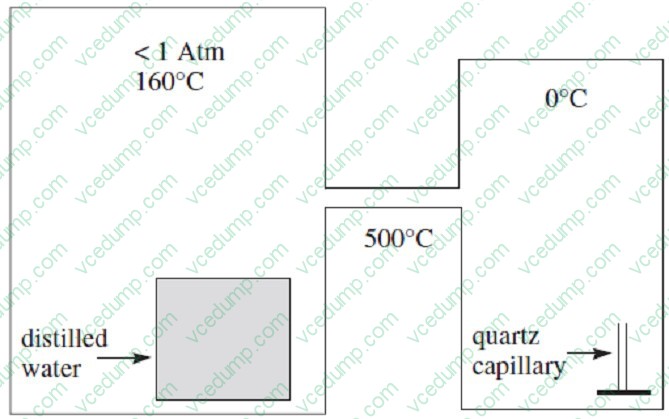
Hypothesis 1
Deryagin proposed that polywater was a polymer of water monomers arranged in a network of hexagonal units. The polymerization was catalyzed by the silicate surface of the quartz capillary.
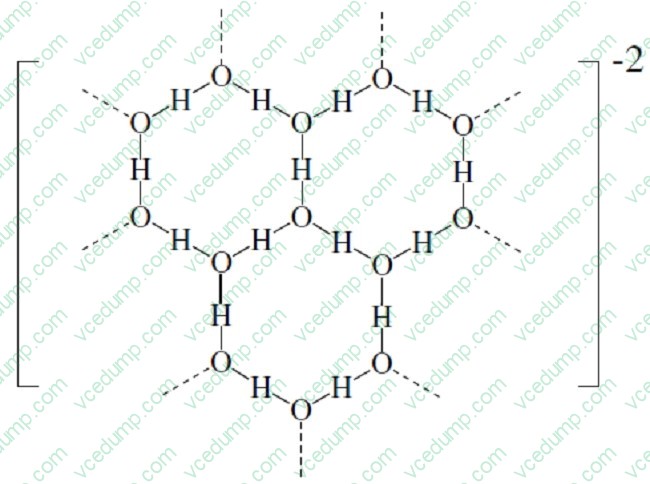
Proposed Structure of Polywater Hypothesis 2
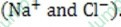
Another researcher was skeptical. Analysis indicated that polywater was merely a solution of water and dissolved particles including silicon, carbon dioxide, and substantial concentrations of ions These contaminants dissolved from the quartz capillary and from materials used in the apparatus.

(constants for normal water : density = 1 g/c , index of refraction = 1.33 , freezing point depression constant = 1.86°C )

The pressure ( ) in the first chamber is decreased by raising a piston and increasing the volume of the chamber from to . If the temperature is kept at 160 °C, which of the following values solves for the new pressure ( ) in the chamber?
A. Option A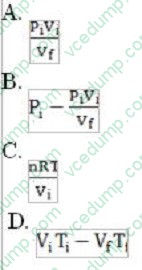
B. Option B
C. Option C
D. Option D


Related Exams:
Tips on How to Prepare for the Exams
Nowadays, the certification exams become more and more important and required by more and more enterprises when applying for a job. But how to prepare for the exam effectively? How to prepare for the exam in a short time with less efforts? How to get a ideal result and how to find the most reliable resources? Here on Vcedump.com, you will find all the answers. Vcedump.com provide not only Medical Tests exam questions, answers and explanations but also complete assistance on your exam preparation and certification application. If you are confused on your MCAT-TEST exam preparations and Medical Tests certification application, do not hesitate to visit our Vcedump.com to find your solutions here.