MCAT-TEST Exam Details
-
Exam Code
:MCAT-TEST -
Exam Name
:Medical College Admission Test: Verbal Reasoning, Biological Sciences, Physical Sciences, Writing Sample -
Certification
:Medical Tests Certifications -
Vendor
:Medical Tests -
Total Questions
:812 Q&As -
Last Updated
:Jul 16, 2026
Medical Tests MCAT-TEST Online Questions & Answers
-
Question 311:
The second law of thermodynamic states that:
A. 100% conversion of mechanical work into heat is not possible.
B. 100% efficient heat engine is not possible.
C. 100% conversion of heat into mechanical work is not possible.
D. None of these. -
Question 312:
In which part of the spectrum is an electromagnetic wave with wavelength 532 nm?
A. visible
B. infrared
C. microwave
D. ultraviolet -
Question 313:
In an acetyl molecule, two atoms of carbon are bonded by:
A. two sigma bonds and two pi () bond.
B. one sigma bond and one pi () bond.
C. two sigma bonds and one pi () bond.
D. one sigma bonds and two pi () bond. -
Question 314:
In 1965, Boris Deryagin reported the discovery of an unusual substance formed during the condensation of water vapor in quartz capillaries. The material, called poly-water, appeared to be a polymer of water monomers and differed from normal water in a number of ways. It had a freezing point of ?0?C and solidified into a glass-like solid with substantially less volumetric expansion than that of ordinary water upon freezing. It had a density 40% greater than water and a refractive index of 1.48.
An intricate apparatus was used to produce the poly-water. Ordinary distilled water was placed in a chamber held at 160?C with pressure below atmospheric pressure. This chamber was connected to a second chamber by a tube held at 500?C in order to prevent the passage of liquid water. The second chamber was held at 0?C and contained a drawn quartz capillary in which the water vapor condensed, forming poly-water.
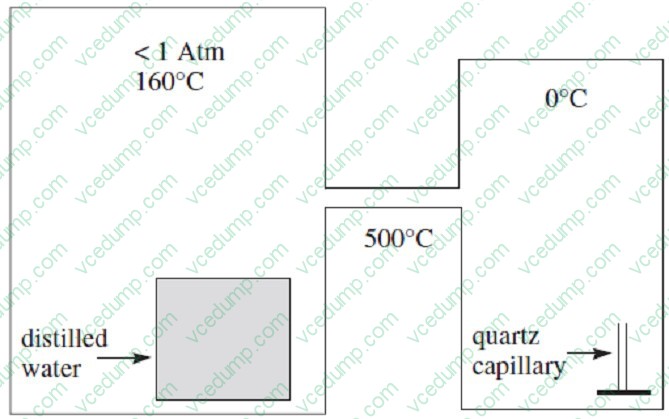
Hypothesis 1
Deryagin proposed that polywater was a polymer of water monomers arranged in a network of hexagonal units. The polymerization was catalyzed by the silicate surface of the quartz capillary.
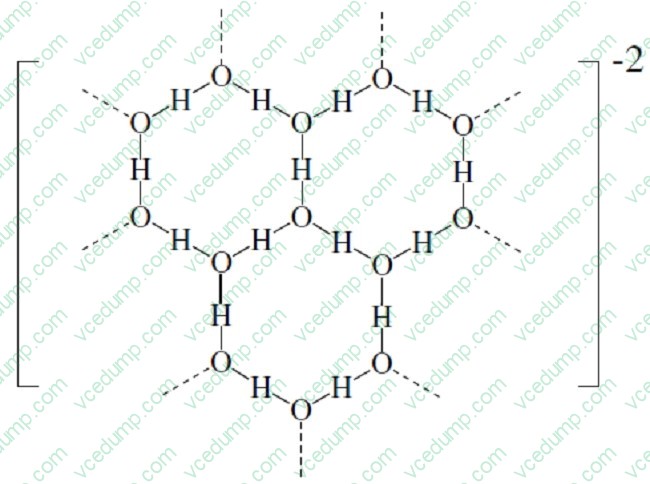
Proposed Structure of Polywater Hypothesis 2
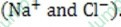
Another researcher was skeptical. Analysis indicated that polywater was merely a solution of water and dissolved particles including silicon, carbon dioxide, and substantial concentrations of ions These contaminants dissolved from the quartz capillary and from materials used in the apparatus.

(constants for normal water : density = 1 g/c , index of refraction = 1.33 , freezing point depression constant = 1.86°C )
Which of the following changes in the experimental apparatus would increase the rate of water vapor production in the first chamber of the experimental apparatus? (All other conditions kept constant.)
A. Decreasing the temperature
B. Decreasing the pressure
C. Decreasing the cross-sectional area of the tube connecting the two chambers
D. Adding NaCl to the distilled water in the first chamber -
Question 315:
Noncompetitive inhibition differs from uncompetitive inhibition in that a noncompetitive inhibitor binds to an allosteric site on the enzyme and prevents it from catalyzing a reaction, whereas uncompetitive inhibitors bind to the enzyme-substrate complex and prevent catalysis. Increasing the substrate concentration would have which of the following effects?
A. Increasing impact of uncompetitive inhibitor and decreasing concentration of noncompetitive inhibitor
B. Decreasing impact of uncompetitive inhibitor and increasing impact of noncompetitive inhibitor.
C. Increasing impact of uncompetitive inhibitor
D. No effect -
Question 316:
Gauguin's attitude toward art marked a break from the past and a beginning to modern art. Like all Post- Impressionist artists, he passed through an Impressionist phase but became quickly dissatisfied with the limitations of the style, and went on to discover a new style that had the directness and universality of a symbol and that concentrated on impressions, ideas and experiences. The beginning of his modern tradition lay in his rejection of Impressionism. He considered naturalism an error to be avoided. He was preoccupied with suggestion rather than description, seeking to portray not the exterior, but the essence of things in their purest, simplest, and most primitive form, which could only be achieved through simplification of the form. He firmly believed throughout his life that "art is an abstraction" and that "this abstraction [must be derived] from nature while dreaming before it." One must think of the creation that will result rather than the model, and not try to render the model exactly as one sees it. This was the birth of "Synthetism" or rather Synthetist-Symbolic, as Gauguin referred to it, using the term "symbolic" to indicate that the forms and patterns in his pictures were meant to suggest mental images or ideas and not simply to record visual experience.
Symbolism flourished around the period of 1885 to 1910 and can be defined as the rejection of direct, literal representation in favor of evocation and suggestion. Painters tried to give a visual expression to emotional experiences, and therefore the movement was a reaction against the naturalistic aims of Impressionism. Satisfying the need for a more spiritual or emotional approach in art, Symbolism is characterized by the desire to seek refuge in a dreamworld of beauty and the belief that color and line in themselves could express ideas. Stylistically, the tendency was towards flattened forms and broad areas of color, and features of the movement were an intense religious feeling and an interest in subjects of death, disease, and sin.
Similarly, "Synthetism" involved the simplification of forms into large-scale patterns and the expressive purification of colors. Form and color had to be simplified for the sake of expression. This style reacted against the "formlessness" of Impressionism and favored painting subjectively and expressing one's ideas rather than relying on external objects as subject matters. It was characterized by areas of pure colors, very defined contours, an emphasis on pattern and decorative qualities, and a relative absence of shadows.
Gauguin's new art form merged these two movements and succeeded in freeing color, form, and line, bringing it to express the artists' emotions, sensibilities, and personal experiences of the world around them. His style created a break with the old tradition of descriptive naturalism and favored the synthesis of observation and imagination. Gauguin sustained that forms are not discovered in nature but in one's wild imagination, and it was in himself that he searched rather than in his surroundings. For this reason, he scorned the Impressionists for their lack of imagination and their mere scientific reasoning. Furthermore, Gauguin used color unnaturalistically for its decorative or emotional effect and reintroduced emphatic outlines. "Synthetism" signified for him that the forms of his pictures were constructed from symbolic patterns of color and linear rhythms and were not mere scientific reproductions of what is seen by the eye.
Dempsey, A., and Dempsey, A. (2010). Styles, Schools and Movements: The Essential Encyclopaedic Guide to Modern Art. London: Thames and Hudson.
According to passage information, what can we infer that Symbolism and Impressionism had in common?
A. Both saw ideas as crucial to the impact of a work.
B. Both focused on representing nature rather than man-made objects.
C. Both considered the artist's subjective experience to be a key element to the work.
D. Both thought art needed to express the idiosyncratic nature of the artist rather than pleasing society. -
Question 317:
It is very important for children to have quality time with their parents. Parents who provide this type of interaction may be assured of a bright future for their offspring. By the same token, according to a study by the Centers for Disease Control, parents who work do not have as much time to devote to parenting. Thus, working mothers automatically thrust an obstacle into their children's developmental future.
The argument in the passage illustrates the following component/s:
A. faulty appeal to authority
B. faulty application of cause and effect
C. faulty initial premise
D. faulty appeal to authority and faulty application of cause and effect -
Question 318:
All of the following are true regarding the function of neurons EXCEPT:
A. Hyperpolarization at the end of an action potential is one mechanism by which neurons limit the rate at which action potentials may fire.
B. The flow of sodium into the neuron depolarizes the membrane in the first phase of an action potential.
C. The transmitting neuron secretes neurotransmitters into the synaptic cleft from its dendrites.
D. An action potential is initiated when the axon hillock reaches the threshold potential. -
Question 319:
When light in the ultraviolet region of the spectrum is shone on a type of material known as a phosphor, it fluoresces and emits light in the visible region of the spectrum. Lamps that utilize this property, known as fluorescent lamps, are very efficient light sources. The arrangement of a typical fluorescent lamp is shown below. The lamp is a glass tube whose inside walls are covered with a phosphor. The tube has an appreciable length-to-diameter ratio so as to reduce the power losses at each end, and it is filled with argon gas mixed with mercury vapor. Inside each end of the tube are tungsten electrodes covered with an emission material.
Electrons are liberated at the cathode and accelerated by an applied electric field. These free electrons encounter the gas mixture, ionizing some mercury atoms and exciting others. Since it requires more energy to ionize the atoms than to excite the electrons, more excitation than ionization occurs. When the excited electrons revert to their ground state, they radiate ultraviolet photons with a wavelength of 253.7 nm. These photons impinge on the phosphor coating of the tube and excite electrons in the phosphor to higher energy states. The excited electrons in the phosphor return to their ground state in two or more steps, producing radiation in the visible region of the spectrum. Not every fluorescent lamp emits the same color of radiation; the color is dependent on the relative percentages of different heavy metal compounds in the phosphor.
The fluorescent lamp shown operates at 100 volts and draws 400 milliamps of current during normal operation. Of the total power that the lamp consumes, only 25% is converted to light, while the remaining 75% is dissipated as heat. This energy keeps the lamp at its optimum working temperature of 40°C. In the lamp shown, the phosphor coating is calcium metasilicate, which emits orange to yellow light.
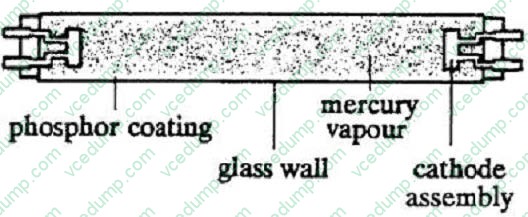
The photons emitted by the mercury vapor have energies:
A. equal to the energies of the electric current.
B. equal to the voltage across the tube.
C. equal to the energy differences between electron orbitals in the mercury atom.
D. less than or equal to the energy differences between the electron orbitals of the mercury atom. -
Question 320:
Studies of photosynthesis began in the late eighteenth century. One scientist found that green plants produce a substance (later shown to be oxygen) that supports the flame of a candle in a closed container. Several years later it was discovered that a plant must be exposed to light in order to replenish this flame- sustaining "substance." Soon another discovery showed that the oxygen is formed at the expense of another gas, carbon dioxide.
In 1804, de Saussure conducted experiments revealing that equal volumes of carbon dioxide and oxygen are exchanged between a plant and the air surrounding it. De Saussure determined that the weight gained by a plant grown in a pot equals the sum of the weights of carbon derived from absorbed carbon dioxide and water absorbed through plant roots. Using this information, de Saussure was able to postulate that in photosynthesis carbon dioxide and water combine using energy in the form of light to produce carbohydrates, water, and free oxygen. Much later, in 1845, scientists' increased understanding of concepts of chemical energy led them to perceive that, through photosynthesis, light energy is transformed and stored as chemical energy.
In the twentieth century, studies comparing photosynthesis in green plants and in certain sulfur bacteria yielded important information about the photosynthetic process. Because water is both a reactant and a product in the central reaction, it had long been assumed that the oxygen released by photosynthesis comes from splitting the carbon dioxide molecule. In the 1930s, however, this popular view was decisively altered by the studies of C. B. Van Niel. Van Niel studied sulfur bacteria, which use hydrogen sulfide for photosynthesis in the same way that green plants use water, and produce sulfur instead of oxygen. Van Niel saw that the use of carbon dioxide to form carbohydrates was similar in the two types of organisms. He reasoned that the oxygen produced by green plants must derive from water -- rather than carbon dioxide, as previously assumed -- in the same way that the sulfur produced by the bacteria derives from hydrogen sulfide. Van Niel's finding was important because the earlier belief had been that oxygen was split off from carbon dioxide, and that carbon then combined with water to form carbohydrates. The new postulate was that, with green plants, hydrogen is removed from water and then combines with carbon dioxide to form the carbohydrates needed by the organism. Later, Van Niel's assertions were strongly backed by scientists who used water marked with a radioactive isotope of oxygen in order to follow photosynthetic reactions. When the photosynthetically-produced free oxygen was analyzed, the isotope was found to be present.
The passage supplies information for answering all of the following questions EXCEPT:
A. Why is oxygen necessary for a candle to burn?
B. What was de Saussure's explanation of the function of water in photosynthesis?
C. What is the function of light in photosynthesis?
D. Is water required for all photosynthetic reactions?

Related Exams:
Tips on How to Prepare for the Exams
Nowadays, the certification exams become more and more important and required by more and more enterprises when applying for a job. But how to prepare for the exam effectively? How to prepare for the exam in a short time with less efforts? How to get a ideal result and how to find the most reliable resources? Here on Vcedump.com, you will find all the answers. Vcedump.com provide not only Medical Tests exam questions, answers and explanations but also complete assistance on your exam preparation and certification application. If you are confused on your MCAT-TEST exam preparations and Medical Tests certification application, do not hesitate to visit our Vcedump.com to find your solutions here.