MCAT-TEST Exam Details
-
Exam Code
:MCAT-TEST -
Exam Name
:Medical College Admission Test: Verbal Reasoning, Biological Sciences, Physical Sciences, Writing Sample -
Certification
:Medical Tests Certifications -
Vendor
:Medical Tests -
Total Questions
:812 Q&As -
Last Updated
:Jul 16, 2026
Medical Tests MCAT-TEST Online Questions & Answers
-
Question 331:
Which of the following is NOT a commonly occurring sulfur compound?
A. H2SO4
B. H2S
C. SO3
D. SO2 -
Question 332:
The automobile airbag was designed to inflate upon impact and decrease the risk of injury to drivers and passengers. Among the challenges to its development was the need to find a reliable inflation mechanism that was sufficiently rapid, controllable, and nontoxic. Prototypes employing compressed gases failed to meet these criteria. Researchers thus turned their attention to chemical alternatives.
The ideal inflatant requires a chemical reaction in which the reactants are stable and relatively dense in the condensed phase while the products are mostly or completely gaseous at ambient temperature and pressure. Additionally, the ideal chemical reaction would require a low activation energy and have a high kinetic rate constant, without the large exothermicity characteristic of most such reactions. Traditional explosives such as nitroglycerin, C3H5N3O9(l), were rejected almost immediately because of the extremely exothermic nature of their conversion. Benign solids such as calcium carbonate, CaCO3 , were similarly rejected, because of their large activation requirements. The desired attributes were finally found in sodium azide, NaN3, a stable, dense, ionic solid which rapidly decomposes into elemental sodium and nitrogen gas when ignited by an electrical impulse.

Reaction 1
The gas generating mixture includes excess KNO3 which reacts with the sodium metal from Reaction 1 to produce additional N2 and potassium and sodium oxides (Reactions 2 and 3). These oxides react with SiO2 to produce a non-toxic and stable alkaline silica (glass).

Reaction 2

Reaction 3
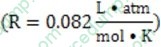
Decomposition of which of the following transition metal complexes would produce the highest theoretical yield of carbon monoxide per gram of reactant?
A. Option A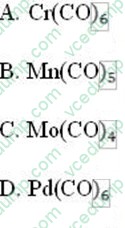
B. Option B
C. Option C
D. Option D -
Question 333:
Aerobic respiration is the major process used by oxygen- requiring organisms to generate energy. During respiration, glucose is metabolized to generate chemical energy in the form of ATP:

The biochemical machinery necessary for cellular respiration is found in the mitochondria, small organelles scattered throughout the cytoplasm of most eukaryotic cells. The number of mitochondria per cell varies by tissue type and cell
function.
Mitochondria are unusual in that they have their own genetic systems that are entirely separate from the cell's genetic material. However, mitochondrial replication is still dependent upon the cell's nuclear DNA to encode essential proteins
required for replication. Despite this fact, mitochondria seem to replicate randomly, out of phase with both the cell cycle and other mitochondria.
The nature of the mitochondrial genome and protein synthesizing machinery has led many researchers to postulate that mitochondria may have arisen as the result of the ingestion of a bacterium by a primitive cell millions of years ago. It is
postulated that the two may have entered into a symbiotic relationship and eventually became dependent on each another; the cell sustained the bacterium, while the bacterium provided energy for the cell. Gradually, the two evolved into the
present-day eukaryotic cell, with the mitochondrion retaining some of its own DNA. This is known as the endosymbiotic hypothesis. Because mitochondrial DNA is inherited in a non-Mendelian fashion (mitochondria are inherited from the
maternal parent, who supplies most of the cytoplasm to the fertilized egg), it has been used to look at evolutionary relationships among different organisms.
A mating type of a wild-type strain of the algae C. reinhardii is crossed with the opposite mating type of a mutant strain of the algae, which has lost all mitochondrial functions due to deletions in their mitochondrial genome. All of the offspring
from this cross also lack mitochondrial functions. Based on information in the passage, this can best be explained by the:
A. endosymbiotic hypothesis.
B. non-Mendelian inheritance of mitochondrial DNA.
C. recombination of mitochondrial DNA during organelle replication.
D. presence of genetic material in the mitochondria that is distinct from nuclear DNA. -
Question 334:
A copper rod has a resistance of 40 at 00C and a resistance of 56 at 1000C. What is the temperature coefficient of resistance of copper?
A. 2 x 10⁻⁴ K-1
B. 4 x 10⁻³ K-1
C. 4 x 10⁻⁴ K-1
D. 8 x 10⁻⁴ K-1 -
Question 335:
Which of the following best illustrates the contracted state of the sarcomere shown below?
A. Option A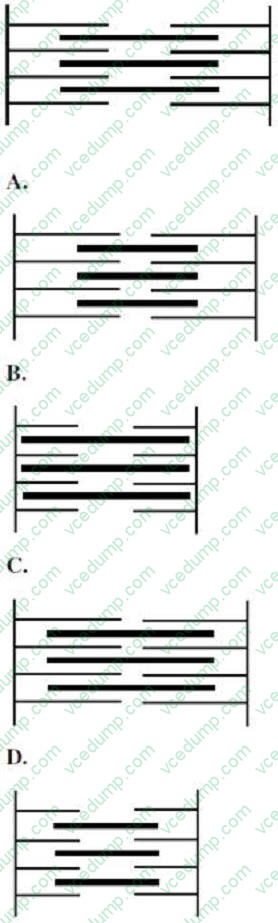
B. Option B
C. Option C
D. Option D -
Question 336:
The periodic beating of the heart is controlled by electrical impulses that originate within the cardiac muscle itself. These pulses travel to the sinoatrial node and from there to the atria and the ventricles, causing the cardiac muscles to contract. If a current of a few hundred milliamperes passes through the heart, it will interfere with this natural system, and may cause the heart to beat erratically. This condition is known as ventricular fibrillation, and is life-threatening. If, however, a larger current of about 5 to 6 amps is passed through the heart, a sustained ventricular contraction will occur. The cardiac muscle cannot relax, and the heart stops beating. If at this point the muscle is allowed to relax, a regular heartbeat will usually resume.
The large current required to stop the heart is supplied by a device known as a defibrillator. A schematic diagram of a defibrillator is shown below. This device is essentially a "heavy-duty" capacitor capable of storing large amounts of energy. To charge the capacitor quickly (in 1 to 3 seconds), a large DC voltage must be applied to the plates of the capacitor. This is achieved using a step-up transformer, which creates an output voltage that is much larger than the input voltage. The transformer used in this defibrillator has a step-up ratio of 1:50.
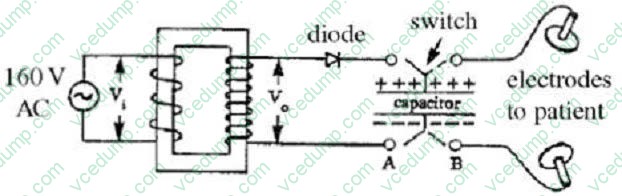
The AC voltage that is obtained from the transformer must then be converted to DC voltage in order to charge the capacitor. This is accomplished using a diode, which allows current flow in one direction only. Once the capacitor is fully
charged, the charge remains stored until the switch is moved to position B and the plates are placed on the patient's chest. To cut down the resistance between the patient's body and the defibrillator, the electrodes are covered with a wetting
gel before use. Care must be taken to insure that the patient is not in electrical contact with the ground while the defibrillator is in use.
The plates of the capacitor are originally separated by a vacuum. If a dielectric K>1 is introduced between the plates of the capacitor, and the capacitor is allowed to charge up, which of the following statements is/are true?
I) The capacitance of the capacitor will increase.
II) The voltage across the capacitor plates will increase.
III) The charge stored on the capacitor will increase.
A. I only
B. I and II only
C. II and III only
D. I and III only -
Question 337:
Ink jet printers produce high resolution output, at a lower cost than laser printers, by generating charged ink droplets which are then deflected onto a sheet of paper by an electric field. Each droplet deflected by the field strikes the paper and forms a tiny dot of ink. While a typical printed letter requires about 100 drops, an ink jet printer is able to produce drops at a rate of 100,000 per second.

The essential elements of the ink jet printer head are shown in Figure 1. The drop generator produces the ink droplets, each with a mass of approximately 1.2 kg and a diameter of approximately 30 m. The drops then enter a

highly precise charging unit which controls the charge q on each droplet to within 2%, with typical charges for drops generated by various ink jet printers ranging from ?.0 C to ?.0 C. The charged droplets are

subsequently passed through the deflecting plates between which a variable electric field is generated. The electronically controlled electric field between the plates is typically varied over a range from 1.0 N/C to 5.4 N/C,
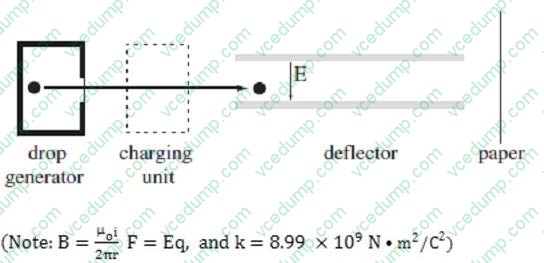
and is used to aim the ink droplet at the paper. .
In order to observe the velocity of the ink droplet, a magnetic field is generated to exactly counter the force applied to the ink droplet by the electric field. This magnetic field is oriented:
A. towards the left.
B. towards the right.
C. out of the page.
D. into the page. -
Question 338:
...[TV Guide's] immediate concern was the television quiz show scandal, which had reached its climax two weeks earlier when Charles Van Doren, the appealing young man who'd taught viewers the value of learning while winning big on MCA's Twenty-one, stood before a House committee and admitted he was a fraud. But the issue went well beyond rigged quiz shows. The charge was that through their stranglehold on talent, MCA and William Morris monopolized the medium to the detriment of their clients, the industry, and the public at large. This was why the Justice Department had launched a secret investigation of both agencies more than two years before. The Morris Agency had started the quiz show vogue in 1955, when it packaged The $64,000 Question for Revlon and sold it to CBS. While the show won praise for its "educational" nature, the real source of its appeal was in its crapshoot format -- the idea that once contestants' winnings hit the $32,000 mark, they had to decide whether to go double or nothing on the final, $64,000 question, or play it safe and go home. The response was tremendous. Within weeks, the show knocked I Love Lucy out of the number-one slot in the ratings. Casinos in Vegas emptied out when it went on the air. Bookies took odds on whether the first contestant to go for the big one -- a marine captain whose specialty was cooking -- would get the answer right. (He did.) Revlon sold so much Living Lipstick that its factory was unable to meet the demand. The $64,000 Question quickly inspired imitators, among them an MCA package called Twenty-one. Based on the card game, more or less, Twenty-one was a dismal failure at first. "Do whatever you have to do," the sponsor ordered angrily, so the producers put the fix in. In December 1956, when Charles Van Doren, a boyishly attractive English instructor at Columbia University, beat Herb Stempel, a short, squat, nerdy grad at City College, Van Doren became the first intellectual hero of the television age. Honors and acclaim poured in -- the covers of Time, letters by the hundreds, offers of movie roles and tenured professorships and a regular guest spot on The Today Show. But Herb Stempel didn't like being told to lose, especially to some Ivy League snot. He went to the press. The DA's office started to investigate. The walls began to close in. Meanwhile, the show's producers agreed to sell the rights to NBC for $2 million. One of them started to feel queasy about selling the show without letting the network know the score, so he went to Sonny Werblin, MCA's top man in New York, and asked his advice. Werblin, the man behind such hits as The Ed Sullivan Show and The Jackie Gleason Show, ran the television department as if it were a football team coached by Attila the Hun. "Dan," he asked the producer, "have I ever asked you whether the show was rigged?" No, he hadn't. "And has NBC ever asked you whether the show is rigged?" No, they hadn't either. "Well," Werblin concluded, "the reason that none of us has asked is because we don't want to know." And with good reason. Not only was Twenty-one an MCA package and Van Doren himself an MCA client; Werblin had a special relationship with NBC's president, Robert Kintner. Kintner had been president of ABC until...ABC's chairman forced him out in his determination to move the network out of third place. MCA used its influence to place him at NBC, where he proved an extremely pliant customer. In the spring of 1957, when the networks were putting together their schedules for the next season, Werblin went to a meeting of NBC programming executives led by Kintner and his boss, RCA chairman Robert Sarnoff. "Sonny, look at the schedule for next season," Kintner said when he walked in, "here are the empty slots, you fill them."
The information in the passage would support the following claims EXCEPT:
A. Werblin had an influential role at NBC.
B. Before 1955, quiz shows did not predominate in television ratings.
C. While a contestant on Twenty-one, Charles Van Doren was aware that he was cheating.
D. Concern over fraud in television game shows was the primary reason why the Justice Department investigated MCA -
Question 339:
Today's new urban Asia is just as sophisticated and in many ways more exciting than Western cities. Urban Asian consumers are knowledgeable, modern, and keen to embrace the global lifestyle. Young, urban Asians have grown up accustomed to many things that originated in the West. They have, for example, completely embraced pizza, some even claiming that it is a part of their heritage. The story is told about a young Singaporean boy who was taken by his father to Rome. "Hey, look, Dad," the little boy exclaimed, "they have pizza here too!" On sampling the product, the boy decided that it was not as good as the original back home. Nury Vitachi, who writes for the South China Post and the Far Eastern Economic Review, describes the Asian middle-class phenomenon: "Executives in Asia have become rich at warp speed by taking full control of their own lives. They invest a great deal of time in their work, they use strategy to scramble up the corporate ladder, and they demand payment in cash -- so they can make their money work as hard as they do." Signs of affluence are everywhere, but don't get carried away. Traveling around Asia, no matter how rich the Asians become, signs of their frugal nature are still apparent. And they are very cost-conscious. Shopkeepers in many Asian cities, most notably in Hong Kong, demand payments for discounted merchandise in cash instead of plastic, and many Asians are accustomed to that. Most people save the increases in their income, and many prefer to put it into fixed or other income-generating assets. Stock, land, and property are their favorites. Many affluent Asians still regard financial security as the most important form of security, and they are confident that Asia is the place to be to achieve that. While many have begun to savor the good life, they are not letting go of their top priority of education for their children. Education is looked upon as the most important contributing factor to success in life. And in many of Asia's competitive urban centers, there is a rush to acquire a second degree and other forms of professional qualification to ensure personal competitiveness in the workplace. There are extraordinary opportunities in Asia for education and training programs from language to software programming. Despite the rise in their assertiveness, Asians still look to the United States and not so much to Europe for ideas and trends. In general, except for those in Hong Kong and Japan, they are not particularly concerned with being fashionable. For today's Asia, Japan and Hong Kong are the sources of Asian fashion ideas, but as Asia becomes more affluent, there is a great opportunity to develop an indigenous fashion industry. For example, a huge market potential exists in introducing new materials and simplified but fashionable designs for countries in tropical Asia with a hot humid climate throughout the year. The population density and lack of space in urban areas has prohibited Asians from exercising frequently and few indulge in outdoor activities. This is changing. Most Asians consider themselves in good health. Compared with Americans, few are overweight -- largely as a result of their Asian diet. But now health clubs are becoming popular among younger Asians. Potential for indoor exercise equipment holds great promise. It is also important to dress for the gym, and younger Asians are serious about looking good, complete with makeup, sunglasses, designer exercise shoes and outfits, and a gym bag. In trying to hit Asia's moving targets, regardless of what you are selling, it is a good idea to stick with market density -- not country by country, but, mostly, city by city. Asian markets can be a marketer's dream in that their densities are among the highest in the world. Java, Indonesia's main island, has 115 million people. On Nanjing Road, Shanghai's busiest street, businesses are open twelve hours a day almost every day of the year. More than 1.5 million people visit the shops there and spend more than $50 million every day. Someone said that you can only become rich if you sell to the rich. I would add that you can become rich faster if you sell to the new rich. For investors in the West, watch for Western companies that are preparing a big push in Asia. The world has not yet seen anything like it before, and you can reap handsome dividends if you back those stocks that are going eastward.
Suppose that Asian urban centers have seen the construction of many new hiking and nature trails. How would this information affect the author's observation on Asians' interest in health?
A. It supports the author's claim that Asians are exercising more.
B. It refutes the claim that health clubs are becoming more popular.
C. It supports the claim that outdoor activities are becoming more popular if it can be shown that these trails are heavily used.
D. It refutes the claim that Asians consider themselves in good health if it can be shown that these trails are heavily used. -
Question 340:
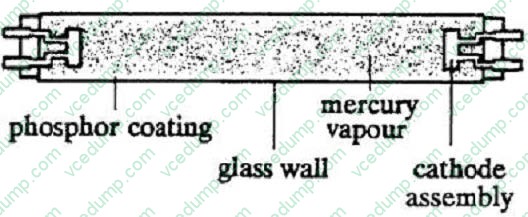
When light in the ultraviolet region of the spectrum is shone on a type of material known as a phosphor, it fluoresces and emits light in the visible region of the spectrum. Lamps that utilize this property, known as fluorescent lamps, are very efficient light sources. The arrangement of a typical fluorescent lamp is shown below. The lamp is a glass tube whose inside walls are covered with a phosphor. The tube has an appreciable length-to-diameter ratio so as to reduce the power losses at each end, and it is filled with argon gas mixed with mercury vapor. Inside each end of the tube are tungsten electrodes covered with an emission material.
Electrons are liberated at the cathode and accelerated by an applied electric field. These free electrons encounter the gas mixture, ionizing some mercury atoms and exciting others. Since it requires more energy to ionize the atoms than to excite the electrons, more excitation than ionization occurs. When the excited electrons revert to their ground state, they radiate ultraviolet photons with a wavelength of 253.7 nm. These photons impinge on the phosphor coating of the tube and excite electrons in the phosphor to higher energy states. The excited electrons in the phosphor return to their ground state in two or more steps, producing radiation in the visible region of the spectrum. Not every fluorescent lamp emits the same color of radiation; the color is dependent on the relative percentages of different heavy metal compounds in the phosphor.
The fluorescent lamp shown operates at 100 volts and draws 400 milliamps of current during normal operation. Of the total power that the lamp consumes, only 25% is converted to light, while the remaining 75% is dissipated as heat. This energy keeps the lamp at its optimum working temperature of 40°C. In the lamp shown, the phosphor coating is calcium metasilicate, which emits orange to yellow light.
In the phosphor coating, an electron falls from an excited state to a lower energy state, emitting a photon with an energy of 2.07 eV. What is the wavelength of the light emitted by the fluorescent tube? (Note: Planck's constant h = 4.14?0-15 eV穝, and c = 3?08m/s.)
A. 300 nm
B. 600 nm
C. 900 nm
D. 1242 nm

Related Exams:
Tips on How to Prepare for the Exams
Nowadays, the certification exams become more and more important and required by more and more enterprises when applying for a job. But how to prepare for the exam effectively? How to prepare for the exam in a short time with less efforts? How to get a ideal result and how to find the most reliable resources? Here on Vcedump.com, you will find all the answers. Vcedump.com provide not only Medical Tests exam questions, answers and explanations but also complete assistance on your exam preparation and certification application. If you are confused on your MCAT-TEST exam preparations and Medical Tests certification application, do not hesitate to visit our Vcedump.com to find your solutions here.