MCAT-TEST Exam Details
-
Exam Code
:MCAT-TEST -
Exam Name
:Medical College Admission Test: Verbal Reasoning, Biological Sciences, Physical Sciences, Writing Sample -
Certification
:Medical Tests Certifications -
Vendor
:Medical Tests -
Total Questions
:812 Q&As -
Last Updated
:Jul 16, 2026
Medical Tests MCAT-TEST Online Questions & Answers
-
Question 291:
Destroying the cerebellum of a cat would cause significant impairment of normal:
A. urine formation.
B. sense of smell.
C. coordinated movement.
D. thermoregulation. -
Question 292:
Several techniques have been developed to determine the order of a reaction. The rate of a reaction cannot be predicted on the basis of the overall equation, but can be predicted on the basis of the rate-determining step. For instance, the following reaction can be broken down into three steps.
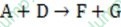
Step 1

(Slow)
Step 2
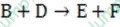
(fast)
Step 3

(fast)
Reaction 1 In this case, the first step in the reaction pathway is the rate-determining step. Therefore, the overall rate of the reaction must equal the rate of the first step, k1 [A] where k1 is the rate constant for the first step. (Rate constants of the different steps are denoted by kx , where x is the step number.)
In some cases, it is desirable to measure the rate of a reaction in relation to only one species. In a second-order reaction, for instance, a large excess of one species is included in the reaction vessel. Since a relatively small amount of this large concentration is reacted, we assume that the concentration essentially remains unchanged. Such a reaction is called a pseudo first-order reaction. A new rate constant, k', is established, equal to the product of the rate constant of the original reaction, k, and the concentration of the species in excess. This approach is often used to analyze enzyme activity.
In some cases, the reaction rate may be dependent on the concentration of a short-lived intermediate. This can happen if the rate-determining step is not the first step. In this case, the concentration of the intermediate must be derived from the equilibrium constant of the preceding step. For redox reactions, the equilibrium can be correlated with the voltage produced by two half-cells by means of the Nernst equation. This equation states that at any given moment:
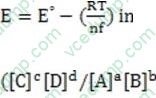
Equation 1 When

Reaction 2
Note: R = 8.314 J/K?mol; F = 9.6485 x 10⁴ C/mol.)
An enzyme, R, catalyzes the oxidation of A to B. Reacting various concentrations of A and B with a large excess of R produced the following results during the first few minutes of the reaction.
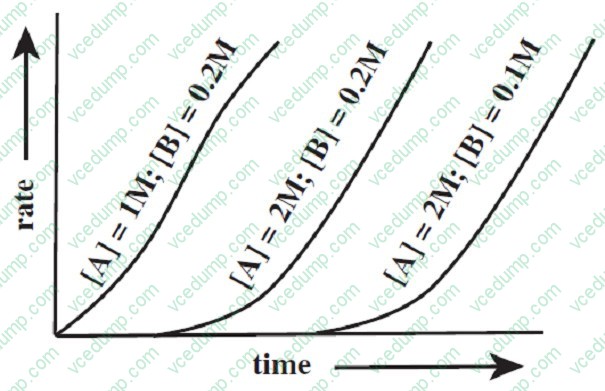
Which of the following is the best tentative rate equation?
A. Option A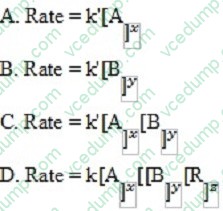
B. Option B
C. Option C
D. Option D -
Question 293:
Aski jump is an inclined track from which a ski jumper takes off through the air. After traveling down the track, the skier takes off from a ramp at the bottom of the track. The skier lands farther down on the slope.
Figure 1 shows a ski jump, in which the ramp at the lower end of the track makes an angle of 30° to the horizontal. The track is inclined at an angle of to the horizontal and the slope is inclined at an angle of 45° to the horizontal. A ski jumper is stationary at the top of the track. Once the skier pushes off, she accelerates down the track, and then takes off from the ramp. The vertical height difference between the top of the track and its lowest point is 50 m, and the vertical height difference between the top of the ramp and its lowest point is 10 m.
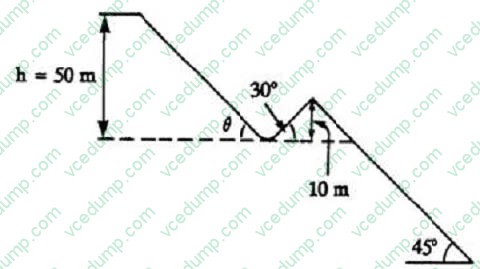
Figure 1
The distance traveled by the skier between leaving the ski jump ramp and making contact with the slope is called the jump distance. In some cases, in order to increase the jump distance a skier will jump slightly upon leaving the ramp, thereby increasing the vertical velocity. Unless otherwise stated, assume that friction between the skis and the slope is negligible, and ignore the effects of air resistance.
If a skier uses skis of greater surface area, which of the following would occur?
A. The normal force of the slope on the skier would increase.
B. The normal force of the slope on the skier would decrease.
C. The pressure exerted on the slope by the skis would increase.
D. The pressure exerted on the slope by the skis would decrease. -
Question 294:
Hemoglobin (Hb) and myoglobin (Mb) are the O2-carrying proteins in vertebrates. Hb, which is contained within red blood cells, serves as the O2 carrier in blood and also plays a vital role in the transport of CO2 and H+. Vertebrate Hb consists of four polypeptides (subunits) each with a heme group. The four chains are held together by noncovalent attractions. The affinity of Hb for O2 varies between species and within species depending on such factors as blood pH, stage of development, and body size. For example, small mammals give up O2 more readily than large mammals because small mammals have a higher metabolic rate and require more O2 per gram of tissue.
The binding of O2 to Hb is also dependent on the cooperativity of the Hb subunits. That is, binding at one heme facilitates the binding of O2 at the other hemes within the Hb molecule by altering the conformation of the entire molecule. This conformational change makes subsequent binding of O2 more energetically favorable. Conversely, the unloading of O2 at one heme facilitates the unloading of O2 at the others by a similar mechanism.
Figure 1 depicts the O2-dissociation curves of Hb (Curves A, B, and C) and myoglobin (Curve D), where saturation, Y, is the fractional occupancy of the O2-binding sites. The fraction of O2 that is transferred from Hb as the blood passes through the tissue capillaries is called the utilization coefficient. A normal value is approximately 0.25.
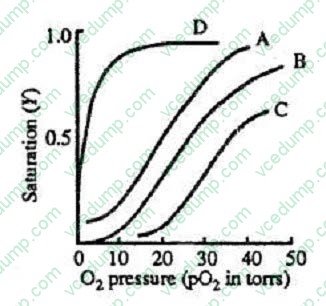
Figure 1
Myoglobin facilitates transport in muscle and serves as a reserve store of O2. Mb is a single polypeptide chain containing a heme group, with a molecular weight of 18 kd. As can be seen in Figure 1, Mb (Curve D) has a greater affinity for than Hb.
If Curve B represents the O2-dissociation curve for elephant Hb, which curve most closely resembles the curve for mouse Hb?
A. Curve A
B. Curve B
C. Curve C
D. Curve D -
Question 295:
Our sense of smell is arguably the most powerful of our five senses, but it also the most elusive. It plays a vital yet mysterious role in our lives. Olfaction is rooted in the same part of the brain that regulates such essential functions as body metabolism, reaction to stress, and appetite. But smell relates to more than physiological function: its sensations are intimately tied to memory, emotion, and sexual desire. Smell seems to lie somewhere beyond the realm of conscious thought, where, intertwined with emotion and experience, it shapes both our conscious and unconscious lives.
The peculiar intimacy of this sense may be related to certain anatomical features. Smell reaches the brain more directly than do sensations of touch, sight, or sound. When we inhale a particular odor, air containing volatile odiferous molecules is warmed and humidified as it flows over specialized bones in the nose called turbinates. As odor molecules land on the olfactory nerves, these nerves fire a message to the brain. Thus olfactory neurons render a direct path between the stimulus provided by the outside environment and the brain, allowing us to rapidly perceive odors ranging from alluring fragrances to noisome fumes.
Certain scents, such as jasmine, are almost universally appealing, while others, like hydrogen sulfide (which emits a stench reminiscent of rotten eggs), are usually considered repellent, but most odors evoke different reactions from person to person, sometimes triggering strong emotional states or resurrecting seemingly forgotten memories. Scientists surmise that the reason why we have highly personal associations with smells is related to the proximity of the olfactory and emotional centers of our brain. Although the precise connection between emotion and olfaction remains a mystery, it is clear that emotion, memory, and smell are all rooted in a part of the brain called the limbic lobe.
Even though we are not always conscious of the presence of odors, and are often unable to either articulate or remember their unique characteristics, our brains always register their existence. In fact, such a large amount of human brain tissue is devoted to smell that scientists surmise the role of this sense must be profound. Moreover, neurobiological research suggests that smell must have an important function because olfactory neurons can regenerate themselves, unlike most other nerve cells. The importance of this sense is further supported by the fact that animals experimentally denied the olfactory sense do not develop full and normal brain function.
The significance of olfaction is much clearer in animals than in human beings. Animal behavior is strongly influenced by pheromones, which are odors that induce psychological or behavioral changes and often provide a means of communicating within a species. These chemical messages, often a complex blend of compounds, are of vital importance to the insect world. Honeybees, for example, organize their societies through odor: the queen bee exudes an odor that both inhibits worker bees from laying eggs and draws drones to her when she is ready to mate. Mammals are also guided by their sense of smell. Through odors emitted by urine and scent glands, many animals maintain their territories, identify one another, signal alarm, and attract mates.
Although our olfactory acuity can't rival that of other animal species, human beings are also guided by smell. Before the advent of sophisticated laboratory techniques, physicians depended on their noses to help diagnose illness. A century ago, it was common medical knowledge that certain bacterial infections carry the musty odor of wine, that typhoid smells like baking bread, and that yellow fever smells like meat. While medical science has moved away from such subjective diagnostic methods, in everyday life we continue to rely on our sense of small, knowingly or not, to guide us.
The author's central concern in this passage is to:
A. discuss both the physiological and emotional aspects of olfaction.
B. explain why the sense of smell is more important than other senses.
C. detail the biological mechanisms by which smells trigger long-forgotten memories.
D. defend the view that human emotion is rooted in anatomical processes. -
Question 296:
Before birth, the rodent brain is sexually undifferentiated. It is only in the first few days following birth, during a period referred to as the critical period, that the rodent brain differentiates along male or female lines. The hormone testosterone plays a critical role in this development. Specifically, sexual differentiation is determined by the presence of estradiol, an estrogen derivative of testosterone, in certain areas of the brain. Testosterone is converted to estradiol in critical brain cells that contain the enzyme aromatase. To study the effects of testosterone on the neonatal rodent brain, the following experiments were conducted:
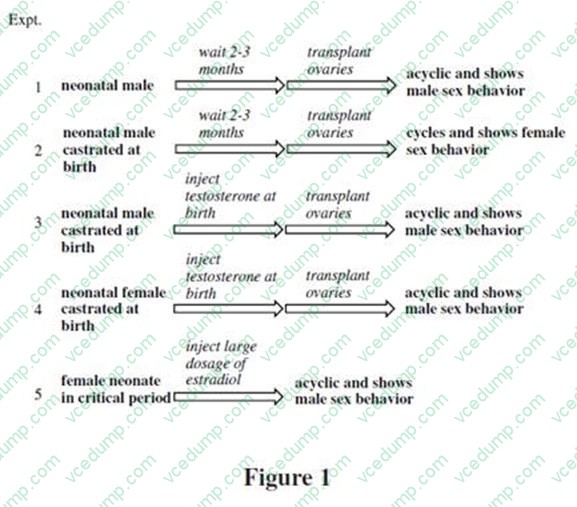
The above research, combined with additional studies, concluded that testosterone has two "organizational" effects on the male rodent brain: Defeminization Moderate levels of testosterone-derived estradiol during the critical period are sufficient for defeminization of the brain. Defeminization of the rodent brain results in loss of estrogen positive feedback on LH and FSH secretion and the ensuing loss of cyclicity, as well as loss of female sex behavior. Masculinization High levels of estradiol due to high levels of testosterone during the critical period results in masculinization of the brain. Masculinization leads to the induction of male sex behavior including antagonism towards other males and the mounting of females.
A researcher proposes that very low doses of estradiol are required for induction of female sex behavior and cyclicity in the rodent brain. Which of the following observations would best support this hypothesis?
A. Female neonates injected with the anti-estrogen tamoxifen are acyclic and show neither male nor female sex behavior.
B. Female neonates lacking the aromatase enzyme develop normally.
C. Female neonates injected with large doses of estradiol are acyclic and show male sex behavior.
D. Male neonates injected with low dosages of estradiol develop normally. -
Question 297:
A hovercraft is a versatile vehicle capable of traveling over land, water, or any other essentially flat surface. The hovercraft consists of a body or hull onto which a rotor (lift fan) is mounted. The lift fan provides the vertical lift by propelling air into an area beneath the hovercraft called the skirt. The pocket of air in the skirt supports the moving hovercraft and reduces the friction between the vehicle and the ground to almost zero. As such, there is no contact between the hovercraft and the ground.
A second fan, which generates a horizontal thrust, propels the hovercraft forward. Rudders which direct the airflow from this second fan are used by the pilot to control the movement of the hovercraft. The horizontal movement of the

hovercraft is opposed by air resistance which generates aerodynamic drag.
A 600 kg hovercraft hovers 0.6 meters above the ground. The rectangular hovercraft is 4 meters long and 2 meters wide with a skirt which hangs from the edge to a distance of 4 cm above the ground. What is the average pressure of air in the skirt?
A. 735 Pa
B. 980 Pa
C. 47.040 kPa
D. 101.735 kPa -
Question 298:
In the early nineteenth century a large number of communal experiments, both secular and religious, sprang up in the northeastern United States. Perhaps the most famous secular commune was Brook Farm, founded by transcendentalists George Ripley and William H. Channing to promote the pursuit of leisure and culture through the proper application of time and labor. Its members (among the more notable were Nathaniel Hawthorne and Margaret Fuller) pursued field labor by day, art and philosophy by night. For a time the system worked so well that two afternoons a week were set aside for leisure and Brook Farm began outcompeting local farmers at the produce market. But by nature the Farm's members were thinkers, not workers; despite their success they remained mainly interested in the theoretical and philosophical implications of the experiment. Thus, when a devastating fire brought the community considerable financial burdens in its fifth year, the members felt little compunction about closing shop and returning to their comfortable Boston homes.
One of the most notable religious utopias was the Oneida community. Its founder, John Humphrey Noyes, believed that Christ's second coming had already occurred and that everyone alive was favored by Divine grace, which Noyes saw as an imperative to live a better life. Perhaps surprisingly, the Oneidans embraced industry and commerce, achieving success in fruit packing, trap making, and silk thread winding. They owned everything communally, and this principle extended to each other. The Oneidans saw monogamy as a selfish act and asserted that the men and women of the community were united in one "complex" marriage; sex between any two consenting members was perfectly acceptable. The Oneidans maintained order solely through "criticism"--anyone acting out of line was made to stand before the other members and hear his or her faults recounted. Oneida remained viable for some thirty years, until the leadership devolved on Noyes' son, an agnostic. The old religious fervor died out, and the dream degenerated into a joint stock company. Doubtless the most successful communalists were the Shakers, so called for the early propensity to tremble ecstatically during religious worship. Their guiding light, Mother Ann, espoused four key principles: Virgin Purity, Christian Communism, Confession, and Separation from the World. Though the Shakers were less adamant on the last point--maintaining social relations and some commerce with heir neighbors--they insisted on the other three, and renounced both personal property and sex. Men and women lived in a single large "Unitary Dwelling" and were considered complete equals, but they occupied separate wings and could speak together only if a third person were present. Despite their religious strictness, Shakers were known as simple, sincere, intelligent people, healthy and long-lived, producers of lovely books and hymns, and of furniture still prized for its quality and durability. In their eyday, six thousand Shakers lived in fifty-eight separate "families" throughout the Northeast. Later their celibacy, combined with their strict discipline, led to a decline in numbers, but even today a small number of elderly Shakers in two communities in Maine and New Hampshire continue to keep the faith.
The passage implies that the end of the Brook Farm experiment was probably brought on by:
A. faltering commitment in the face of hardship.
B. a failure to attract members of sufficient intellect or ability.
C. the completion of the community's aims.
D. the incompetence of philosophers at field labor. -
Question 299:
When electric current passes through an aqueous solution, which of the following ionic migrations is correct?
A. H+ ions move towards anode
B. Cl- ions move towards anode
C. Cl- ions move towards cathode
D. Both move towards cathode -
Question 300:
Hemoglobin (Hb) and myoglobin (Mb) are the O2-carrying proteins in vertebrates. Hb, which is contained within red blood cells, serves as the O2 carrier in blood and also plays a vital role in the transport of CO2 and H+. Vertebrate Hb consists of four polypeptides (subunits) each with a heme group. The four chains are held together by noncovalent attractions. The affinity of Hb for O2 varies between species and within species depending on such factors as blood pH, stage of development, and body size. For example, small mammals give up O2 more readily than large mammals because small mammals have a higher metabolic rate and require more O2 per gram of tissue.
The binding of O2 to Hb is also dependent on the cooperativity of the Hb subunits. That is, binding at one heme facilitates the binding of O2 at the other hemes within the Hb molecule by altering the conformation of the entire molecule. This conformational change makes subsequent binding of O2 more energetically favorable. Conversely, the unloading of O2 at one heme facilitates the unloading of O2 at the others by a similar mechanism.
Figure 1 depicts the O2-dissociation curves of Hb (Curves A, B, and C) and myoglobin (Curve D), where saturation, Y, is the fractional occupancy of the O2-binding sites. The fraction of O2 that is transferred from Hb as the blood passes through the tissue capillaries is called the utilization coefficient. A normal value is approximately 0.25.
Figure 1
Myoglobin facilitates transport in muscle and serves as a reserve store of O2. Mb is a single polypeptide chain containing a heme group, with a molecular weight of 18 kd. As can be seen in Figure 1, Mb (Curve D) has a greater affinity for than Hb.
A sample of human adult Hb is placed in an 8 M urea solution, resulting in the disruption of noncovalent interactions. After this procedure, the chains of Hb are isolated. Which of the four curves most closely resembles the O2-dissociation curve for the isolated chains? [Note: Assume that Curve B represents the O2-dissociation curve for human adult Hb in vivo.]
A. Curve A
B. Curve B
C. Curve C
D. Curve D



Related Exams:
Tips on How to Prepare for the Exams
Nowadays, the certification exams become more and more important and required by more and more enterprises when applying for a job. But how to prepare for the exam effectively? How to prepare for the exam in a short time with less efforts? How to get a ideal result and how to find the most reliable resources? Here on Vcedump.com, you will find all the answers. Vcedump.com provide not only Medical Tests exam questions, answers and explanations but also complete assistance on your exam preparation and certification application. If you are confused on your MCAT-TEST exam preparations and Medical Tests certification application, do not hesitate to visit our Vcedump.com to find your solutions here.