MCAT-TEST Exam Details
-
Exam Code
:MCAT-TEST -
Exam Name
:Medical College Admission Test: Verbal Reasoning, Biological Sciences, Physical Sciences, Writing Sample -
Certification
:Medical Tests Certifications -
Vendor
:Medical Tests -
Total Questions
:812 Q&As -
Last Updated
:Jul 16, 2026
Medical Tests MCAT-TEST Online Questions & Answers
-
Question 261:
For the last two decades many earth scientists have supported the notion that the Mediterranean was once a huge, dry desert, lying 3,000 meters below sea level. This "death valley" was thought to have existed at the end of Miocene time, about 6 to 5.5 million years ago.... ...From a geological point of view, the Mediterranean is a tectonically mobile land-enclosed depression -- small (about 3,000,000 square kilometers) in comparison to the major world oceans...Immediately obvious on all charts is the highly variable topography and relief of both the seafloor and adjacent borderland. The coastline is highly irregular and continental shelves, though generally narrow, are well developed off the major river deltas (Nile, Rhone, Po, and Ebro). Moreover, the deep-sea basins and trenches have distinctive relief, with basin plains ranging in depth from less than 1,000 meters to more than 4,000...Observation that rocks dredged offshore are similar to those on land raised a fundamental concept -- the key to understanding Mediterranean history lies in the adjacent emerged land masses, and vice- versa.... ...Early paleographic reconstructions showed that the once-open communication with the Atlantic deteriorated during the upper Miocene. Water-mass exchange continued for a while in the Rif Strait, but then ceased completely prior to the beginning of the Pliocene.... ...High relief near what is now the Strait of Gibraltar served as a barrier to the exchange of waters with the Atlantic. Exposed to a hot and dry climate, water evaporated and the then-dry basin elicited comparison with a gigantic Death Valley... Microfossil studies suggested that the depth of the Mediterranean basin at these times had been "deep." Estimates suggested a dry seafloor as far as 2,000 meters below ocean level... As a response to suddenly lowered sea level, rivers feeding the Mediterranean and canyons on the now-dry seafloor began a geologically dramatic phase of erosion. Deep, Grand Canyon-like gorges of the Nile and Rhone rivers, presently buried on land, were apparently cut during a great drawdown of water -- when the Mediterranean floor lay exposed 1,000 meters or more below its present level...The sudden flooding through a gigantic waterfall at Gibraltar drowned the exposed basin floor. These falls would have been 1,000 times bigger than Niagara Falls...This flooding event is recorded by the Miocene Pliocene boundary, a time when open marine faunal assemblages were suddenly reintroduced from the Atlantic.... ...Geological theories usually fall at a glacial pace into a sea of controversy, and this one is no exception. Today -- charging that proof for the theory is lacking -- many scientists believe that the Med always contained saltwater, with only the depth of the seafloor and the water being in question... Some of the tenets on which the theory was formulated are, if not defective, very seriously in question. To interpret their findings, a respectable number of geologists studying the surrounding emerged borderland as well as subsea sections indicate that alternative, more comprehensive concepts must be envisioned.... ...It is not realistic to envision the Mediterranean seafloor of about 5 million years ago as a desert at 3,000 meters below present ocean level. Several years ago...the Mediterranean [was compared] to a complex picture- puzzle that comprises numerous intricate pieces, many of which are already in place. A general image is emerging, although gaps in some areas of the picture remain fuzzy and indistinct.
According to the passage, during the Miocene period:
A. tectonic plates collided creating the massive waterfall at the Strait of Gibraltar.
B. the composition and size of the Mediterranean differed greatly than the present.
C. rivers dried up as they filled the Mediterranean.
D. an abundance of flora and fauna existed that are now extinct. -
Question 262:
For the last two decades many earth scientists have supported the notion that the Mediterranean was once a huge, dry desert, lying 3,000 meters below sea level. This "death valley" was thought to have existed at the end of Miocene time, about 6 to 5.5 million years ago.... ...From a geological point of view, the Mediterranean is a tectonically mobile land-enclosed depression -- small (about 3,000,000 square kilometers) in comparison to the major world oceans...Immediately obvious on all charts is the highly variable topography and relief of both the seafloor and adjacent borderland. The coastline is highly irregular and continental shelves, though generally narrow, are well developed off the major river deltas (Nile, Rhone, Po, and Ebro). Moreover, the deep-sea basins and trenches have distinctive relief, with basin plains ranging in depth from less than 1,000 meters to more than 4,000...Observation that rocks dredged offshore are similar to those on land raised a fundamental concept -- the key to understanding Mediterranean history lies in the adjacent emerged land masses, and vice- versa.... ...Early paleographic reconstructions showed that the once-open communication with the Atlantic deteriorated during the upper Miocene. Water-mass exchange continued for a while in the Rif Strait, but then ceased completely prior to the beginning of the Pliocene.... ...High relief near what is now the Strait of Gibraltar served as a barrier to the exchange of waters with the Atlantic. Exposed to a hot and dry climate, water evaporated and the then-dry basin elicited comparison with a gigantic Death Valley... Microfossil studies suggested that the depth of the Mediterranean basin at these times had been "deep." Estimates suggested a dry seafloor as far as 2,000 meters below ocean level... As a response to suddenly lowered sea level, rivers feeding the Mediterranean and canyons on the now-dry seafloor began a geologically dramatic phase of erosion. Deep, Grand Canyon-like gorges of the Nile and Rhone rivers, presently buried on land, were apparently cut during a great drawdown of water -- when the Mediterranean floor lay exposed 1,000 meters or more below its present level...The sudden flooding through a gigantic waterfall at Gibraltar drowned the exposed basin floor. These falls would have been 1,000 times bigger than Niagara Falls...This flooding event is recorded by the Miocene Pliocene boundary, a time when open marine faunal assemblages were suddenly reintroduced from the Atlantic.... ...Geological theories usually fall at a glacial pace into a sea of controversy, and this one is no exception. Today -- charging that proof for the theory is lacking -- many scientists believe that the Med always contained saltwater, with only the depth of the seafloor and the water being in question... Some of the tenets on which the theory was formulated are, if not defective, very seriously in question. To interpret their findings, a respectable number of geologists studying the surrounding emerged borderland as well as subsea sections indicate that alternative, more comprehensive concepts must be envisioned.... ...It is not realistic to envision the Mediterranean seafloor of about 5 million years ago as a desert at 3,000 meters below present ocean level. Several years ago...the Mediterranean [was compared] to a complex picture- puzzle that comprises numerous intricate pieces, many of which are already in place. A general image is emerging, although gaps in some areas of the picture remain fuzzy and indistinct.
In the context of the passage, the term "emerged land masses" (lines 19-20) refers to: A. regions of land that surround the Mediterranean.
B. barriers that develop into waterfalls.
C. saline-concentrated soil that extracts water from surrounding tributaries.
D. continents that have come to touch one another. -
Question 263:
DNA and RNA are composed of long chains of monomers known as nucleotides. On the guanine molecule shown below, which arrow best indicates the 5' end of the subunit?
A. I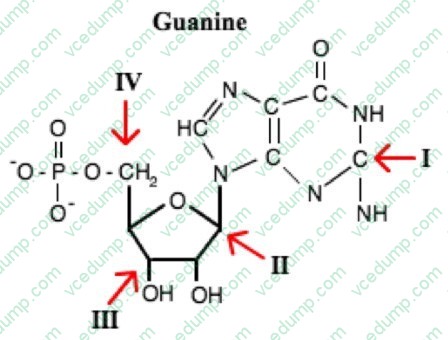
B. II
C. III
D. IV -
Question 264:
It is critical for the human body blood to maintain its pH at approximately 7.4. Decreased or increased blood pH are called acidosis and alkalosis respectively; both are serious metabolic problems that can cause death. The table below lists the major buffers found in the blood and/or kidneys. Table 1 Buffer pKa of a typical conjugate acid:*
+ Histidine side chains

Organic phosphates N-terminal amino groups

6.1
6.3
6.8
7.0
8.0
9.2

*For buffers in many of these categories, there is a range of actual values.
The relationship between blood pH and the of any buffer can be described by the Henderson-Hasselbalch equation:
pH = + log([conjugate base]/[conjugate acid]) Equation 1

Bicarbonate, the most important buffer in the plasma, enters the blood in the form of carbon dioxide, a byproduct of metabolism, and leaves in two forms: exhaled and excreted bicarbonate. Blood pH can be adjusted rapidly by changes
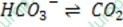
in the rate of exhalation. The reaction given below, which is catalyzed by carbonic anhydrase in the erythrocytes, describes how bicarbonate and interact in the blood.
+ + Reaction 1
The equilibrium as shown in Reaction 1 is most likely to proceed through which of the following intermediates?
A. Option A
B. Option B
C. Option C
D. Option D -
Question 265:
Which of the following is equivalent to one Pascal of gas pressure?
A. 1 Kg.m2/s2
B. 1 Kg.m3/s2
C. 1 Kg/m.s2
D. 1 Kg.m/s -
Question 266:
Morphine alkaloids derived from the opium poppy have long been used as analgesics. Codeine, the methyl ether of morphine, is a naturally occurring alkaloid with medicinal properties very similar to those of morphine. Thousands of derivatives of morphine have been synthesized and tested for their biological effects. For example, the diacylated derivative of morphine, heroin, is a highly addictive drug. Much effort has gone into understanding how morphine and its derivatives function.
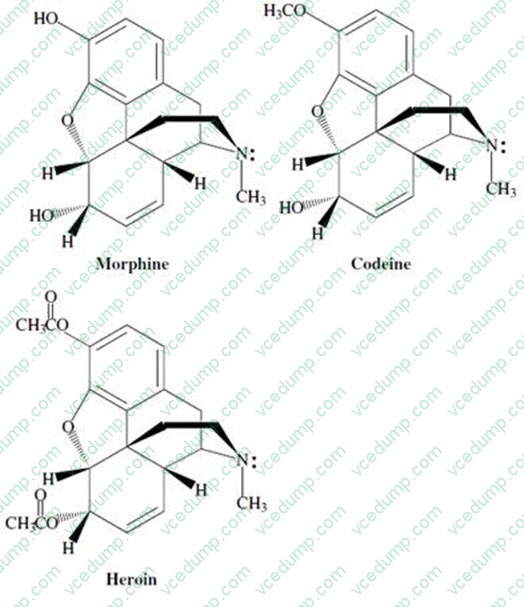
Studies have shown that certain common structural features of alkaloids are required for the compound to exhibit biological activity. These structural requirements are summarized by the so called "morphine rule":
Demerol and methadone, shown in Figure 2, are two synthetic alkaloids designed to satisfy the "morphine rule." Synthetic alkaloids such as these have been found to mimic certain physiological properties of morphine and its derivatives, and
have found pharmacological application due to other, more desirable biological effects. Methadone has been used widely in the United States and Great Britain as a treatment for heroin addiction; it reduces the physical symptoms
accompanying withdrawal without producing many of the other effects of heroin.
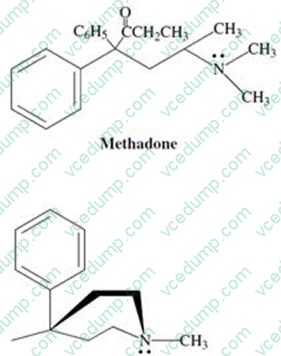
Meperidine (demerol) Figure 2
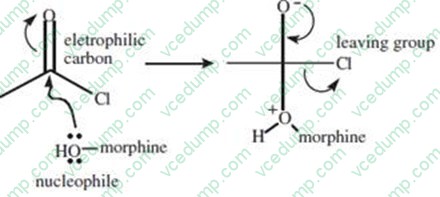
Morphine can be reacted with 2 equivalents of ethanoyl chloride (acetyl chloride) to form heroin. In this reaction, the hydroxy groups of morphine function as:
A. nucleophiles.
B. electrophiles.
C. leaving groups.
D. Lewis acids. -
Question 267:
Aski jump is an inclined track from which a ski jumper takes off through the air. After traveling down the track, the skier takes off from a ramp at the bottom of the track. The skier lands farther down on the slope.
Figure 1 shows a ski jump, in which the ramp at the lower end of the track makes an angle of 30° to the horizontal. The track is inclined at an angle of to the horizontal and the slope is inclined at an angle of 45° to the horizontal. A ski jumper is stationary at the top of the track. Once the skier pushes off, she accelerates down the track, and then takes off from the ramp. The vertical height difference between the top of the track and its lowest point is 50 m, and the vertical height difference between the top of the ramp and its lowest point is 10 m.
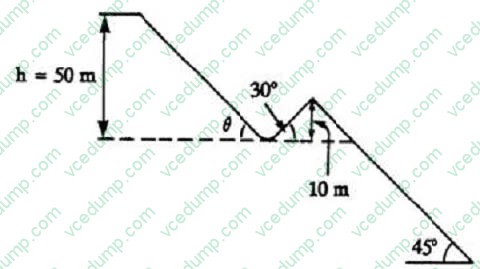
Figure 1
The distance traveled by the skier between leaving the ski jump ramp and making contact with the slope is called the jump distance. In some cases, in order to increase the jump distance a skier will jump slightly upon leaving the ramp,
thereby increasing the vertical velocity. Unless otherwise stated, assume that friction between the skis and the slope is negligible, and ignore the effects of air resistance.
How would the work done by gravity on the skier when she skis down the track compare with the work done by gravity on the skier if she fell the same vertical height?
A. Less work would be done on the skier when she skis down the track.
B. More work would be done on the skier when she skis down the track.
C. Equal amounts of work would be done.
D. The answer depends on the angle of the track. -
Question 268:
Bebop lives! cries the newest generation of jazz players. During the 1980s, musicians like Wynton Marsalis revived public interest in bebop, the speedy, angular music that first bubbled up out of Harlem in the early 1940s, changing the face of jazz. That Marsalis and others thought of themselves as celebrating and preserving a noble tradition is, in one sense, inevitable. After the excesses of experimental or "free" jazz in the 1960s and the electronic jazz-rock "fusion" of the 70s, it is hardly surprising that people should hearken back to a time when jazz was "purer," perhaps even at the apex of its development. But the recent enthusiasm for bebop is also ironic in light of the music's initial public reception.
In its infancy, during the first two decades of the 20th century, jazz was played by small groups of musicians improvising variations on blues tunes and popular songs. Most of the musicians were unable to read music, and their improvisations were fairly rudimentary. Nevertheless, jazz attained international recognition in the 1920s. Two of the people most responsible for its rise in popularity were Louis Armstrong, the first great jazz soloist, and Fletcher Henderson, leader of the first great jazz band. Armstrong, with his buoyant personality and virtuosic technical skills, greatly expanded the creative range and importance of the soloist in jazz. Henderson, a pianist with extensive training in music theory, foresaw the orchestral possibilities of jazz played by a larger band. He wrote out arrangements of songs for his band members that preserved the spirit of jazz, while at the same time giving soloists a more structured musical background upon which to shape their solo improvisations. In the 1930s, jazz moved further into the mainstream with the advent of the Swing Era. Big bands in the Henderson mold, led by musicians like Benny Goodman, Count Basie and Duke Ellington, achieved unprecedented popularity with jazz-oriented "swing" music that was eminently danceable.
Against this musical backdrop, bebop arrived on the scene. Like other modernist movements in art and literature, bebop music represented a departure from tradition in both form and content, and was met with initial hostility. Bebop tempos were unusually fast, with the soloist often playing at double time to the backing musicians. The rhythms were tricky and complex, the melodies intricate and frequently dissonant, involving chord changes and notes not previously heard in jazz. Before bebop, jazz players had improvised on popular songs such as those produced by Tin-Pan Alley, but bebop tunes were often originals with which jazz audiences were unfamiliar.
Played mainly by small combos rather than big bands, bebop was not danceable; it demanded intellectual concentration. Soon, jazz began to lose its hold on the popular audience, which found the new music disconcerting. Compounding public alienation was the fact that bebop seemed to have arrived on the scene in a completely mature state of development, without that early phase of experimentation that typifies so many movements in the course of Western music. This was as much the result of an accident of history as anything else. The early development of bebop occurred during a three-year ban on recording in this country made necessary by the petrol and vinyl shortages of World War II. By the time the ban was lifted, and the first bebop records were made, the new music seemed to have sprung fully-formed like Athena from the forehead of Zeus. And though a small core of enthusiasts would continue to worship bebop pioneers like Charlie Parker and Dizzy Gillespie, many bebop musicians were never able to gain acceptance with any audience and went on to lead lives of obscurity and deprivation.
The author mentions Wynton Marsalis and Charlie Parker as:
A. pioneers of jazz-rock "fusion."
B. architects of the bebop movement.
C. Swing Era musicians hostile to bebop.
D. bebop musicians of different eras. -
Question 269:
By now the image of California in decline looms as large in the conventional media wisdom as the Golden State -- triumphant clich閟 of a generation ago -- "this El Dorado," as Time magazine had put it in 1969, that was to be "the mirror of America as it will become." Hardly anyone mentions the sunshine these days, or the beaches, or the beautiful young families around the pool, or the new lifestyles that all Americans will soon emulate, or how the University of California is wall-to-wall with cyclotrons and Nobel laureates, or how the state's higher-education system is accommodating absolutely all comers at little or no cost.
Today, California classrooms are among the most crowded in the country; many schools operate without libraries, without counselors, without nurses, without art or music, with greatly diminished curricular offerings. And what's true for the schools is true for the other services that have no powerful constituencies: children's protective services, probation, public health. Many cities have shut down swimming and wading pools because they cannot be safely maintained, and fenced playgrounds have been shut because of the danger presented by cracked and splintered structures. The list could be extended indefinitely. As thousands of professors receive golden handshakes from the University of California and California State University, among them some of the stars recruited in the go- go Fifties, the crowding in the lecture halls has increased and the lines at the classroom door have gotten longer and longer ("Don't panic," says the T-shirt on a student waiting to enroll at a Sacramento junior college, but many have been in line since four in the morning). U.C. tuition, which was roughly $800 a year in the early 1980s, is now over $4,000, a figure not out of line with tuitions at public colleges in other states but a far cry from the cost of a California state education in the golden days -- and it is almost certain to increase again next year. More than 200,000 students -- roughly 10 percent -- have vanished from the rolls of the state's colleges and universities in the past two years. While per capita tax revenues have been effectively frozen, and while they have declined relative to other states, client rolls for state services -- schools, prisons, Medicaid, welfare -- have been rising faster than population, leaving a structural gap that no one has yet confronted, much less closed. Again this year, the governor and legislature borrowed $7 billion from the banks and rolled over a $5 billion budget deficit, for which few politicians have proposed any remedies. Thanks to the deficit, California, which a decade ago, had one of the highest bond ratings in the country, has one of the lowest. "Were California a corporation," said John Vasconcellos, the chairman of the State Assembly Ways and Means Committee, "it would have little option but to initiate some sort of bankruptcy proceeding." The new image of California is familiar enough: a state suffering from earthquakes, fires, drought, floods, urban riots, dirty air, schools as overcrowded as the freeways; a legislature -- once said to be the nation's most professional and progressive -- oozing with corruption and stuck in the budgetary gridlock; and of course, recession, unemployment, chronic budget deficits, and financial calamity. For those who know their Nathaniel West, their Raymond Chandler, and their Joan Didion, the California apocalypse imagery is hardly new; it was always there on the dark side of the dream. This was the place, as Didion wrote back in the 1960s, "in which a boom mentality and a sense of Chekhovian loss meet in uneasy suspension; in which the mind is troubled by some buried but ineradicable suspicion that things better work here, because here, beneath that immense bleached sky, is where we run out of continent." os Angeles has burnt before. If you believe people like Governor Wilson, most of the state's problems were created somewhere else, usually in Washington, where the Clinton Administration has, on the one hand, cost California hundreds of thousands of jobs through excessive defense cuts and, on the other, allowed a horde of illegal immigrants to overrun the state's schools and health facilities without paying them for the immense costs that come with them...much has been changed in California since the days of West and Chandler, but the capacity for denial and self-deception is undiminished. In fact, California's trouble is at once more prosaic and more complex than the political rhetoric claims or the apocalyptic imagery suggests. It began before the recent recession, the big 1991 fire in the Oakland hills or the San Francisco earthquake of 1989 (itself a rerun of a classic), before those L.A. cops beat up Rodney King or the riot and the fire that followed their acquittal in the first trial, before the eight-year drought that still may not be over. And contrary to what a lot of Californians believe, a lot of the damage didn't just happen to us: we inflicted it on ourselves.
The strongest contrasts between California's educational system in the past and that of today can clearly be seen in:
A. the quality of staff and equipment and the ratio of students to teachers.
B. the availability of higher education to more people and the atypically high tuition compared to the rest of the nation.
C. the lack of distinguished professors and increased tuition costs.
D. the decrease in student enrollment at state universities and the ratio of students to teachers. -
Question 270:
Aski jump is an inclined track from which a ski jumper takes off through the air. After traveling down the track, the skier takes off from a ramp at the bottom of the track. The skier lands farther down on the slope.
Figure 1 shows a ski jump, in which the ramp at the lower end of the track makes an angle of 30?to the horizontal. The track is inclined at an angle of to the horizontal and the slope is inclined at an angle of 45?to the horizontal. A ski jumper is stationary at the top of the track. Once the skier pushes off, she accelerates down the track, and then takes off from the ramp. The vertical height difference between the top of the track and its lowest point is 50 m, and the vertical height difference between the top of the ramp and its lowest point is 10 m.
Figure 1
The distance traveled by the skier between leaving the ski jump ramp and making contact with the slope is called the jump distance. In some cases, in order to increase the jump distance a skier will jump slightly upon leaving the ramp, thereby increasing the vertical velocity. Unless otherwise stated, assume that friction between the skis and the slope is negligible, and ignore the effects of air resistance.
Which of the following would increase the jump distance?
I) Increasing the vertical height h of the jump track II) Increasing the angle of incline of the jump track III) Carrying extra weight to increase the total mass of the ski jumper
A. I only
B. I and II only
C. II and III only
D. I and III only
Related Exams:
Tips on How to Prepare for the Exams
Nowadays, the certification exams become more and more important and required by more and more enterprises when applying for a job. But how to prepare for the exam effectively? How to prepare for the exam in a short time with less efforts? How to get a ideal result and how to find the most reliable resources? Here on Vcedump.com, you will find all the answers. Vcedump.com provide not only Medical Tests exam questions, answers and explanations but also complete assistance on your exam preparation and certification application. If you are confused on your MCAT-TEST exam preparations and Medical Tests certification application, do not hesitate to visit our Vcedump.com to find your solutions here.