MCAT-TEST Exam Details
-
Exam Code
:MCAT-TEST -
Exam Name
:Medical College Admission Test: Verbal Reasoning, Biological Sciences, Physical Sciences, Writing Sample -
Certification
:Medical Tests Certifications -
Vendor
:Medical Tests -
Total Questions
:812 Q&As -
Last Updated
:Jul 08, 2026
Medical Tests MCAT-TEST Online Questions & Answers
-
Question 101:
Every atomic orbital contains plus and minus regions, defined by the value of the quantum mechanical function for electron density. When orbitals from different atoms overlap to form bonds, an equal number of new molecular orbitals results. These are of two types: or bonding orbitals, formed by overlap between orbital regions with the same sign, and antibonding * or * orbitals, formed by overlap between regions with opposite signs. Bonding orbitals have lower energy than their component atomic orbitals, and antibonding orbitals have higher energy. The electron pairs reside in the lower-energy bonding orbitals; the higher-energy, less stable orbitals remain empty when the molecule is in its ground state. A benzene ring has six unhybridized pz orbitals (one from each carbon atom), which together from six molecular orbitals, each one delocalized over the entire ring. Of the possible orbital structures for benzene, the one with the lowest energy has the plus region of all six p orbital functions on one side of the ring. The six electrons occupying the orbitals fill the three most stable molecular orbitals, leaving the other three empty. Molecular orbitals are filled from the lowest to the highest energy level. The number of bonds between atoms is determined by the number of filled bonding orbitals minus the number of filled antibonding orbitals; each antibonding orbital cancels out a filled bonding orbital. For a diatomic molecule, orbitals in the n = 2 energy level are filled as follows:
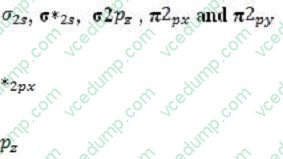
(equal in energy), and * (equal in energy), *2 . (The designation of the three p orbitals as , , and are interchangeable.) Absorption of a photon can raise an electron to a higher-energy molecular orbital. The excited electron does not immediately change its spin, which is opposite to that of the electron with which it was previously paired. This singlet state is relatively unstable: the molecule may interact with another molecule, or fluoresce and return to its ground state. Alternatively, there may be a change in spin direction somewhere in the system; the molecule then enters the so-called triplet state, which generally has lower energy. The molecule now cannot return quickly to its ground state, since the excited electron no longer has a partner of opposite spin with which to pair. It also cannot return to the singlet state, because the singlet has greater energy. Consequently, the triplet state, which has two unpaired electrons in separate orbitals, is long-lived by atomic standards, with a lifetime that may be ten seconds or more. During this period, the molecule is highly reactive.
Given the order in which orbitals are filled, which molecule is a triplet in its ground state?
A. Option A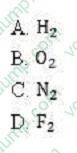
B. Option B
C. Option C
D. Option D -
Question 102:
A hovercraft is a versatile vehicle capable of traveling over land, water, or any other essentially flat surface. The hovercraft consists of a body or hull onto which a rotor (lift fan) is mounted. The lift fan provides the vertical lift by propelling air into an area beneath the hovercraft called the skirt. The pocket of air in the skirt supports the moving hovercraft and reduces the friction between the vehicle and the ground to almost zero. As such, there is no contact between the hovercraft and the ground.
A second fan, which generates a horizontal thrust, propels the hovercraft forward. Rudders which direct the airflow from this second fan are used by the pilot to control the movement of the hovercraft. The horizontal movement of the

hovercraft is opposed by air resistance which generates aerodynamic drag.
The horizontal thrust fan of a hovercraft traveling across a frozen lake in a large circle suddenly fails. Which of the following best describes the path of the hovercraft (as one looks down from above) immediately following thrust fan shutoff?
A. Option A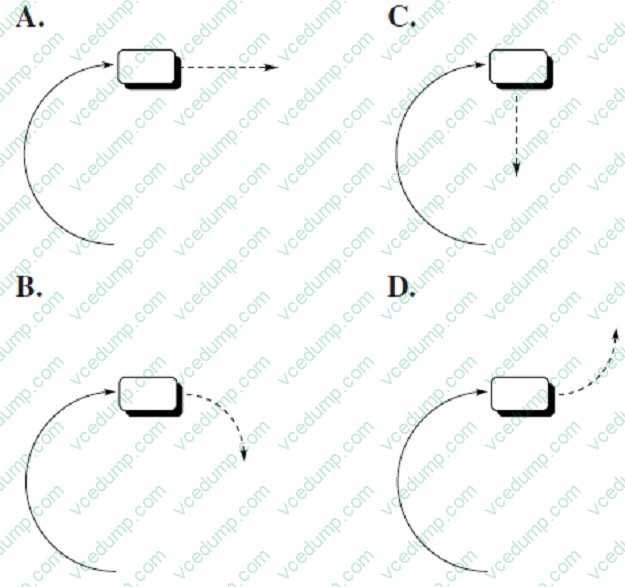
B. Option B
C. Option C
D. Option D -
Question 103:
One distinguishing factor in a redox titration, as opposed to other titrations, is that it involves:
A. the determining of an unknown concentration in one reactant.
B. the quantitative analysis of a substance.
C. the use of a known concentration.
D. the use of oxidation and reduction. -
Question 104:
Several models have been developed for relating changes in dissociation constants to changes in the tertiary and quaternary structures of oligomeric proteins. One model suggests that the protein's subunits can exist in either of two distinct conformations, R and T. At equilibrium, there are few R conformation molecules: 10 000 T to 1 R and it is an important feature of the enzyme that this ratio does not change. The substrate is assumed to bind more tightly to the R form than to the T form, which means that binding of the substrate favors the transition from the T conformation to R.
The conformational transitions of the individual subunits are assumed to be tightly linked, so that if one subunit flips from T to R the others must do the same. The binding of the first molecule of substrate thus promotes the binding of the second and if substrate is added continuously, all of the enzyme will be in the R form and act on the substrate. Because the concerted transition of all of the subunits from T to R or back, preserves the overall symmetry of the protein, this model is called the symmetry model. The model further predicts that allosteric activating enzymes make the R conformation even more reactive with the substrate while allosteric inhibitors react with the T conformation so that most of the enzyme is held back in the T shape. Experiment Evaluating Non-Symmetry Model Enzymes
Experiments were performed with enzyme conformers that did not obey the symmetry model. The data is summarized in Figure 1.
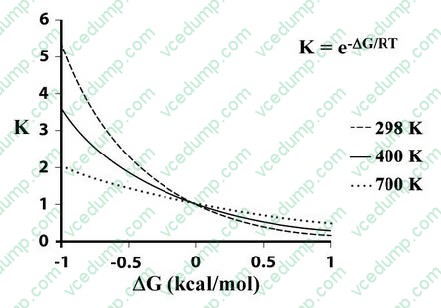
Figure 1: Equilibrium distribution of two conformers at different temperatures given the free energy of their interconversion. (modified from Mr.Holmium). Allosteric enzymes differ from other enzymes in that they:
A. are not denatured at high temperatures.
B. are regulated by compounds which are not their substrates and which do not bind to their active sites.
C. they operate at an optimum pH of about 2.0.
D. they are not specific to just one substrate. -
Question 105:
Today's new urban Asia is just as sophisticated and in many ways more exciting than Western cities. Urban Asian consumers are knowledgeable, modern, and keen to embrace the global lifestyle. Young, urban Asians have grown up accustomed to many things that originated in the West. They have, for example, completely embraced pizza, some even claiming that it is a part of their heritage. The story is told about a young Singaporean boy who was taken by his father to Rome. "Hey, look, Dad," the little boy exclaimed, "they have pizza here too!" On sampling the product, the boy decided that it was not as good as the original back home. Nury Vitachi, who writes for the South China Post and the Far Eastern Economic Review, describes the Asian middle-class phenomenon: "Executives in Asia have become rich at warp speed by taking full control of their own lives. They invest a great deal of time in their work, they use strategy to scramble up the corporate ladder, and they demand payment in cash -- so they can make their money work as hard as they do." Signs of affluence are everywhere, but don't get carried away. Traveling around Asia, no matter how rich the Asians become, signs of their frugal nature are still apparent. And they are very cost-conscious. Shopkeepers in many Asian cities, most notably in Hong Kong, demand payments for discounted merchandise in cash instead of plastic, and many Asians are accustomed to that. Most people save the increases in their income, and many prefer to put it into fixed or other income-generating assets. Stock, land, and property are their favorites. Many affluent Asians still regard financial security as the most important form of security, and they are confident that Asia is the place to be to achieve that. While many have begun to savor the good life, they are not letting go of their top priority of education for their children. Education is looked upon as the most important contributing factor to success in life. And in many of Asia's competitive urban centers, there is a rush to acquire a second degree and other forms of professional qualification to ensure personal competitiveness in the workplace. There are extraordinary opportunities in Asia for education and training programs from language to software programming. Despite the rise in their assertiveness, Asians still look to the United States and not so much to Europe for ideas and trends. In general, except for those in Hong Kong and Japan, they are not particularly concerned with being fashionable. For today's Asia, Japan and Hong Kong are the sources of Asian fashion ideas, but as Asia becomes more affluent, there is a great opportunity to develop an indigenous fashion industry. For example, a huge market potential exists in introducing new materials and simplified but fashionable designs for countries in tropical Asia with a hot humid climate throughout the year. The population density and lack of space in urban areas has prohibited Asians from exercising frequently and few indulge in outdoor activities. This is changing. Most Asians consider themselves in good health. Compared with Americans, few are overweight -- largely as a result of their Asian diet. But now health clubs are becoming popular among younger Asians. Potential for indoor exercise equipment holds great promise. It is also important to dress for the gym, and younger Asians are serious about looking good, complete with makeup, sunglasses, designer exercise shoes and outfits, and a gym bag. In trying to hit Asia's moving targets, regardless of what you are selling, it is a good idea to stick with market density -- not country by country, but, mostly, city by city. Asian markets can be a marketer's dream in that their densities are among the highest in the world. Java, Indonesia's main island, has 115 million people. On Nanjing Road, Shanghai's busiest street, businesses are open twelve hours a day almost every day of the year. More than 1.5 million people visit the shops there and spend more than $50 million every day. Someone said that you can only become rich if you sell to the rich. I would add that you can become rich faster if you sell to the new rich. For investors in the West, watch for Western companies that are preparing a big push in Asia. The world has not yet seen anything like it before, and you can reap handsome dividends if you back those stocks that are going eastward.
It can be inferred from the passage that:
A. the Asian fashion market is already saturated with indigenous designs and manufacturers.
B. credit cards are gaining acceptance slowly as a form of payment for merchandise in Asia.
C. the comparative lack of space in urban Asia has led to increased health problems.
D. competitive professionals often pursue additional education and training. -
Question 106:
In the United States, breast cancer is the second leading cause of death for women, and as a result, the American Cancer Society, has recommended annual mammography screening for women age 40 years and older. It is estimated that
the risk of mortality can be reduced through this procedure by approximately 20-25% during a ten-year period for women age 40 years and older.
In general, cancer screening behaviors have increased in the United States. According to the National Health Interview Survey, in 1987, approximately 29% of women age 40 years and older reported having had a mammogram in the last 2
years. By 2000, this increased to 70%. However, there are racial disparities, as fewer African American and Hispanic women have mammograms compared to their Caucasian female counterparts. Some studies have looked into these
differences. Cultural factors seem to play a role in minority women obtaining fewer mammograms. Asian women, for example, do not like to discuss sensitive topics with strangers.
Prevention promotions have been designed to increase awareness for the need of breast cancer screening, particularly for women in racial and ethnic minority groups. An innovative breast cancer education program, called the Educational
Intervention Asian Grocery Store-Based Education Program, was designed to target Asian women. Located in 20 different Asian grocery stores in communities, the cancer screening exhibits were placed at the entrances of the stores. As
Asian women came into the grocery store, health information was passed out to Asian women. Even though only a small amount of women who were considered non-adherents to breast cancer screening ended up scheduling a screening,
the study demonstrated an innovative culturally competent approach to health promotion.
Source: Adapted from G.R. Sadler, P.R. Beerman, K. Lee et al. "Promoting Breast Cancer Screening Among Asian American Women: The Asian Grocery Store Based Cancer Education Program." Copyright 2012 Journal of Cancer
Education.
What technique was being used by researchers from the Asian grocery store program if they tried to recruit more participants by asking for referrals to those who had previously agreed?
A. Random digit dialing
B. Snowball sampling
C. Purposive sampling
D. Simple random sampling -
Question 107:
The reaction below is NOT spontaneous at any temperature.
2ICl(g) I2(g) + Cl2(g)
Which of the following is true?
A. Option A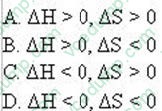
B. Option B
C. Option C
D. Option D -
Question 108:
What is the term for the temperature at which a material loses its permanent magnetism?
A. the Bose temperature
B. the Weiss temperature
C. the Boyle temperature
D. the Curie temperature -
Question 109:
What is the wavelength of the light in millimeter?
A. 5.4 x 10⁻³
B. 5.4 x 10⁻⁵
C. 5.4 x 10⁻⁴
D. 5.4 x 10⁻¹⁰ -
Question 110:
Aski jump is an inclined track from which a ski jumper takes off through the air. After traveling down the track, the skier takes off from a ramp at the bottom of the track. The skier lands farther down on the slope.
Figure 1 shows a ski jump, in which the ramp at the lower end of the track makes an angle of 30° to the horizontal. The track is inclined at an angle of to the horizontal and the slope is inclined at an angle of 45° to the horizontal. A ski jumper is stationary at the top of the track. Once the skier pushes off, she accelerates down the track, and then takes off from the ramp. The vertical height difference between the top of the track and its lowest point is 50 m, and the vertical height difference between the top of the ramp and its lowest point is 10 m.
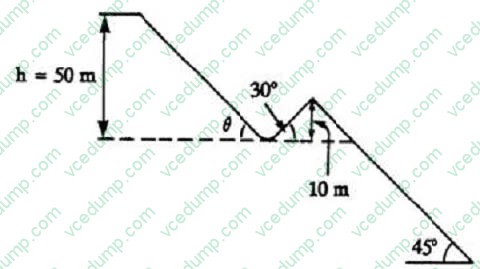
Figure 1
The distance traveled by the skier between leaving the ski jump ramp and making contact with the slope is called the jump distance. In some cases, in order to increase the jump distance a skier will jump slightly upon leaving the ramp,
thereby increasing the vertical velocity. Unless otherwise stated, assume that friction between the skis and the slope is negligible, and ignore the effects of air resistance.
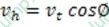
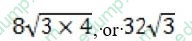
Another ski jumper sets off from a point farther down the jump track, and leaves the ramp at a speed of 16 m/s. If the time in flight is 4 s, what is the total horizontal distance traveled by the ski jumper after leaving the ramp?
A. Option A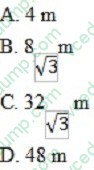
B. Option B
C. Option C
D. Option D


Related Exams:
Tips on How to Prepare for the Exams
Nowadays, the certification exams become more and more important and required by more and more enterprises when applying for a job. But how to prepare for the exam effectively? How to prepare for the exam in a short time with less efforts? How to get a ideal result and how to find the most reliable resources? Here on Vcedump.com, you will find all the answers. Vcedump.com provide not only Medical Tests exam questions, answers and explanations but also complete assistance on your exam preparation and certification application. If you are confused on your MCAT-TEST exam preparations and Medical Tests certification application, do not hesitate to visit our Vcedump.com to find your solutions here.