USMLE-STEP-3 Exam Details
-
Exam Code
:USMLE-STEP-3 -
Exam Name
:United States Medical Licensing Step 3 -
Certification
:USMLE Certifications -
Vendor
:USMLE -
Total Questions
:804 Q&As -
Last Updated
:Jul 29, 2026
USMLE USMLE-STEP-3 Online Questions & Answers
-
Question 751:
A 35-year-old woman with a history of major depressive disorder is brought into the ED by her boyfriend. He believes she may have overdosed on pain medication in an effort to hurt herself. He gives you three medication bottles which he discovered empty and states that they were nearly full before leaving for work earlier that morning. However, the timing of the ingestion is unclear. All three of the bottles apparently held acetaminophen- containing medications. Examination of the patient reveals a tired- appearing woman complaining of nausea and right upper quadrant abdominal pain. Which of the following pharmacologic treatments is most appropriate at this time?
A. no pharmacologic treatment is necessary
B. naloxone
C. flumazenil
D. physostigmine
E. N-acetylcysteine -
Question 752:
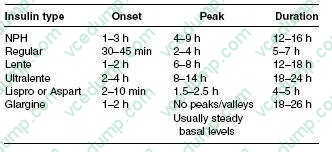
A 23-year-old pregnant woman with type 1 diabetes was admitted to the Obstetrics service for DKA. The DKA was appropriately treated and has resolved. You were consulted for medical management of the diabetes, as her sugars have been labile throughout the hospital stay. Your history and review of records reveals that the patient has a long-standing history of noncompliance with diet and medication regimens. She currently uses any insulin she can get and does not eat regular meals. She has fluctuating blood sugars with episodes of hypoglycemia.
You counsel the patient extensively, order nutrition and diabetic teaching consults, and discuss keeping home glucose logs. Assuming the patient will follow your advice, which regimen would you recommend to minimize fluctuating glucose readings?
A. NPH insulin twice daily
B. insulin glargine once daily and insulin lispro before meals
C. Humulin 70/30 twice daily
D. NPH twice daily and regular insulin three times daily with meals
E. insulin glargine twice daily -
Question 753:
As an intern on a medical consultation service, you are providing a cardiology consultation for a patient who developed a myocardial infarction while undergoing an elective cholecystectomy. Although not described in the medical record, the cardiology consultant attending stated the patient experienced the myocardial infarction because of prolonged general anesthesia. The surgical attending did not make the initial incision until the patient had been sedated for more than 1 hour. As you review the medical record, you realize the patient is the father of your college roommate. When you walk in the room, the family is very happy to see you and asks, "What happened? What went wrong?" What is your ethical responsibility?
A. disclosure of your knowledge of the clinical circumstances to the patient
B. disclosure of your knowledge of the clinical circumstances to your college roommate
C. disclosure of the family's questions to the attending physician
D. documentation in the medical record of your assessment of the iatrogenic patient injury
E. request a random drug test of the surgeon -
Question 754:
An 18-year-old male is brought to the ED after sustaining a stab wound to the left chest that is medial and superior to the nipple. He was unresponsive at the scene and intubated by the emergency medical technician (EMT) team. His pulse is 140 and BP is 60/30 after receiving 1 L of lactated Ringers solution and 2 units of blood during his transport. On auscultation there are no breath sounds on the left. His trachea is midline. He has no evidence of neck vein distention.
Which of the following statements is true?
A. Cardiac tamponade is unlikely since there is no evidence of neck vein distention.
B. A left chest tube should be placed immediately.
C. Given the probability of a cardiac injury, an emergent thoracotomy should be performed in the ED.
D. An aortic angiogram should be ordered immediately to assess for aortic injury.
E. No intervention should be performed until a chest x-ray is completed to provide more information. -
Question 755:
A 34-year-old male presents with a penile lesion. Your history, physical examination, and serology confirm a diagnosis of syphilis. The patient reports that his mother told him he was "allergic" to penicillin. He does not recall any personal history of anaphylaxis or rash to antibiotics however he has never been "sick." How would you manage this patient?
A. Admit to the ICU for penicillin desensitization as you don't want to risk anaphylaxis especially with the uncertain history.
B. Do skin testing for penicillin allergy.
C. Avoid penicillin or cephalosporins in future.
D. Treat with erythromycin.
E. Treat with penicillin as he is not likely to have a true allergy. -
Question 756:
A 23-year-old female graduate student with acne and asthma presents to you with a chief complaint of headaches. She has noted a gradual increase in the intensity and frequency of the headaches to the point where they are interfering with her daily activities and studies. Your examination shows an obese young lady with papilledema. The remainder of your physical examination is normal The test ordered above was negative. Which of the following is your most appropriate next step?
A. instruct the patient on a weight loss program and follow-up in 3 months
B. begin diuretic therapy
C. start the patient on sumatriptan for migraine headaches
D. perform a lumbar puncture to measure opening pressure
E. obtain an MRI of the brain and orbits, with and without contrast -
Question 757:
A42-year-old man without prior significant medical history comes to your office for evaluation of chronic diarrhea of 12 months duration, although the patient states he has had loose stools for many years. During this time he has lost 25 lbs. The diarrhea is large volume, occasionally greasy, and nonbloody. In addition, the patient has mild abdominal pain for much of the day. He has been smoking a pack of cigarettes a day for 20 years and drinks approximately five beers per day. His physical examination reveals a thin male with temporal wasting and generalized muscle loss. He has glossitis and angular cheilosis. He has excoriations on his elbows and knees and scattered papulovesicular lesions in these regions as well What is the most serious long-term complication this patient could face?
A. pancreatic cancer
B. small bowel cancer
C. gastric cancer
D. colon cancer
E. rectal cancer -
Question 758:
Gastrin secretion is enhanced by which of the following?
A. antral distention
B. antral acidification
C. presence of fat in the antrum
D. sympathetic nerve stimulation
E. duodenal acidification -
Question 759:
A mother brings her 21/2-year-old daughter to your office for evaluation of frequent urination. The mother relates that the daughter seems to be urinating more frequently, up to 810 times in a day, over the past week. The girl complains of pain when she urinates, but the urine does not have any different odor to it. The mother says that the girl otherwise seems fine and still loves to take her bubble bath at night. The girl does not have a fever, weight loss, diarrhea, or vomiting What is the most likely diagnosis?
A. pyelonephritis
B. chemical urethritis
C. retained vaginal foreign body
D. type 1 diabetes mellitus
E. diabetes insipidus -
Question 760:
A 37-year-old multiparous White female, s/p bilateral tubal ligation, reports a family history remarkable for a mother diagnosed with bilateral breast cancer at the age of 43, from which she ultimately died, and a sister diagnosed with epithelial ovarian cancer at the age of 47, for which she is currently undergoing chemotherapy. Secondary to this worrisome family history, the patient elected to undergo genetic testing and was found to be a BRCA1 carrier.
In view of her carrier status, you inform her of which of the following?
A. She has a 3050% lifetime risk for the development of ovarian cancer.
B. She has a 10% lifetime risk for the development of breast cancer.
C. If she develops ovarian cancer, it will likely be 1015 years later than the normal onset of ovarian cancer seen in the general population.
D. She is at increased risk for the development of hereditary nonpolyposis colorectal cancer (Lynch family syndrome type II).
E. She has a lower risk for the development of Fallopian tube cancer than the general patient population.
Tips on How to Prepare for the Exams
Nowadays, the certification exams become more and more important and required by more and more enterprises when applying for a job. But how to prepare for the exam effectively? How to prepare for the exam in a short time with less efforts? How to get a ideal result and how to find the most reliable resources? Here on Vcedump.com, you will find all the answers. Vcedump.com provide not only USMLE exam questions, answers and explanations but also complete assistance on your exam preparation and certification application. If you are confused on your USMLE-STEP-3 exam preparations and USMLE certification application, do not hesitate to visit our Vcedump.com to find your solutions here.