MCAT-TEST Exam Details
-
Exam Code
:MCAT-TEST -
Exam Name
:Medical College Admission Test: Verbal Reasoning, Biological Sciences, Physical Sciences, Writing Sample -
Certification
:Medical Tests Certifications -
Vendor
:Medical Tests -
Total Questions
:812 Q&As -
Last Updated
:Jul 16, 2026
Medical Tests MCAT-TEST Online Questions & Answers
-
Question 711:
When preparing for the MCAT exam, a student begins studying electrochemical cells. He learns the basic information needed by actively relating it to previous information he has learned about redox reactions. He then builds from that knowledge to learn the advanced concepts needed. The student's process is best characterized as:
A. chunking.
B. a network model.
C. maintenance rehearsal.
D. elaborative rehearsal. -
Question 712:
As Alice Echols went on to claim, "Nothing seems to conjure up the 1970s quite so effectively as disco. Even at the time, critics remarked upon disco's neat encapsulation of that decade's zeitgeist. `It must be clear by now to everyone with an ear or an eye that this era,' wrote journalist Andrew Kopkind in 1979, `is already the Disco Years, whether it will be called by that name or not.' A former sixties radical, Kopkind was by turns fascinated, bemused, and appalled by the disco epoch, and he likely imagined that in years to come fellow cultural critics would share his interest. But the seventies have not loomed large in our national imagination, except perhaps as comic relief. For many Americans, these were the forgettable years.
That forgettability owes a lot to the 1960s, the outsized decade that dwarfs all others in recent memory. The sixties will always be remembered for their audacity, whether found in the courage of civil rights protesters who put their bodies on the line or in those doomed but beautiful rock stars who tried breaking through to the other side. By contrast, the seventies seem the decade when nothing, or nothing good, happened ?an era memorable for the country's hapless presidents, declining prestige, bad fashions, ludicrous music, and such over-the-top narcissism that Tom Wolfe dubbed it the `Me Decade.' Before the decade was out, this narrative of decline had become routine. `After the poetry of the Beatles comes the monotonous bass-pedal bombardment of Donna Summer,' huffed one New York Times writer in 1979. It is a measure of the era's persistent bad press that a recent book challenging this view carries the pleading title Something Happened.
As for the sixties, it doesn't matter how much silliness went down, we still invest those times with seismic significance. Take Joe Cocker's performance at Woodstock. His spasmodic thrashing about and his vocals, slurred to the point of incomprehensibility, are something of a joke today. Cringe-inducing though it may be, however, Cocker's performance is never made to stand in for the whole of the sixties. The sixties remain enveloped in the gauzy sentimentalism of what might have been. Yet the iconic image of John Travolta as dance-floor king Tony Manero in white polyester suit, arm thrust to the disco heavens, has come to symbolize the narcissistic imbecility and inconsequentiality of the disco years.
Were it not for the Rubaiyat, I, too, might well regard the seventies as a lamentable and regrettable period in American history. The Rubaiyat was, yes, a disco. It was located in the heart of sixtiesland: Ann Arbor, Michigan, the home of the University of Michigan and legendary incubator of radical activism. At the height of the seventies, the town's annual Hash Bash ?a smoke-in to reform marijuana laws ?was still going strong and so were its two food co-ops-one reform, the other orthodox when it came to selling white foods (that is, rice, sugar, and flour of the white variety). Ann Arbor also had bookstores galore, including the original, wonderful Borders Bookstore, and any number of hippie-ish restaurants and bars such as the Fleetwood Diner, the Del Rio, and the Blind Pig. Musically, it prided itself on its vintage music (it hosted one of the earliest blues festivals), but at heart it was a rock town besotted with Iggy Pop and the Stooges and Sonic's Rendezvous, a band fronted by Patti Smith's future husband, Fred Smith. Its leading music store, Schoolkids' Records, stocked disco, but never played it. All of this is to say that disco-averse Ann Arbor came close to providing something of a safe haven from glitterball culture. The Rubaiyat was no red-velvet-rope disco where fashionista doormen determined who was sufficiently fabulous to gain entry. This would never have worked in a town where down jackets and army surplus were hardly an unusual sight. The club did have some pretensions to classiness, but the mismatched, sagging booths and bordello red defeated occasional efforts at upmarket sophistication. What the Rubaiyat did have were better-thanaverage speakers, a heterogeneous cliente, and a weekend cover of three dollars."
Echols, A. (2011). Hot stuff: Disco and the Remaking of American Culture. New York: W. W. Norton.
The author's likely purpose in introducing details about the Rubaiyat is to: A. demonstrate that the popularity of disco must have been overwhelming since it made its way to a hippie town like Ann Arbor.
B. criticize disco as a genre whose fans often feign glamorousness although it is sleazy.
C. emphasize that disco's adherents were real people, so they do not deserve to be mocked.
D. show that the audience for disco was diverse and does not necessarily match the popular stereotypes about the genre. -
Question 713:
Glycogen storage disease type V, also known as GSD-V or McArdle disease, is an autosomal recessive disease that results in the deficiency of myophosphorylase, an isoform of glycogen phosphorylase found in muscle cells. Patients with GSD-V experience severe muscle cramps after strenuous exercise and exercise intolerance.
Physicians may order two histology stains of the patient's muscle tissue in order to aid in the diagnosis (see Figure 1):
(A) A Periodic acid-Schiff (PAS) stain uses periodic acid to detect carbohydrates in tissues. The reaction of the acid with sugar cleaves vicinal diols creating ketone and/or aldehyde fragments, the latter of which then reacts with the Schiff
reagent to give a purple color;
(B)
A phosphorylase stain identifies the presence of the enzyme using a dark blue color indicator.

Figure 1A. Comparative histochemistry of GSD-V and healthy individual.
PAS stain of muscle tissue shows an accumulation of glycogen in the GSD-V individual (top) compared to the control (bottom). B) Phosphorylase stain of muscle tissue reveals an absence of phosphorylase in the GSD-V individual (top).
Despite initial pain during exercise, many patients with GSD-V have been able to increase their exercise tolerance by engaging in moderate periods of aerobic exercise. Muscle pain and fatigue subsides after a few minutes, a response that
researchers call the "second wind" phenomenon.
Patients who experienced "second wind" typically experienced lowered heart rate and a reported decrease in exercise effort after 7-10 minutes. A similar effect was seen in the same patients after an intravenous infusion of glucose.
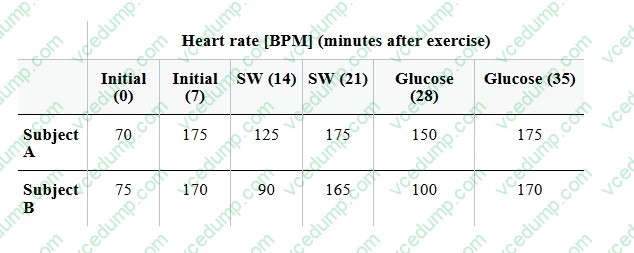
Figure 2. Measured heart rates in two GSD-V patients during sustained exercise.
Two subjects were asked to ride stationary bicycles at a steady rate over the course of 40 minutes. The subjects' heart rates were measured continuously, with high and low values coinciding with 7-minute intervals. Glucose was injected
intravenously after 21 minutes. SW = Second Wind.
Adapted from Bhavaraju-Sanka R, Howard J. Jr, Chahin N (2014). SOJ Neurol 1(1), 1-3. and Haller RG, Vissing J. Arch Neurol. 2002;59(9):1395-1402.
Biopsies of the patients showed glycogen accumulation in muscle cells (Figure 1A), but not in the liver. What is the most likely explanation for this observation?
A. Glycogen is not stored in the liver.
B. Liver cells use a different isomer of glycogen phosphorylase.
C. Glycogen is transported out of the liver via carrier-mediated transport.
D. Muscles do not require ATP. -
Question 714:
The anthropomorphic bias of those who would relegate marsupials to an inferior evolutionary status is most apparent in their recourse to data on brain structure and behavior. Unlike humans and other placentals, marsupials lack the corpus callosum, which facilitates inter-hemisphere transfer of data acquired through the senses. Yet it cannot be inferred that marsupials are thus deprived of such function. Didelphis Virginiana, one of the opossums, makes use of the anterior commissure, an adaptation that is also found in reptiles and monotremes. Diprodontons, including kangaroos and koalas, supplement the anterior commissure with the fasciculus aberrans. While the modes of neocortical interconnection may be diverse, the work of Johnson, Heath and Jones points to the conclusion that, functionally speaking the cortices and neocortices of both groups of mammals exhibit parallel connections. Parker also notes "a similar range of brain size to body weight ratios and of neocortical expansion". Another stigma borne by marsupials is the consensus that they are less intelligent than placentals. Yet Williams argues that, all else being equal, natural selection will favor instinctive over learned behavior as being more biologically efficient and that it is the accidental death of the young that is the prime selective pressure for the evolution of intelligence. Seen in this light, marsupials have a competitive edge; their gestation period is brief and the young remain in the pouch for an extended period exposed only to those dangers which also affect the mother. There they are directly exposed to the mother's food supply and can observe her behavior at leisure. Placentals, on the other hand, not only have a longer gestation period but, once their young are born, must often leave while foraging. Such absences increase the risk of mortality and decrease the opportunity to learn. Thus, among placentals, selection would favor the apparent intelligence in the young and protective behavior in the mother. Marsupials are not known to exhibit maternal protective behavior. In fact, Serventy has reported that frightened female kangaroos will drop their pouch-young as they flee, drawing a predator's attention to the less able offspring while the adult escapes. This behavior, whether purposeful or accidental, instantaneously relieves the female marsupial of the mechanical difficulties of pregnancy with which her placental counterpart would be burdened, while marsupials can replace any lost young quickly. Thus, in the absence of any need for close maternal supervision, sacrificing their offspring in this manner may well have been favored in selection. Pointing to the absence of the "virtue" of maternal protectiveness in marsupials is an instance of how mistaken are those theorists who see similarities with humans as marks of evolutionary sophistication.
The author's attitude toward those who consider marsupials to occupy an inferior evolutionary position would most probably be one of:
A. criticism because they ignore evidence that marsupials are more intelligent than usually supposed.
B. disagreement because current studies support the opposite view.
C. disagreement because they apply human standards in an inappropriate context.
D. agreement, but on the basis of marsupials' lack of maternal protective behavior rather than their brain structure. -
Question 715:
The human kidney can be damaged from a number of causes resulting in a patient's inability to filter toxins (i.e. urea) from the body which could result in death. Complete kidney failure is usually first treated with dialysis which "cleans" the blood.
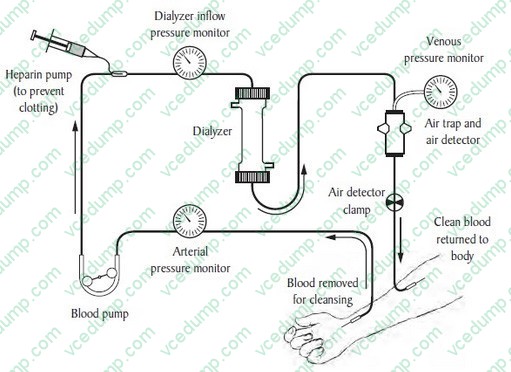
Figure 1: Dialysis. The "dialyzer" is a glass container that has 3 main components: (1) blood percolating through to be cleaned; (2) a dividing membrane; and (3) the dialysate. The latter is liquid containing chemicals used to draw fluids and toxins out of the bloodstream and supply electrolytes and other chemicals to the bloodstream. (kidney.niddk.nih.gov)
Considering the information provided, which of the following is NOT consistent with the process of dialysis?
A. The membrane in the dialyzer separating the dialysate and the blood must be semipermeable.
B. The concentration of toxins in the dialysate must increase during dialysis.
C. The concentration of glucose and vital minerals in the dialysate must be similar to that of the patient's blood.
D. Excessive minerals and toxins cross the membrane in the dialyzer by osmosis. -
Question 716:
Pressure exerted on a surface with some force is:
A. directly proportional to the surface area.
B. inversely proportional to the surface area.
C. directly proportional to the force.
D. None of them. -
Question 717:
Ink jet printers produce high resolution output, at a lower cost than laser printers, by generating charged ink droplets which are then deflected onto a sheet of paper by an electric field. Each droplet deflected by the field strikes the paper and forms a tiny dot of ink. While a typical printed letter requires about 100 drops, an ink jet printer is able to produce drops at a rate of 100,000 per second.

The essential elements of the ink jet printer head are shown in Figure 1. The drop generator produces the ink droplets, each with a mass of approximately 1.2 kg and a diameter of approximately 30 m. The drops then enter a

highly precise charging unit which controls the charge q on each droplet to within 2%, with typical charges for drops generated by various ink jet printers ranging from ?.0 C to ?.0 C. The charged droplets are

subsequently passed through the deflecting plates between which a variable electric field is generated. The electronically controlled electric field between the plates is typically varied over a range from 1.0 N/C to 5.4 N/C,

and is used to aim the ink droplet at the paper. .

An ink jet printer deflects a particular ink droplet by 1.5 mm in the region of the deflector. Which of the following is a possible value of the work done on the droplet?
A. Option A
B. Option B
C. Option C
D. Option D -
Question 718:
Bebop lives! cries the newest generation of jazz players. During the 1980s, musicians like Wynton Marsalis revived public interest in bebop, the speedy, angular music that first bubbled up out of Harlem in the early 1940s, changing the face of jazz. That Marsalis and others thought of themselves as celebrating and preserving a noble tradition is, in one sense, inevitable. After the excesses of experimental or "free" jazz in the 1960s and the electronic jazz-rock "fusion" of the 70s, it is hardly surprising that people should hearken back to a time when jazz was "purer," perhaps even at the apex of its development. But the recent enthusiasm for bebop is also ironic in light of the music's initial public reception.
In its infancy, during the first two decades of the 20th century, jazz was played by small groups of musicians improvising variations on blues tunes and popular songs. Most of the musicians were unable to read music, and their improvisations were fairly rudimentary. Nevertheless, jazz attained international recognition in the 1920s. Two of the people most responsible for its rise in popularity were Louis Armstrong, the first great jazz soloist, and Fletcher Henderson, leader of the first great jazz band. Armstrong, with his buoyant personality and virtuosic technical skills, greatly expanded the creative range and importance of the soloist in jazz. Henderson, a pianist with extensive training in music theory, foresaw the orchestral possibilities of jazz played by a larger band. He wrote out arrangements of songs for his band members that preserved the spirit of jazz, while at the same time giving soloists a more structured musical background upon which to shape their solo improvisations. In the 1930s, jazz moved further into the mainstream with the advent of the Swing Era. Big bands in the Henderson mold, led by musicians like Benny Goodman, Count Basie and Duke Ellington, achieved unprecedented popularity with jazz-oriented "swing" music that was eminently danceable.
Against this musical backdrop, bebop arrived on the scene. Like other modernist movements in art and literature, bebop music represented a departure from tradition in both form and content, and was met with initial hostility. Bebop tempos were unusually fast, with the soloist often playing at double time to the backing musicians. The rhythms were tricky and complex, the melodies intricate and frequently dissonant, involving chord changes and notes not previously heard in jazz. Before bebop, jazz players had improvised on popular songs such as those produced by Tin-Pan Alley, but bebop tunes were often originals with which jazz audiences were unfamiliar.
Played mainly by small combos rather than big bands, bebop was not danceable; it demanded intellectual concentration. Soon, jazz began to lose its hold on the popular audience, which found the new music disconcerting. Compounding public alienation was the fact that bebop seemed to have arrived on the scene in a completely mature state of development, without that early phase of experimentation that typifies so many movements in the course of Western music. This was as much the result of an accident of history as anything else. The early development of bebop occurred during a three-year ban on recording in this country made necessary by the petrol and vinyl shortages of World War II. By the time the ban was lifted, and the first bebop records were made, the new music seemed to have sprung fully-formed like Athena from the forehead of Zeus. And though a small core of enthusiasts would continue to worship bebop pioneers like Charlie Parker and Dizzy Gillespie, many bebop musicians were never able to gain acceptance with any audience and went on to lead lives of obscurity and deprivation.
Based on the information in the passage comparing bebop to other movements in the history of Western music, it is reasonable to conclude that:
I. most movements in music history passed through a stage of experimentation before reaching mature expression.
II. World War II prevented bebop from reaching a more appreciative audience.
III.
bebop did not go through a developmental stage before reaching mature expression.
A. I only
B. III only
C. I and II only
D. II and III only
I. most movements in music history passed through a stage of experimentation before reaching mature expression. II. World War II prevented bebop from reaching a more appreciative audience. III. bebop did not go through a developmental stage before reaching mature expression. -
Question 719:
At its isoelectric point, an amino acid in an electric field will migrate towards the:
A. anode.
B. cathode.
C. basic region.
D. it will not migrate. -
Question 720:
Nitric oxide, NO, has recently been found to have widespread physiological effects, acting as a major regulator in the nervous, cardiovascular, and immune systems. The production of NO in the body is regulated by specific NOS enzymes which exist in at least three different isoforms -- bNOS, eNOS, and macNOS. Each of these isoforms differ in location and function and serve to mediate different physiological responses to NO. Some physiological roles of NO have been demonstrated as follows:
I. In the central nervous system, NO production is regulated by bNOS. Calcium ion concentrations of 200- 400 nM in the central nervous system activate bNOS to catalyze the formation of NO. NO exerts definite effects on brain function although its specific roles are not well established. bNOS inhibitors have been found to block the release of neurotransmitter from presynaptic neurons. Excess levels of NO are also thought to contribute to neurodegenerative disorders such as Alzheimer's disease.
II. In the blood vessels, NO is produced by eNOS which is activated by Ca2+ concentrations of 200-400 nM. NO acts as the major endogenous vasodilator in blood vessels. It diffuses into smooth muscle cells and leads to muscle relaxation by stimulating cGMP formation through activation of guanylyl cyclase. In addition, NO regulates the vascular system by inhibiting platelet aggregation and adhesion.
III. The role of NO in the immune system is regulated by macNOS through a pathway that is not Ca2+ dependent. Rather, exposure to cytokines, including interleukin-1 and interferon- , leads to synthesis of large amounts of NO by activation of macNOS in response to inflammatory stimuli. The NO produced plays a definitive role in the mediation of the activities of macrophages and neutrophils. NO also acts to inhibit the mechanism of viral replication.
A patient with hypertension (high blood pressure) is treated with nitroglycerin, which spontaneously breaks down to give NO. This treatment will be:
A. effective because NO will activate eNOS.
B. effective because NO will lead to vasodilation.
C. ineffective because eNOS will not be activated.
D. ineffective because NO will build up, leading to neurotoxicity.
I. In the central nervous system, NO production is regulated by bNOS. Calcium ion concentrations of 200- 400 nM in the central nervous system activate bNOS to catalyze the formation of NO. NO exerts definite effects on brain function although its specific roles are not well established. bNOS inhibitors have been found to block the release of neurotransmitter from presynaptic neurons. Excess levels of NO are also thought to contribute to neurodegenerative disorders such as Alzheimer's disease. II. In the blood vessels, NO is produced by eNOS which is activated by Ca2+ concentrations of 200-400 nM. NO acts as the major endogenous vasodilator in blood vessels. It diffuses into smooth muscle cells and leads to muscle relaxation by stimulating cGMP formation through activation of guanylyl cyclase. In addition, NO regulates the vascular system by inhibiting platelet aggregation and adhesion. III. The role of NO in the immune system is regulated by macNOS through a pathway that is not Ca2+ dependent. Rather, exposure to cytokines, including interleukin-1 and interferon- , leads to synthesis of large amounts of NO by activation of macNOS in response to inflammatory stimuli. The NO produced plays a definitive role in the mediation of the activities of macrophages and neutrophils. NO also acts to inhibit the mechanism of viral replication. A patient with hypertension (high blood pressure) is treated with nitroglycerin, which spontaneously breaks down to give NO. This treatment will be:


Related Exams:
Tips on How to Prepare for the Exams
Nowadays, the certification exams become more and more important and required by more and more enterprises when applying for a job. But how to prepare for the exam effectively? How to prepare for the exam in a short time with less efforts? How to get a ideal result and how to find the most reliable resources? Here on Vcedump.com, you will find all the answers. Vcedump.com provide not only Medical Tests exam questions, answers and explanations but also complete assistance on your exam preparation and certification application. If you are confused on your MCAT-TEST exam preparations and Medical Tests certification application, do not hesitate to visit our Vcedump.com to find your solutions here.