MCAT-TEST Exam Details
-
Exam Code
:MCAT-TEST -
Exam Name
:Medical College Admission Test: Verbal Reasoning, Biological Sciences, Physical Sciences, Writing Sample -
Certification
:Medical Tests Certifications -
Vendor
:Medical Tests -
Total Questions
:812 Q&As -
Last Updated
:Jul 16, 2026
Medical Tests MCAT-TEST Online Questions & Answers
-
Question 701:
Diisopropylfluorophosphate (DFP) binds to the active site of acetylcholinesterase (ACE) in the synapses of neurons. When DFP binds to ACE, the ACE enzyme is rendered permanently inactive. This makes DFP a potent toxin, with lethal amounts at less than 100 mg. The interaction between DFP and ACE can best be characterized as:
A. Competitive inhibition
B. Noncompetitive inhibition
C. Irreversible inhibition
D. Partially competitive inhibition -
Question 702:
Which of the following is true when ice melts?
A. The changes in both enthalpy and entropy are positive.
B. The changes in both enthalpy and entropy are negative.
C. The charge in enthalpy is positive; the change in entropy is negative.
D. The change in enthalpy is negative; the change in entropy is positive. -
Question 703:

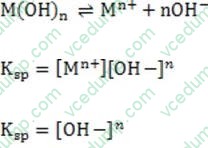
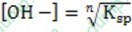
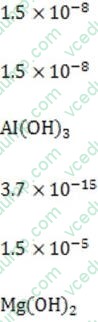
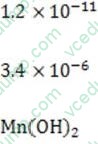
1M NaOH is added to a solution containing 1M A , 1M A , 1M M , and 1M M . Given the solubility data shown below, which of the following will precipitate first?
A. Option A
B. Option B
C. Option C
D. Option D -
Question 704:
Researchers are currently trying to develop materials which could be used to replace damaged or destroyed human muscle tissue. One of the more promising avenues of research involves the use of substances that contract with the application of a small electric current.
Two physicists published an article relating to their work with Substance Q42, a material which contracts with the application of very small electric currents.
The atomic structure of the substance, they report, is designed so that the magnetic fields from each atom maintain a certain distance between adjacent atoms. With the application of an electrical current, the atoms' magnetic fields are
dampened slightly, causing them to draw closer together. The extent to which it contracts is dependent upon the strength of the current passing through it, but will at any rate never exceed a 20% reduction in length.
Moreover, the physicists report, Substance Q42 essentially operated like a spring, but one which can compress itself. The force generated by a spring, Fs, is given by the following equation:
Fs = -kx,
where k is the spring of constant in N/m, and x is the distance of compression (or expansion, but that is irrelevant for this example, since Substance Q42 only compresses).
With this in mind, it is possible to calculate the feasibility of using Substance Q42 as a replacement for human muscle tissue. Assume a section of test Substance Q42 is hooked to a scalable electrical source. The section is 10 cm long at its
fully extended state, and 8 cm long when fully compressed due to an electrical current.
Substance Q42 is fully expanded and then contracts in response to a 5.0 amp current. Which of the following best represents the conversion of energies in the process described?
A. Potential --> kinetic --> mechanical
B. Potential --> mechanical --> kinetic
C. Electrical --> mechanical --> potential
D. Potential --> mechanical --> electrical -
Question 705:
Artificial kidneys have been used for almost 50 years to treat patients with different forms of renal failure. The artificial kidney (dialysis machine) removes unwanted substances from the blood by diffusion. A patient's blood is passed through channels bounded by a porous, semi-permeable membrane that allows the free diffusion in both directions of all plasma constituents except the plasma proteins. Erythrocytes and other cellular components of blood cannot pass through the membrane. The other side of the membrane is exposed to the dialyzing fluid which carries away the unwanted materials. If the concentration of a material in the blood is greater than in the dialyzing fluid, there will be a net flow of the material from the plasma to the dialyzing fluid. If the concentration of a material in the blood is less than in the dialyzing fluid, there will be a net flow of the material from the dialyzing fluid into the blood. The composition of normal plasma, plasma in an individual suffering renal failure, and dialyzing fluid are shown in Table 1.
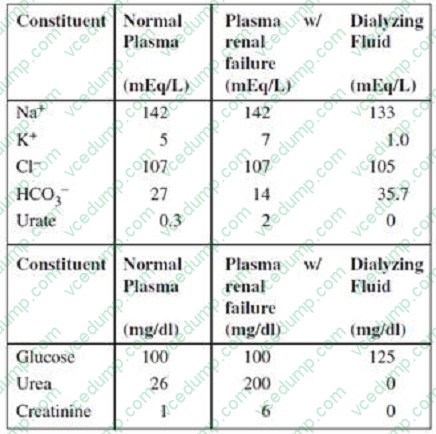
Table 1
Dialysis replaces some functions of the kidneys and attempts to correct the effects of renal failure. For example, patients with renal failure develop acidosis due to a buildup of metabolically produced acids in the circulation. Without dialysis,
the pH of the blood will drop and coma may occur. Dialyzing fluid contains a relatively high concentration of bicarbonate which diffuses into the circulation and neutralizes the acid.
Which of the following provides the best explanation for the urea plasma concentration in individuals with renal failure?
A. Urea filtration decreases
B. Urea absorption decreases
C. Urea filtration increases
D. Urea secretion increases -
Question 706:
The mind, just like the body, has its needs. The needs of the body are the foundations of society; those of the mind are its amenities. While government and laws provide for the safety and well-being of men when they gather together, the sciences and the arts, which are less despotic but perhaps more powerful, spread garlands of flowers over the iron chains that bind them, stifle in them the sense for that original liberty for which they seem to have been born, cause them to love their own enslavement, and turn them into so-called "civilized people." Necessity raised thrones; the sciences and the arts have strengthened them. O earthly powers: cherish talents and protect those who cultivate them. O civilized people, cultivate them: you happy slaves owe to them that delicate and refined taste of which you are so proud, that gentleness of character and urbanity of manner which make relations among you so amiable and easy -- in other words, that semblance of all the virtues, none of which you actually possess... ...How pleasant it would be to live among us, if our external appearance were always a reflection of what is in our hearts, if decency were virtue, if our maxims served as our rules, and if true philosophy were inseparable from the title of philosopher! But so many qualities are seldom found together, and virtue hardly ever walks in such great pomp. Richness of adornment may be the mark of a man of taste, but a healthy, robust man is known by other signs: it is beneath the rustic clothes of a farmer, and not the gilt of a courtier, that strength and vigor of the body will be found. Ornamentation is just as foreign to virtue, which is the strength and vigor of the soul. The good man is an athlete who prefers to compete in the nude: he disdains all those vile ornaments which would hinder the use of his strength, ornaments which were for the most part invented only to hide some deformity. Before art had molded our manners and taught our passions to speak an affected language, our customs were rustic but natural, and differences in conduct revealed clearly differences in character. Human nature, basically, was no better, but men found security in being able to see through each other easily, and this advantage, which we no longer appreciate, spared them many vices. Now that more subtle refinements and more delicate taste have reduced the art of pleasing to set rules, a base and deceptive uniformity prevails in our behavior, and all minds seem to have been cast in the same mold. Incessantly politeness and propriety make demands on us, and incessantly we follow usage but never our own inclinations. We no longer dare to appear as we are, and under this perpetual constraint, the men who form this herd called society, when placed in the same circumstances, will all act similarly unless stronger motives direct them to do otherwise. Therefore we will never know well those with whom we deal, for to know our friends we will have to wait for some crises to arise -- which is to say that we will have to wait until it is too late, as it is for these very crises that it is essential to know one's friends well. What vice would not accompany this uncertainty? No more sincere friendships, no more genuine esteem, no more well-based confidence. Suspicion, offenses, fears, coldness, reserve, hatred and betrayal will constantly hide under the same false veil of politeness, under that much touted urbanity which we owe to the enlightenment of our times. The name of the Master of the Universe will no longer be profaned by swearing, but insulted by blasphemies that will not offend our scrupulous ears. Men will not boast of their own merits, but belittle those of others. An enemy will not be crudely insulted, but adroitly slandered. National hatreds will die, but so will patriotism. A dangerous skepticism will take the place of the scorning of ignorance. Some excesses will be forbidden, some vices dishonored, but others will be dignified with the name of virtues, and one must either have them or feign them. Let those who want to praise the sobriety of the sages of our time do so; as for me, I see in it only a refinement of intemperance that is as unworthy of my praise as their hypocritical simplicity.
In the context of this passage, the "needs of the body" are to government and laws as:
A. the arts are to the "earthly powers" that "cherish talents."
B. the arts are to the "semblance of all the virtues."
C. the arts are to chains that bind men into slavery.
D. the arts are to man's sense of original liberty. -
Question 707:
The time has come to acknowledge the ascendancy of the humanistic psychology movement. The so- called "Third Stream" emerged at mid-century, asserting itself against the opposition of a pair of mighty, long-established currents, psychoanalysis and behaviorism. The hostility between these two older schools, as well as divisiveness within each of them, probably helped enable humanistic psychology to survive its early years. But the movement flourished because of its wealth of insights into the nature of this most inexact science.
Of the three major movements in the course of 20th century psychology, psychoanalysis is the oldest and most introspective. Conceived by Sigmund Freud as a means of treating mental and emotional disorders, psychoanalysis is based on the theory that people experience unresolved emotional conflicts in infancy and early childhood. Years later, although these experiences have largely disappeared from conscious awareness, they may continue to impair a person's ability to function in daily life. The patient experiences improvement when the psychoanalyst eventually unlocks these long-repressed memories of conflict and brings them to the patient's conscious awareness.
In the heyday of behaviorism, which occurred between the two world wars, the psychoanalytic movement was heavily criticized for being too concerned with inner subjective experience. Behavioral psychologists, dismissing ideas and feelings as unscientific, tried to deal only with observable and quantifiable facts. They perceived the human being merely as an organism which generated responses to stimuli produced by its body and the environment around it. Patients' neuroses no longer needed analysis; they could instead by modified by behavioral conditioning. Not even babies were safe: B.F. Skinner devised a container in which infants could be raised under "ideal" conditions -- if a sound-proof box can be considered the ideal environment for child-rearing.
By mid-century, a number of psychologists had grown dissatisfied with both the deterministic Freudian perspective and the mechanistic approach of behaviorism. They questioned the idea that human personality becomes permanently fixed in the first few years of life. They wondered if the purpose of psychology was really to reduce people to laboratory specimens. Was it not instead possible that human beings are greater than the sum of their parts? That psychology should speak to their search for fulfillment and meaning in life?
It is questions like these that members of the Third Stream have sought to address. While the movement cannot be simplified down to a single theoretical position, it does spring from certain fundamental propositions. Humanistic psychologists believe that conscious experience, rather than outward behavior, is the proper subject of psychology. We recognize that each human being is unique, capable of change and personal growth. We see maturity as a process dependent on the establishment of a set of values and the development of self. And we believe that the more aspects of self which are satisfactorily developed, the more positive the individual's self-image.
Abraham Maslow, a pioneer of the Third Stream, articulated a hierarchy of basic human needs, starting with food, water and air, progressing upward through shelter and security, social acceptance and belonging, to love, esteem and self-expression. Progress toward the higher stages cannot occur until all of the more basic needs have been satisfied. Individuals atop the pyramid, having developed their potential to the highest possible extent, are said to be "self-actualized".
If this humanist theoretical perspective is aimed at empowering the individual, so too are the movement's efforts in the practical realm of clinical psychology. Believing that traditional psychotherapists tend to lead patients toward predetermined resolutions of their problems, Carl Rogers pressed for objective evaluations of both the process and outcome of psychotherapeutic treatment. Not content to function simply as a reformer, Rogers also pioneered the development of "client-centered" or nondirective therapy, which emphasizes the autonomy of the client (i.e., patient). In client-centered therapy, clients choose the subjects for discussion, and are encouraged to create their own solutions to their problems.
A. F. Skinner is mentioned in the passage to support the point that:
B. the ultimate goal of behaviorism is technological innovation.
C. raising babies in isolation prevents childhood conflicts.
D. stimulus-response conditioning was attempted on all sorts of individuals.
E. behaviorists reject the scientific validity of subjective experience. -
Question 708:
By now the image of California in decline looms as large in the conventional media wisdom as the Golden State -- triumphant clich閟 of a generation ago -- "this El Dorado," as Time magazine had put it in 1969, that was to be "the mirror of America as it will become." Hardly anyone mentions the sunshine these days, or the beaches, or the beautiful young families around the pool, or the new lifestyles that all Americans will soon emulate, or how the University of California is wall-to-wall with cyclotrons and Nobel laureates, or how the state's higher-education system is accommodating absolutely all comers at little or no cost.
Today, California classrooms are among the most crowded in the country; many schools operate without libraries, without counselors, without nurses, without art or music, with greatly diminished curricular offerings. And what's true for the schools is true for the other services that have no powerful constituencies: children's protective services, probation, public health. Many cities have shut down swimming and wading pools because they cannot be safely maintained, and fenced playgrounds have been shut because of the danger presented by cracked and splintered structures. The list could be extended indefinitely. As thousands of professors receive golden handshakes from the University of California and California State University, among them some of the stars recruited in the go- go Fifties, the crowding in the lecture halls has increased and the lines at the classroom door have gotten longer and longer ("Don't panic," says the T-shirt on a student waiting to enroll at a Sacramento junior college, but many have been in line since four in the morning). U.C. tuition, which was roughly $800 a year in the early 1980s, is now over $4,000, a figure not out of line with tuitions at public colleges in other states but a far cry from the cost of a California state education in the golden days -- and it is almost certain to increase again next year. More than 200,000 students -- roughly 10 percent -- have vanished from the rolls of the state's colleges and universities in the past two years. While per capita tax revenues have been effectively frozen, and while they have declined relative to other states, client rolls for state services -- schools, prisons, Medicaid, welfare -- have been rising faster than population, leaving a structural gap that no one has yet confronted, much less closed. Again this year, the governor and legislature borrowed $7 billion from the banks and rolled over a $5 billion budget deficit, for which few politicians have proposed any remedies. Thanks to the deficit, California, which a decade ago, had one of the highest bond ratings in the country, has one of the lowest. "Were California a corporation," said John Vasconcellos, the chairman of the State Assembly Ways and Means Committee, "it would have little option but to initiate some sort of bankruptcy proceeding". The new image of California is familiar enough: a state suffering from earthquakes, fires, drought, floods, urban riots, dirty air, schools as overcrowded as the freeways; a legislature -- once said to be the nation's most professional and progressive -- oozing with corruption and stuck in the budgetary gridlock; and of course, recession, unemployment, chronic budget deficits, and financial calamity. For those who know their Nathaniel West, their Raymond Chandler, and their Joan Didion, the California apocalypse imagery is hardly new; it was always there on the dark side of the dream. This was the place, as Didion wrote back in the 1960s, "in which a boom mentality and a sense of Chekhovian loss meet in uneasy suspension; in which the mind is troubled by some buried but ineradicable suspicion that things better work here, because here, beneath that immense bleached sky, is where we run out of continent." os Angeles has burnt before. If you believe people like Governor Wilson, most of the state's problems were created somewhere else, usually in Washington, where the Clinton Administration has, on the one hand, cost California hundreds of thousands of jobs through excessive defense cuts and, on the other, allowed a horde of illegal immigrants to overrun the state's schools and health facilities without paying them for the immense costs that come with them...much has been changed in California since the days of West and Chandler, but the capacity for denial and self-deception is undiminished. In fact, California's trouble is at once more prosaic and more complex than the political rhetoric claims or the apocalyptic imagery suggests. It began before the recent recession, the big 1991 fire in the Oakland hills or the San Francisco earthquake of 1989 (itself a rerun of a classic), before those L.A. cops beat up Rodney King or the riot and the fire that followed their acquittal in the first trial, before the eight-year drought that still may not be over. And contrary to what a lot of Californians believe, a lot of the damage didn't just happen to us: we inflicted it on ourselves.
Why does the author mention Governor Wilson's opinions in paragraph seven?
A. He wishes to underscore the economic plight that California has been submerged in through federal policy.
B. He wants to highlight a point of view with which he will disagree.
C. He is portraying California's plight as a natural result of unfortunate circumstances.
D. He wishes to show that California's governor is as guilty as any other party in the demise of California's economy. -
Question 709:
Although nihilism is commonly defined as a form of extremist political thought, the term has a broader meaning. Nihilism is in fact a complex intellectual stance with venerable roots in the history of ideas, which forms the theoretical basis for many positive assertions of modern thought. Its essence is the systematic negation of all perceptual orders and assumptions. A complete view must account for the influence of two historical crosscurrents: philosophical skepticism about the ultimacy of any truth, and the mystical quest for that same pure truth. These are united by their categorical rejection of the "known". The outstanding representative of the former current, David Hume (1711?776), maintained that external reality is unknowable, since sense impressions are actually part of the contents of the mind. Their presumed correspondence to external "things" cannot be verified, since it can be checked only by other sense impressions. Hume further asserts that all abstract conceptions turn out, on examination, to be generalizations from sense impressions. He concludes that even such an apparently objective phenomenon as a cause-and-effect relationship between events may be no more than a subjective fabrication of the observer. Stanley Rosen notes: "Hume terminates in skepticism because he finds nothing within the subject but individual impressions and ideas". For mystics of every faith, the "experience of nothingness" is the goal of spiritual practice. Buddhist meditation techniques involve the systematic negation of all spiritual and intellectual constructs to make way for the apprehension of pure truth. St. John of the Cross similarly rejected every physical and mental symbolization of God as illusory. St. John's spiritual legacy is, as Michael Novak puts it, "the constant return to inner solitude, an unbroken awareness of the emptiness at the heart of consciousness. It is a harsh refusal to allow idols to be placed in the sanctuary. It requires also a scorching gaze upon all the bureaucracies, institutions, manipulators, and hucksters who employ technology and its supposed realities to bewitch and bedazzle the psyche". Novak's interpretation points to the way these philosophical and mystical traditions prepared the ground for the political nihilism of the nineteenth and twentieth centuries. The rejection of existing social institutions and their claims to authority is in the most basic sense made possible by Humean skepticism. The political nihilism of the Russian intelligentsia combined this radical skepticism with a near mystical faith in the power of a new beginning. Hence, their desire to destroy becomes a revolutionary affirmation; in the words of Stanley Rosen, "Nihilism is an attempt to overcome or repudiate the past on behalf of an unknown and unknowable, yet hoped-for, future." This fusion of skepticism and mystical re-creation can be traced in contemporary thought, for example as an element in the counterculture of the 1960s.
The author uses all of the following techniques in developing the topic EXCEPT:
A. discussion of individuals as representative of intellectual trends.
B. a contrast between a common definition and his own.
C. identification of the common elements in distinct intellectual traditions.
D. examination of the practical consequences of a social doctrine. -
Question 710:
What is the shape of a molecule of NH3?
A. Trigonal planar
B. Pyramidal
C. Tetrahedral
D. Trigonal bipyramidal



Related Exams:
Tips on How to Prepare for the Exams
Nowadays, the certification exams become more and more important and required by more and more enterprises when applying for a job. But how to prepare for the exam effectively? How to prepare for the exam in a short time with less efforts? How to get a ideal result and how to find the most reliable resources? Here on Vcedump.com, you will find all the answers. Vcedump.com provide not only Medical Tests exam questions, answers and explanations but also complete assistance on your exam preparation and certification application. If you are confused on your MCAT-TEST exam preparations and Medical Tests certification application, do not hesitate to visit our Vcedump.com to find your solutions here.