MCAT-TEST Exam Details
-
Exam Code
:MCAT-TEST -
Exam Name
:Medical College Admission Test: Verbal Reasoning, Biological Sciences, Physical Sciences, Writing Sample -
Certification
:Medical Tests Certifications -
Vendor
:Medical Tests -
Total Questions
:812 Q&As -
Last Updated
:Jul 16, 2026
Medical Tests MCAT-TEST Online Questions & Answers
-
Question 381:
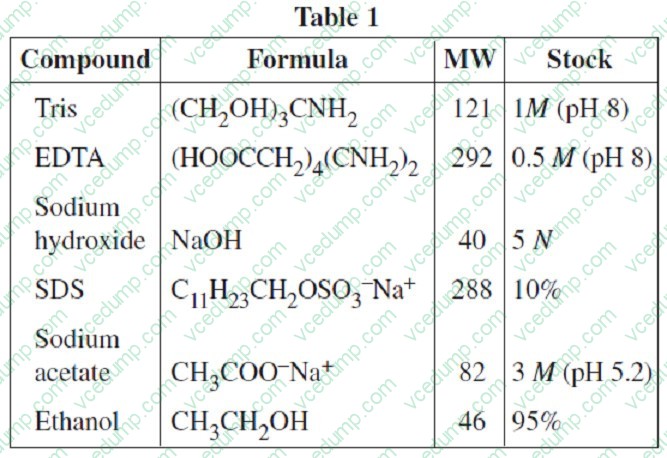
A researcher in a molecular biology lab planned to carry out an extraction procedure known as an alkaline plasmid prep, which is designed to purify plasmids, small pieces of the hereditary material DNA, from bacterial cells. The bacteria are first placed into a test tube containing liquid nutrient medium and allowed to grow until they reach a high population density. The culture, which consists of solid cells suspended in the medium, is then centrifuged; a solid pellet is formed. The supernatant is poured out, leaving the pellet behind, and the cells are resuspended in a mL of lysis buffer solution (50 mM glucose, 25 mM Tris buffer and 10 mM ethylenediaminetetraacetic acid (EDTA), with 5 mg of the enzyme lysozyme added). They are then incubated for 30 minutes at 0°C, during which time the bacterial cell walls break down and the cell contents are released into the solution. After incubation, 1 mL of 0.4 N sodium hydroxide and 1 mL of 2% sodium dodecyl sulfate (SDS) are added, and the solution is again incubated on ice for 10 minutes. 2 mL of 3 M sodium acetate are added and the mixture is incubated for 30 minutes at 0°C. The test tube is centrifuged once more and the supernatant is decanted into a clean tube, leaving behind the protein and most other cell components in the pellet. Finally, 10 mL of pure ethanol are added to the supernatant from the previous step to precipitate out the DNA, and the test tube is incubated at –20°C for 60 minutes, during which the mixture remains liquid. The mixture is centrifuged a final time and the supernatant removed. The translucent precipitate that results is washed with 70% ethanol (70% ethanol and 30% water by volume), allowed to dry, and resuspended in 1 mL of TE buffer (10 mM Tris, 1 mM EDTA). In preparation for this experiment, the researcher prepared stock solutions of the various chemicals that she will need in the experiment. Stock solutions are highly concentrated solutions of commonly used chemicals in water from which dilute solutions are prepared for daily use. Table 1 shows the chemicals, their molecular formulas and weights, and the composition of commonly used stock solutions.
Which of the following conclusions can be reached based on the fact that DNA precipitates in the last step of the plasmid prep procedure?
A. DNA dissolves better in water at lower temperatures.
B. DNA is polar and therefore dissolves better in water than in a mixture of water and ethanol.
C. DNA is nonpolar and therefore dissolves better in ethanol than in water.
D. DNA dissolves well in ethanol and precipitates only because the solution is centrifuged. -
Question 382:
Glycogen storage disease type V, also known as GSD-V or McArdle disease, is an autosomal recessive disease that results in the deficiency of myophosphorylase, an isoform of glycogen phosphorylase found in muscle cells. Patients with GSD-V experience severe muscle cramps after strenuous exercise and exercise intolerance.
Physicians may order two histology stains of the patient's muscle tissue in order to aid in the diagnosis (see Figure 1):
(A)
A Periodic acid-Schiff (PAS) stain uses periodic acid to detect carbohydrates in tissues. The reaction of the acid with sugar cleaves vicinal diols creating ketone and/or aldehyde fragments, the latter of which then reacts with the Schiff reagent to give a purple color;
(B)
A phosphorylase stain identifies the presence of the enzyme using a dark blue color indicator.
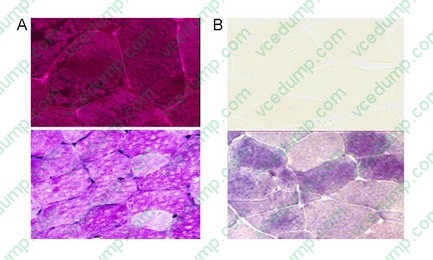
Figure 1A. Comparative histochemistry of GSD-V and healthy individual.
PAS stain of muscle tissue shows an accumulation of glycogen in the GSD-V individual (top) compared to the control (bottom). B) Phosphorylase stain of muscle tissue reveals an absence of phosphorylase in the GSD-V individual (top).
Despite initial pain during exercise, many patients with GSD-V have been able to increase their exercise tolerance by engaging in moderate periods of aerobic exercise. Muscle pain and fatigue subsides after a few minutes, a response that
researchers call the "second wind" phenomenon.
Patients who experienced "second wind" typically experienced lowered heart rate and a reported decrease in exercise effort after 7-10 minutes. A similar effect was seen in the same patients after an intravenous infusion of glucose.
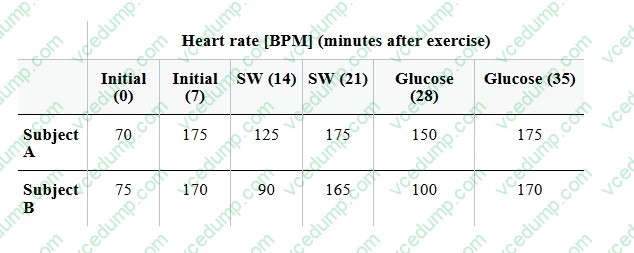
Figure 2. Measured heart rates in two GSD-V patients during sustained exercise.
Two subjects were asked to ride stationary bicycles at a steady rate over the course of 40 minutes. The subjects' heart rates were measured continuously, with high and low values coinciding with 7-minute intervals. Glucose was injected
intravenously after 21 minutes. SW = Second Wind.
Adapted from Bhavaraju-Sanka R, Howard J. Jr, Chahin N (2014). SOJ Neurol 1(1), 1-3. and Haller RG, Vissing J. Arch Neurol. 2002;59(9):1395-1402.
Muscle biopsies offer valuable data that can aid physicians in the diagnosis. However, they can be painful and invasive. A less invasive test uses a blood pressure cuff placed on the upper arm, which blocks blood flow to the arm. The patient
affected by GSD-V is then asked to perform a strenuous arm exercise, such as squeezing a rubber ball. After some time, blood is drawn, and its chemical contents are compared to pre-exercise blood samples. One would expect to see:
A. a decrease in calcium.
B. an increase in lactate.
C. an increase in glucose.
D. no increase in lactate. -
Question 383:
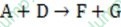
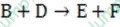
Several techniques have been developed to determine the order of a reaction. The rate of a reaction cannot be predicted on the basis of the overall equation, but can be predicted on the basis of the rate-determining step. For instance, the following reaction can be broken down into three steps.
Step 1

(Slow)
Step 2
(fast)
Step 3

(fast)
Reaction 1 In this case, the first step in the reaction pathway is the rate-determining step. Therefore, the overall rate of the reaction must equal the rate of the first step, k1 [A] where k1 is the rate constant for the first step. (Rate constants of the different steps are denoted by kx , where x is the step number.)
In some cases, it is desirable to measure the rate of a reaction in relation to only one species. In a second-order reaction, for instance, a large excess of one species is included in the reaction vessel. Since a relatively small amount of this large concentration is reacted, we assume that the concentration essentially remains unchanged. Such a reaction is called a pseudo first-order reaction. A new rate constant, k', is established, equal to the product of the rate constant of the original reaction, k, and the concentration of the species in excess. This approach is often used to analyze enzyme activity.
In some cases, the reaction rate may be dependent on the concentration of a short-lived intermediate. This can happen if the rate-determining step is not the first step. In this case, the concentration of the intermediate must be derived from the equilibrium constant of the preceding step. For redox reactions, the equilibrium can be correlated with the voltage produced by two half-cells by means of the Nernst equation. This equation states that at any given moment:
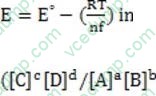
Equation 1 When

Reaction 2
Note: R = 8.314 J/K•mol; F = 9.6485 x 10⁴ C/mol.)
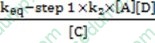
If Step 2 above were the rate-determining step of Reaction 1, which of the following equations would correctly define the rate?
A. Option A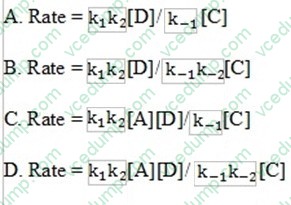
B. Option B
C. Option C
D. Option D -
Question 384:
The process of depolarization triggers the cardiac cycle. The electronics of the cycle can be monitored by an electrocardiogram (EKG). The cycle is divided into two major phases, both named for events in the ventricle: the period of ventricular contraction and blood ejection, systole, followed by the period of ventricular relaxation and blood filling, diastole.
During the very first part of systole, the ventricles are contracting but all valves in the heart are closed thus no blood can be ejected. Once the rising pressure in the ventricles becomes great enough to open the aortic and pulmonary valves, the ventricular ejection or systole occurs. Blood is forced into the aorta and pulmonary trunk as the contracting ventricular muscle fibers shorten. The volume of blood ejected from a ventricle during systole is termed stroke volume.
During the very first part of diastole, the ventricles begin to relax, and the aortic and pulmonary valves close. No blood is entering or leaving the ventricles since once again all the valves are closed. Once ventricular pressure falls below atrial pressure, the atrioventricular (AV) valves open. Atrial contraction occurs towards the end of diastole, after most of the ventricular filling has taken place. The ventricle receives blood throughout most of diastole, not just when the atrium contracts.
Figure 1: Electronic and pressure changes in the heart and aorta during the cardiac cycle.
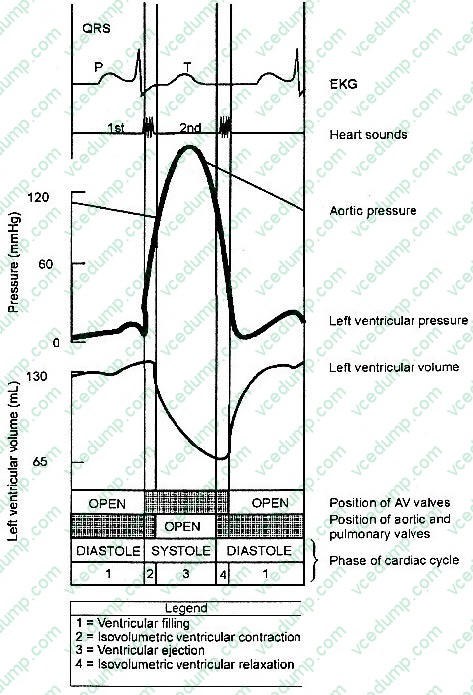
Position P on the EKG of Fig. 1 probably correspond to:
A. atrial contraction.
B. ventricular contraction.
C. the beginning of ventricular systole.
D. the beginning of ventricular diastole. -
Question 385:
By now the image of California in decline looms as large in the conventional media wisdom as the Golden State -- triumphant clich閟 of a generation ago -- "this El Dorado," as Time magazine had put it in 1969, that was to be "the mirror of America as it will become." Hardly anyone mentions the sunshine these days, or the beaches, or the beautiful young families around the pool, or the new lifestyles that all Americans will soon emulate, or how the University of California is wall-to-wall with cyclotrons and Nobel laureates, or how the state's higher-education system is accommodating absolutely all comers at little or no cost.
Today, California classrooms are among the most crowded in the country; many schools operate without libraries, without counselors, without nurses, without art or music, with greatly diminished curricular offerings. And what's true for the schools is true for the other services that have no powerful constituencies: children's protective services, probation, public health. Many cities have shut down swimming and wading pools because they cannot be safely maintained, and fenced playgrounds have been shut because of the danger presented by cracked and splintered structures. The list could be extended indefinitely. As thousands of professors receive golden handshakes from the University of California and California State University, among them some of the stars recruited in the go- go Fifties, the crowding in the lecture halls has increased and the lines at the classroom door have gotten longer and longer ("Don't panic," says the T-shirt on a student waiting to enroll at a Sacramento junior college, but many have been in line since four in the morning). U.C. tuition, which was roughly $800 a year in the early 1980s, is now over $4,000, a figure not out of line with tuitions at public colleges in other states but a far cry from the cost of a California state education in the golden days -- and it is almost certain to increase again next year. More than 200,000 students -- roughly 10 percent -- have vanished from the rolls of the state's colleges and universities in the past two years. While per capita tax revenues have been effectively frozen, and while they have declined relative to other states, client rolls for state services -- schools, prisons, Medicaid, welfare -- have been rising faster than population, leaving a structural gap that no one has yet confronted, much less closed. Again this year, the governor and legislature borrowed $7 billion from the banks and rolled over a $5 billion budget deficit, for which few politicians have proposed any remedies. Thanks to the deficit, California, which a decade ago, had one of the highest bond ratings in the country, has one of the lowest. "Were California a corporation," said John Vasconcellos, the chairman of the State Assembly Ways and Means Committee, "it would have little option but to initiate some sort of bankruptcy proceeding." The new image of California is familiar enough: a state suffering from earthquakes, fires, drought, floods, urban riots, dirty air, schools as overcrowded as the freeways; a legislature -- once said to be the nation's most professional and progressive -- oozing with corruption and stuck in the budgetary gridlock; and of course, recession, unemployment, chronic budget deficits, and financial calamity. For those who know their Nathaniel West, their Raymond Chandler, and their Joan Didion, the California apocalypse imagery is hardly new; it was always there on the dark side of the dream. This was the place, as Didion wrote back in the 1960s, "in which a boom mentality and a sense of Chekhovian loss meet in uneasy suspension; in which the mind is troubled by some buried but ineradicable suspicion that things better work here, because here, beneath that immense bleached sky, is where we run out of continent." os Angeles has burnt before. If you believe people like Governor Wilson, most of the state's problems were created somewhere else, usually in Washington, where the Clinton Administration has, on the one hand, cost California hundreds of thousands of jobs through excessive defense cuts and, on the other, allowed a horde of illegal immigrants to overrun the state's schools and health facilities without paying them for the immense costs that come with them...much has been changed in California since the days of West and Chandler, but the capacity for denial and self-deception is undiminished. In fact, California's trouble is at once more prosaic and more complex than the political rhetoric claims or the apocalyptic imagery suggests. It began before the recent recession, the big 1991 fire in the Oakland hills or the San Francisco earthquake of 1989 (itself a rerun of a classic), before those L.A. cops beat up Rodney King or the riot and the fire that followed their acquittal in the first trial, before the eight-year drought that still may not be over. And contrary to what a lot of Californians believe, a lot of the damage didn't just happen to us: we inflicted it on ourselves.
It can be inferred from the passage that compared to other states, California:
A. had held one of the highest bond ratings.
B. continues to make public education affordable to its residents.
C. has a progressive and professional legislature.
D. has been successful in balancing budgets. -
Question 386:
The anthropomorphic bias of those who would relegate marsupials to an inferior evolutionary status is most apparent in their recourse to data on brain structure and behavior. Unlike humans and other placentals, marsupials lack the corpus callosum, which facilitates inter-hemisphere transfer of data acquired through the senses. Yet it cannot be inferred that marsupials are thus deprived of such function. Didelphis Virginiana, one of the opossums, makes use of the anterior commissure, an adaptation that is also found in reptiles and monotremes. Diprodontons, including kangaroos and koalas, supplement the anterior commissure with the fasciculus aberrans. While the modes of neocortical interconnection may be diverse, the work of Johnson, Heath and Jones points to the conclusion that, functionally speaking the cortices and neocortices of both groups of mammals exhibit parallel connections. Parker also notes "a similar range of brain size to body weight ratios and of neocortical expansion". Another stigma borne by marsupials is the consensus that they are less intelligent than placentals. Yet Williams argues that, all else being equal, natural selection will favor instinctive over learned behavior as being more biologically efficient and that it is the accidental death of the young that is the prime selective pressure for the evolution of intelligence. Seen in this light, marsupials have a competitive edge; their gestation period is brief and the young remain in the pouch for an extended period exposed only to those dangers which also affect the mother. There they are directly exposed to the mother's food supply and can observe her behavior at leisure. Placentals, on the other hand, not only have a longer gestation period but, once their young are born, must often leave while foraging. Such absences increase the risk of mortality and decrease the opportunity to learn. Thus, among placentals, selection would favor the apparent intelligence in the young and protective behavior in the mother. Marsupials are not known to exhibit maternal protective behavior. In fact, Serventy has reported that frightened female kangaroos will drop their pouch-young as they flee, drawing a predator's attention to the less able offspring while the adult escapes. This behavior, whether purposeful or accidental, instantaneously relieves the female marsupial of the mechanical difficulties of pregnancy with which her placental counterpart would be burdened, while marsupials can replace any lost young quickly. Thus, in the absence of any need for close maternal supervision, sacrificing their offspring in this manner may well have been favored in selection. Pointing to the absence of the "virtue" of maternal protectiveness in marsupials is an instance of how mistaken are those theorists who see similarities with humans as marks of evolutionary sophistication.
The author uses the word "virtue" (line 48) in order to:
A. remind the reader that the word has specialized connotation in this context.
B. ridicule the thinkers whom she is attacking in her conclusion.
C. introduce the idea that moral concepts can be applied only to humans.
D. indicate that the term reflects a mode of thinking with which she disagrees. -
Question 387:
If both parents have one recessive allele for blue eyes and one dominant allele for brown eyes, what is the percentage chance of an offspring having blue eyes?
A. 0%
B. 25%
C. 100%
D. 50% -
Question 388:
The heart of majority of reptiles has:
A. three chambers.
B. four chambers.
C. six chambers.
D. five chambers. -
Question 389:
In the United States, breast cancer is the second leading cause of death for women, and as a result, the American Cancer Society, has recommended annual mammography screening for women age 40 years and older. It is estimated that the risk of mortality can be reduced through this procedure by approximately 20-25% during a ten-year period for women age 40 years and older.
In general, cancer screening behaviors have increased in the United States. According to the National Health Interview Survey, in 1987, approximately 29% of women age 40 years and older reported having had a mammogram in the last 2 years. By 2000, this increased to 70%. However, there are racial disparities, as fewer African American and Hispanic women have mammograms compared to their Caucasian female counterparts. Some studies have looked into these differences. Cultural factors seem to play a role in minority women obtaining fewer mammograms. Asian women, for example, do not like to discuss sensitive topics with strangers.
Prevention promotions have been designed to increase awareness for the need of breast cancer screening, particularly for women in racial and ethnic minority groups. An innovative breast cancer education program, called the Educational Intervention Asian Grocery Store-Based Education Program, was designed to target Asian women. Located in 20 different Asian grocery stores in communities, the cancer screening exhibits were placed at the entrances of the stores. As Asian women came into the grocery store, health information was passed out to Asian women. Even though only a small amount of women who were considered non-adherents to breast cancer screening ended up scheduling a screening, the study demonstrated an innovative culturally competent approach to health promotion.
Source: Adapted from G.R. Sadler, P.R. Beerman, K. Lee et al. "Promoting Breast Cancer Screening Among Asian American Women: The Asian Grocery Store Based Cancer Education Program." Copyright 2012 Journal of Cancer Education.
After learning about the foot-in-the-door technique, what might a health promoter do so to promote Asian women to sign up for a mammogram appointment?
A. Give them a 15-minute lecture on the importance of early prevention.
B. Promote the cultural concept of "loss of face" by informing them that the sponsors of the Educational Intervention Asian Grocery Store-Based Education Program put in a lot of money into the program and will lose face if progress is not made.
C. Encourage them to take a free shopping bag that includes a box of tea bags and a brochure about mammograms.
D. Tell them that many other Asian women have signed up right on the spot. -
Question 390:
Morphine alkaloids derived from the opium poppy have long been used as analgesics. Codeine, the methyl ether of morphine, is a naturally occurring alkaloid with medicinal properties very similar to those of morphine. Thousands of derivatives of morphine have been synthesized and tested for their biological effects. For example, the diacylated derivative of morphine, heroin, is a highly addictive drug. Much effort has gone into understanding how morphine and its derivatives function.
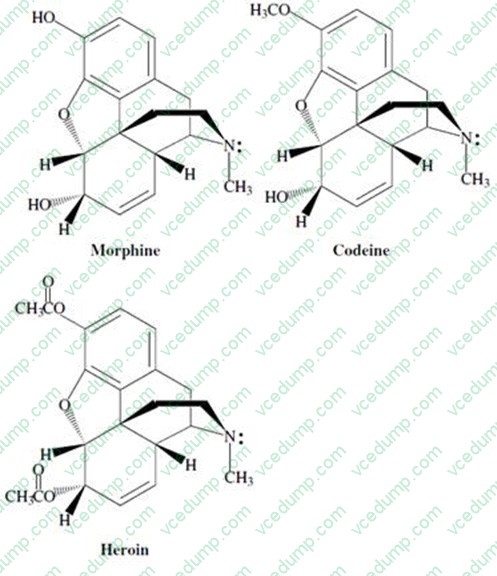
Studies have shown that certain common structural features of alkaloids are required for the compound to exhibit biological activity. These structural requirements are summarized by the so called "morphine rule":
Demerol and methadone, shown in Figure 2, are two synthetic alkaloids designed to satisfy the "morphine rule." Synthetic alkaloids such as these have been found to mimic certain physiological properties of morphine and its derivatives, and
have found pharmacological application due to other, more desirable biological effects. Methadone has been used widely in the United States and Great Britain as a treatment for heroin addiction; it reduces the physical symptoms
accompanying withdrawal without producing many of the other effects of heroin.
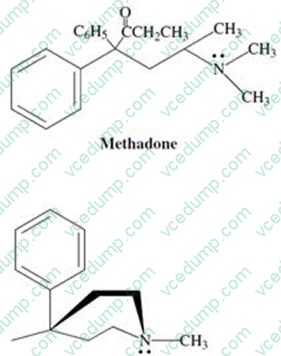
Meperidine (demerol) Figure 2
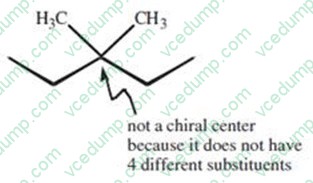
One of the requirements of the "morphine rule" is that an aromatic ring be attached to a quaternary carbon in order for the molecule to be biologically active. The quaternary carbon of any morphine-like substance must be:
I. a stereocenter
II. sp3 hybridized
III.
sp2 hybridized
A. I only
B. II only
C. I and II only
D. I and III only
I. a stereocenter II. sp3 hybridized III. sp2 hybridized


Related Exams:
Tips on How to Prepare for the Exams
Nowadays, the certification exams become more and more important and required by more and more enterprises when applying for a job. But how to prepare for the exam effectively? How to prepare for the exam in a short time with less efforts? How to get a ideal result and how to find the most reliable resources? Here on Vcedump.com, you will find all the answers. Vcedump.com provide not only Medical Tests exam questions, answers and explanations but also complete assistance on your exam preparation and certification application. If you are confused on your MCAT-TEST exam preparations and Medical Tests certification application, do not hesitate to visit our Vcedump.com to find your solutions here.