MCAT-TEST Exam Details
-
Exam Code
:MCAT-TEST -
Exam Name
:Medical College Admission Test: Verbal Reasoning, Biological Sciences, Physical Sciences, Writing Sample -
Certification
:Medical Tests Certifications -
Vendor
:Medical Tests -
Total Questions
:812 Q&As -
Last Updated
:Jul 16, 2026
Medical Tests MCAT-TEST Online Questions & Answers
-
Question 211:
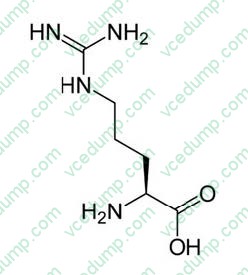
Arginine is one of the 20 most common natural amino acids. Most healthy people do not need to supplement with arginine because the body usually produces sufficient quantities. The pathway for arginine synthesis was studied using cells from a red bread mold. This natural form of arginine is illustrated below.
The red bread mold Neurospora crassa grows well on a cultural plate with "minimal" medium which is a fluid containing only a few simple sugars, inorganic salts, and vitamin. Neurospora that grows normally in nature (wild type) has enzymes that convert these simple substances into the amino acids necessary for growth. Mutating any one of the genes that makes an enzyme can produce a Neurospora strain that cannot grow on minimal medium. The mutant would only grow if the enzyme product were to be added as a supplement. On the other hand, if a "complete" medium is provided, containing all required amino acids, then Neurospora would grow, with or without mutation.
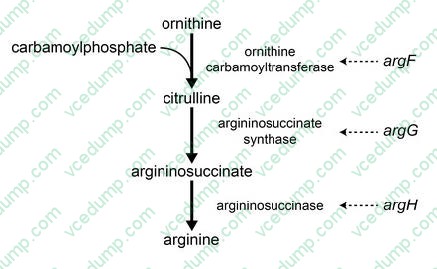
Figure 1 A synthesis pathway for the amino acid arginine. Each gene in italics in the diagram produces one enzyme necessary for the synthesis of this essential amino acid required for growth.

Table 1 Growth response of mutant strains in "minimal" media with supplements (ornithine, citrulline, argininosuccinate, and arginine) as indicated. Strain growth is indicated by (+) and no strain growth is indicated by (-).
According to the information provided, a conclusion that can be made with certainty is that neither mutant strain P nor Q have the defective enzyme:
A. carbamoyltransferase.
B. argininosuccinate synthase.
C. argininosuccinase.
D. None of the above enzymes are defective in either mutant strain P nor Q. -
Question 212:
A hovercraft is a versatile vehicle capable of traveling over land, water, or any other essentially flat surface. The hovercraft consists of a body or hull onto which a rotor (lift fan) is mounted. The lift fan provides the vertical lift by propelling air into an area beneath the hovercraft called the skirt. The pocket of air in the skirt supports the moving hovercraft and reduces the friction between the vehicle and the ground to almost zero. As such, there is no contact between the hovercraft and the ground.
A second fan, which generates a horizontal thrust, propels the hovercraft forward. Rudders which direct the airflow from this second fan are used by the pilot to control the movement of the hovercraft. The horizontal movement of the

hovercraft is opposed by air resistance which generates aerodynamic drag.
Which of the following conditions must be true for the thrust fan to propel the hovercraft horizontally? (Assume that the air is not compressed in the process.)
A. The air intake velocity must be lower than the air output velocity.
B. The air intake velocity must be greater than the air output velocity.
C. The air intake volume must be lower than the air output volume.
D. The air intake pressure must be greater than the air output pressure. -
Question 213:
Several models have been developed for relating changes in dissociation constants to changes in the tertiary and quaternary structures of oligomeric proteins. One model suggests that the protein's subunits can exist in either of two distinct conformations, R and T. At equilibrium, there are few R conformation molecules: 10 000 T to 1 R and it is an important feature of the enzyme that this ratio does not change. The substrate is assumed to bind more tightly to the R form than to the T form, which means that binding of the substrate favors the transition from the T conformation to R.
The conformational transitions of the individual subunits are assumed to be tightly linked, so that if one subunit flips from T to R the others must do the same. The binding of the first molecule of substrate thus promotes the binding of the second and if substrate is added continuously, all of the enzyme will be in the R form and act on the substrate. Because the concerted transition of all of the subunits from T to R or back, preserves the overall symmetry of the protein, this model is called the symmetry model. The model further predicts that allosteric activating enzymes make the R conformation even more reactive with the substrate while allosteric inhibitors react with the T conformation so that most of the enzyme is held back in the T shape.
Experiment Evaluating Non-Symmetry Model Enzymes
Experiments were performed with enzyme conformers that did not obey the symmetry model. The data is summarized in Figure 1.
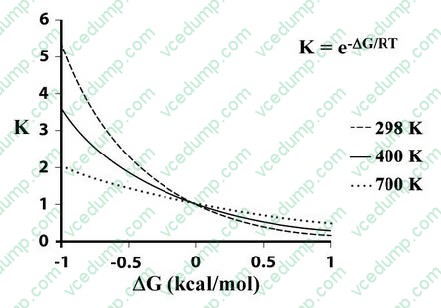
Figure 1: Equilibrium distribution of two conformers at different temperatures given the free energy of their interconversion. (modified from Mr.Holmium).
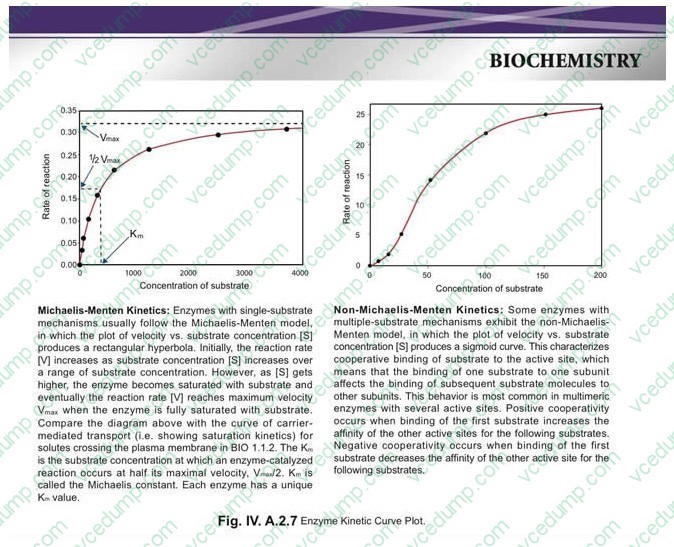
The symmetry model describes a form of cooperative binding. Most enzymes do not engage in cooperative binding. The predicted shape of a graph representing reaction rate versus the addition of substrate to most enzymes would be expected to be:
A. a hyperbola.
B. a straight line with a positive slope.
C. a straight line with a negative slope.
D. sigmoidal. -
Question 214:
In the early nineteenth century a large number of communal experiments, both secular and religious, sprang up in the northeastern United States. Perhaps the most famous secular commune was Brook Farm, founded by transcendentalists George Ripley and William H. Channing to promote the pursuit of leisure and culture through the proper application of time and labor. Its members (among the more notable were Nathaniel Hawthorne and Margaret Fuller) pursued field labor by day, art and philosophy by night. For a time the system worked so well that two afternoons a week were set aside for leisure and Brook Farm began outcompeting local farmers at the produce market. But by nature the Farm's members were thinkers, not workers; despite their success they remained mainly interested in the theoretical and philosophical implications of the experiment. Thus, when a devastating fire brought the community considerable financial burdens in its fifth year, the members felt little compunction about closing shop and returning to their comfortable Boston homes.
One of the most notable religious utopias was the Oneida community. Its founder, John Humphrey Noyes, believed that Christ's second coming had already occurred and that everyone alive was favored by Divine grace, which Noyes saw as an imperative to live a better life. Perhaps surprisingly, the Oneidans embraced industry and commerce, achieving success in fruit packing, trap making, and silk thread winding. They owned everything communally, and this principle extended to each other. The Oneidans saw monogamy as a selfish act and asserted that the men and women of the community were united in one "complex" marriage; sex between any two consenting members was perfectly acceptable. The Oneidans maintained order solely through "criticism"--anyone acting out of line was made to stand before the other members and hear his or her faults recounted. Oneida remained viable for some thirty years, until the leadership devolved on Noyes' son, an agnostic. The old religious fervor died out, and the dream degenerated into a joint stock company. Doubtless the most successful communalists were the Shakers, so called for the early propensity to tremble ecstatically during religious worship. Their guiding light, Mother Ann, espoused four key principles: Virgin Purity, Christian Communism, Confession, and Separation from the World. Though the Shakers were less adamant on the last point--maintaining social relations and some commerce with heir neighbors--they insisted on the other three, and renounced both personal property and sex. Men and women lived in a single large "Unitary Dwelling" and were considered complete equals, but they occupied separate wings and could speak together only if a third person were present. Despite their religious strictness, Shakers were known as simple, sincere, intelligent people, healthy and long-lived, producers of lovely books and hymns, and of furniture still prized for its quality and durability. In their eyday, six thousand Shakers lived in fifty-eight separate "families" throughout the Northeast. Later their celibacy, combined with their strict discipline, led to a decline in numbers, but even today a small number of elderly Shakers in two communities in Maine and New Hampshire continue to keep the faith.
The Shakers resembled the Oneidans in their attitude toward:
A. sexual practices.
B. equality of men and women.
C. personal property.
D. contact with the outside world. -
Question 215:
Although we know more about so-called Neanderthal men than about any other early population, their exact relation to present-day human beings remains unclear. Long considered sub-human, Neanderthals are now known to have been fully human. They walked erect, used fire, and made a variety of tools. They lived partly in the open and partly in caves. The Neanderthals are even thought to have been the first humans to bury their dead, a practice which has been interpreted as demonstrating the capacity for religious and abstract thought. The first monograph on Neanderthal anatomy, published by Marcelling Boule in 1913, presented a somewhat misleading picture. Boule took the Neanderthals' lowvaulted cranium and prominent brow ridges, their heavy musculature, and the apparent overdevelopment of certain joints as evidence of a prehuman physical appearance. In postulating for the Neanderthal such "primitive" characteristics as a stooping, bent-kneed posture, a rolling gait, and a forward-hanging head, Boule was a victim of the rudimentary state of anatomical science. Modern anthropologists recognize the Neanderthal bone structure as that of a creature whose bodily orientation and capacities were very similar to those of present-day human beings. The differences in the size and shape of the limbs, shoulder blades, and other body parts are simply adaptations which were necessary to handle the Neanderthal's far more massive musculature. Current taxonomy considers the Neanderthals to have been fully human and thus designates them not as a separate species, Homo neanderthalensis, but as a subspecies of Homo sapiens: Homo sapiens neanderthalensis. The rise of the Neanderthals occurred over some 100,000 years -- a sufficient period to account for evolution of the specifically Neanderthal characteristics through free interbreeding over a broad geographical range. Fossil evidence suggests that the Neanderthals inhabited a vast area from Europe through the Middle East and into Central Asia from approximately 100,000 years ago until 35,000 years ago. Then, within a brief period of five to ten thousand years, they disappeared. Modern human, not found in Europe prior to about 33,000 years ago, thenceforth became the sole inhabitants of the region. Anthropologists do not believe that the Neanderthals evolved into modern human beings. Despite the similarities between Neanderthal and modern human anatomy, the differences are great enough that, among a population as broad-ranging as the Neanderthals, such an evolution could not have taken place in a period of only ten thousand years. Furthermore, no fossils of types intermediate between Neanderthals and moderns have been found. A major alternative hypothesis, advanced by E. Trinkaus and W.W. Howells, is that of localized evolution. Within a geographically concentrated population, free interbreeding could have produced far more pronounced genetic effects within a shorter time. Thus modern human could have evolved relatively quickly, either from Neanderthals or from some other ancestral type, in isolation from the main Neanderthal population. These humans may have migrated throughout the Neanderthal areas, where they displaced or absorbed the original inhabitants. One hypothesis suggests that these "modern" humans immigrated to Europe from the Middle East. No satisfactory explanation of why modern human beings replaced the Neanderthals has yet been found. Some have speculated that the modern humans wiped out the Neanderthals in warfare; however, there exists no archeological evidence of a hostile encounter. It has also been suggested that the Neanderthals failed to adapt to the onset of the last Ice Age; yet their thick bodies should have been heat-conserving and thus well-adapted to extreme cold. Finally, it is possible that the improved tools and hunting implements of the late Neanderthal period made the powerful Neanderthal physique less of an advantage than it had been previously. At the same time, the Neanderthals' need for a heavy diet to sustain this physique put them at a disadvantage compared to the less massive moderns. If this was the case, then it was improvements in human culture -- including some introduced by the Neanderthals themselves -- that made the Neanderthal obsolete.
The passage best supports which of the following conclusions?
A. Neanderthals were less intelligent than early modern humans.
B. Neanderthals were poorly adapted for survival.
C. There was probably no contact between Neanderthals and early modern humans.
D. Neanderthals may have had a capacity for religious and abstract thought. -
Question 216:
Agonistic behavior, or aggression, is exhibited by most of the more than three million species of animals on this planet. Animal behaviorists still disagree on a comprehensive definition of the term, but aggressive behavior can be loosely described as any action that harms an adversary or compels it to retreat. Aggression may serve many purposes, such as food gathering, establishing territory, and enforcing social hierarchy. In a general Darwinian sense, however, the purpose of aggressive behavior is to increase the individual animal's -- and thus, the species' -- chance of survival. Aggressive behavior may be directed at animals of other species, or it may be conspecific -- that is, directed at members of an animal's own species. One of the most common examples of conspecific aggression occurs in the establishment and maintenance of social hierarchies. In a hierarchy, social dominance is usually established according to physical superiority; the classic example is that of a pecking order among domestic fowl. The dominance hierarchy may be viewed as a means of social control that reduces the incidence of attack within a group. Once established, the hierarchy is rarely threatened by disputes because the inferior animal immediately submits when confronted by a superior. Two basic types of aggressive behavior are common to most species: attack and defensive threat. Each type involves a particular pattern of physiological and behavioral responses, which tends not to vary regardless of the stimulus that provokes it. For example, the pattern of attack behavior in cats involves a series of movements, such as stalking, biting, seizing with the forepaws and scratching with the hind legs, that changes very little regardless of the stimulus -- that is, regardless of who or what the cat is attacking. The cat's defensive threat response offers another set of closely linked physiological and behavioral patterns. The cardiovascular system begins to pump blood at a faster rate, in preparation for sudden physical activity. The eyes narrow and the ears flatten against the side of the cat's head for protection, and other vulnerable areas of the body such as the stomach and throat are similarly contracted. Growling or hissing noises and erect fur also signal defensive threat. As with the attack response, this pattern of responses is generated with little variation regardless of the nature of the stimulus. Are these aggressive patterns of attack and defensive threat innate, genetically programmed, or are they learned? The answer seems to be a combination of both. A mouse is helpless at birth, but by its 12th day of life can assume a defensive threat position by backing up on its hind legs. By the time it is one month old, the mouse begins to exhibit the attack response. Nonetheless, copious evidence suggests that animals learn and practice aggressive behavior; one need look no further than the sight of a kitten playing with a ball of string. All the elements of attack -- stalking, pouncing, biting and shaking -- are part of the game which prepares the kitten for more serious situations later in life.
Based on the information in the passage about agonistic behavior, it is reasonable to conclude that:
I. the purpose of agonistic behavior is to help insure the survival of the species.
II. agonistic behavior is both innate and learned.
III.
conspecific aggression is more frequent than interspecies aggression.
A. I only
B. II only
C. I and II only
D. I, II and III
I. the purpose of agonistic behavior is to help insure the survival of the species. II. agonistic behavior is both innate and learned. III. conspecific aggression is more frequent than interspecies aggression. -
Question 217:
The automobile airbag was designed to inflate upon impact and decrease the risk of injury to drivers and passengers. Among the challenges to its development was the need to find a reliable inflation mechanism that was sufficiently rapid, controllable, and nontoxic. Prototypes employing compressed gases failed to meet these criteria. Researchers thus turned their attention to chemical alternatives.
The ideal inflatant requires a chemical reaction in which the reactants are stable and relatively dense in the condensed phase while the products are mostly or completely gaseous at ambient temperature and pressure. Additionally, the ideal chemical reaction would require a low activation energy and have a high kinetic rate constant, without the large exothermicity characteristic of most such reactions. Traditional explosives such as nitroglycerin, C3H5N3O9(l), were rejected almost immediately because of the extremely exothermic nature of their conversion. Benign solids such as calcium carbonate, CaCO3 , were similarly rejected, because of their large activation requirements. The desired attributes were finally found in sodium azide, NaN3, a stable, dense, ionic solid which rapidly decomposes into elemental sodium and nitrogen gas when ignited by an electrical impulse.

Reaction 1
The gas generating mixture includes excess KNO3 which reacts with the sodium metal from Reaction 1 to produce additional N2 and potassium and sodium oxides (Reactions 2 and 3). These oxides react with SiO2 to produce a non-toxic and stable alkaline silica (glass).

Reaction 2

Reaction 3
Potassium chlorate, KClO3(s), decomposes when heated, yet it is unsuitable as an airbag inflatant. All of the following characteristics of KClO3 make it a poor candidate for an air bag inflatant EXCEPT:
A. the decomposition requires a steady supply of energy due to its high activation energy and low exothermicity.
B. the oxygen gas formed upon decomposition creates a combustion hazard during an automobile accident.
C. the potassium chloride formed upon decomposition is a dense solid.
D. the oxygen gas formed upon decomposition leads to rapid expansion of the reaction mixture. -
Question 218:
X-rays are produced by a device which beams electrons with an energy between 103 and 106 eV at a metal plate. The electrons interact with the metal plate and are stopped by it. Much of the energy of the incoming electrons is released in the form of X-rays, which are high-energy photons of electromagnetic radiation. An example of such a device is shown below. Electrons are accelerated from the cathode towards the anode by an electric field.
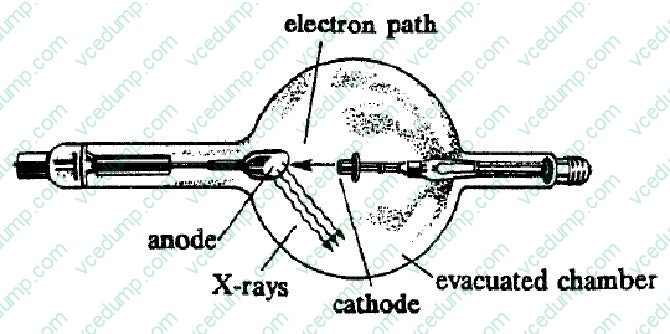
There are two mechanisms by which the X-rays are produced within the metal. The first mechanism is called bremsstrahlung, which is German for "breaking radiation." X-rays are emitted by the electrons as they are brought to rest by
interactions with the positive nuclei of the anode.
The second mechanism occurs when an incoming electron knocks an inner electron out of one of the metal atoms of the anode. This electron is replaced by an electron from a higher energy level of the atom, and a photon making up the
energy difference is emitted.
X-rays are absorbed by a material when they pass through it. The amount of X-rays absorbed increases with the density of the material. In addition, lower energy X-rays are more likely to be absorbed than higher energy X-rays. (Note: 1 eV =
1.6 x 10¹⁹ J; Planck's constant h = 4.1 x 10⁻¹⁵ eV•s; speed of light c = 3 x 10⁸ m/s.)
In an X-ray tube, electrons of charge e are accelerated through a potential difference of V. The anode is cooled by water of mass m with specific heat c. If n electrons per second strike the anode, what is the maximum possible rise in the temperature of the water after 100 s?
A. nVe/100mc
B. 100Ve/mc
C. 100n(Ve + mc)
D. 100nVe/mc -
Question 219:
Due to ever-increasing paranoia about the transmission of hepatitis and AIDS via blood transfusions and the frequent difficulty of procuring matching blood donors for patients, researchers have been working at a feverish pace to produce disease-free and easy-to-use blood substitutes. The difficulty most synthetic blood researches have had is in formulating a substance that combines qualities of sterility, high capacity for carrying oxygen to body tissues, and versatility within the human body. Three major substitute technologies have been developed to date; each has certain advantages and shortcomings.
"Red blood," the first of the blood substitute technologies, is derived from hemoglobin which has been recycled from old, dead, or worn-out red blood cells and modified so that it can carry oxygen outside the red blood cell. Hemoglobin, a complex protein, is the blood's natural oxygen carrier and is attractive to scientists for use in synthetic blood because of its oxygen-carrying capacity. However, hemoglobin can sometimes constitute a two-fold threat to humans when it is extracted from the red blood cell and introduced to the body in its naked form. First, hemoglobin molecules are rarely sterile and often remain contaminated by viruses to which they were exposed in the cell. Second, naked hemoglobin is extremely dangerous to the kidneys, causing blood flow at these organs to shut down and leading, ultimately, to renal failure. Additional problems arise from the fact that hemoglobin is adapted to operate optimally within the intricate environment of the red blood cell. Stripped of the protection of the cell, the hemoglobin molecule tends to suffer breakdown within several hours. Although modification has produced more durable hemoglobin molecules which do not cause renal failure, undesired side effects continue to plague patients and hinder the development of hemoglobin-based blood substitutes.
Another synthetic blood alternative, "white blood," is dependent on laboratory synthesized chemicals called perfluorocarbons (PFCs). Unlike blood, PFCs are clear oil like liquids, yet they are capable of absorbing quantities of oxygen up to 50% of their volume, enough of an oxygen carrying potential for oxygen-dependent organisms to survive submerged in the liquid for hours by "breathing" it. Although PFCs imitate real blood by effectively absorbing oxygen, scientists are primarily interested in them as constituents of blood substitutes because they are inherently safer to use than hemoglobin-based substitutes. PFCs do not interact with any chemicals in the body and can be manufactured in near-perfect sterility. The primary pitfall of PFCs is in their tendency to form globules in plasma that can block circulation. Dissolving PFCs in solution can mitigate globulation; however, this procedure also seriously curtails the PFCs' oxygen capacity.
The final and perhaps most ambitious attempt to form a blood substitute involves the synthesis of a modified version of human hemoglobin by genetically-altered bacteria. Fortunately, this synthetic hemoglobin seems to closely mimic the qualities of sterility, and durability outside the cellular environment, and the oxygen-carrying efficiency of blood. Furthermore, researchers have found that if modified hemoglobin genes are added to bacterial DNA, the bacteria will produce the desired product in copious quantities. This procedure is extremely challenging, however, because it requires the isolation of the human gene for the production of hemoglobin, and the modification of the gene to express a molecule that works without support from a living cell.
While all the above technologies have serious drawbacks and difficulties, work to perfect an ideal blood substitute continues. Scientists hope that in the near future safe synthetic blood transfusions may ease blood shortages and resolve the unavailability of various blood types.
We can infer that all of the synthetic blood technologies discussed in this passage:
A. sustain submerged oxygen-dependent organisms.
B. possess high oxygen-carrying capacities.
C. maintain high standards of sterility.
D. exhibit versatility in the human body -
Question 220:
The lead-acid battery, also called a lead storage battery, is the battery of choice for starting automobiles. It contains 6 cells connected in series, each composed of a lead oxide cathode "sandwiched" between 2 lead anodes. Insulating separators are placed between the electrodes to prevent internal short-circuits. Aqueous sulfuric acid is the electrolyte.
When the battery is being discharged, the following reaction takes place:

Reaction 1
The electrode reactions, both written as reductions, are shown in Table 1.
Table 1
Half-reaction
E?V)
PbO2(s) + SO42-(aq) + 4H+(aq) + 2ePbSO4(s) + 2H2O
PbSO4(s) + 2e-Pb(s) + SO42-(aq)
?.36
As a car operates, the battery is recharged by electricity produced by the car's alternator, an AC generator whose ultimate power source is the car's internal combustion engine. In spite of this, batteries eventually lose their power. The battery
is said to be "dead" when Reaction 1 has proceeded completely to the right.
Where does oxidation occur in the lead storage battery?
A. At the lead oxide cathodes
B. At the lead oxide anodes
C. At the lead cathodes
D. At the lead anodes
Related Exams:
Tips on How to Prepare for the Exams
Nowadays, the certification exams become more and more important and required by more and more enterprises when applying for a job. But how to prepare for the exam effectively? How to prepare for the exam in a short time with less efforts? How to get a ideal result and how to find the most reliable resources? Here on Vcedump.com, you will find all the answers. Vcedump.com provide not only Medical Tests exam questions, answers and explanations but also complete assistance on your exam preparation and certification application. If you are confused on your MCAT-TEST exam preparations and Medical Tests certification application, do not hesitate to visit our Vcedump.com to find your solutions here.