FCP_FGT_AD-7.4 Exam Details
-
Exam Code
:FCP_FGT_AD-7.4 -
Exam Name
:FCP - FortiGate 7.4 Administrator -
Certification
:Fortinet Certifications -
Vendor
:Fortinet -
Total Questions
:89 Q&As -
Last Updated
:Jul 12, 2026
Fortinet FCP_FGT_AD-7.4 Online Questions & Answers
-
Question 41:
Refer to the exhibits.
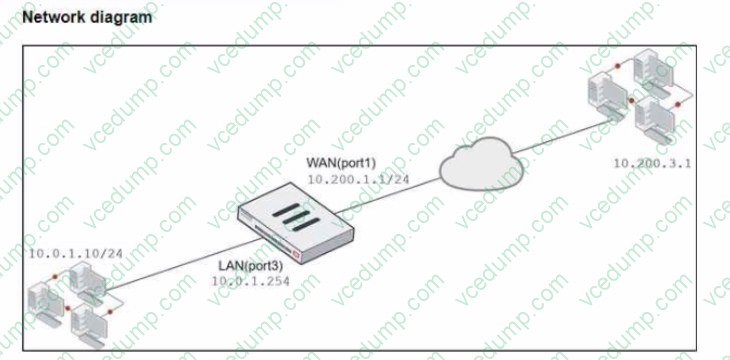
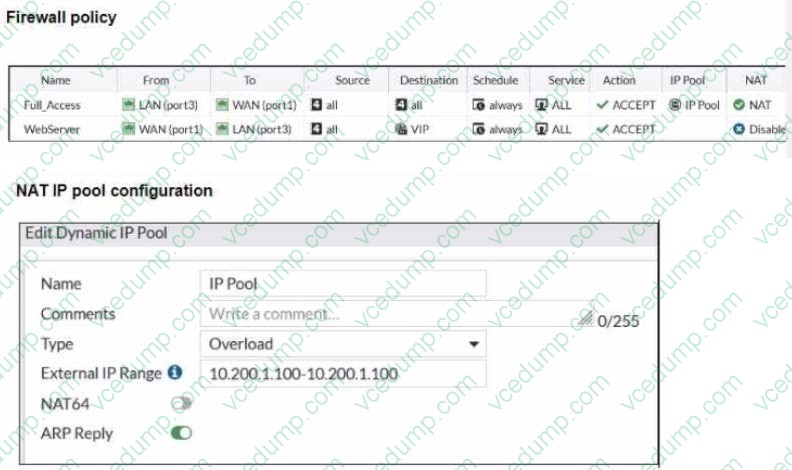
The exhibits show a diagram of a FortiGate device connected to the network, and the firewall policies configuration VIP configuration and IP pool configuration on the FortiGate device
The WAN (port1) interface has the IP address 10.200. l. 1/24 The LAN (port3) interface has the IP address 10.0.1.254/24
The first firewall policy has NAT enabled using the IP pool The second firewall policy is configured with a VIP as the destination address.
Which IP address will be used to source NAT (SNAT) the internet traffic coming from a workstation with the IP address 10.0.1.10?
A. 10.200.1.1
B. 10.200.1.10
C. 10.0.1.254
D. 10.200.1.100 -
Question 42:
Refer to the exhibit, which shows the IPS sensor configuration.
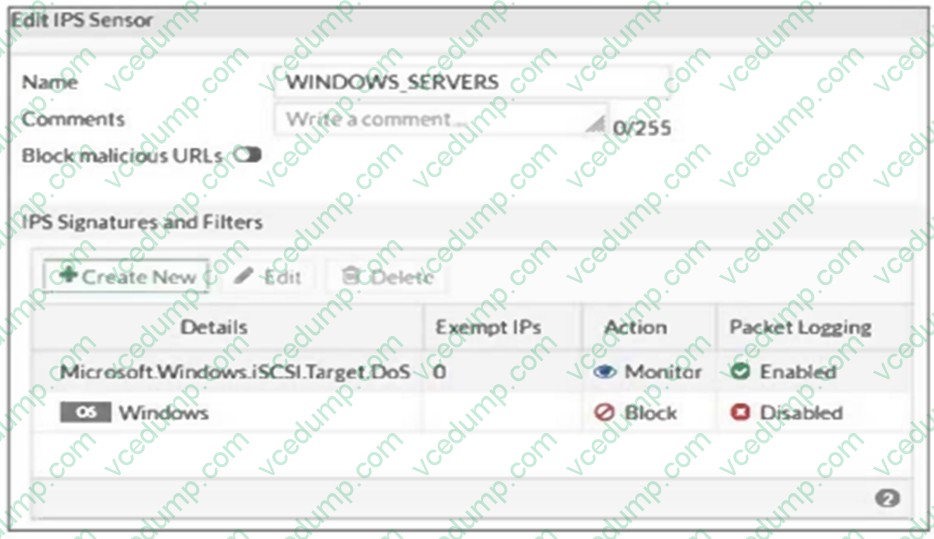
If traffic matches this IPS sensor, which two actions is the sensor expected to take? (Choose two.)
A. The sensor will gather a packet log for all matched traffic.
B. The sensor will reset all connections that match these signatures.
C. The sensor will allow attackers matching the Microsoft.Windows.iSCSl.Target.DoS signature.
D. The sensor will block all attacks aimed at Windows servers. -
Question 43:
A network administrator wants to set up redundant IPsec VPN tunnels on FortiGate by using two IPsec VPN tunnels and static routes.
All traffic must be routed through the primary tunnel when both tunnels are up. The secondary tunnel must be used only if the primary tunnel goes down. In addition, FortiGate should be able to detect a dead tunnel to speed up tunnel failover.
Which two key configuration changes must the administrator make on FortiGate to meet the requirements? (Choose two.)
A. Enable Dead Peer Detection
B. Enable Auto-negotiate and Autokey Keep Alive on the phase 2 configuration of both tunnels.
C. Configure a lower distance on the static route for the primary tunnel, and a higher distance on the static route for the secondary tunnel.
D. Configure a higher distance on the static route for the primary tunnel, and a lower distance on the static route for the secondary tunnel. -
Question 44:
Refer to the exhibits.
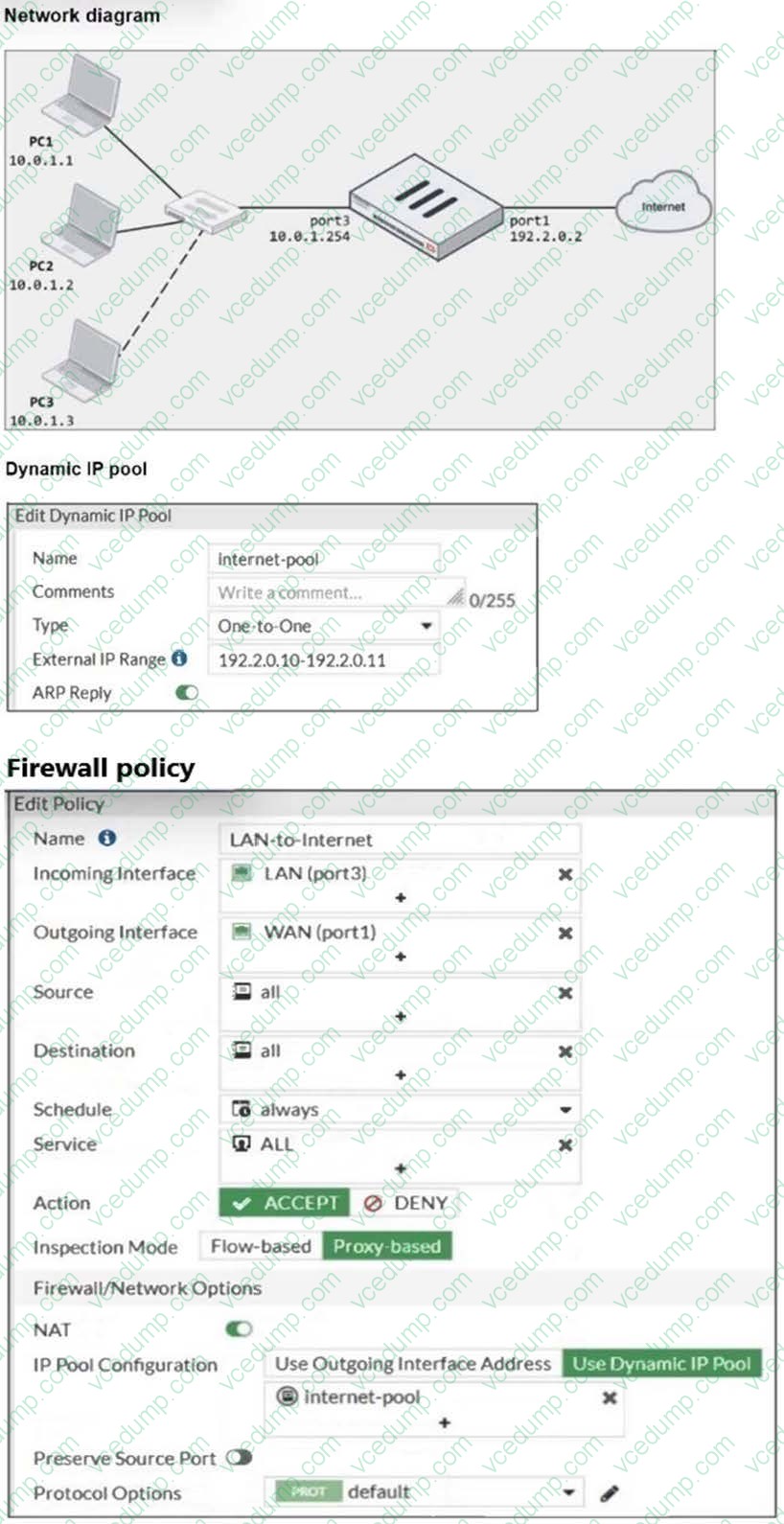
The exhibits show a diagram of a FortiGate device connected to the network, as well as the firewall policy and IP pool configuration on the FortiGate device.
Two PCs, PC1 and PC2, are connected behind FortiGate and can access the internet successfully. However, when the administrator adds a third PC to the network (PC3), the PC cannot connect to the internet.
Based on the information shown in the exhibit, which two configuration options can the administrator use to fix the connectivity issue for PC3? (Choose two.)
A. In the firewall policy configuration, add 10. o. l. 3 as an address object in the source field.
B. In the IP pool configuration, set endig to 192.2.0.12.
C. Configure another firewall policy that matches only the address of PC3 as source, and then place the policy on top of the list.
D. In the IP pool configuration, set cype to overload. -
Question 45:
Which two statements are correct when FortiGate enters conserve mode? (Choose two.)
A. FortiGate halts complete system operation and requires a reboot to regain available resources
B. FortiGate refuses to accept configuration changes
C. FortiGate continues to run critical security actions, such as quarantine.
D. FortiGate continues to transmit packets without IPS inspection when the fail-open global setting in IPS is enabled -
Question 46:
An administrator must enable a DHCP server on one of the directly connected networks on FortiGate. However, the administrator is unable to complete the process on the GUI to enable the service on the interface. In this scenario, what prevents the administrator from enabling DHCP service?
A. The role of the interface prevents setting a DHCP server.
B. The DHCP server setting is available only on the CLI.
C. Another interface is configured as the only DHCP server on FortiGate.
D. The FortiGate model does not support the DHCP server. -
Question 47:
Which two statements explain antivirus scanning modes? (Choose two.)
A. In flow-based inspection mode, FortiGate buffers the file, but also simultaneously transmits it to the client.
B. In flow-based inspection mode files bigger than the buffer size are scanned
C. In proxy-based inspection mode files bigger than the buffer size are scanned
D. In proxy-based inspection mode antivirus scanning buffers the whole file for scanning, before sending it to the client -
Question 48:
Refer to the exhibit, which shows a partial configuration from the remote authentication server.

Why does the FortiGate administrator need this configuration?
A. To authenticate only the Training user group.
B. To set up a RADIUS server Secret
C. To authenticate and match the Training OU on the RADIUS server.
D. To authenticate Any FortiGate user groups. -
Question 49:
Which inspection mode does FortiGate use for application profiles if it is configured as a profile-based next-generation firewall (NGFW)?
A. Full content inspection
B. Proxy-based inspection
C. Certificate inspection
D. Flow-based inspection -
Question 50:
Refer to the exhibits.
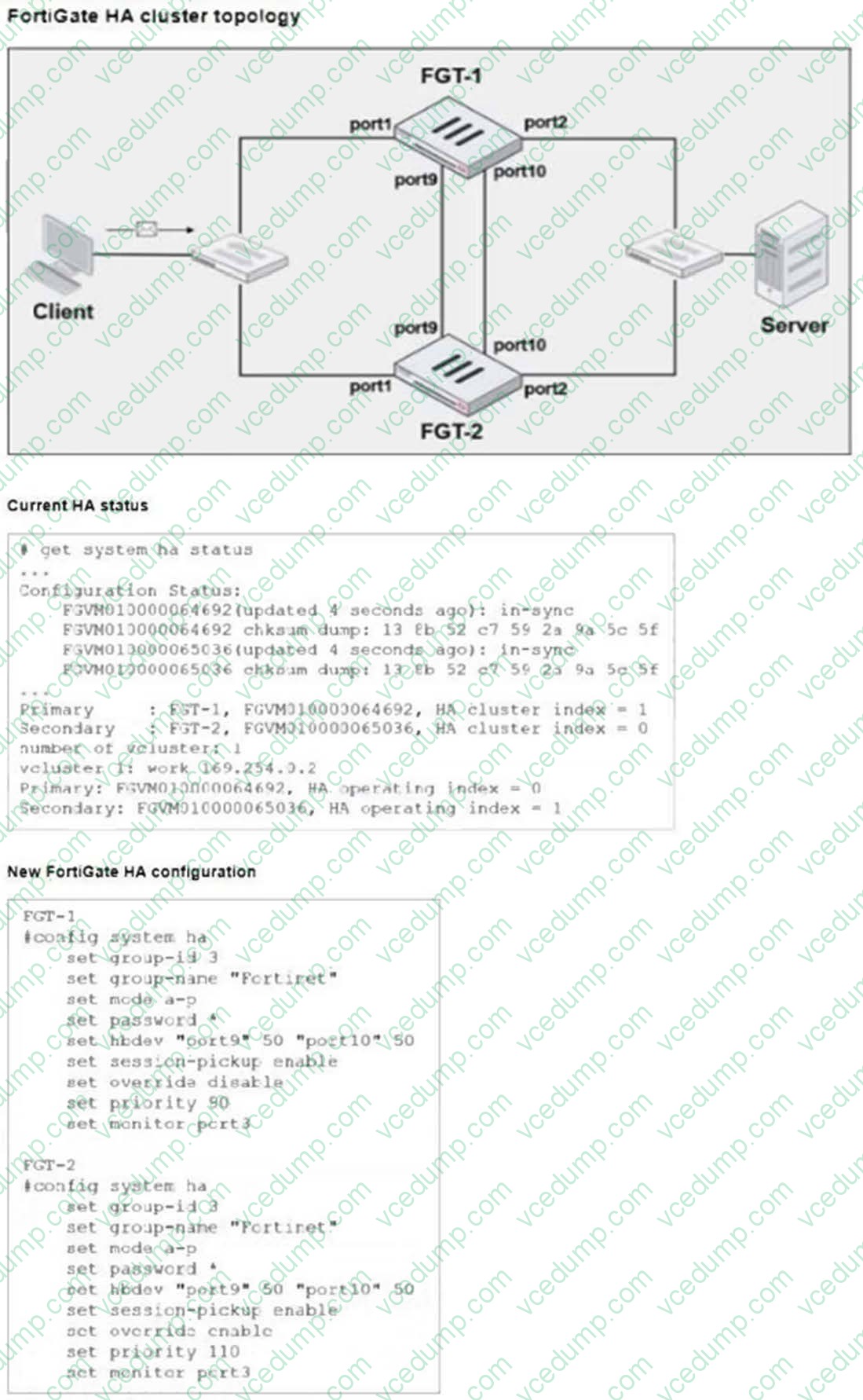
FGT-1 and FGT-2 are updated with HA configuration commands shown in the exhibit. What would be the expected outcome in the HA cluster?
A. FGT-1 will remain the primary because FGT-2 has lower priority.
B. FGT-2 will take over as the primary because it has the override enable setting and higher priority than FGT-1.
C. FGT-1 will synchronize the override disable setting with FGT-2.
D. The HA cluster will become out of sync because the override setting must match on all HA members.
Related Exams:
-
EMEA-ADVANCED-SUPPORT
Fortinet EMEA Advanced Support -
FCP_FAC_AD-6.5
FCP - FortiAuthenticator 6.5 Administrator -
FCP_FAZ_AD-7.4
FCP - FortiAnalyzer 7.4 Administrator -
FCP_FAZ_AN-7.4
FCP - FortiAnalyzer 7.4 Analyst -
FCP_FAZ_AN-7.6
Fortinet NSE 5 - FortiAnalyzer 7.6 Analyst -
FCP_FCT_AD-7.2
FCP - Forti Client EMS 7.2 Administrator -
FCP_FCT_AD-7.4
Fortinet NSE 6 - FortiClient EMS 7.4 Administrator -
FCP_FGT_AD-7.4
FCP - FortiGate 7.4 Administrator -
FCP_FGT_AD-7.6
FortiGate 7.6 Administrator FCP_FGT_AD-7.6 -
FCP_FMG_AD-7.4
FCP - FortiManager 7.4 Administrator
Tips on How to Prepare for the Exams
Nowadays, the certification exams become more and more important and required by more and more enterprises when applying for a job. But how to prepare for the exam effectively? How to prepare for the exam in a short time with less efforts? How to get a ideal result and how to find the most reliable resources? Here on Vcedump.com, you will find all the answers. Vcedump.com provide not only Fortinet exam questions, answers and explanations but also complete assistance on your exam preparation and certification application. If you are confused on your FCP_FGT_AD-7.4 exam preparations and Fortinet certification application, do not hesitate to visit our Vcedump.com to find your solutions here.