USMLE-STEP-3 Exam Details
-
Exam Code
:USMLE-STEP-3 -
Exam Name
:United States Medical Licensing Step 3 -
Certification
:USMLE Certifications -
Vendor
:USMLE -
Total Questions
:804 Q&As -
Last Updated
:Jul 29, 2026
USMLE USMLE-STEP-3 Online Questions & Answers
-
Question 471:
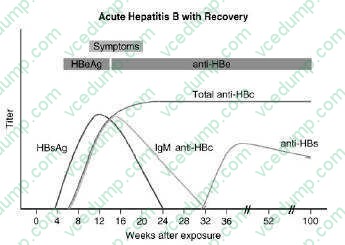
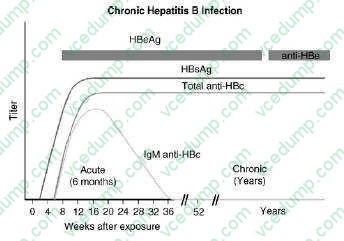
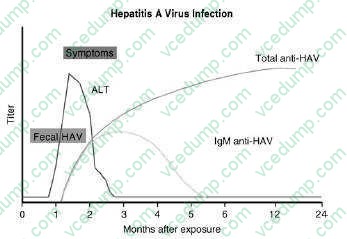
Apatient you see routinely in the clinic has elevated liver function tests. ALT is 89, AST is 75, and the total bilirubin and alkaline phosphatase are normal. The patient has no past history of hepatitis, taking medications, or excessive drinking. You order hepatitis serologies. The results are as follows: Positive:
HBsAg and anti-HBc. Negative: anti-HBs, anti-HBc IgM, anti-HAV, and anti-HCV
What is your interpretation?
A. The patient has acute hepatitis B.
B. The patient needs a test for IgM antibody to hepatitis A virus to rule out acute hepatitis A.
C. The patient needs a test for hepatitis C antigen to exclude acute hepatitis C.
D. The patient has chronic hepatitis B.
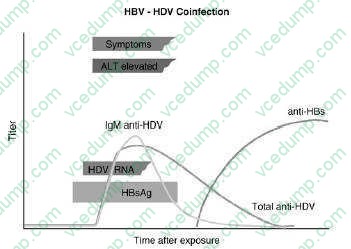
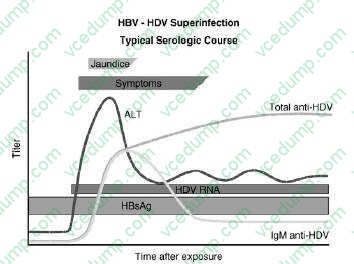
E. If the patient had a negative test for HBsAg, they could be infected with hepatitis delta. -
Question 472:
A22-year-old male presents to an acute care clinic in order to have two genital lesions evaluated. He first noticed the lesions about 2 weeks ago, but delayed seeking medical care because he believed they were harmless due to the lack of any discomfort. He states that he does engage in unprotected sexual intercourse, with the most recent time being 1 month ago. On examination, the glans penis features two distinct nontender papules with elevated edges surrounding ulcerated craters. They each measure 1 cm in diameter. There is also nontender bilateral inguinal lymphadenopathy. Six hours after treating this patient, he calls your office with complaints of new-onset headache, myalgia, and malaise. He also states that he felt feverish immediately prior to calling and measured his temperature, which was 99.8. Which of th e following is most appropriate at this time?
A. Advise transport to the nearest ED for immediate evaluation.
B. Advise use of acetaminophen and provide reassurance.
C. Advise immediate use of Benadryl and then have the patient go to the nearest ED.
D. Start treatment with levaquin.
E. Start treatment with oral corticosteroids. -
Question 473:
A28-year-old male, well known to your clinic, presents for management of swelling, pain, and tenderness that has developed in his left ankle and right knee. It has persisted for 1 month. Your patient reports that he developed severe diarrhea after a picnic 1 month prior to the onset of his arthritis. During the interval between the diarrhea and onset of arthritis, he developed a "pink eye" that lasted for 4 days. He denies any symptoms of back pain or stiffness. You remember that he was treated with ceftriaxone and doxycycline for gonorrhea 2 years ago, which he acquired from sexual activity with multiple partners. Since that time, he has been in a monogamous relationship with his wife and has not had any genitourinary symptoms. He promises that he has been faithful to his wife and has not engaged in unprotected sexual activity outside his marriage. His physical examination is notable for a swollen left ankle, swollen right knee, and the absence of penile discharge or any skin lesions. Which of the following is the most likely diagnosis?
A. pseudogout
B. gout
C. reactive arthritis
D. resistant gonococcal arthritis
E. ankylosing spondylitis -
Question 474:
A42-year-old male with extensive Crohn's disease undergoes a near complete resection of the ileum. Adeficiency of which of the following vitamin is likely to result?
A. niacin
B. thiamine
C. vitamin B12
D. vitamin C
E. vitamin B6 -
Question 475:
A newborn male is brought to you in the neonatal intensive care unit (NICU). On physical examination, you notice that the infant has deficient abdominal musculature and undescended testes. Your suspicion is high for a certain condition.
You presumptively diagnose the child with which of the following?
A. VATER association
B. Cushing's triad
C. Potter's syndrome
D. Jones criteria
E. Eagle-Barrett syndrome -
Question 476:
A15-year-old female presents to the emergency room (ER) with acute onset right lower quadrant pain and nausea. She recently became sexually active and is "in the middle" of her menstrual cycle. Physical examination is notable for generalized guarding, rebound, and 8/10 pain in both lower quadrants. A pelvic examination shows no vaginal discharge, a normal appearing cervix, and general pelvic tenderness, but the examination is limited by the patient's guarding. Her complete blood count is notable for a borderline elevated white blood cell (WBC) count, and a urinary -hCG is negative. Pelvic ultrasound shows a 2-cm simple appearing cyst on the right ovary and a mild amount of fluid in the cul-de-sac. Acomputed tomographic (CT) scan cannot definitively visualize the appendix, confirms the presence of a 2-cm cystic structure in the right ovary, and otherwise notes normal anatomy.
Which of the following is the most appropriate next step?
A. diagnostic laparoscopy
B. pelvic MRI
C. intravenous antibiotics
D. admission for serial physical examinations and pain control
E. discharge home on oral antibiotics -
Question 477:
In your role as a physician in a community health center, you agree to perform sports preparticipation examinations on students from the local high school. You have several scheduled for today. Your first appointment is with a 16-year-old male who is planning to run on the cross-country team in the Fall and play baseball in the Spring. He reports that one time he "blacked out" while running, but he has never had chest pain while exercising and he is one of the top runners on the team. He has no known medical history, denies alcohol, tobacco, recreational drug, or performance-enhancing drug use. He has a cousin who died at the age of 21 of "some kind of heart disease," although your patient is not sure of any details. On examination, he is healthy appearing and has normal vital signs, with a pulse rate of 72 and a blood pressure of 100/65. Auscultation of his heart reveals no cardiac murmur while he is lying down, a soft systolic murmur when he stands which increases on having the patient perform a Valsalva maneuver. The remainder of his examination is normal
Appropriate diagnostic testing would include which of the following?
A. chromosomal analysis
B. echocardiography
C. serum calcium measurement
D. fasting plasma glucose
E. cervical spine x-rays with flexion and extension views -
Question 478:
A 14-year-old nulligravid female is brought to the ER by her parents with a 12-hour history of severe, intermittent left lower quadrant pain. She has had nausea and vomiting for the past 2 hours. On history, the patient experienced menarche at age 12 and denies past or current contact with a sexual partner. Her last normal menstrual period was 3 weeks ago. On examination, she is afebrile, pulse 100, BP 110/70, respiratory rate (RR) 20. She is visibly uncomfortable. She has no costovertebral tenderness, has diminished bowel sounds, her abdomen is nondistended, and exhibits rebound and guarding in both lower quadrants. She is unable to tolerate a pelvic examination due to pain. Laboratory values are as follows:
WBC 13, HCT 39, -hCG (-), UA (-). Apelvic ultrasound shows a normal nonpregnant uterus, normal right adnexa, and an 8-cm left adnexal mass with a 3-cm solid component.
Which of the following would be the next appropriate step in managing this patient?
A. abdominal and pelvic CT scan
B. social work referral for possible sexual abuse
C. obtain liver enzymes, amylase, and lipase
D. consultation for immediate surgical intervention
E. discharge to home with pain medications -
Question 479:
A 5-year-old girl presents for evaluation of breast development, history of multiple bone fractures, and vaginal bleeding. Physical examination is notable for "caf?au lai"; spots on her skin, tanner stage 2 breasts, and she appears tall for her age. What is the most likely cause of precocious puberty in this child?
A. acromegaly
B. McCune-Albright syndrome
C. ovarian cyst
D. ingestion of her mother's oral contraceptives
E. hyperparathyroidism -
Question 480:
A healthy 38-year-old G4P3003 presents for amniocentesis. The karyotype returns as shown in the Figure.
What is the diagnosis?
A. Down syndrome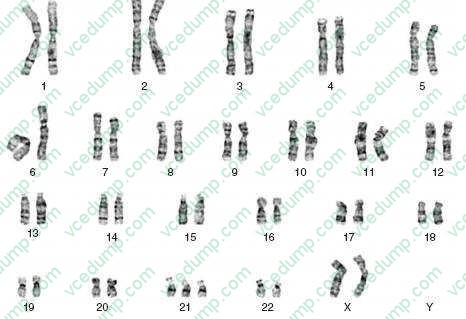
B. Patau syndrome
C. Edwards syndrome
D. Turner syndrome
E. Klinefelter syndrome
Tips on How to Prepare for the Exams
Nowadays, the certification exams become more and more important and required by more and more enterprises when applying for a job. But how to prepare for the exam effectively? How to prepare for the exam in a short time with less efforts? How to get a ideal result and how to find the most reliable resources? Here on Vcedump.com, you will find all the answers. Vcedump.com provide not only USMLE exam questions, answers and explanations but also complete assistance on your exam preparation and certification application. If you are confused on your USMLE-STEP-3 exam preparations and USMLE certification application, do not hesitate to visit our Vcedump.com to find your solutions here.