BUSINESS-ENVIRONMENT-AND-CONCEPTS Exam Details
-
Exam Code
:BUSINESS-ENVIRONMENT-AND-CONCEPTS -
Exam Name
:Certified Public Accountant (Business Environment amd Concepts) -
Certification
:Test Prep Certifications -
Vendor
:Test Prep -
Total Questions
:530 Q&As -
Last Updated
:May 31, 2026
Test Prep BUSINESS-ENVIRONMENT-AND-CONCEPTS Online Questions & Answers
-
Question 351:
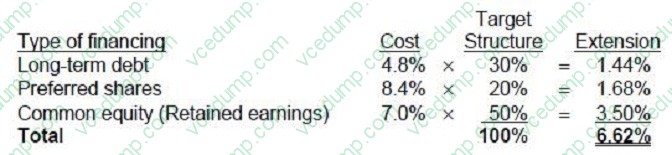
Williams, Inc. is interested in measuring its overall cost of capital and has gathered the following data. Under the terms described below, the company can sell unlimited amounts of all instruments.
A. 4.8 percent.
B. 6.6 percent.
C. 6.8 percent.
D. 7.3 percent. -
Question 352:
Monopolistic competition is characterized by:
A. A relatively large group of sellers who produce differentiated products.
B. A relatively small group of sellers who produce differentiated products.
C. One or two companies producing similar products.
D. A relatively large group of sellers who produce a homogeneous product. -
Question 353:
Gartshore Inc. is a mail-order book company. The Company recently changed its credit policy in an attempt to increase sales. Gartshore's variable cost ratio is 70 percent and its required rate of return is 12 percent. The company projects that annual sales will increase from the current level of $360,000 to $432,000, but the average collection period on receivables will go from 30 days to 40 days. Ignoring any tax implications, what is the cost of carrying the additional investment in accounts receivable, using a 360-day year?
A. $1,512
B. $2,000
C. $2,160
D. $12,600 -
Question 354:
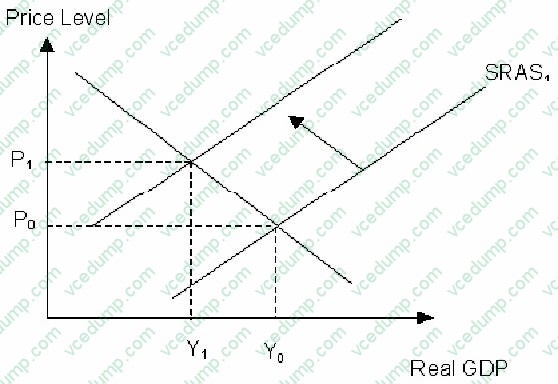
An increase in the price of crude oil will have what affect on the equilibrium price and quantity of gasoline?
A. Price will fall and quantity will rise.
B. Price will rise and quantity will fall.
C. Price will fall and quantity will fall.
D. Price will rise and quantity will rise. -
Question 355:
Which of the following decreases stockholder equity?
A. Investments by owners.
B. Distributions to owners.
C. Issuance of stock.
D. Acquisition of assets in a cash transaction. -
Question 356:
Limitations of the information provided by total asset turnover include:
A. A good measure for trend analysis of a particular company, but variable ways of calculating cost of goods sold limit its usefulness for comparative analysis.
B. The calculation can be affected by varying accounting assumptions, which affect the calculation of net income.
C. Because of differing costs of capital, the measure cannot be effectively used for comparative analysis.
D. When making the calculation, total assets may need to be refined by the elimination of assets that do not relate to sales as the inclusion of these items could distort the measure. -
Question 357:
An industry that is oligopolistic would be best characterized by:
A. One firm selling a product with no close substitutes.
B. Significant barriers to entry.
C. Horizontal or flat demand curves for the output of individual firms.
D. The absence of significant economies of scale. -
Question 358:
If an economy is currently experiencing both full employment and price stability, a major tax reduction will probably cause:
A. An increase in the unemployment rate.
B. An acceleration in the inflation rate, unless government expenditures are also reduced.
C. No change in real GDP or the price level.
D. A decrease in consumption. -
Question 359:
The Frame Supply Company has just acquired a large account and needs to increase its working capital by $100,000. The controller of the company has identified a source of funds which is given below:
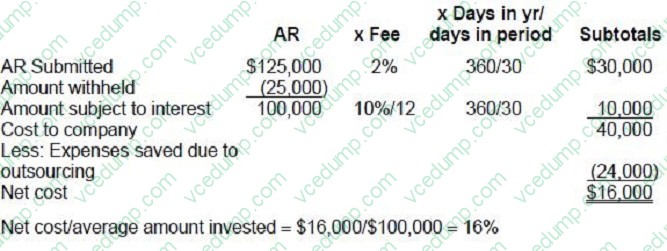
Pay a factor to buy the company's receivables, which average $125,000 per month and have an average collection period of 30 days. The factor will advance up to 80 percent of the face value of receivables at 10 percent and charge a fee of
2 percent on all receivables purchaseD. The controller estimates that the firm would save $24,000 in collection expenses over the year. Assume the fee and interest are not deductible in advance.
Assume a 360-day year in all of your calculations.
The cost of factoring is:
A. 12.0 percent.
B. 14.8 percent.
C. 16.0 percent.
D. 20.0 percent. -
Question 360:
An example of a carrying cost is:
A. Disruption of production schedules.
B. Quantity discounts lost.
C. Handling costs.
D. Obsolescence.

Related Exams:
-
AACD
American Academy of Cosmetic Dentistry -
ACLS
Advanced Cardiac Life Support -
ASSET
ASSET Short Placement Tests Developed by ACT -
ASSET-TEST
ASSET Short Placement Tests Developed by ACT -
BUSINESS-ENVIRONMENT-AND-CONCEPTS
Certified Public Accountant (Business Environment amd Concepts) -
CBEST-SECTION-1
California Basic Educational Skills Test - Math -
CBEST-SECTION-2
California Basic Educational Skills Test - Reading -
CCE-CCC
Certified Cost Consultant / Cost Engineer (AACE International) -
CGFNS
Commission on Graduates of Foreign Nursing Schools -
CLEP-BUSINESS
CLEP Business: Financial Accounting, Business Law, Information Systems & Computer Applications, Management, Marketing
Tips on How to Prepare for the Exams
Nowadays, the certification exams become more and more important and required by more and more enterprises when applying for a job. But how to prepare for the exam effectively? How to prepare for the exam in a short time with less efforts? How to get a ideal result and how to find the most reliable resources? Here on Vcedump.com, you will find all the answers. Vcedump.com provide not only Test Prep exam questions, answers and explanations but also complete assistance on your exam preparation and certification application. If you are confused on your BUSINESS-ENVIRONMENT-AND-CONCEPTS exam preparations and Test Prep certification application, do not hesitate to visit our Vcedump.com to find your solutions here.