303 Exam Details
-
Exam Code
:303 -
Exam Name
:BIG-IP ASM Specialist -
Certification
:F5 Certifications -
Vendor
:F5 -
Total Questions
:524 Q&As -
Last Updated
:Jul 12, 2026
F5 303 Online Questions & Answers
-
Question 411:
An HTTP monitor is created and assigned to a pool with the following non-default configuration: Interval: 7 seconds Timeout: 22 seconds Reverse: Yes Send String: GET/status.htmlHTTP/1.1/r/nHost:test.example.com/r/nConnector:Close Receive String: Up The HTTP server sends the following response:
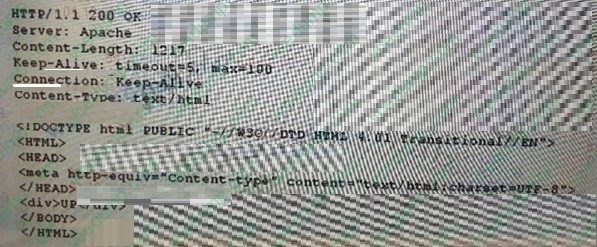
What is the resulting pool status?
A. Unavailable (Enabled)
B. Available (Enabled)
C. Offline (Enabled)
D. Unknown (Disabled) -
Question 412:
A node is assigned two monitors as seen in this configuration.

What is the status of a member that runs on that node and listens on port 443?
A. UNKNOWN
B. UNAVAILABLE
C. DOWN
D. UP -
Question 413:
A BIG-IP Administrator contacts F5 Support, which identifies a suspected hardware failure. Which information should the BIG-IP Administrator provide to F5 Support?
A. Qkview, EUD output
B. Qkview, UCS archive, core files
C. Qkview, part numbers for failed components
D. Qkview, packet capture, UCS archive -
Question 414:
Four members in a server pool have similar hardware platforms. An LTM Specialist needs the load balancing method that canselect the server with the fewest entries in the persistence table. Which load balancing method should the LTM Specialist use?
A. Observed
B. Dynamic Ratio
C. Least Sessions
D. Leas Connections -
Question 415:
An LTM Specialist configures two LTM devices in a high-availability pair with trusts established and device groups configured properly using network failover. After several months, the LTM Specialist notices that changes made to one LTM device do NOT cause the synchronization status to update to "changes pending," and this device does NOT synchronize with the device group.
Which two steps should the LTM Specialist take to identify the issue? (Choose two.)
A. Verify that NTP is synchronized.
B. Verify the network connectivity between the devices.
C. Verify that the devices are not using self-signed certificates.
D. Verify that ConfigSync is using the management IP address.
E. Verify that port lockdown on the ConfigSync interface is set to allow port 1026. -
Question 416:
A device on the network is configured with the same IP address as the management address of the active LTM device, causing the management GUI to be inaccessible. Which two methods should the LTM Specialist use to access the LTM device in order to change the management IP address? (Choose two.)
A. Connect via ssh to the AOM IP address.
B. Connect via ssh to the management address.
C. Connect to the LTM device via serial connection.
D. Connect a monitor and keyboard to the LTM device.
E. Connect via ssh to the standby unit and connect via ssh across the serial link between the devices. -
Question 417:
Active connections to pool members are unevenly distributed. The load balancing method is Least Connections (member) Priority Group Activation is disabled. What is a potential cause of the event distribution?
A. Priority Group Activation is disabled
B. SSL Profile Server is applied
C. Persistence profile is applied
D. incorrect load balancing method -
Question 418:
There are three servers in the pool: 172.16.20.1, 172.16.20.2, and 172.16.20.3, with the virtual IP address 10.0.20.88.
A user CANNOT connect to an HTTP application. To understand the problem and find a solution, the LTM Specialist runs two concurrent traces on the LTM device, with the following results:
Trace on client side:
tcpdump: verbose output suppressed, use -v or -vv for full protocol decode
listening on 0.0, link-type EN10MB (Ethernet), capture size 96 bytes
22:22:07.423759 IP 172.16.20.100.53875 > 10.0.20.88.80: S 998346084:998346084(0) win 5840
22:22:07.424056 IP 10.0.20.88.80 > 172.16.20.100.53875: S 4671780:4671780(0) ack 998346085 win 4380
22:22:07.424776 IP 172.16.20.100.53875 > 10.0.20.88.80: . ack 1 win 365
22:22:07.424790 IP 172.16.20.100.53875 > 10.0.20.88.80: P 1:149(148) ack 1 win 365
22:22:07.424891 IP 10.0.20.88.80 > 172.16.20.100.53875: . ack 149 win 4528
22:22:12.024850 IP 10.0.20.88.80 > 172.16.20.100.53875: R 1:1(0) ack 149 win 4528
6 packets captured
6 packets received by filter
0 packets dropped by kernel
Trace on server side:
tcpdump: verbose output suppressed, use -v or -vv for full protocol decode
listening on internal, link-type EN10MB (Ethernet), capture size 96 bytes
22:22:07.424881 IP 172.16.20.100.53875 > 172.16.20.2.80: S 51116678:51116678(0) win 4380
22:22:08.424893 IP 172.16.20.100.53875 > 172.16.20.2.80: S 51116678:51116678(0) win 4380
22:22:09.625082 IP 172.16.20.100.53875 > 172.16.20.2.80: S 51116678:51116678(0) win 4380
22:22:10.825194 IP 172.16.20.100.53875 > 172.16.20.2.80: S 51116678:51116678(0) win 4380
4 packets captured
4 packets received by filter
0 packets dropped by kernel
What should the LTM Specialist do to solve the problem?
A. Edit the packet filter rules.
B. Modify the monitor of the pool.
C. Enable the virtual server.
D. Configure the virtual server to use SNAT. -
Question 419:
A BIG-IP Administrator has configured a BIG-IP cluster with remote user authentication against dcOl f5trn.com. Only local users can successfully log into the system. Configsync is also failing. Which two tools should the 8IG-IP Administrator use to further investigate these issues? (Choose two)
A. ntpq
B. pam_timestamp_check
C. passwd
D. pwck
E. dig -
Question 420:
A BIG-IP Administrator needs to collect HTTP status code and HTTP method for traffic flowing through a virtual server. Which default profile provides this information?
A. HTTP
B. Analytics
C. Request Adapt
D. Statistics
Related Exams:
-
101
Application Delivery Fundamentals -
201
TMOS Administration -
301A
BIG-IP LTM Specialist: Architect, Set up and Deploy -
301B
BIG-IP Local Traffic Manager (LTM) Specialist: Maintain & Troubleshoot -
302
BIG-IP DNS Specialist -
303
BIG-IP ASM Specialist -
402
F5 Cloud Solutions -
771-101
Application Delivery Fundamentals -
F50-506
F5 FirePass 600 V5 -
F50-531
BIG-IP v10.x LTM Essentials V10.x
Tips on How to Prepare for the Exams
Nowadays, the certification exams become more and more important and required by more and more enterprises when applying for a job. But how to prepare for the exam effectively? How to prepare for the exam in a short time with less efforts? How to get a ideal result and how to find the most reliable resources? Here on Vcedump.com, you will find all the answers. Vcedump.com provide not only F5 exam questions, answers and explanations but also complete assistance on your exam preparation and certification application. If you are confused on your 303 exam preparations and F5 certification application, do not hesitate to visit our Vcedump.com to find your solutions here.