USMLE-STEP-3 Exam Details
-
Exam Code
:USMLE-STEP-3 -
Exam Name
:United States Medical Licensing Step 3 -
Certification
:USMLE Certifications -
Vendor
:USMLE -
Total Questions
:804 Q&As -
Last Updated
:Jul 29, 2026
USMLE USMLE-STEP-3 Online Questions & Answers
-
Question 681:
A 59-year-old White male with a 40 pack-year history of smoking presents to your clinic complaining of three prior episodes of a "shade passing over his left eye" over the last 2 months. He reports that last week he experienced some weakness in his right arm, which resolved after 5 minutes. Appropriate management and counseling for this patient includes which of the following?
A. Initial management of this patient should include bilateral cerebral vessel duplex ultrasonography.
B. Explanation to him that he has had a stroke and will be referred to a neurologist for management.
C. The most common cause of strokes in these patients is related to decreased blood flow.
D. Presence of a carotid bruit confirms the diagnosis and may lead to operative intervention without the need for imaging studies.
E. The presence of a 50% stenosis in the right carotid artery should lead to bilateral surgical repair. -
Question 682:
A 49-year-old male presents with crushing substernal pain and rules out for a myocardial infarction. He is noted to have subcutaneous emphysema of the chest and neck and precordial crackles that correlate to his heartbeat but not his respirations.
Which of the following is the most likely diagnosis?
A. spontaneous pneumothorax
B. esophageal perforation
C. pericarditis
D. pneumopericardium
E. pulmonary embolus -
Question 683:
A 60-year-old man with a history of severe chronic obstructive pulmonary disease (COPD), which is steroid dependent, is admitted to the ICU with pulmonary infiltrates and a sepsis syndrome. His hospital course is complicated by acute renal insufficiency and respiratory failure. Therapy includes glucocorticoids and dopamine. He has no history of thyroid disease. Several weeks into his hospital course, the following laboratory studies are performed:
Based on these laboratory studies, which of the following is the most appropriate next step?
A. initiate levothyroxine therapy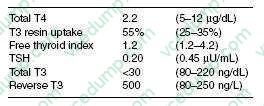
B. discontinue glucocorticoid therapy
C. initiate methimazole therapy
D. order MRI of the pituitary
E. supportive treatment only -
Question 684:
A 42-year-old man presents to your clinic with a 1-week history of pain and inflammation involving his right first metatarsophalangeal (MTP) joint. He describes the pain as sudden in onset and worse at night. He denies experiencing any fever or traumatic injury to the joint and states that he has never had this type of pain before. He denies any chronic medical conditions, any prior surgery, and any current medication use. Besides an erythematous and exquisitely tender right first MTP joint, the remainder of his physical examination is unremarkable.
What is a potential long-term complication of this patient's condition?
A. CHF
B. nephrolithiasis
C. anemia of chronic disease
D. recurrent urinary tract infection (UTI)
E. rheumatoid arthritis (RA) -
Question 685:
A mobile mass is found on rectal examination in a 77-year-old male with complaints of blood in his stool. On workup, he is found to have a stage I (Dukes' A), well-differentiated adenocarcinoma. The most appropriate intervention is which of the following?
A. transanal excision
B. abdominal perineal resection
C. low anterior resection
D. placement of endorectal wallstent
E. neoadjuvant chemotherapy followed by transanal resection -
Question 686:
A32-year-old female presents for her first pap smear in more than 10 years. She has a history of heavy alcohol use and IV drug use and has performed sexual acts for drugs on numerous occasions. Testing performed today reveals her to have chlamydia cervicitis and trichomonas vaginalis and to be seropositive for hepatitis B and hepatitis C. HIV testing is negative. Her pap smear subsequently returns with carcinoma in-situ of the cervix.
Infection with which of the following agents is most likely to have resulted in her cancer?
A. human papillomavirus type 16
B. hepatitis C virus
C. hepatitis B virus
D. Chlamydia trachomatis
E. human papillomavirus type 11 -
Question 687:
A70-year-old White woman has been faithful about taking 1200 mg of calcium, 400 IU of vitamin D supplements, and performing weight-bearing exercise on a daily basis. Her hip T score from her current DEXA scan has changed from -2.0 SDs to -2.55 SDs compared with last year's test.
Which of the following is associated with a reduced risk of osteoporotic fractures?
A. family history of hip fractures
B. estrogen deficiency
C. body mass index of greater than 23
D. tobacco use
E. vision problems -
Question 688:
A 28-year-old man presents with vague complaints of fatigue, nausea, and dyspnea. He has had occasional episodes of hemoptysis and some burning with urination. Laboratory studies reveal a mild anemia and an elevation of both blood urea nitrogen (BUN) and creatinine. Urinalysis reveals the presence of blood, protein, and red cell casts. Antibodies against which of the following is the cause of this condition?
A. platelet surface antigens
B. basement membrane
C. parietal cell antigens
D. colonic mucosal cells
E. macrophage receptors -
Question 689:
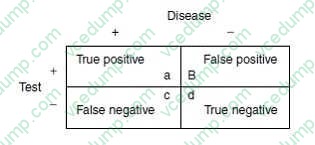
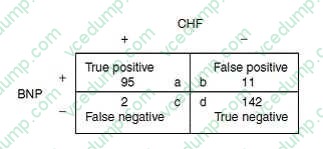
You are evaluating a journal article describing a test for the diagnosis of congestive heart failure (CHF). In the study described, 250 consecutive patients were given the test. Of the 250 subjects, 106 tested positive for CHF and 144 tested negative. All 250 subjects were then evaluated by expert cardiologists who were blinded to the results of the experimental test. These cardiologists determined that of the 106 persons who tested positive, 95 actually had CHF. Further, the cardiologists found that of the 144 who tested negative, 2 truly had CHF. What is the negative predictive value (NPV) of this test for the diagnosis of CHF?
A. 99%
B. 93%
C. 90%
D. 85%
E. 77% -
Question 690:
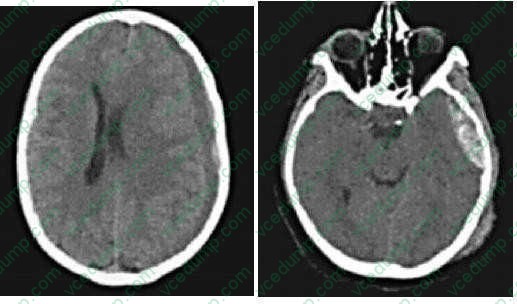
A 23-year old male driver involved in a head-on motor vehicle collision is brought to the ER. On initial evaluation in the trauma unit, his blood pressure is 180/70 and his pulse is 56. After initial evaluation and resuscitation you obtain a CT scan of his head
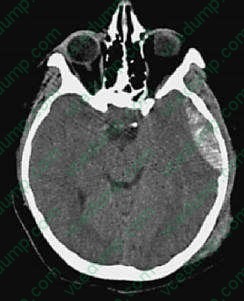
The finding on the imaging study is most commonly associated with injury to which of the following?
A. the bridging veins
B. the middle meningeal artery
C. the sagital sinus
D. the temporal artery
E. the epidural artery
Tips on How to Prepare for the Exams
Nowadays, the certification exams become more and more important and required by more and more enterprises when applying for a job. But how to prepare for the exam effectively? How to prepare for the exam in a short time with less efforts? How to get a ideal result and how to find the most reliable resources? Here on Vcedump.com, you will find all the answers. Vcedump.com provide not only USMLE exam questions, answers and explanations but also complete assistance on your exam preparation and certification application. If you are confused on your USMLE-STEP-3 exam preparations and USMLE certification application, do not hesitate to visit our Vcedump.com to find your solutions here.