USMLE USMLE-STEP-2 Online Practice
Questions and Exam Preparation
USMLE-STEP-2 Exam Details
Exam Code
:USMLE-STEP-2
Exam Name
:United States Medical Licensing Step 2
Certification
:USMLE Certifications
Vendor
:USMLE
Total Questions
:738 Q&As
Last Updated
:May 25, 2026
USMLE USMLE-STEP-2 Online Questions &
Answers
Question 151:
A10-year-old boy presents with a 3- to 4-day history of left ear pain. He is afebrile; he has had no symptoms of cold or cough. He has been swimming daily. On physical examination, there is pain on moving the pinna and the tragus. There is erythema and swelling of the ear canal; the tympanic membrane is obscured by thick white discharge
Which of the following is the most likely organism involved in this case?
A. aureus B. Proteus mirabilis C. Candida D. Pseudomonas aeruginosa E. Streptococci
D. Pseudomonas aeruginosa
Explanation
P. aeruginosa is the most common agent involved in external otitis. The other organisms listed may also be isolated.
Question 152:
For each organism causing food-related illness, choose the corresponding average incubation period.
What is the average incubation period of Clostridium perfringens?
A. under 4 hours B. 824 hours C. 1236 hours D. 12 hours to 6 days E. 13 weeks
B. 824 hours
Explanation
Knowing the incubation period (average and range) of a pathogen can be important in determining the source of infection in food-borne disease. Knowing what food was eaten on the day of an attack of food poisoning may not help in establishing C. botulinum as the cause of illness, since certain strains of S. aureus cause food-borne disease by the production of enterotoxin. As no time is required after ingestion for the growth of colonies in the infected host, and the toxin affects the vagus nerve in the stomach, the incubation period is under 4 hours. C. perfringens, formerly known as Clostridium welchii, causes food- borne disease, after 824 hours when enterotoxin is released when C. perfringens passes from stomach to intestine. Meat prepared in bulk for consumption at a banquet or in an institution is a possible source. Spores that survive incomplete cooking may start reproducing during cooling and may persist if subsequent rewarming is not completed to a temperature above 60°C (140°F) required to kill the organisms. Salmonella has an incubation time of 1236 hours. It may also survive in meat and other products if cooking is inadequate and heat does not penetrate below the surface of the food. The organisms multiply in the gut of the infected host, and low infective doses may therefore have longer incubation periods
Question 153:
A 16-year old male becomes ill with fever, chills, headache, myalgia, and arthralgia 6 days after hunting prairie dogs with his cousin at his uncle's farm. Examination reveals extremely large, painful, and tender inguinal lymph nodes and a couple of small papules around his ankles. Which of the following is the most likely diagnosis?
A. influenza C B. bubonic plague C. tularemia D. cat-scratch fever E. West Nile virus
B. bubonic plague
Explanation
Bubonic plague is uncommon in the United States. It is almost always contracted through a bite by an infected flea. Asmall local papule or vesicle, and sometimes a local ulceration, may occur at the site of the Y. pestis infecting bite. Mucous membranes and broken skin also can be entry sites. After an incubation period of 26 days, illness is manifested by fever, chills, headache, myalgia, and arthralgia. Eventually, there is painful enlargement (the bubo) of lymph nodes draining the inoculation site.
Question 154:
A 17-year-old G1P1001 is now 5 weeks postpartum after a routine vaginal delivery. She calls your office to report a 3-week history of difficulty sleeping and "feeling blue." On further questioning, she reports difficulty concentrating, very poor appetite, occasional wishes that she had never become pregnant, and feelings of guilt about those wishes. She has not left her home in more than a week because she "just can't find the energy to go anywhere." This patient's symptoms are most consistent with:
A. postpartum blues B. normal adolescent adjustment to motherhood C. postpartum depression D. hypothyroidism E. postpartum psychosis
C. postpartum depression
Explanation
Postpartum mood disorders are much more common than previously believed. Postpartum blues (also called maternity blues or baby blues) occurs in most women within the first 2 weeks of delivery and is characterized by irritability, mood lability, and anxiety. This condition is enerally resolved within 2 weeks. Hypothyroidism can mimic postpartum depression or contribute to it, but this diagnosis is based on laboratory studies and is not as common as postpartum depression itself. Psychosis is a very serious condition that occurs in up to 0.2% of deliveries and is marked by confusion, bizarre behavior, disordered thoughts, delusions, and hallucinations.
There is a high risk of suicide or harm to others and immediate psychiatric care is required. Postpartum mood disorders are more common in adolescents but cannot be blamed on "typical teenage adjustment." This patient's case fits most closely the definition of postpartum epression, using the same DSM-IV Diagnostic and Statistical Manual of Mental Disorders, 4th Edition) criteria as major depression. Five lakh postpartum women in the United States have postpartum depression annually. Treatment should include antidepressant therapy (generally using SSRIs) and psychotherapy as indicated.
Question 155:
A 4-year-old previously healthy girl presents to the emergency department with a 24-hour history of rectal bleeding and dizziness. She has no other gastrointestinal symptoms. On examination, she appears pale. Her heart rate is 140 beats/min, and she has a 20 mmHg postural drop in systolic blood pressure. The child's abdomen is nondistended and nontender, and fresh blood and clots are in the rectal vault on rectal examination.
Which of the following is the most likely diagnosis?
A. a bleeding Meckel's diverticulum B. juvenile rectal polyp C. hemorrhoids D. an anal fissure E. intussusception
A. a bleeding Meckel's diverticulum
Explanation
Hemorrhage associated with a Meckel's diverticulum classically presents with painless rectal bleeding in the absence of other gastrointestinal symptoms. The amount of hemorrhage may be enough to result in hypovolemia, with pallor, tachycardia, and postural hypotension. Abdominal examination is usually normal. Diagnosis is confirmed by technetium scan, with the isotope concentrated in the gastric mucosa of the diverticulum. Initial management should include IV fluid resuscitation and transfusion as needed, before laparotomy and diverticulectomy with resection of the adjacent ileum. Rectal polyps, hemorrhoids, and anal fissures may be associated with rectal bleeding. The bleeding is usually small in amount and often temporally related to defecation, typically on the surface of the stool or after defecation. Colonoscopy and proctoscopy are useful adjuncts to diagnosis. Bleeding associated with intussusception is described as "currant jelly" and is secondary to mucosal ischemia of the lead point. These children are most commonly between 2 months and 2 years of age, and often have a prodromal viral illness. They present with colicky abdominal pain and dehydration. Management includes hydrostatic reduction.
Question 156:
A75-year-old woman is admitted to the hospital from a nursing home for abdominal pain and pneumonia. She was noted to be short of breath with increasing cough for 2 days before admission. Treatment, consisting of supplemental oxygen, IV antibiotics, and pulmonary toilet, is instituted, with improvement within 2 days. On the third hospital day, her abdominal pain worsens. Examination reveals a mildly distended abdomen with bowel sounds but no signs of peritonitis. Remainder of examination reveals a tender bulge in the medial left thigh below the inguinal ligament. Gentle pressure causes more pain but does not change the size or shape of the bulge. Abdominal films show a nonspecific bowel gas pattern. Laboratory analysis shows a WBC of 13,000, decreased from 18,000 at the time of admission.
Which ofthe following is the most likely diagnosis?
A. incarcerated direct inguinal hernia B. lymph node with abscess C. femoral artery aneurysm D. incarcerated indirect inguinal hernia E. incarcerated femoral hernia
E. incarcerated femoral hernia
Explanation
The diagnosis of an incarcerated hernia must be considered in the differential diagnosis of a patient with abdominal symptoms and a nonreducible inguinal bulge. Femoral hernia presents as a bulge below the inguinal ligament medial to the femoral artery. Direct or indirect inguinal hernias would present above the inguinal ligament. An aneurysm of the femoral artery should be pulsatile. If there is concern for an aneurysm, a Doppler ultrasound examination may be diagnostic. Alymph node with abscess may present as a tender, nonreducible mass, but should be accompanied by additional adenopathy and a source of the infection.
Question 157:
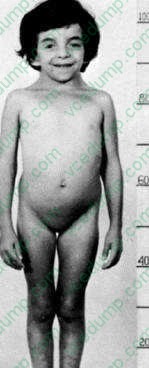
An 8-year-old girl presents for a checkup. She is new to your practice. The mother states that she has always been small for her age; otherwise, she has been well. She is short and has a height age of 4 years, 4 months. You note some abnormalities in her general appearance as shown in the figure.
As you continue your physical examination, you remember that congenital heart disease is common in this particular syndrome. Which of the following is the most likely congenital heart defect in patients with this syndrome?
A. supravalvular aortic stenosis B. atrioventricular (AV) canal defects C. coarctation of the aorta D. pulmonary valvular stenosis E. mitral valve prolapse
C. coarctation of the aorta
Explanation
Turner syndrome is associated with coarctation of the aorta and aortic stenosis.Williams syndrome is associated specifically with supravalvular aortic stenosis. In Noonan syndrome, the cardiac defect most often is pulmonary valvular stenosis or an atrial septal defect. Marfan syndrome is associated with mitral valve prolapse and aortic root dilatation. Septal defects, primarily endocardial cushion defects, are the most common heart defects among children with Down syndrome.
Question 158:
A5-year-old boy is reported by his kindergarten teacher to be easily distracted, impulsive, in need of continual supervision, but not hyperactive Select the diagnosis with which it is most likely to be associated.
A. childhood depression B. childhood schizophrenia C. conduct disorder D. ADHD E. infantile autism
D. ADHD
Explanation
Infantile autism, called a pervasive developmental disorder in DSM-IV, typically is diagnosed when children do not demonstrate the acquisition of communication skills. Ability to form interpersonal relationships also is grossly impaired. Other behavioral manifestations of infantile autism include unusual repetitive mannerisms (e.g., spinning), marked anxiety during environmental changes, and high pain threshold. As to be expected, school performance is poor, though autistic children may display isolated areas (islands) of normal or superior intellectual functioning. Behavioral manipulation is useful in trying to contain the behavior of autistic children. Unlike infantile autism, childhood schizophrenia usually develops later in childhood and follows an intermittent course. Deterioration in social or school functioning is a characteristic presenting feature, along with hallucinations, delusions, and other manifestations of psychosis. Phenothiazine drugs offer effective treatment. Symptoms and signs of depression in children are similar to those in adults. However, children may not be able to recognize depressed feelings. Persistence of puzzling physical problems in association with apathetic, withdrawn behavior is a common presentation. The use of antidepressants is controversial; family and individual counseling often can be quite helpful. ADHD once was called hyperactivity and minimal brain dysfunction. Characteristic signs include impulsivity, distractibility, inattention in school, and (usually but not universally) hyperactivity.
A variety of pharmacologic agents, including imipramine, dextroamphetamine, and methylphenidate (Ritalin), have been recommended for treatment of ADHD.
Question 159:
Identify the defense mechanisms of a person accusing another of being angry and jealous when the feelings belong to oneself
A. acting out B. altruism C. displacement D. intellectualization E. passive-aggressive behavior F. projection G. rationalization H. reaction formation I. sublimation J. suppression
F. projection
Explanation
Defense mechanisms provide a means for dealing with anxiety and affect. The mechanisms chosen range from the very narcissistic and immature to mature. In suppression, a person makes a conscious decision to put the conflict aside until it can be dealt with more appropriately. On the other hand, in acting out, there is little or no attempt to contain the affect, and it is directly expressed, as in name calling. Sublimation provides a channel for the indirect expression of a need or affect. Its use is positive and socially acceptable. In reaction formation, the person acts as if the strong need or affect did not exist and acts out the opposing feeling. In projection, unacceptable feelings and thoughts are denied as part of the self and instead are "put on" the other person.
Question 160:
Ahealth insurance company decides to market its services to a population that will not incur high charges. The use of health services in the United States is most strongly associated with which of the following characteristics?
A. age B. sex C. race D. education E. income
A. age
Explanation
In 1990, there were 3 million persons in the United States aged 65 or more. In 2001, there were 35 million, and by 2030 there may be 71 million. For the population as a whole, usage of health care is high at the time of birth and, to an even greater degree, in the period prior to death.
Nowadays, the certification exams become more and more important and required by more and more
enterprises when applying for a job. But how to prepare for the exam effectively? How to prepare
for the exam in a short time with less efforts? How to get a ideal result and how to find the
most reliable resources? Here on Vcedump.com, you will find all the answers.
Vcedump.com provide not only USMLE exam questions,
answers and explanations but also complete assistance on your exam preparation and certification
application. If you are confused on your USMLE-STEP-2 exam preparations
and USMLE certification application, do not hesitate to visit our
Vcedump.com to find your solutions here.