USMLE-STEP-1 Exam Details
-
Exam Code
:USMLE-STEP-1 -
Exam Name
:United States Medical Licensing Step 1 -
Certification
:USMLE Certifications -
Vendor
:USMLE -
Total Questions
:847 Q&As -
Last Updated
:May 25, 2026
USMLE USMLE-STEP-1 Online Questions & Answers
-
Question 751:
A 73-year-old woman complains of difficulty sleeping, exercise fatigue, and shortness of breath. Examination reveals mental confusion, swollen ankles, pulmonary rales, and dyspnea while supine. Immediate treatment of the patient may be needed if signs and symptoms, especially those of pulmonary congestion, worsen rapidly. Which of the following would be most beneficial in treating acute, severe pulmonary edema?
A. amiloride
B. furosemide
C. hydrochlorothiazide
D. losartan
E. metoprolol -
Question 752:
One of your diabetic patients has a blood glucose level of 200 mg/dL. Surprisingly, a dipstick test is negative for urinary glucose. How could this finding be explained?
A. dipstick tests are more sensitive for reducing sugars other than glucose
B. the patient has defective tubular glucose transporters
C. the patient has diabetes insipidus
D. the patient has significantly reduced GFR
E. the patient is in a state of antidiuresis -
Question 753:
Exhibit:
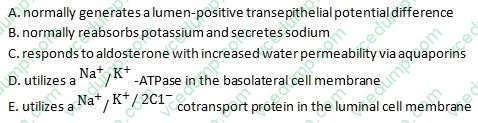
Please refer to the exhibit:
Which of the following is a feature of the principal cell in the cortical collecting duct?
A. A
B. B
C. C
D. D
E. E -
Question 754:
A 73-year-old man is brought to his primary care physician by his wife who is concerned about her husband's progressive memory problems over the past year. She notes that he originally began forgetting to do his normal household chores, and then started routinely misplacing things around the house; he has also forgotten to close or lock doors or turn off the oven and has left the car running in the garage. He is having trouble remembering the driving routes to familiar places and names of longtime friends and acquaintances. The patient's neurological examination reveals disorientation to place and time, inability to recall three objects, and difficulty following a threestage command. Based on this information, which of the following best explains the pathogenesis of his condition?
A. cortical atrophy with neuronal cytoskeletal abnormalities and abnormal filamentous protein aggregation
B. gray matter damage to mammillary bodies and hemorrhage associated with nutritional deficiency
C. infiltrative mass of pleomorphic cells with areas of pseudopalisading, necrosis, and endothelial cell proliferation
D. injury of oligodendroglial cells with focal areas of demyelination, mononuclear infiltrate, and patchy gliosis
E. selective neuronal loss secondary to excitotoxicity associated with excessive glutamate levels -
Question 755:
End-stage chronic renal disease is associated with a glomerular filtration rate (GFR) of less than 15 mL/ min and an increase in which of the following blood values?
A. calcium
B. erythropoietin (EPO)
C. hematocrit
D. phosphate
E. 1,25-(OH vitamin -
Question 756:
HIV isolated from the same patient over time may differ antigenically. HIV also differs from the viruses found in the general class of RNA tumor viruses. Which of the following best explains how HIV differs from most other RNA tumor viruses?
A. HIV contains the gag gene
B. HIV contains the pol gene
C. HIV contains two copies of singlestranded RNA in its virion
D. HIV does not require T4 receptor protein for adsorption to host cells
E. HIV lyses the host cells -
Question 757:
Which theory concerning pain postulates that non-pain sensations, such as vibration or pressure, may affect the transmission and perception of pain sensation?
A. bradykinin theory
B. gate control theory
C. pattern theory
D. peptide theory
E. specificity theory -
Question 758:
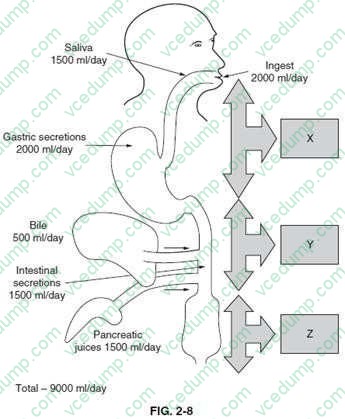
Below figure shows the amounts of water ingested and secreted daily into the GI tract by a healthy individual. Since about 100 mL of water is excreted daily in the stool, which of the following volumes (in milliliter) best reflects the daily absorbed water in the indicated areas x, y, and z of the GI tract?
A. Option A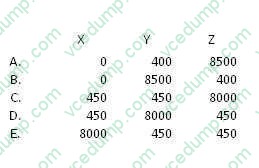
B. Option B
C. Option C
D. Option D
E. Option E -
Question 759:
A 66-year-old woman is undergoing surgery to repair an abdominal aortic aneurism. During the procedure the abdominal aorta is momentarily clamped below the renal arteries. below figure shows the left ventricular pressure/ volume relationship immediately before (curve 1) and during (curve 2) the aortic occlusion. The change in curve 2 represents an increase in which of the following?
A. afterload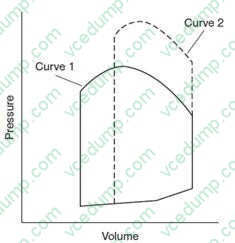
B. cardiac output
C. ejection fraction
D. preload
E. stroke volume -
Question 760:
A 16-year-old boy fractured his leg while running track at school. X-ray studies revealed an abnormality at the lesion site indicating that this was a pathological fracture. Abiopsy of the area was taken and a photomicrograph of the tissue is shown in below figure. The most likely diagnosis is which of the following?
A. chondroblastoma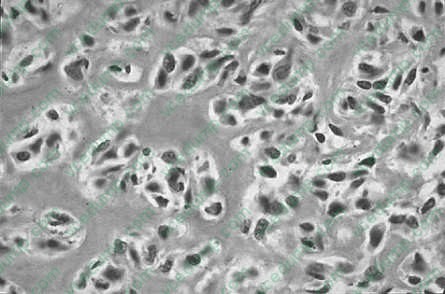
B. chondrosarcoma
C. osteoid osteoma
D. osteoblastoma
E. osteochondroma
F. osteosarcoma

Tips on How to Prepare for the Exams
Nowadays, the certification exams become more and more important and required by more and more enterprises when applying for a job. But how to prepare for the exam effectively? How to prepare for the exam in a short time with less efforts? How to get a ideal result and how to find the most reliable resources? Here on Vcedump.com, you will find all the answers. Vcedump.com provide not only USMLE exam questions, answers and explanations but also complete assistance on your exam preparation and certification application. If you are confused on your USMLE-STEP-1 exam preparations and USMLE certification application, do not hesitate to visit our Vcedump.com to find your solutions here.