USMLE-STEP-1 Exam Details
-
Exam Code
:USMLE-STEP-1 -
Exam Name
:United States Medical Licensing Step 1 -
Certification
:USMLE Certifications -
Vendor
:USMLE -
Total Questions
:847 Q&As -
Last Updated
:May 25, 2026
USMLE USMLE-STEP-1 Online Questions & Answers
-
Question 741:
below figure depicts an electrophoretic pattern of serum proteins. This electrophoretic pattern is likely to be obtained from a 6-month-old infant suffering from recurrent pyogenic infections. He has which of the following diseases?
A. Addison disease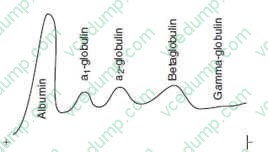
B. Bruton disease
C. Graves disease
D. Goodpasture syndrome
E. Myasthenia gravis -
Question 742:
A 28-year-old man has a long history of intermittent bloody diarrhea. The colon is surgically removed and displayed in below figure. The most likely diagnosis is which of the following?
A. amebic colitis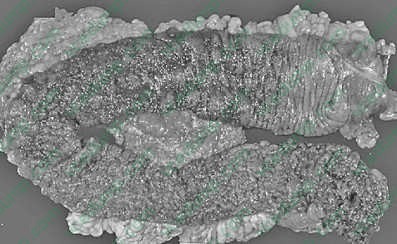
B. collagenous colitis
C. gangrenous colitis
D. pseudomembranous colitis
E. ulcerative colitis -
Question 743:
A newborn infant suffers from epidermolysis bullosa simplex, characterized by skin blistering soon after birth. The blisters appear at sites of pressure or rubbing such as the fingers. You explain to the distressed parents that this condition is a disease of intermediate filaments and results from mutant genes for keratins K5 and K14. Which cells of the skin normally produce keratins K5 and K14?
A. adipose cells in the hypodermis
B. basal cells of the epidermis
C. fibrocytes of the dermis
D. melanocytes of the epidermis
E. upper differentiating cells of the epidermis -
Question 744:
Ayoung woman presents to the physician with the chief complaint of palpitations. She also complains of feelings that she is going to die, with feelings of dizziness. Which of the following is the most useful question to ask?
A. Are you anxious?
B. Do you have a heart disease?
C. Has anything like this happened before?
D. What drugs do you use?
E. Why do you think you will die? -
Question 745:
Aliver biopsy of a 61-year-old man reveals the presence of clusters of cells with large, intracellular vacuoles and nuclei eccentrically displaced to the cell periphery. From which of the following conditions does this patient most likely suffer?
A. alcoholism
B. chronic liver congestion
C. hepatitis A
D. metastatic colon carcinoma
E. portal vein thrombosis -
Question 746:
Which of the following statements correctly associates a CNS drug with its mechanism of action?
A. bupropion--activation of endocannabinoid receptors
B. diazepam--facilitation of GABAstimulated chloride channel opening
C. fluoxetine--selective inhibition of presynaptic norepinephrine reuptake
D. pentobarbital--inhibition of NMDA receptors
E. tranylcypromine--inhibition of O-methylation of catecholamines -
Question 747:
A 57-year-old woman presents with an arterial pressure of 180/115 mm Hg, and blood creatinine levels are elevated. Renal angiography reveals a severe bilateral stenosis of the renal arteries. Which of the following are elevated also?
A. ADH secretion
B. GFR
C. para-aminohippurate (PAH) clearance
D. renin secretion
E. urine output -
Question 748:
The occurrence of Type II diabetes (NIDDM) in adolescent females can lead to the development of polycystic ovarian syndrome (PCOS). PCOS is the result of follicular atresis and ovulatory dysfunction brought about by a hyperandrogenic microenvironment in the ovary. Which of the following statements reflects the underlying cause of the hyperandrogenic state in females with NIDDM?
A. Hyperinsulinemia, associated with NIDDM, reduces the level of sex hormone-binding globulin leading to increased free testosterone.
B. NIDDM in adolescents is primarily the result of obesity and the associated disruption in fatty acid metabolism negatively affects adrenal estrogen production.
C. The increased level of circulating lipid in NIDDM patients competes for steroid binding to sex hormone- binding globulin, resulting in a reduced transport of estrogen within the ovary.
D. The persistent hyperglycemia associated with NIDDM causes increased levels of glycosylated hemoglobin, which interferes with the need for increased ovarian vascularization at puberty. -
Question 749:
A 72-year-old man is discovered wandering in the hot sun by hospital staff several hours after being reported missing. Recommended testing involves analysis of serum electrolytes. The assay revealed the following serum values: Na+ 150 mEq/L, K+ 5.2 mEq/L. Which of the following is the most likely diagnosis?
A. Alzheimer's disease
B. delirium
C. lewy body dementia
D. secondary dementia
E. seizure disorder -
Question 750:
Which of the following statements concerning total body energy storage is correct?
A. Most of the body's energy store is held as carbohydrate.
B. Most of the body's energy store is held as lipid.
C. Most of the body's energy store is held as plasma glucose.
D. Most of the body's energy store is held as protein.
E. Total body's energy storage approximately equals resting metabolic rate.
Tips on How to Prepare for the Exams
Nowadays, the certification exams become more and more important and required by more and more enterprises when applying for a job. But how to prepare for the exam effectively? How to prepare for the exam in a short time with less efforts? How to get a ideal result and how to find the most reliable resources? Here on Vcedump.com, you will find all the answers. Vcedump.com provide not only USMLE exam questions, answers and explanations but also complete assistance on your exam preparation and certification application. If you are confused on your USMLE-STEP-1 exam preparations and USMLE certification application, do not hesitate to visit our Vcedump.com to find your solutions here.