USMLE USMLE-STEP-1 Online Practice
Questions and Exam Preparation
USMLE-STEP-1 Exam Details
Exam Code
:USMLE-STEP-1
Exam Name
:United States Medical Licensing Step 1
Certification
:USMLE Certifications
Vendor
:USMLE
Total Questions
:847 Q&As
Last Updated
:Jun 02, 2026
USMLE USMLE-STEP-1 Online Questions &
Answers
Question 551:
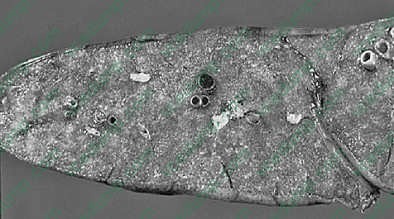
Alung autopsy specimen with an abnormality of the vasculature is depicted in below figure. What is the most likely associated clinical finding?
A. chronic idiopathic thrombocytopenic purpura B. disseminated intravascular coagulation C. hemoptysis due to aneurysmal rupture D. hemoptysis due to tumor eroding into blood vessel E. sudden death due to occlusive embolus
E. sudden death due to occlusive embolus
Explanation
Section: Pathology and Path physiology figure depicts a large occlusive embolus in the pulmonary artery. Clinically, this finding is most frequently associated with the formation of deep venous thrombi; sudden death may occur with thromboemboli large enough to lodge in the pulmonary artery bifurcation (saddle embolus). Chronic idiopathic thrombocytopenic purpura (choice A) is an unlikely milieu to form thromboemboli due to the paucity of platelets. Both hemorrhage and thrombosis may occur in disseminated intravascular coagulation (choice B);
however, this condition affects the microvasculature, not large vessels. The figure does not display an aneurysm (choice C) or a neoplasm (choice D).
Question 552:
A known drug abuser is brought to the emergency room by the police. He is in restraints, combative, and hallucinating. His blood pressure, heart rate, and body temperature are elevated. Pupils are dilated and demonstrate both horizontal and vertical nystagmus. Which of the following drugs would cause this presentation?
A. amphetamine B. heroin C. LSD D. phencyclidine E. scopolamine
D. phencyclidine
Explanation
Section: Pharmacology Phencyclidine, an NMDA receptor antagonist, is a more violent hallucinogen than most other drugs in this class (LSD, mescaline, scopolamine). It causes sympathetic discharge and muscle twitching; nystagmus is very common. Amphetamine (choice A) is a sympathomimetic stimulant that can produce hallucinations or toxic psychosis in overdose, but is not usually associated with nystagmus. Heroin (choice B) is a depressant drug and does not present with combative stimulation. Pupils are constricted by opioids. LSD (choice C) is a classical hallucinogen, but does not commonly cause combativeness or nystagmus. Scopolamine (choice E) similarly does not usually cause combativeness or nystagmus.
Both LSD and scopolamine cause mydriasis.
Question 553:
Continued consumption of calories in excess of energy expenditure will eventually lead to obesity, a current major health problem in the United States. A major contributing factor in obesity is a disorder in fuel partitioning, as evidenced by a lower rate of fat oxidation in obese individuals. Which of the following situations would best explain a reduction in overall fat metabolism in these individuals?
A. An increase in the hepatic ATP/ adenosine diphosphate (ADP) ratio increases incorporation of carbon into fatty acids by causing an inhibition in acetyl-CoA oxidation in the TCA cycle. B. Decreased hepatic gluconeogenesis which requires acetyl-CoA from fatty acid oxidation, thus fat oxidation is secondarily inhibited. C. Increased levels of malonyl-CoA occur in these individuals leading to inhibition of carnitine palmitoyltransferase I. D. Insulin-induced decrease in the activity of acetyl-CoA carboxylase (ACC) causing reduction in fatty acid synthesis. E. Insulin-induced repression of fatty acid synthase (FAS) activity.
C. Increased levels of malonyl-CoA occur in these individuals leading to inhibition of carnitine palmitoyltransferase I.
Explanation
Section: Biochemistry The oxidation of long-chain fatty acids is initiated by the sequential action of carnitine palmitoyltransferase-I (CPTI), which is located in the outer mitochondrial membrane, and carnitine palmitoyltransferase II, which is located in the inner mitochondrial, together with a carnitine- acylcarnitine translocase. Major control over the process is exerted at the level of CPTI by virtue of the unique inhibitability of this enzyme by malonyl- CoA. Thus, CPTI has a pivotal role in lipid metabolism. Obese individuals have higher overall dietary intake of lipid and the disruption in fat metabolism exacerbates the increases in malonyl-CoA, which propagates the fuel partitioning disorder. Although an increase in hepatic ATP (choice A) will lower the flux through the TCA cycle, this does not constitute a mechanism for a disruption in fuel partitioning. The rate of hepaticgluconeogenesis (choice B) does not significantly affect fat metabolism. Obese individualsactually have reduced responses to insulin (choiceD) and thus any insulin- mediated effects on ACC would be minimal.
Insulin does not repress FAS activity (choice E).
Question 554:
A 57-year-old man has just returned from an overseas trip and reports having had severe substernal chest pain 3 days ago. Which of the following is the most appropriate laboratory test to order for this patient?
A. aspartate aminotransferase B. creatine kinase, MB fraction C. creatine kinase, total D. lactate dehydrogenase, LD1 fraction E. lactate dehydrogenase, total F. troponin I
F. troponin I
Explanation
Section: Pathology and Path physiology Troponin I is now the method of choice for the laboratory diagnosis of MI. There is a detectable increase within 48 hours of the infarction and the peak level is reached within 1436 hours. Levels do not return to baseline for 310 days making it an appropriate test for this patient who was 3 days post- infarction. Aspartate aminotransferase (choice A) was the first serum enzyme marker used for the diagnosis of MI, but it has poor specificity and sensitivity compared to newer markers and is no longer used for this purpose. Creatine kinase, total (choice C) is not used for the diagnosis of MI since the cardiac fraction (MB) can be overwhelmed by the presence of the skeletal muscle fraction. Creatine kinase-MB (choice B) is still being used in some institutions but it returns to baseline in 23 days and would not be useful for this patient. Lactate dehydrogenase, either LD1 fraction (choice D) or lactate dehydrogenase, total (choice E) return to baseline later than creatine kinase but have been replaced by troponin I and are seldom used.
Question 555:
Which of the following diseases will result in left ventricular hypertrophy?
A. Aortic valve stenosis B. mitral valve stenosis C. pulmonary valve regurgitation D. tricuspid valve regurgitation E. tricuspid valve stenosis
A. Aortic valve stenosis
Explanation
Section: Physiology Stenosis of the outlet valve of the left ventricle greatly increases the work of the ventricle in ejecting blood and will result in left ventricular hypertrophy. Mitral valve stenosis (choice B) will impede filling of the left ventricle and will not cause left ventricular hypertrophy. Tricuspid valve regurgitation (choice D), pulmonary valve regurgitation (choice C), and tricuspid valve stenosis (choice E) cause congestion of the right atria and/or right ventricles and impede flow of blood toward the left ventricle and thus will not result in left ventricular hypertrophy.
Question 556:
Alarge vascular infarct involving the posterior limb of the internal capsule on the right side is likely to produce which of the following deficits?
A. deviation of the protruded tongue to the right B. hypertonia and hyperreflexia in the right upper limb C. paralysis of facial expression muscles on the lower left portion of face D. paraplegia involving the lower extremities E. spastic hemiplegia involving the right side of the body
C. paralysis of facial expression muscles on the lower left portion of face
Explanation
Section: Anatomy Capsular lesions of the corticobulbar system produce the "central seven" symptoms. Loss of the descending cortical fibers to the contralateral facial nucleus (cranial nerve VII) primarily affects the muscles of facial expression in the lower portion of the face, particularly those around the angle of the mouth and the nasolabial fold. Deviation of the protruded tongue (choice A), hypertonia/hyperreflexia (choice B), and spastic hemiplegia (choice E) are symptoms that result from a capsular lesion, but they would be seen contralateral to the affected capsule, and in this case would involve the left side of the body. Paraplegia (choice D) is not typically seen following a unilateral capsular lesion.
Question 557:
A 26-year-old management consultant has recently eaten raw oysters on three occasions. The patient has always been healthy, but suddenly developed fatigue, loss of appetite, nausea, vomiting, abdominal pain, and fever. Following a careful evaluation, his doctor informed him that he is suffering from a viral infection. This infection was caused by a small (2030 nm), non-enveloped, single-stranded RNA virus. This virus is most likely which of the following? Diagnosis of the causative agent of the patient's illness can best be made by which of the following means?
A. a positive Tzanck smear B. assays for specific viral cytopathic effects C. detection of IgA antibodies against the specific virus D. detection of IgM antibodies against the specific virus E. detection of Negri bodies in the patient's tissues
D. detection of IgM antibodies against the specific virus
Explanation
Section: Microbiology/Immunology Diagnosis of the patient's infectious hepatitis can best be made by the demonstration of a fourfold rise of IgM against hepatitis Avirus. Patients with hepatitis virus A do not show any meaningful rise of IgA (choice C). Hepatitis virus does not induce any pathognomonic cytopathic effects (choice B). The detection of Negri bodies is useful in the diagnosis of rabies, not hepatitis virus A (choice E). A positive Tzanck test is useful for the diagnosis of herpes virus, not hepatitis virus A (choice A).
Question 558:
Which of the following is useful in rheumatoid arthritis because it binds tumor necrosis factoralpha (TNF- alpha)?
A. leflunomide B. infliximab C. methotrexate D. paclitaxel E. trastuzumab
B. infliximab
Explanation
Section: Pharmacology Infliximab is a chimeric monoclonal antibody that binds TNF-alpha and is useful in rheumatoid arthritis, ulcerative colitis, and several other immune diseases. Leflunomide (choice A) inhibits ribonucleotide synthesis and thereby reduces T-cell proliferation. Methotrexate (choice C) is an antimetabolite that inhibits cell proliferation. It is useful in rheumatoid arthritis. Paclitaxel (choice D) is a microtubule-binding agent that is cytotoxic in certain neoplasms and slows restenosis in coronary stents. It is not used in autoimmune diseases. Trastuzumab (choice E) is an antibody to the human epidermal growth factor receptor and is useful in metastatic breast cancer.
Question 559:
A 35-year-old opera singer has been treated for hypertension with enalapril. Although his blood pressure has been reduced, he complains that he is now unable to perform because of a dry cough. Which of the following acts by a similar but not identical mechanism and is much less likely to cause cough?
A. captopril B. clonidine C. losartan D. prazosin E. propranolol
C. losartan
Question 560:
Aurologist is teaching her resident to perform a vasectomy. She explains that he has to inject the anesthetic in the skin of the scrotum, in preparation for incision of its lateral aspect. This surgical location allows for easy access to the spermatic cord. Which of the following nerves innervates the skin of the scrotum?
A. femoral nerve B. iliohypogastric nerve C. ilioinguinal nerve D. obturator nerve E. subcostal nerve
C. ilioinguinal nerve
Explanation
Section: Anatomy The anterior aspect of the scrotum is innervated by branches of the ilioinguinal nerve (L1).Other nerves innervating the scrotum are branches of the genitofemoral nerve (L1, L2), pudendal nerve (S2-S4), and posterior femoral cutaneous nerve (S2, S3). The femoral nerve (L2-L4, choice A) supplies sensory innervations to the anteromedial thigh, hip joint, and knee joint. It also innervates muscles of the anterior compartment of the thigh. The iliohypograstric nerve (L1, choice B) provides sensory innervations over the iliac crest and the hypogastric region. The obturator nerve (L2-L4, choice D) supplies motor innervation to the medial compartment of the thigh. The subcostal nerve (T12, choice E) provides motor innervation for the lower part of the external oblique muscle and sensory innervations over the hip and anterior superior iliac spine.
Nowadays, the certification exams become more and more important and required by more and more
enterprises when applying for a job. But how to prepare for the exam effectively? How to prepare
for the exam in a short time with less efforts? How to get a ideal result and how to find the
most reliable resources? Here on Vcedump.com, you will find all the answers.
Vcedump.com provide not only USMLE exam questions,
answers and explanations but also complete assistance on your exam preparation and certification
application. If you are confused on your USMLE-STEP-1 exam preparations
and USMLE certification application, do not hesitate to visit our
Vcedump.com to find your solutions here.