USMLE-STEP-1 Exam Details
-
Exam Code
:USMLE-STEP-1 -
Exam Name
:United States Medical Licensing Step 1 -
Certification
:USMLE Certifications -
Vendor
:USMLE -
Total Questions
:847 Q&As -
Last Updated
:May 25, 2026
USMLE USMLE-STEP-1 Online Questions & Answers
-
Question 161:
A 25-year-old man is admitted to the hospital after coming to the doctor carrying a bottle containing bloody urine. All tests were negative, and he was observed stealing a test tube of blood from the laboratory technician's cart. Which of the following is the most likely diagnosis?
A. antisocial personality disorder
B. factitious disorder
C. malingering
D. schizophrenia
E. somatization disorder -
Question 162:
A renal calculus (kidney stone) passing from the renal pelvis into the ureter causes excessive distention and severe ureteric colic. During development in the embryo, the ureter arose from which of the following?
A. mesonephric duct
B. metanephric diverticulum
C. metanephric mass of intermediate mesoderm
D. paramesonephric duct
E. pronephric duct -
Question 163:
The inability to rapidly synthesize DNA during the process of erythrocyte maturation leads to abnormally enlarged erythrocytes. This disorder is referred to as macrocytic anemia and is caused by a deficiency in which of the following vitamins?
A. ascorbate
B. biotin
C. folate
D. niacin
E. thiamine -
Question 164:
Which of the following antiviral drugs is correctly associated with the appropriate primary toxicity?
A. amantadine--neutropenia
B. didanosine--pancreatitis
C. ribavirin--hepatitis
D. ritonavir--hemolytic anemia
E. zidovudine--CNS stimulation, GI complaints -
Question 165:
A 14-year-old boy is referred to you for nasal obstruction and frequent nosebleeds. Which of the following is the most likely diagnosis?
A. inverted papilloma
B. juvenile angiofibroma
C. nasal polyps
D. nasopharyngeal carcinoma
E. wegener granulomatosis -
Question 166:
Exhibit:
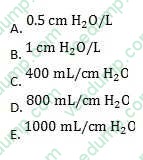
The graph in below figure shows the static pressurevolume curve of a patient's lung (solid line). The broken line indicates the pressurevolume curve of a normal person for comparison. What is the approximate lung compliance of this patient over the volume range from 1 to 7 L?
A. A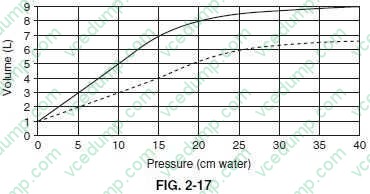
B. B
C. C
D. D
E. E -
Question 167:
A family reports that their mother's mental status has been deteriorating for the past several years, during which time she has had episodes of transient weaknesses of the arms and legs. Which of the following is the most likely diagnosis?
A. Alzheimer's disease
B. Korsakoff syndrome
C. multi-infarct dementia
D. old age
E. vitamin deficiency -
Question 168:
Which of the following is characterized by an absence of lymphoid follicles and germinal centers?
A. axillary lymph node
B. Peyer's patches
C. pharyngeal tonsil
D. spleen
E. thymus -
Question 169:
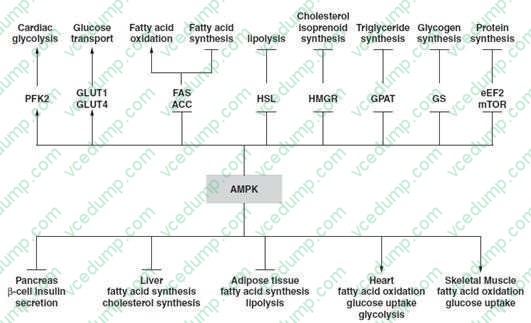
Metformin is one of the most prescribed hypoglycemia-inducing drugs in the treatment of Type II diabetes. One of the effects of metformin is a reduction in adipose tissue lipolysis, which is effected via the activation of AMP-activated kinase (AMPK). Which of the following actions of AMPK explains the adipose tissue benefits of metformin?
A. activation of ACC
B. activation of FAS
C. inhibition of hormone-sensitive lipase
D. inhibition of mammalian target of rapamycin (mTOR)
E. inhibition of 6-PFK-2 -
Question 170:
A 42-year-old woman had a catheter placed in her urethra. One week later she is experiencing suprapubic flank pain with urinary urgency and frequency. She has also chills and fever. After examining the patient and evaluating the sediment of her centrifuged urine, she is informed by her physician that she has acute ascending pyelonephritis. If the diagnosis is accurate and the patient's urine is cultured, which of the following organisms will most likely be isolated?
A. Clostridium difficile
B. Escherichia coli with pili
C. Pseudomonas aeruginosa
D. Staphylococcus aureus
E. streptococci--group B
Tips on How to Prepare for the Exams
Nowadays, the certification exams become more and more important and required by more and more enterprises when applying for a job. But how to prepare for the exam effectively? How to prepare for the exam in a short time with less efforts? How to get a ideal result and how to find the most reliable resources? Here on Vcedump.com, you will find all the answers. Vcedump.com provide not only USMLE exam questions, answers and explanations but also complete assistance on your exam preparation and certification application. If you are confused on your USMLE-STEP-1 exam preparations and USMLE certification application, do not hesitate to visit our Vcedump.com to find your solutions here.