QSDA2019 Exam Details

  • Exam Code
    :QSDA2019
  • Exam Name
    :Qlik Sense Data Architect Certification - June 2019 Release
  • Certification
    :QlikView Certifications
  • Vendor
    :QlikView
  • Total Questions
    :52 Q&As
  • Last Updated
    :Jul 09, 2026

QlikView QSDA2019 Online Questions & Answers

  • Question 1:

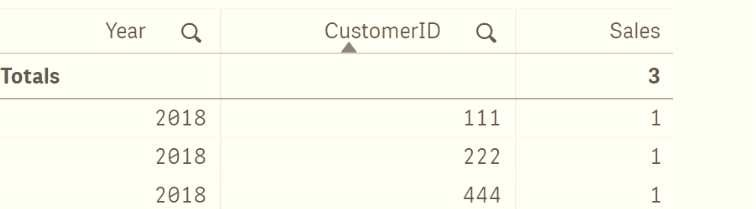
    Refer to the exhibit.
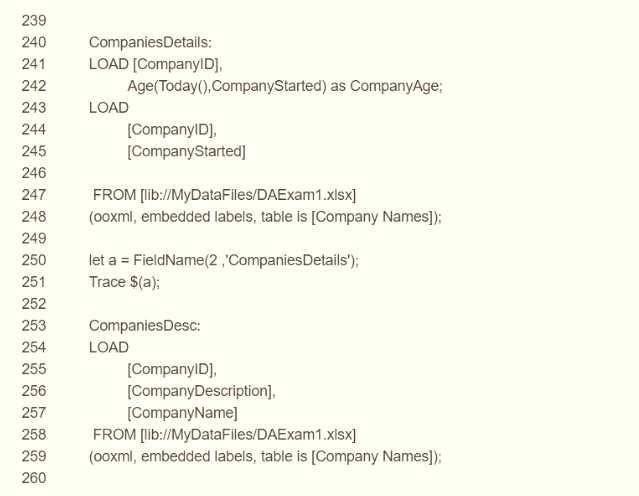
    A data architect has a data model that includes historical order fulfillment centers. The order fulfillment centers occasionally changed location. The history of order fulfillment must be tracked on a per center, per location basis. Which scripting function should the data architect use to meet this data modeling requirement?

    A. IntervalMatch
    B. Peek
    C. ApplyMap
    D. Inner Join

  • Question 2:

    A company generates 1 GB of ticketing data daily. The data is stored in multiple tables Business users need to see trends of tickets processed for the past two years. Users very rarely access the transaction-level data for a specific date. Only the past two years of data must be loaded which is 720 GB of data Which method should a data architect use to meet these requirements?

    A. Load only two years of data in an aggregated app and create a separate transaction app for occasional use
    B. Load only two years of data and use best practices in scripting and visualization to calculate and display aggregated data
    C. Load only aggregated data for two years and use Direct Discovery for transaction data
    D. Load only aggregated data for two years and use ODAG for transaction data

  • Question 3:

    A data architect needs to upload data from ten different sources, but only if there are any changes after the last reload When data is updated, a new file is placed into a folder mapped to E:\373948870. The data connection points to this folder. The data architect plans a script which will:

    1.

    Verify that the file exists

    2.

    If the file exists, upload it. Otherwise, skip to the next piece of code. The script will repeat this subroutine for each source.

    When the script ends, all uploaded files will be removed with a batch procedure. Which option should the data architect use to meet these requirements?

    A. FilePath, IF, THEN, Drop
    B. FileSize, IF, THEN, END IF
    C. FilePath, FOR EACH, Peek, Drop
    D. FileExists, FOR EACH, IF

  • Question 4:

    Refer to the exhibit.

    A company has different departments Executive and Sales should always be the first values in a Department filter pane.

    Which script must the data architect use to meet this requirement?

    A)

    B)

    C)

    D)

    A. Option A
    B. Option B
    C. Option C
    D. Option D

  • Question 5:

    A data architect executes the following script:

    What will be the result of Table_A?

    A. Option A
    B. Option B
    C. Option C
    D. Option D

  • Question 6:

    A data architect needs to load large amounts of data from a database which is continuously updated New records are added, and existing records get updated and deleted. Each record has a LastModified field

    All existing records are exported into a QVD file. The data architect wants to load the records into Qlik Sense efficiently.

    Which steps should the data architect take to meet these requirements?

    A. 1. Use a partial load to load new and updated data from the database. 2. Load the existing data from the QVD without the updated rows that have just been loaded from the database. Concatenate with the new and updated records. 3. Use the Peek function to remove the deleted rows.
    B. 1. Load the new and updated data from the database 2. Load the existing data from the QVD without the updated rows that have just been loaded from the database. Concatenate with the new and updated records. 3. Load all records from the key field from the database and use an Inner Join on the previous table.
    C. 1. Load the existing data from the QVD. 2. Load the new and updated data from the database without the rows that have just been loaded from the QVD. Concatenate with data from the QVD. 3. Load all records from the key field from the database and use an Inner Join on the previous table.
    D. 1. Load the existing data from the QVD. 2. Load new and updated data from the database. Concatenate with the table loaded from the QVD. 3. Create a separate table for the deleted rows and use a WHERE NOT EXISTS to remove these records.

  • Question 7:

    A data architect builds a data model for a large user group. Some sheets will be published, and the app will allow users to create their own visualizations and analyze data. Some fields must NOT appear in any field list. How should a data architect meet these requirements?

    A. Use HidePrefix variable
    B. Add fields to master items
    C. Use security rules
    D. Use HideField variable

  • Question 8:

    Refer to the exhibit.

    A data architect needs to modify the script to ONLY load rows fromTabl e_B when Field_1 and Field_2 are the same as inTabl e_A. (For example, only the row containing A. 1. 456 should be loaded fromTabl e_B ) Which script should the data architect use?

    A. Option A
    B. Option B
    C. Option C
    D. Option D

  • Question 9:

    A data architect is loading two tables into a data model from a SQL database. These tables are related on key fields CustomerlD and CustomerKey. Which scripts should be used to load the data while maintaining the correct associations?

    A. Option A
    B. Option B
    C. Option C
    D. Option D

  • Question 10:

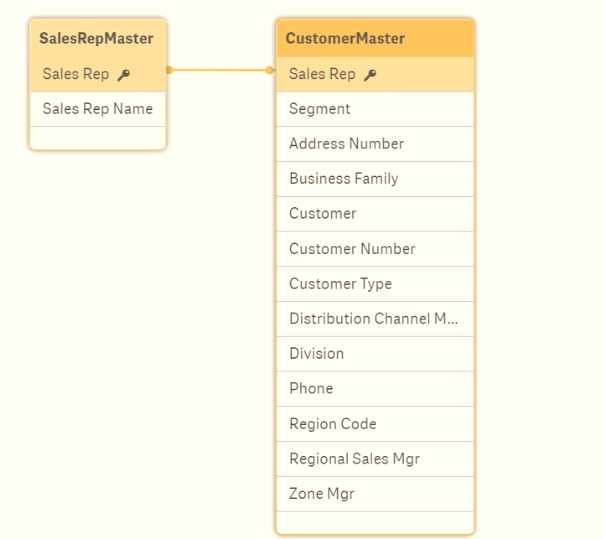
    Refer to the exhibit.

    An app has been built to analyze salesperson performance by department. Salespeople often move between departments. There is a strict business rule which states a salesperson must be associated with ONLY one department at all times. The data architect creates a summary of department performance and notices the values are incorrect. The KPI showing the total sales shows the correct result.

    How should the data architect modify the data model to correct the issue?

    A. Create a bridge table between the Departments and Salespeople tables to resolve the many-to- many relationship
    B. Create a bridge table between the Transactions and Salespeople tables to resolve the many-to- many relationship
    C. Join the Transactions and Salespeople tables to resolve the many-to-many relationship
    D. Join the Departments and Salespeople tables to resolve the many-to-many relationship

Tips on How to Prepare for the Exams

Nowadays, the certification exams become more and more important and required by more and more enterprises when applying for a job. But how to prepare for the exam effectively? How to prepare for the exam in a short time with less efforts? How to get a ideal result and how to find the most reliable resources? Here on Vcedump.com, you will find all the answers. Vcedump.com provide not only QlikView exam questions, answers and explanations but also complete assistance on your exam preparation and certification application. If you are confused on your QSDA2019 exam preparations and QlikView certification application, do not hesitate to visit our Vcedump.com to find your solutions here.