FCP_FGT_AD-7.6 Exam Details
-
Exam Code
:FCP_FGT_AD-7.6 -
Exam Name
:FortiGate 7.6 Administrator FCP_FGT_AD-7.6 -
Certification
:Fortinet Certifications -
Vendor
:Fortinet -
Total Questions
:138 Q&As -
Last Updated
:Jul 11, 2026
Fortinet FCP_FGT_AD-7.6 Online Questions & Answers
-
Question 11:
A remote IPsec VPN tunnel shows phase 1 is up, but phase 2 cannot establish. Which configuration mismatch most commonly causes this?
A. Mismatched IKE version
B. Mismatched phase 1 lifetime
C. Incorrect phase 2 selectors
D. Incorrect NAT-Traversal settings -
Question 12:
An administrator wants to configure dead peer detection (DPD) on IPsec VPN for detecting dead tunnels.
The requirement is that FortiGate sends DPD probes only when there is no inbound traffic.
Which DPD mode on FortiGate meets this requirement?
A. Enabled
B. On Idle
C. Disabled
D. On Demand -
Question 13:
Refer to the exhibit, which shows an SD-WAN zone configuration on the FortiGate GUI.
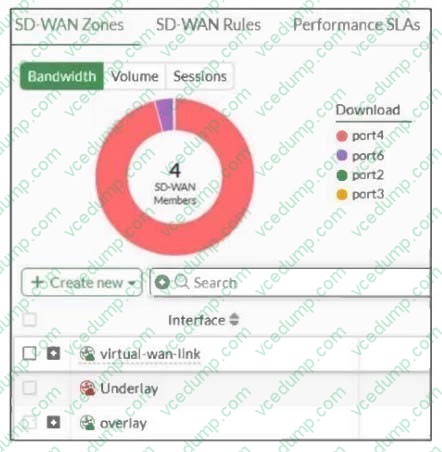
Based on the exhibit, which statement is true?
A. The Underlay zone is the zone by default.
B. The Underlay zone contains no member.
C. port2 and port3 are not assigned to a zone.
D. The virtual-wan-link and overlay zones can be deleted. -
Question 14:
The HTTP inspection process in web filtering follows a specific order when multiple features are enabled in the web filter profile.
Which order must FortiGate use when the web filter profile has features such as safe search enabled?
A. DNS-based web filter and proxy-based web filter
B. Static URL filter, FortiGuard category filter, and advanced filters
C. FortiGuard category filter and rating filter
D. Static domain filter, SSL inspection filter, and external connectors filters -
Question 15:
Refer to the exhibit.
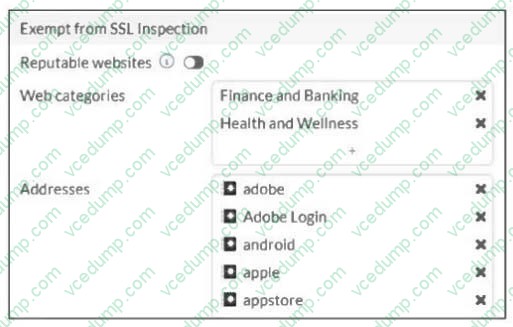
The predefined deep-inspection and custom-deep-inspection profiles exclude some web categories from SSL inspection, as shown in the exhibit.
For which two reasons are these web categories exempted? (Choose two.)
A. The FortiGate temporary certificate denies the browser's access to websites that use HTTP Strict Transport Security.
B. These websites are in an allowlist of reputable domain names maintained by FortiGuard.
C. The resources utilization is optimized because these websites are in the trusted domain list on FortiGate.
D. The legal regulation aims to prioritize user privacy and protect sensitive information for these websites. -
Question 16:
Refer to the exhibit, which shows a routing table.
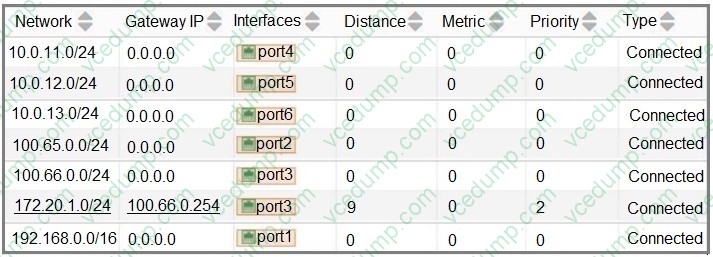
An administrator wants to create a new static route so the traffic to the subnet 172.20.1.0/24 is routed through port2 only.
What are the two criteria that the administrator can use to achieve this objective? (Choose two.)
A. The new static route must have the distance set to 9.
B. The existing static route through port3 must have the distance set to 11.
C. The new static route must have the priority set to 3.
D. The new static route must have the metric set to 1. -
Question 17:
An administrator manages a FortiGate model that supports NTurbo.
How does NTurbo acceleration enhance antivirus performance?
A. For proxy-based inspection, NTurbo offloads traffic to the content processor.
B. For flow-based inspection, NTurbo establishes a dedicated data path to redirect traffic between the IPS engine and FortiGate ingress and egress interfaces.
C. For proxy-based inspection, NTurbo buffers the whole file and then sends it to the antivirus engine.
D. For flow-based inspection, NTurbo creates two inspection sessions on the FortiGate device. -
Question 18:
FortiGate is operating in NAT mode and has two physical interfaces connected to the LAN and DMZ networks respectively.
Which two statements about the requirements of connected physical interfaces on FortiGate are true? (Choose two.)
A. Both interfaces must have the interface role assigned.
B. Both interfaces must have directly connected routes on the routing table.
C. Both interfaces must have DHCP enabled and interfaces set to LAN and DMZ roles assigned.
D. Both interfaces must have IP addresses assigned. -
Question 19:
A network administrator configures a static route with distance 10 and a second static route for the same destination with distance 20.
What happens if the primary next hop becomes unreachable?
A. FortiGate immediately removes the first route from the routing table
B. FortiGate waits for the timeout in the route-hold timer before switching
C. FortiGate automatically installs the second static route as the active route
D. Both routes remain in the routing table and ECMP is used -
Question 20:
An administrator has configured the following settings:
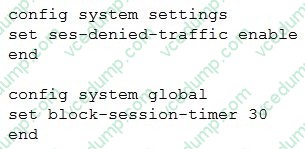
What are the two results of this configuration? (Choose two.)
A. Denied users are blocked for 30 minutes.
B. A session for denied traffic is created.
C. Session helpers are disabled for denied traffic.
D. The number of logs generated by denied traffic is reduced.
Related Exams:
-
EMEA-ADVANCED-SUPPORT
Fortinet EMEA Advanced Support -
FCP_FAC_AD-6.5
FCP - FortiAuthenticator 6.5 Administrator -
FCP_FAZ_AD-7.4
FCP - FortiAnalyzer 7.4 Administrator -
FCP_FAZ_AN-7.4
FCP - FortiAnalyzer 7.4 Analyst -
FCP_FAZ_AN-7.6
Fortinet NSE 5 - FortiAnalyzer 7.6 Analyst -
FCP_FCT_AD-7.2
FCP - Forti Client EMS 7.2 Administrator -
FCP_FCT_AD-7.4
Fortinet NSE 6 - FortiClient EMS 7.4 Administrator -
FCP_FGT_AD-7.4
FCP - FortiGate 7.4 Administrator -
FCP_FGT_AD-7.6
FortiGate 7.6 Administrator FCP_FGT_AD-7.6 -
FCP_FMG_AD-7.4
FCP - FortiManager 7.4 Administrator
Tips on How to Prepare for the Exams
Nowadays, the certification exams become more and more important and required by more and more enterprises when applying for a job. But how to prepare for the exam effectively? How to prepare for the exam in a short time with less efforts? How to get a ideal result and how to find the most reliable resources? Here on Vcedump.com, you will find all the answers. Vcedump.com provide not only Fortinet exam questions, answers and explanations but also complete assistance on your exam preparation and certification application. If you are confused on your FCP_FGT_AD-7.6 exam preparations and Fortinet certification application, do not hesitate to visit our Vcedump.com to find your solutions here.