CS0-003 Exam Details
-
Exam Code
:CS0-003 -
Exam Name
:CompTIA Cybersecurity Analyst (CySA+) -
Certification
:CompTIA Certifications -
Vendor
:CompTIA -
Total Questions
:680 Q&As -
Last Updated
:Jul 20, 2026
CompTIA CS0-003 Online Questions & Answers
-
Question 221:
A company discovers that its proprietary information is being sold on the dark web. A security analyst uses threat hunting to search for signs of compromise. After running a network packet capture tool, the analyst identifies millions of packets similar to the following: The analyst does not detect or identify any other abnormalities.
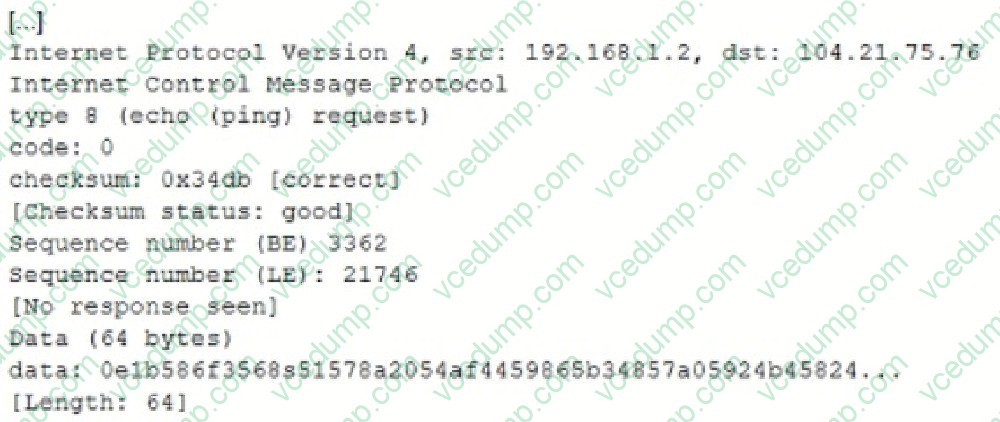
Which of the following is most likely the malicious activity in this scenario?
A. An insider is using an IP command-and-control to sell proprietary information.
B. A threat actor is performing exfiltration over an alternative protocol.
C. A machine was infected with a virus that is trying to propagate.
D. A hacktivist is conducting an ICMP DDoS attack against the company. -
Question 222:
During security scanning, a security analyst regularly finds the same vulnerabilities in a critical application.
Which of the following recommendations would best mitigate this problem if applied along the SDLC phase?
A. Conduct regular red team exercises over the application in production
B. Ensure that all implemented coding libraries are regularly checked
C. Use application security scanning as part of the pipeline for the CI/CDflow
D. Implement proper input validation for any data entry form -
Question 223:
A new SOC manager reviewed findings regarding the strengths and weaknesses of the last tabletop exercise in order to make improvements.
Which of the following should the SOC manager utilize to improve the process?
A. The most recent audit report
B. The incident response playbook
C. The incident response plan
D. The lessons-learned register -
Question 224:
A user is suspected of violating policy by logging in to a Linux VM during non-business hours.
Which of the following system files is the best way to track the user's activities?
A. /var/log/secure
B. /etc/motd
C. /var/log/messages
D. /etc/passwd -
Question 225:
A security analyst is evaluating the following support ticket:
Issue: Marketing campaigns are being filtered by the customer's email servers.
Description: Our marketing partner cannot send emails using our email address. The following log messages were collected from multiple customers:
1. The SPF result is PermError.
2. The SPF result is SoftFail or Fail.
3. The 550 SPF check failed.
Which of the following should the analyst do next?
A. Ask the marketing partner's ISP to disable the DKIM setting.
B. Request approval to disable DMARC on the company's ISP.
C. Ask the customers to disable SPF validation.
D. Request a configuration change on the company's public DNS. -
Question 226:
A SOC manager reviews metrics from the last four weeks to investigate a recurring availability issue. The manager finds similar events correlating to the times of the reported issues.
Which of the following methods would the manager most likely use to resolve the issue?
A. Vulnerability assessment
B. Root cause analysis
C. Recurrence reports
D. Lessons learned -
Question 227:
HOTSPOT
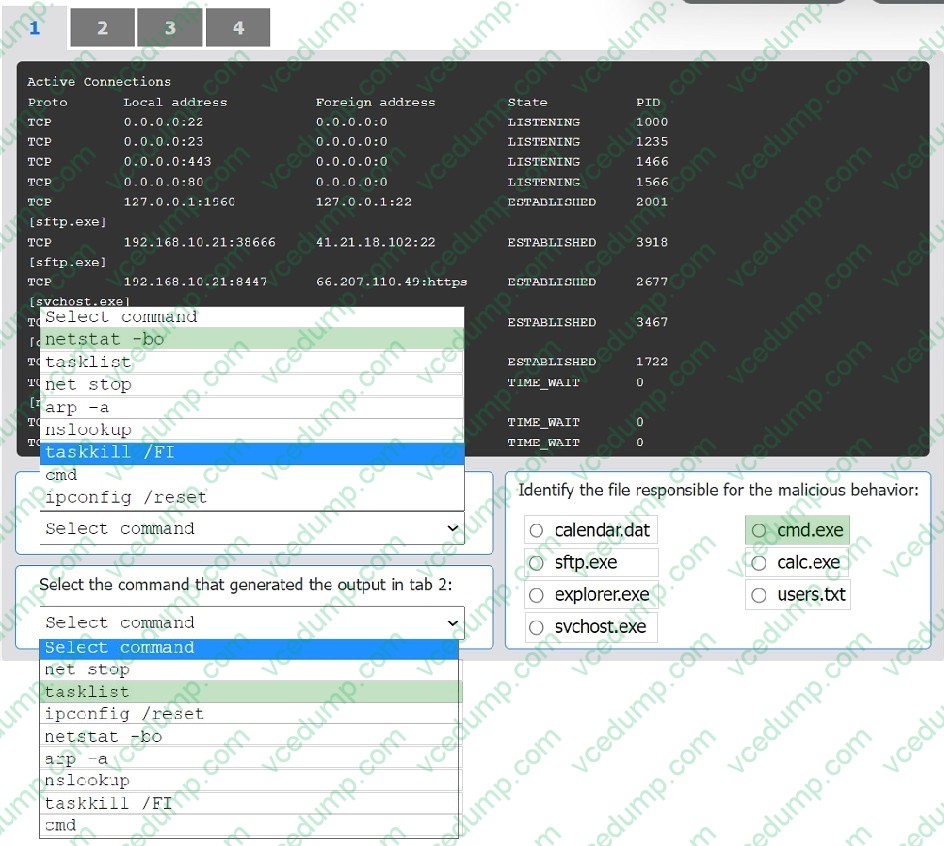
An organization has noticed large amounts of data are being sent out of its network. An analyst is identifying the cause of the data exfiltration.
INSTRUCTIONS
Select the command that generated the output in tabs 1 and 2.
Review the output text in all tabs and identify the file responsible for the malicious behavior.
If at any time you would like to bring back the initial state of the simulation, please click the Reset All button.
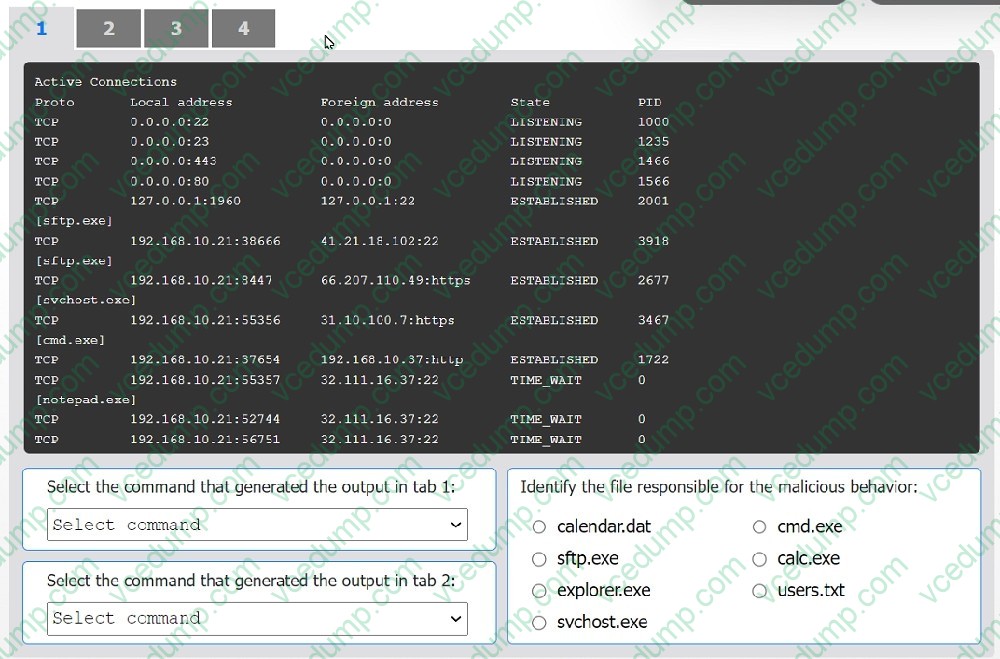
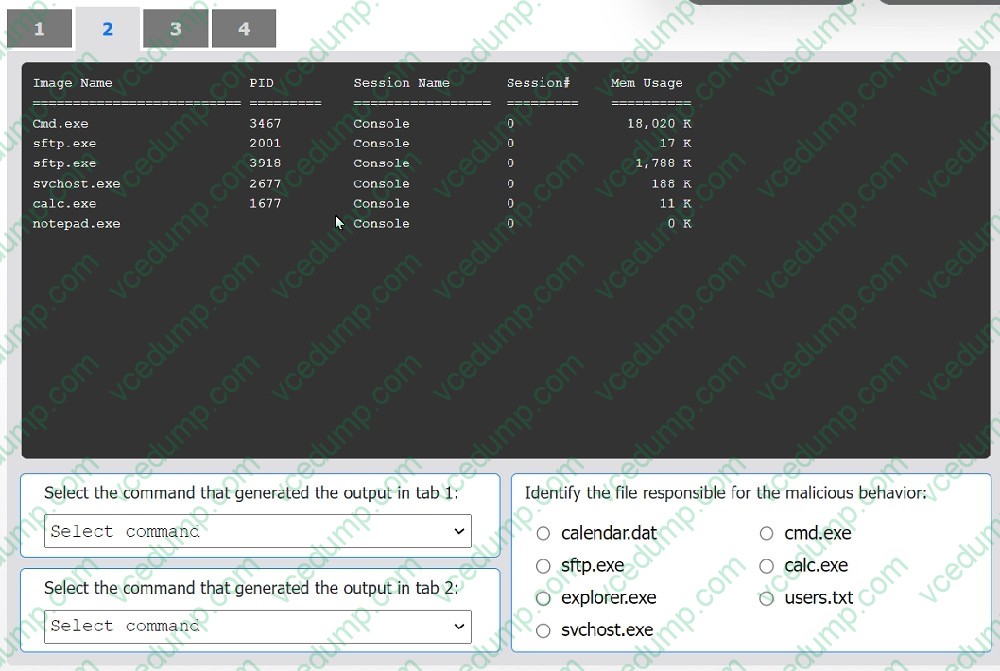
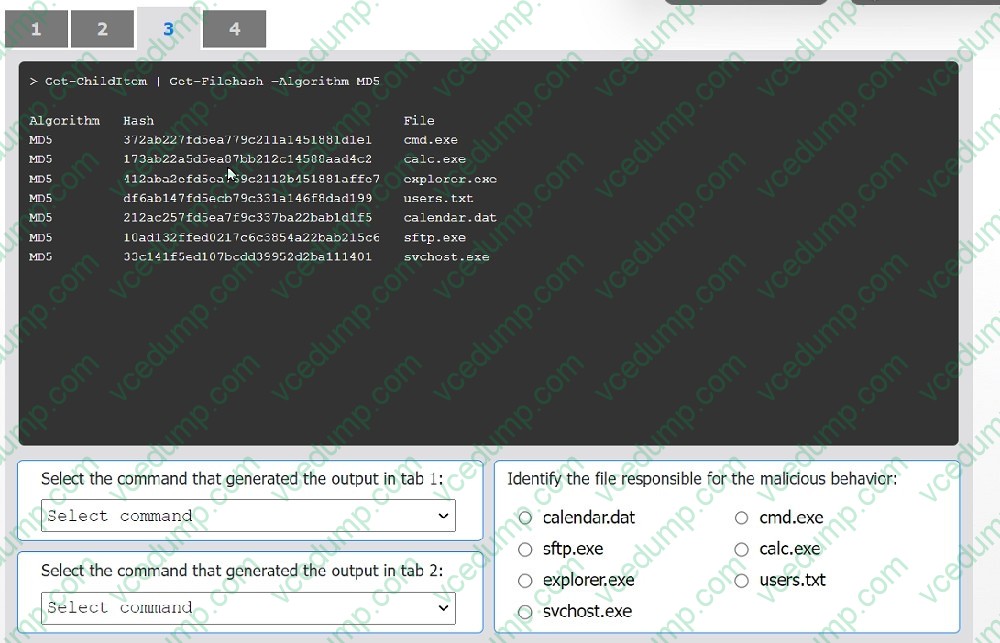
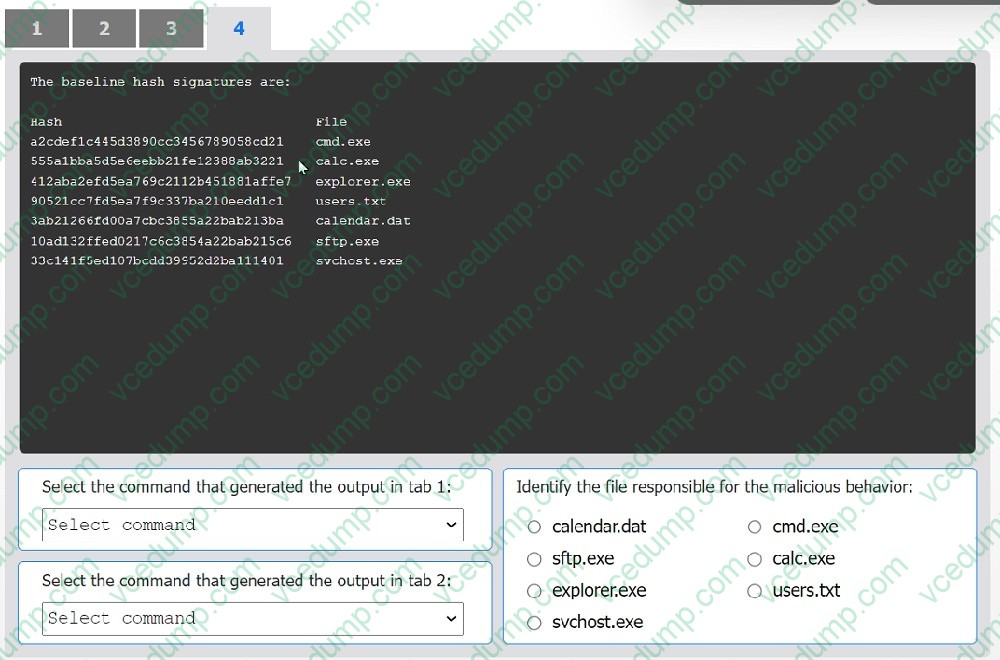
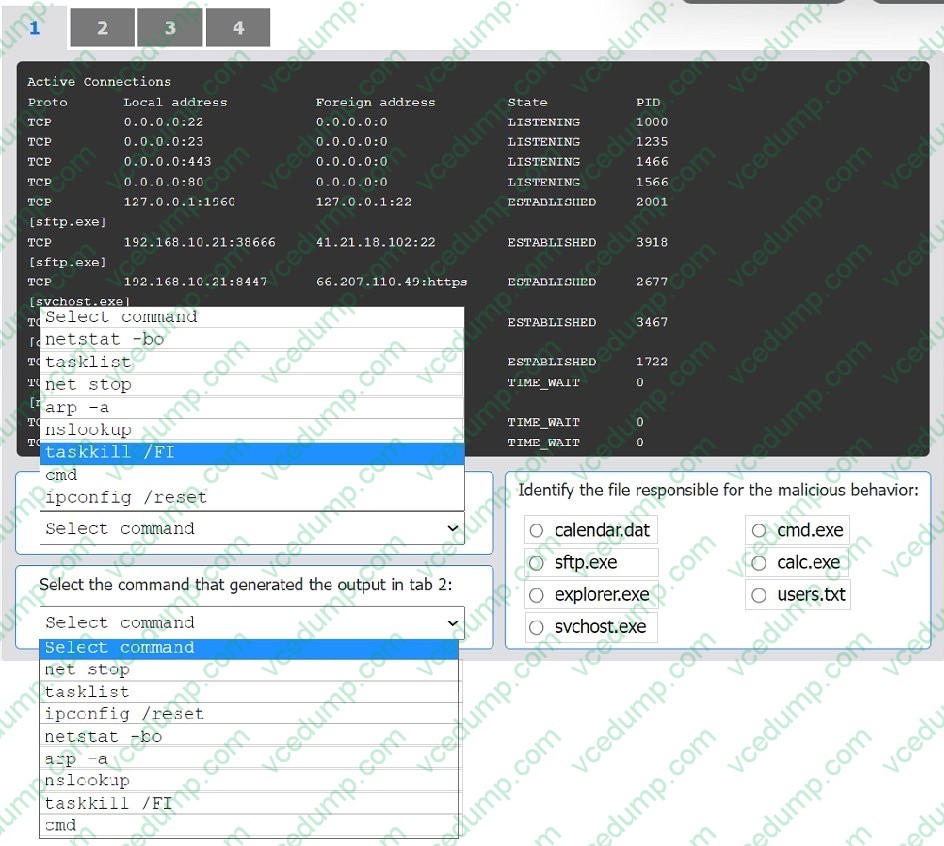
-
Question 228:
The management team has asked a senior security engineer to explore DLP security solutions for the company's growing use of cloud-based storage.
Which of the following is an appropriate solution to control the sensitive data that is being stored in the cloud?
A. NAC
B. IPS
C. CASB
D. WAF -
Question 229:
During a training exercise, a security analyst must determine the vulnerabilities to prioritize. The analyst reviews the following vulnerability scan output:
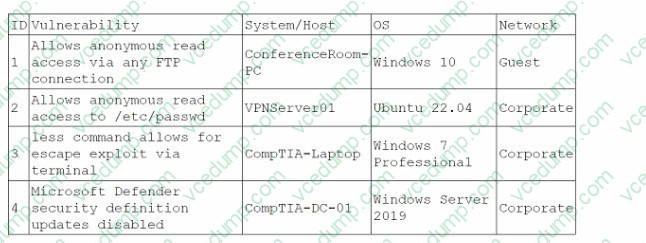
Which of the following issues should the analyst address first?
A. Allows anonymous read access to /etc/passwd
B. Allows anonymous read access via any FTP connection
C. Microsoft Defender security definition updates disabled
D. less command allows for escape exploit via terminal -
Question 230:
The architecture team has been given a mandate to reduce the triage time of phishing incidents by 20%.
Which of the following solutions will most likely help with this effort?
A. Integrate a SOAR platform.
B. Increase the budget to the security awareness program.
C. Implement an EDR tool.
D. Install a button in the mail clients to report phishing.
Related Exams:
-
220-1001
CompTIA A+ Certification: Core 1 -
220-1002
CompTIA A+ Certification: Core 2 -
220-1101
CompTIA A+ Certification: Core 1 -
220-1102
CompTIA A+ Certification: Core 2 -
220-1201
CompTIA A+ Certification: Core 1 -
220-1202
CompTIA A+ Core 2 (2026) -
220-902
CompTIA A+ Certification -
CAS-004
CompTIA Advanced Security Practitioner (CASP+) -
CAS-005
CompTIA SecurityX -
CLO-001
CompTIA Cloud Essentials+
Tips on How to Prepare for the Exams
Nowadays, the certification exams become more and more important and required by more and more enterprises when applying for a job. But how to prepare for the exam effectively? How to prepare for the exam in a short time with less efforts? How to get a ideal result and how to find the most reliable resources? Here on Vcedump.com, you will find all the answers. Vcedump.com provide not only CompTIA exam questions, answers and explanations but also complete assistance on your exam preparation and certification application. If you are confused on your CS0-003 exam preparations and CompTIA certification application, do not hesitate to visit our Vcedump.com to find your solutions here.