AZ-700 Exam Details
-
Exam Code
:AZ-700 -
Exam Name
:Designing and Implementing Microsoft Azure Networking Solutions -
Certification
:Microsoft Certifications -
Vendor
:Microsoft -
Total Questions
:452 Q&As -
Last Updated
:Jul 16, 2026
Microsoft AZ-700 Online Questions & Answers
-
Question 341:
You have an Azure virtual network named Hub1.
Hub1 connects to an on-premises network by using a Site-to-Site VPN connection.
You created an Azure Virtual network named Spoke1.
You are implementing peering between Hub1 and Spoke1.
You need to ensure that a virtual machine connected to Spoke1 can connect to the on-premises network through Hub1.
How should you complete the PowerShell script?
A. Code Block1: -AllowForwardedTraffic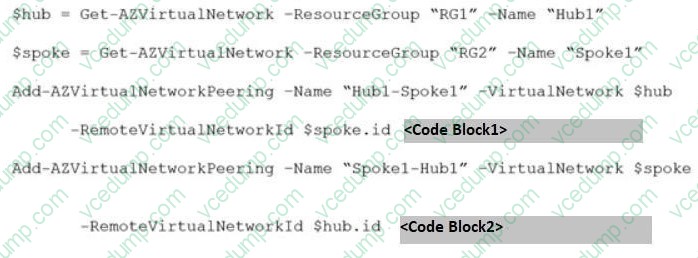
B. Code Block1: -AllowGatewayTransit
C. Code Block1: -UseRemoteGateways
D. Code Block2: -AllowForwardedTraffic
E. Code Block2: -AllowGatewayTransit
F. Code Block2: -UseRemoteGateways -
Question 342:
SIMULATION
Username and password
Use the following login credentials as needed:
To enter your username, place your cursor in the Sign in box and click on the username below.
To enter your password, place your cursor in the Enter password box and click on the password below.
Azure Username: [email protected] Azure Password: xxxxxxxxxx
If the Azure portal does not load successfully in the browser, press CTRL-K to reload the portal in a new browser tab.
The following information is for technical support purposes only:
Lab Instance: 12345678
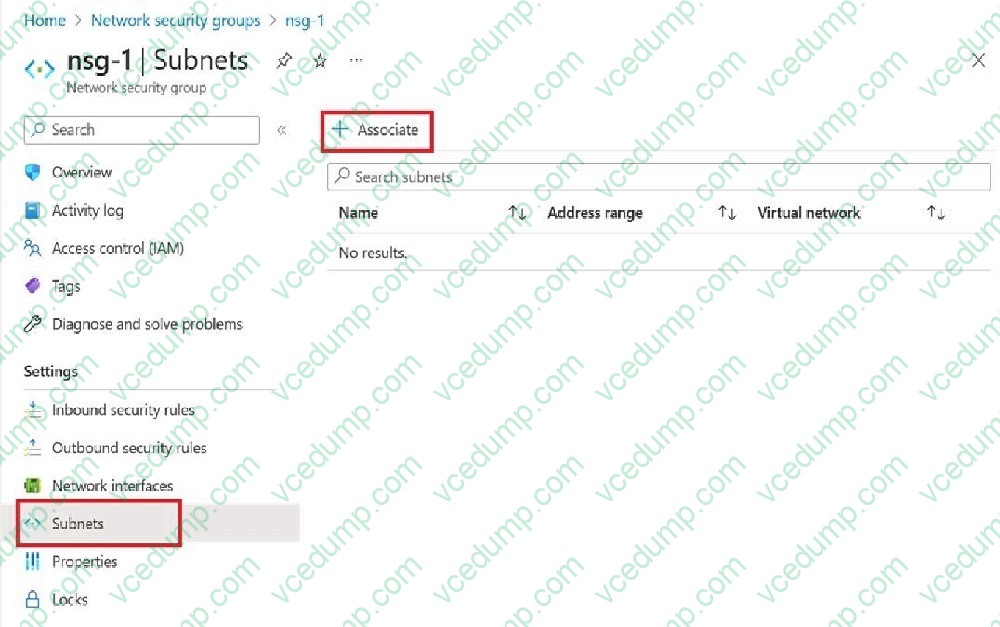
You need to ensure that subnet3-2 can only access resources on subnet3-1.
To complete this task, sign in to the Azure portal.
A. See explanation below.
B. PlaceHolder
C. PlaceHolder
D. PlaceHolder -
Question 343:
You have an on-premises network.
You have an Azure subscription that contains a virtual network.
You have an ExpressRoute service provider.
You plan to connect the Azure virtual network and the on-premises network by using an ExpressRoute circuit.
You create a new ExpressRoute circuit.
You need to provision the new circuit.
Which information should you provide to the service provider?
A. the IKEv2 shared key
B. the certificate
C. the public IP address
D. the service key -
Question 344:
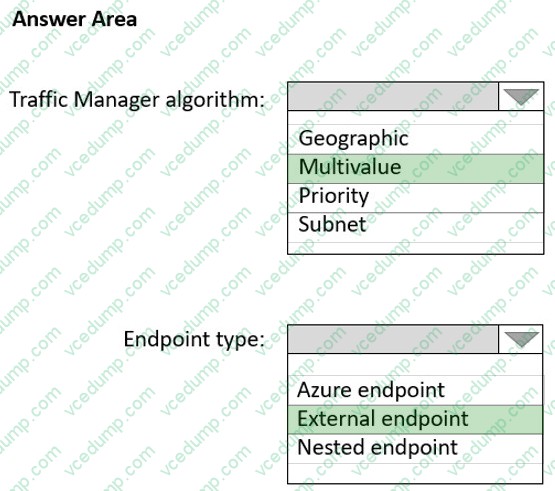
HOTSPOT
Your company has 10 instances of a web service. Each instance is hosted in a different Azure region and is accessible through a public endpoint.
The development department at the company is creating an application named App1. Every 10 minutes, App1 will use a list of endpoints and connect to the first available endpoint.
You plan to use Azure Traffic Manager to maintain the list of endpoints.
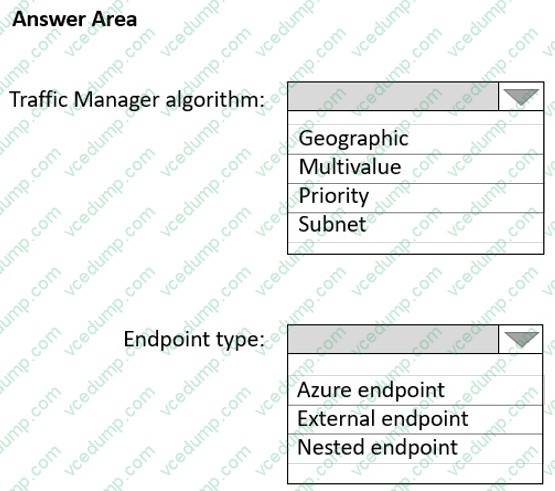
You need to configure a Traffic Manager profile that will minimize the impact of DNS caching.
What should you configure? To answer, select the appropriate options in the answer area.
NOTE: Each correct selection is worth one point.
-
Question 345:
You have an Azure subscription that contains an Azure Front Door named FD1. FD1 is configured as shown in the following exhibit.
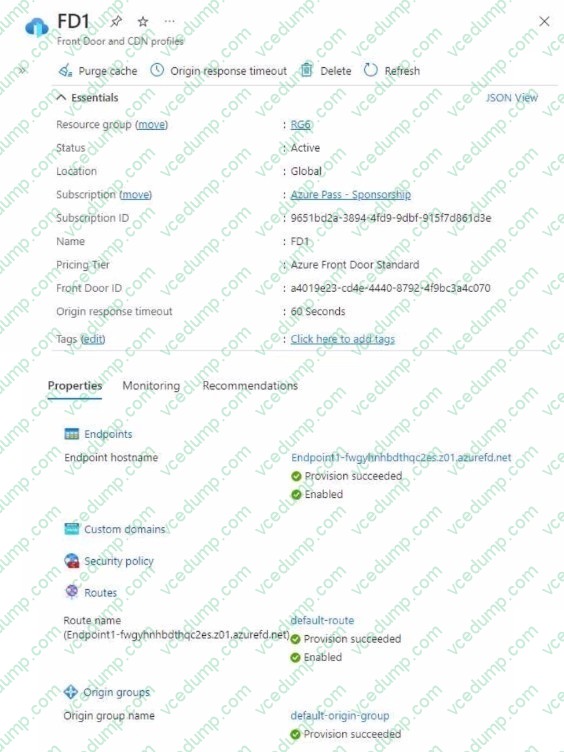
You need to enable Azure Private Link for FD1.
What should you do first?
A. Create an origin group.
B. Add an endpoint.
C. Change Pricing Tier to Azure Front Door Premium.
D. Create a custom route. -
Question 346:
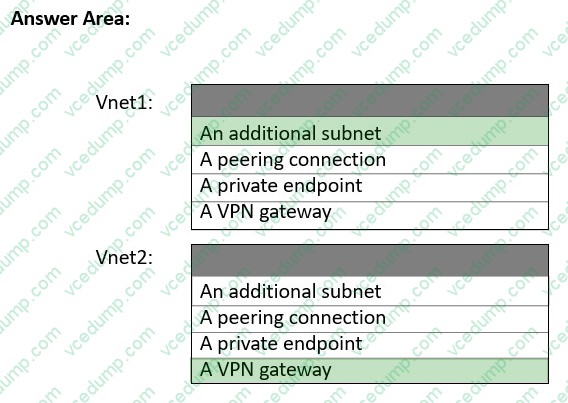
HOTSPOT
You have the Azure resources shown in the following table.
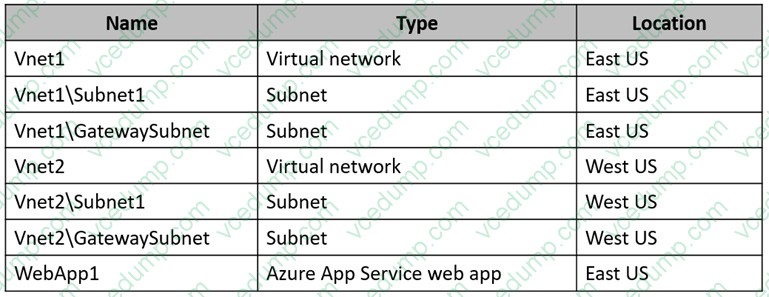
WebApp1 uses the Standard pricing tier.
You need to ensure that WebApp1 can access the virtual machines deployed to Vnet1\Subnet1 and Vnet2
\Subnet1. The solution must minimize costs.
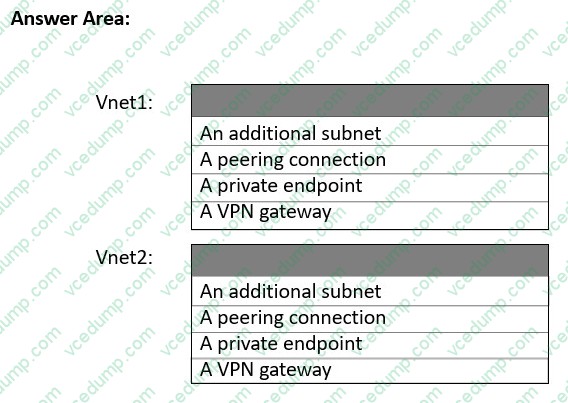
What should you create in each virtual network? To answer, select the appropriate options in the answer area.
-
Question 347:
Note: This question is part of a series of questions that present the same scenario. Each question in the series contains a unique solution that might meet the stated goals. Some question sets might have more than one correct solution, while others might not have a correct solution.
After you answer a question in this section, you will NOT be able to return to it. As a result, these questions will not appear in the review screen.
You have an Azure subscription that contains the following resources:
1. A virtual network named Vnet1
2. A subnet named Subnet1 in Vnet1
3. A virtual machine named VM1 that connects to Subnet1
4. Three storage accounts named storage1, storage2, and storage3
You need to ensure that VM1 can access storage1. VM1 must be prevented from accessing any other storage accounts.
Solution: You create a network security group (NSG). You configure a service tag for Microsoft.Storage and link the tag to Subnet1.
Does this meet the goal?
A. Yes
B. No -
Question 348:
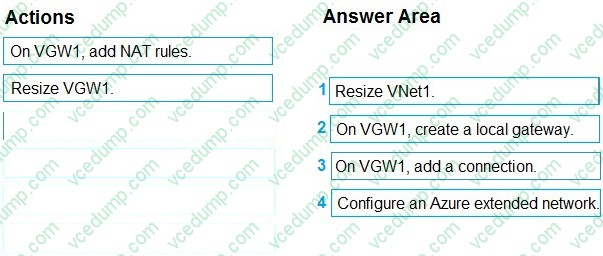
DRAG DROP
You have 100 on-premises servers with IP addresses from the 10.0.0.0/24 IP address space.
You have an Azure subscription that contains a virtual network named VNet1, an Azure VPN gateway named VGW1, and 100 virtual machines. VNet1 has an IP address space of 10.0.0.0/22. VGW1 uses the VpnGw1 SKU.
You need to ensure that the Azure virtual machines and the on-premises servers can communicate by using VGW1. The solution must minimize administrative effort.
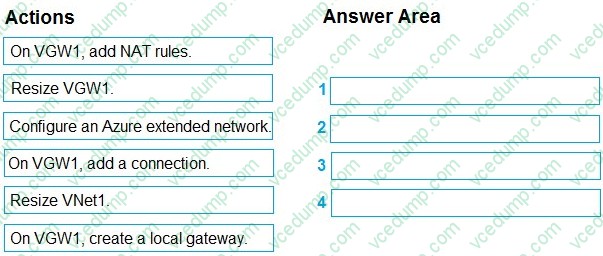
Which four actions should you perform in sequence? To answer, move the appropriate actions from the list of actions to the answer area and arrange them in the correct order.
Select and Place:
-
Question 349:
Your on-premises network contains an SMB share named Share1. You have an Azure subscription that contains the following resources:
1. A web app named webapp1
2. A virtual network named VNET1
3. You need to ensure that webapp1 can connect to Share1.
What should you deploy?
A. an Azure Application Gateway
B. an Azure Active Directory (Azure AD) Application Proxy
C. an Azure Virtual Network Gateway -
Question 350:
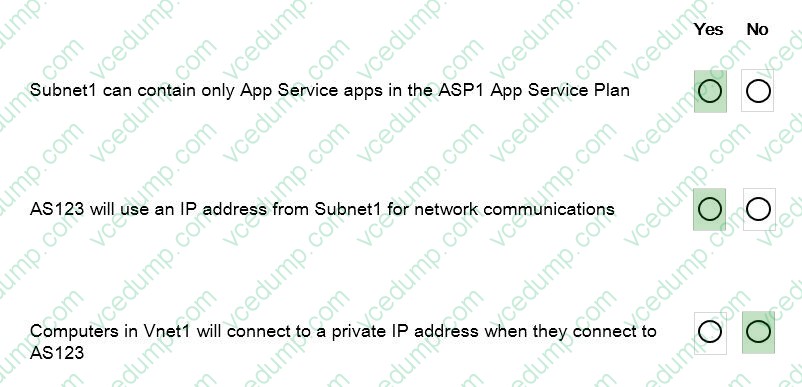
You have the Azure App Service app shown below.
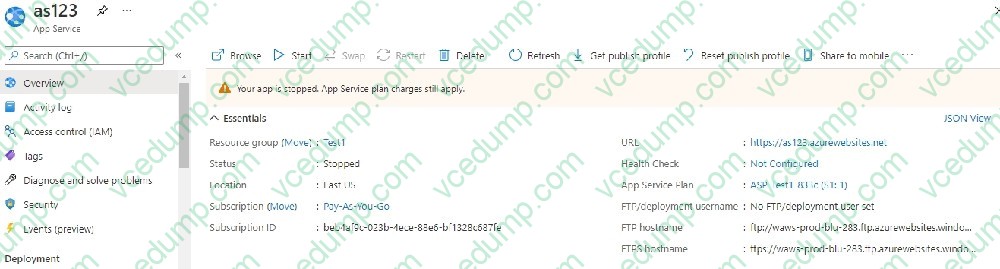
The VNet Integration settings for as123 are configured as shown below.
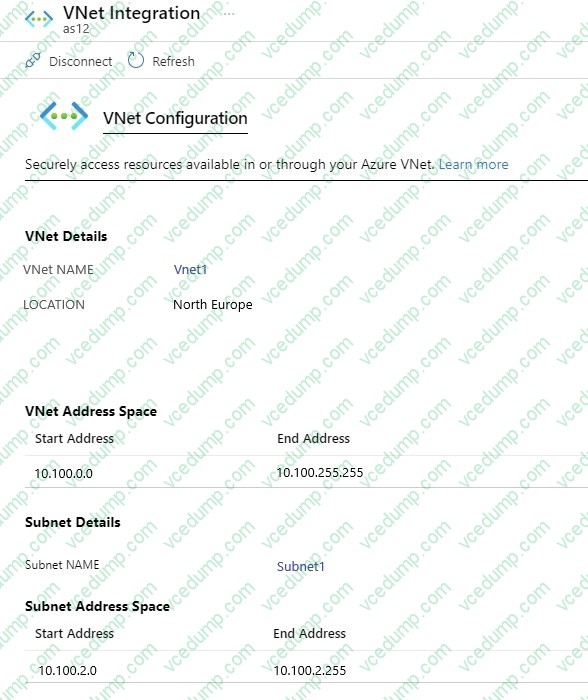
The Private Endpoint connections settings for as123 are configured as shown below.
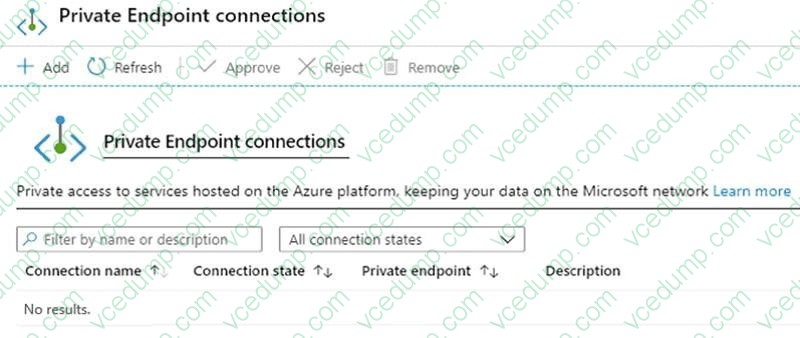
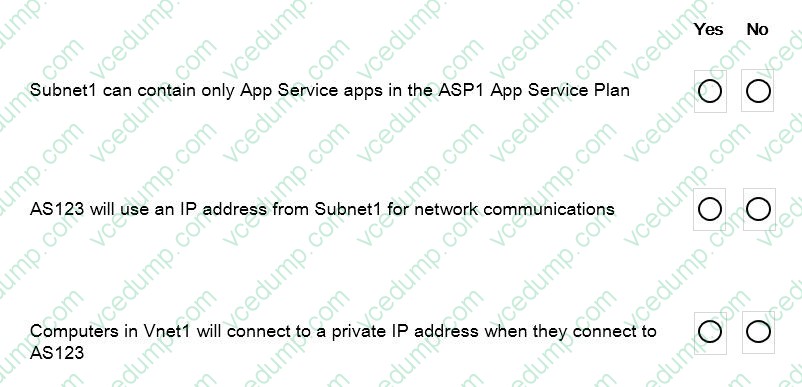
Select Yes of the below statement is true. Otherwise, select No.
Related Exams:
-
62-193
Technology Literacy for Educators -
70-243
Administering and Deploying System Center 2012 Configuration Manager -
70-355
Universal Windows Platform – App Data, Services, and Coding Patterns -
77-420
Excel 2013 -
77-427
Excel 2013 Expert Part One -
77-725
Word 2016 Core Document Creation, Collaboration and Communication -
77-726
Word 2016 Expert Creating Documents for Effective Communication -
77-727
Excel 2016 Core Data Analysis, Manipulation, and Presentation -
77-728
Excel 2016 Expert: Interpreting Data for Insights -
77-731
Outlook 2016 Core Communication, Collaboration and Email Skills
Tips on How to Prepare for the Exams
Nowadays, the certification exams become more and more important and required by more and more enterprises when applying for a job. But how to prepare for the exam effectively? How to prepare for the exam in a short time with less efforts? How to get a ideal result and how to find the most reliable resources? Here on Vcedump.com, you will find all the answers. Vcedump.com provide not only Microsoft exam questions, answers and explanations but also complete assistance on your exam preparation and certification application. If you are confused on your AZ-700 exam preparations and Microsoft certification application, do not hesitate to visit our Vcedump.com to find your solutions here.