70-761 Exam Details
-
Exam Code
:70-761 -
Exam Name
:Querying Data with Transact-SQL -
Certification
:Microsoft Certifications -
Vendor
:Microsoft -
Total Questions
:228 Q&As -
Last Updated
:Jan 21, 2022
Microsoft 70-761 Online Questions & Answers
-
Question 141:
HOTSPOT
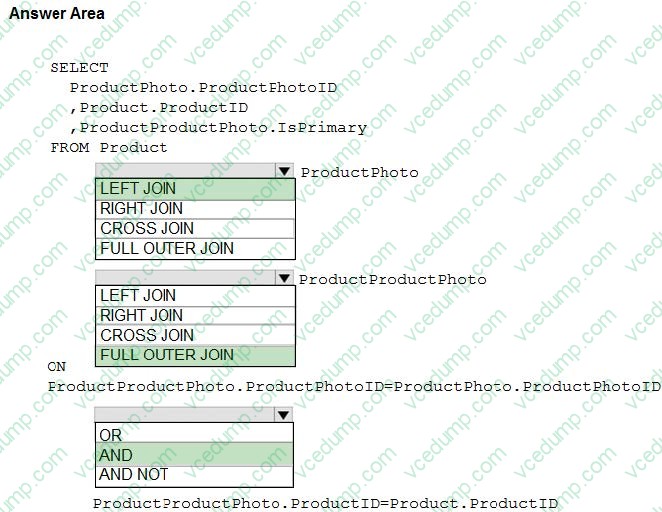
A company creates marketing photographs of products for online retailers. Photographs and related information are stored in a database that has the following structure:
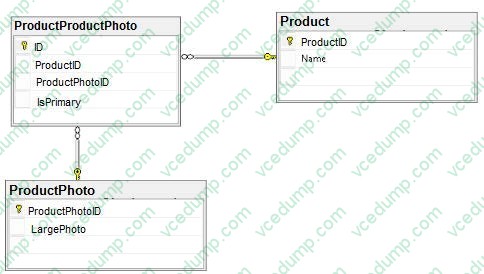
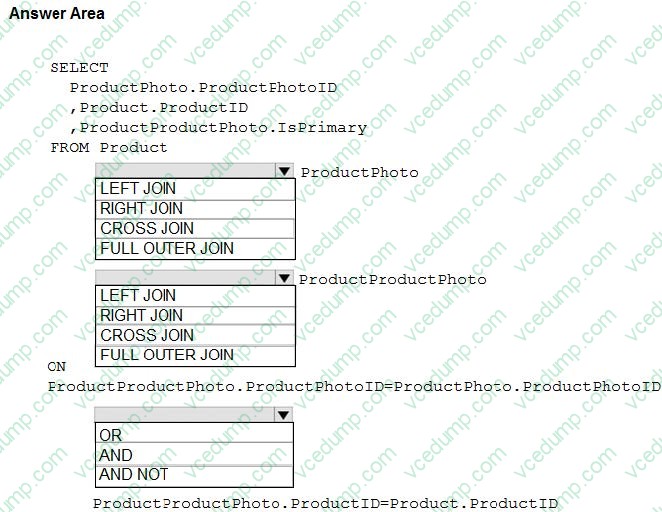
You must create a report that returns a list of all product photos, and whether the product has a primary photo.
How should you complete the Transact-SQL statement? To answer, select the appropriate Transact-SQL segments in the answer area.
NOTE: Each correct selection is worth one point.
Hot Area:
-
Question 142:
DRAG DROP
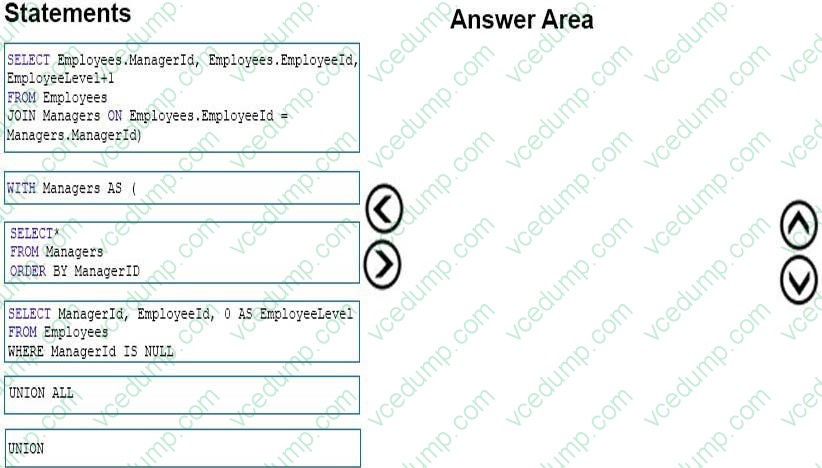
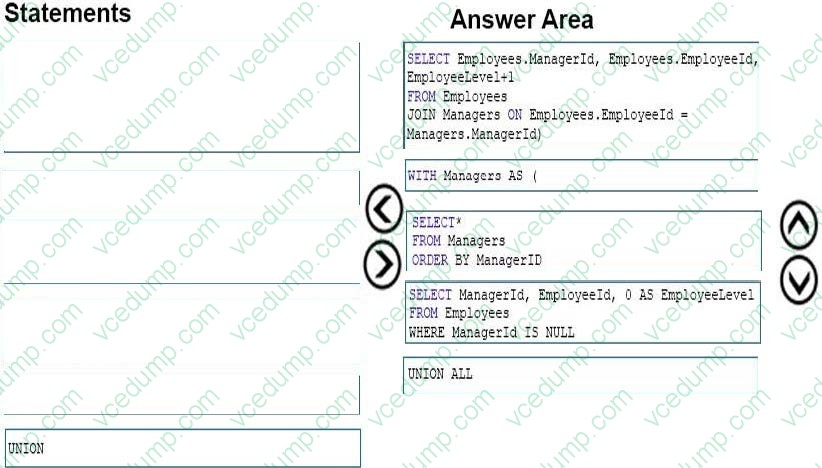
You have a database named DB1 that contains a table named HR.Employees. HR.Employees contains two columns named ManagerID and EmployeeID. ManagerID refers to EmployeeID.
You need to create a query that returns a list of all employees, the manager of each employee, and the numerical level of each employee in your organization's hierarchy.
Which five statements should you add to the query in sequence? To answer, move the appropriate statements from the list of statements to the answer area and arrange them in the correct order.
Select and Place:
-
Question 143:
You have a database named DB1 that contains two tables named Sales.Customers and Sales.CustomerTransaction. Sales.CustomerTransactions has a foreign key relationship to column named CustomerID in Sales.Customers.
You need to recommend a query that returns the number of customers who never completed a transaction.
Which query should you recommend?
A. Option A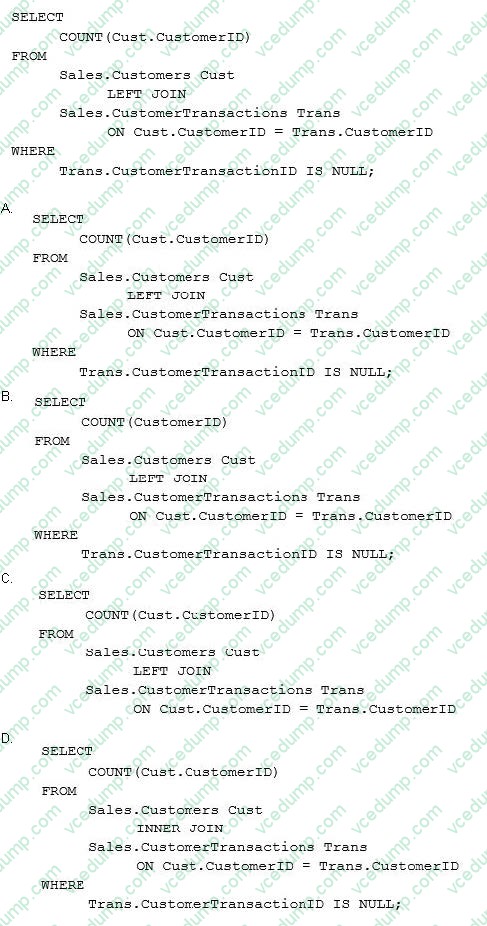
B. Option B
C. Option C
D. Option D -
Question 144:
Note: This question is part of a series of questions that use the same or similar answer choices. An answer choice may be correct for more than one question in the series. Each question is independent of the other questions in this series.
Information and details provided in a question apply only to that question.
You have a database that contains several connected tables. The tables contain sales data for customers in the United States only.
All the sales data is stored in a table named table1. You have a table named table2 that contains city names.
You need to create a query that lists only the cities that have no sales.
Which statement clause should you add to the query?
A. GROUP BY
B. MERGE
C. GROUP BY ROLLUP
D. LEFT JOIN
E. GROUP BY CUBE
F. CROSS JOIN
G. PIVOT
H. UNPIVOT -
Question 145:
Note: This question is part of a series of questions that present the same scenario. Each question in the series contains a unique solution that might meet the stated goals. Some question sets might have more than one correct solution, while
others might not have a correct solution.
After you answer a question in this section. You will NOT be able to return to it. As a result, these questions will not appear in the review screen.
You have a table named Products that stores information about products your company sells. The table has a column named ListPrice that stores retail pricing information for products.
Some products are used only internally by the company. Records for these products are maintained in the Products table for inventory purposes. The price for each of these products is $0.00. Customers are not permitted to order these
products.
You need to increase the list price for products that cost less than $100 by 10 percent. You must only increase pricing for products that customers are permitted to order. Solution: You run the following Transact-SQL statement:
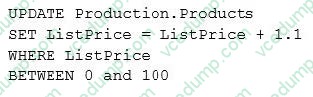
Does the solution meet the goal?
A. Yes
B. No -
Question 146:
SIMULATION
You create a table named Products.Sales by running the following Transact-SQL statement:
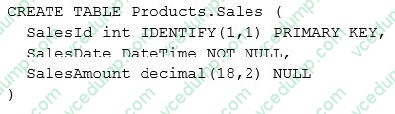
You add the following data to the table.
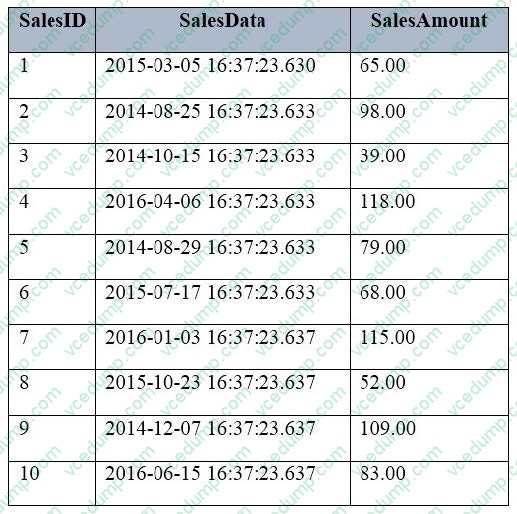
You are developing a report to display monthly sales data.
You need to create a Transact-SQL query to meet the following requirements:

Retrieve a column for the year followed by a column for each month from January through December.
Include the total sales amount for each month.
Aggregate columns by year, month, and then amount.
Construct the query using the following guidelines:
Use the MONTH keyword as the interval when using the DATANAME function.
Do not modify the provided IN clause.
Do not surround object names with square brackets.
Do not use implicit joins.
Do not use the DATEPART function.
Part of the correct Transact-SQL has been provided in the answer area below. Enter the code in the answer area that resolves the problem and meets the stated goals or requirements. You can add code within the code that has been provided as well as below it.
1.
SELECT * FROM
2.
(SELECT YEAR(SalesData)) AS Year, DATENAME (MONTH, SalesDate) AS Month, SalesAmount AS Amount
3.
4.
) AS MonthlySalesData
5.
6.
FOR Month IN (January, February, March, April, May, June, July, August, September, October, November, December)) AS MonthNamePivot
A. Check the answer below
-
Question 147:
You have a database named DB1 that contains a temporal table named Sales.Customers.
You need to create a query that returns the credit limit that was available to each customer in DB1 at the beginning of 2017.
Which query should you execute?
A. Option A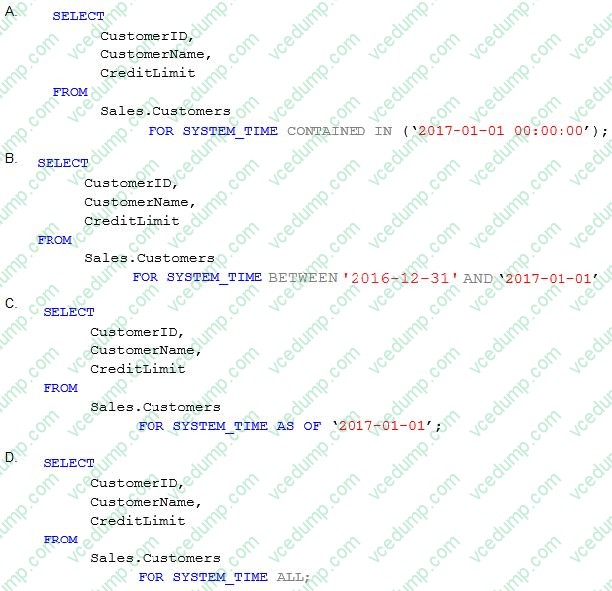
B. Option B
C. Option C
D. Option D -
Question 148:
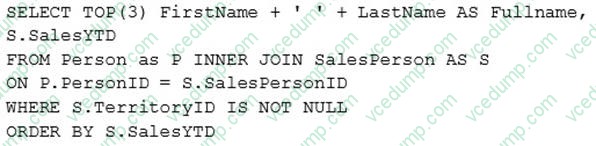
SIMULATION
You have a database that contains the following tables.
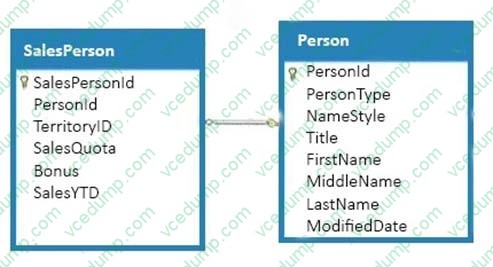
You need to create a query that lists the lowest-performing salespersons based on the current year-to-date sales period. The query must meet the following requirements:
1. Return a column named Fullname that includes the salesperson FirstName, a space, and then LastName.
2. Include the current year-to-date sales for each salesperson.
3. Display only data for the three salespersons with the lowest year-to-year sales values.
4. Exclude salespersons that have no value for TerritoryID.
Construct the query using the following guidelines:
1. Use the first letter of a table name as the table alias.
2. Use two-part column names.
3. Do not surround object names with square brackets.
4. Do not use implicit joins.
5. Use only single quotes for literal text.
6. Use aliases only if required.
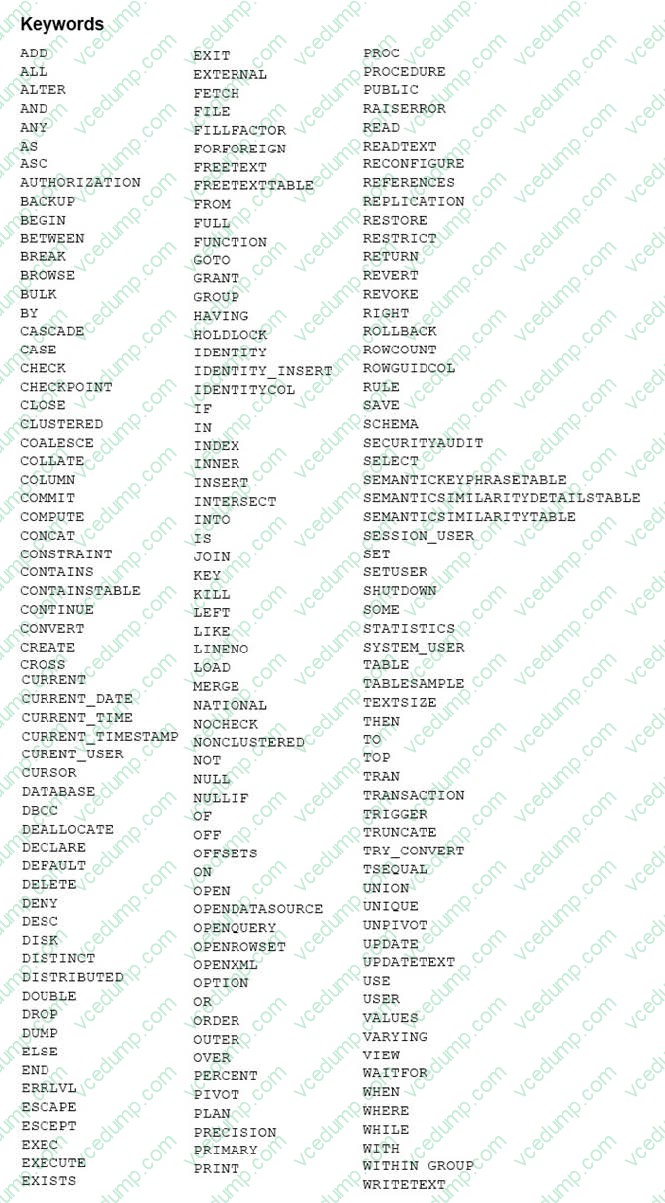
Part of the correct Transact-SQL has been provided in the answer area below. Enter the code in the answer area that resolves the problem and meets the stated goals or requirements. You can add code within the code that has been provided as well as below it.

Use the Check Syntax button to verify your work. Any syntax or spelling errors will be reported by line and character position.
A. Check the answer below -
Question 149:
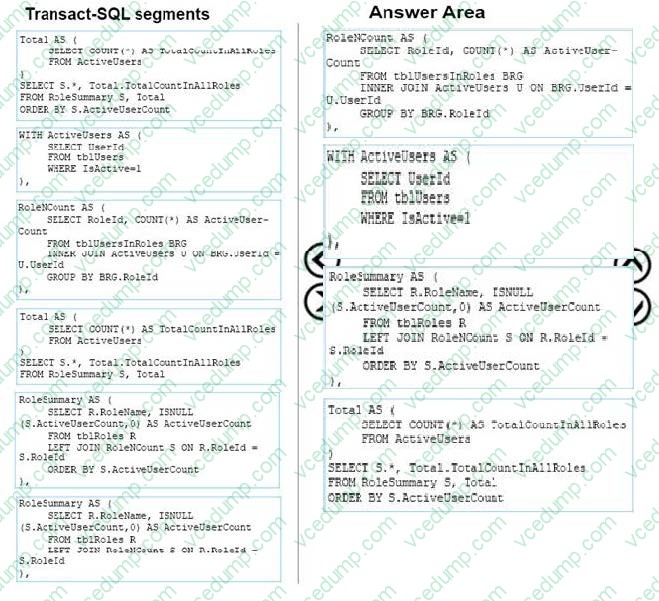
DRAG DROP
You create three tables by running the following Transact-SQL statements:
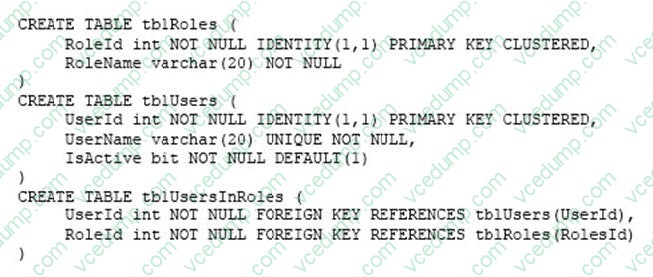
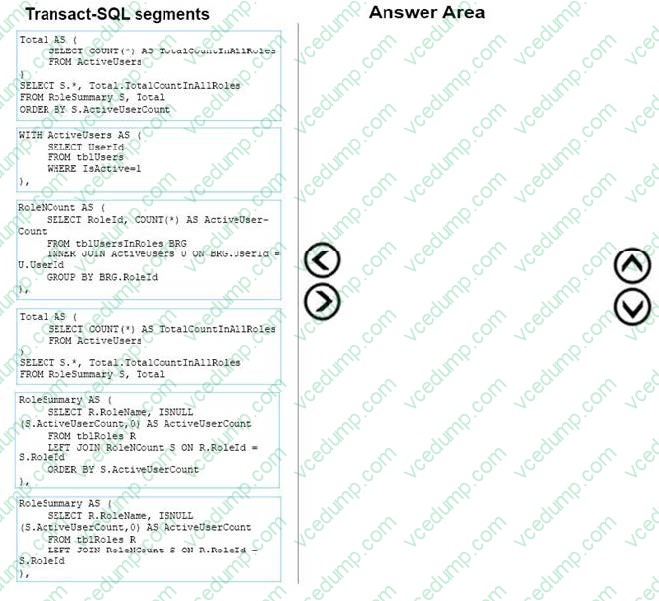
For reporting purposes, you need to find the active user count for each role, and the total active user count. The result must be ordered by active user count of each role. You must use common table expressions (CTEs). Which four Transact-SQL segments should you use to develop the solution? To answer, move the appropriate Transact-SQL segments from the list of Transact-SQL segments to the answer area and arrange them in the correct order.
Select and Place:
-
Question 150:
You are developing a database to track employee progress relative to training goals. You run the following Transact-SQL statements:
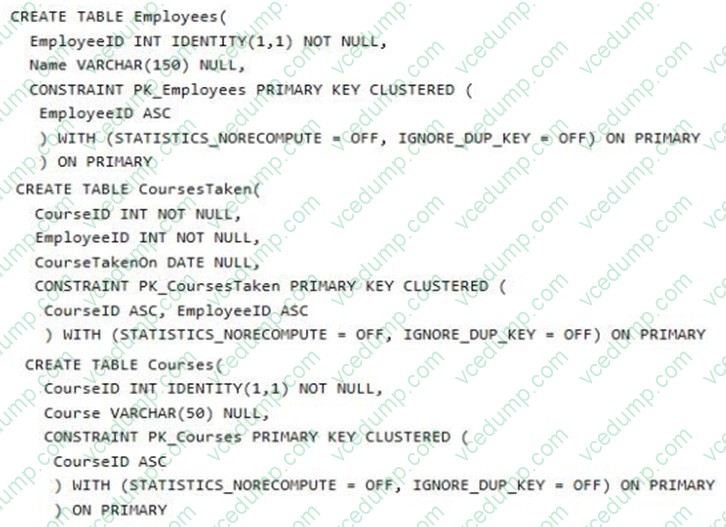
You must build a report that shows all Employees and the courses that they have taken. Employees that have not taken training courses must still appear in the report. The report must display NULL in the course column for these employees. You need to create a query for the report.
A. Option A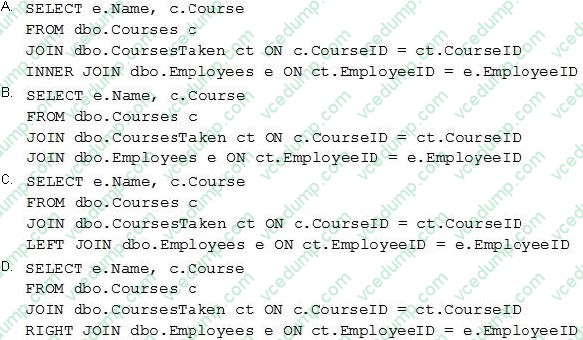
B. Option B
C. Option C
D. Option D
Related Exams:
-
62-193
Technology Literacy for Educators -
70-243
Administering and Deploying System Center 2012 Configuration Manager -
70-355
Universal Windows Platform – App Data, Services, and Coding Patterns -
77-420
Excel 2013 -
77-427
Excel 2013 Expert Part One -
77-725
Word 2016 Core Document Creation, Collaboration and Communication -
77-726
Word 2016 Expert Creating Documents for Effective Communication -
77-727
Excel 2016 Core Data Analysis, Manipulation, and Presentation -
77-728
Excel 2016 Expert: Interpreting Data for Insights -
77-731
Outlook 2016 Core Communication, Collaboration and Email Skills
Tips on How to Prepare for the Exams
Nowadays, the certification exams become more and more important and required by more and more enterprises when applying for a job. But how to prepare for the exam effectively? How to prepare for the exam in a short time with less efforts? How to get a ideal result and how to find the most reliable resources? Here on Vcedump.com, you will find all the answers. Vcedump.com provide not only Microsoft exam questions, answers and explanations but also complete assistance on your exam preparation and certification application. If you are confused on your 70-761 exam preparations and Microsoft certification application, do not hesitate to visit our Vcedump.com to find your solutions here.