USMLE-STEP-1 Exam Details
-
Exam Code
:USMLE-STEP-1 -
Exam Name
:United States Medical Licensing Step 1 -
Certification
:USMLE Certifications -
Vendor
:USMLE -
Total Questions
:847 Q&As -
Last Updated
:Jun 02, 2026
USMLE USMLE-STEP-1 Online Questions & Answers
-
Question 501:
Which of the following can most likely restore the immunological competency of this 5-month-old baby?
A. administration of purine nucleoside phosphorylase
B. B-cell supplementation
C. compatible bone marrow transplantation
D. injection of adenosine deaminase
E. T-cell treatment -
Question 502:
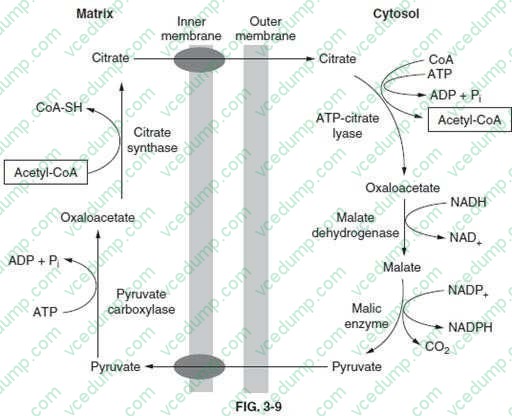
When cells acquire sufficient energy such that the rate of flux through the tricarboxylic acid (TCA) cycle declines, excess acetyl-CoA that cannot be oxidized is predominantly converted into fat. In order for the carbons in mitochondrial acetyl-CoA to serve as a precursor for fat synthesis, they must be delivered to the cytosol. Which of the following represents the molecule used to transport acetyl-CoA to the cytosol?
A. acetyl-CoA
B. carnitine
C. citrate
D. beta-hydroxybutyrate
E. pyruvate -
Question 503:
A 10-year boy is examined because his parents noticed that "his eyes never seem to look in the right direction." On examination, the left eye of the child is unable to move laterally (abduction) and when asked to look toward the nose (adduction), the eyeball retracts into the socket and the eye opening narrows. Sometimes, the eye also moves superiorly. The child is diagnosed with Duane syndrome, a congenital ocular motility disorder characterized by limited abduction of the affected eye. This is due to absence of the abducens (fifth cranial) nerve with aberrant innervation by the oculomotor (third cranial) nerve. Which of the following muscles is normally innervated by the abducens nerve?
A. inferior oblique
B. lateral rectus
C. medial rectus
D. superior oblique
E. superior rectus -
Question 504:
A 19-year-old camper fell asleep with the right side of her face against the cold earth on an autumn night. In the morning, she woke up and found that she could not move the right side of the face. She went to the local emergency room in a nearby town and was diagnosed with Bell's palsy. Which of the following muscles is not affected in her condition?
A. buccinators
B. levator labii superioris
C. levator labii superioris alaeque nasi
D. levator palpebrae superioris
E. orbicularis oculi -
Question 505:
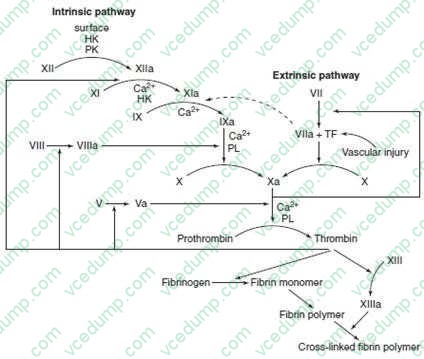
Which of the following clotting factors forms an active complex with tissue factor (factor III) to initiate the extrinsic clotting cascade?
A. factor I (fibrinogen)
B. factor VII (proconvertin)
C. factor VIII
D. factor IX
E. protein S -
Question 506:
A fourth-year medical student is learning to place a central line. To prepare for this procedure, she reviews X-rays and CT scans in order to gain a proper three-dimensional relationship of the structures involved. In following figure what is the structure pointed to by arrow 1?
A. Ascending aorta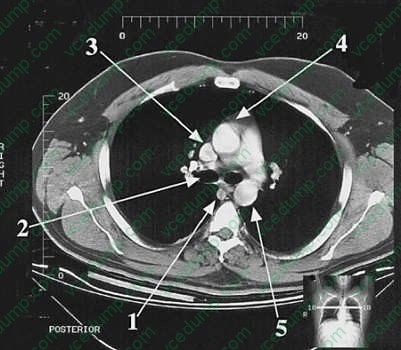
B. Azygos vein
C. Descending aorta
D. Right bronchus
E. Superior vena cava -
Question 507:
Which of the following familial cancers results from a defect in the tumor suppressor gene, p53?
A. familial adenomatous polyposis coli (APC)
B. Li Fraumeni syndrome
C. neurofibromatosis type 1
D. retinoblastoma
E. Wilms tumor -
Question 508:
A 26-year-old woman with cerebral palsy complains of severe pain associated with spasms in her leg muscles. Which of the following drugs is used in cerebral palsy to reduce skeletal muscle spasticity by an action on cholinergic nerve endings?
A. baclofen
B. botulinum toxin
C. dantrolene
D. diazepam
E. tubocurarine -
Question 509:
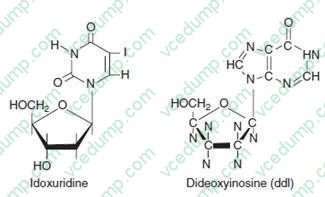
Ayoung street person was treated with the drug the structure of which is shown in below figure. Which of the following correctly identifies the drug?
A. acyclovir, which inhibits the herpesvirus- encoded DNA polymerase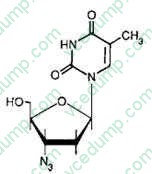
B. azidothymidine (AZT), which inhibits the AIDS virus reverse transcriptase
C. dideoxyinosine, which inhibits poliovirus replication
D. enviroxine, which inhibits rhinoviruses
E. idoxuridine, which inhibits herpesvirus thymidine kinase -
Question 510:
A patient has begun exhibiting signs of paranoia and psychosis within the past week. In considering the diagnosis of schizophrenia, which of the following is a crucial piece of information?
A. The patient does not smoke.
B. The patient has a history of similar psychotic episodes in the past.
C. The patient has a history of substance abuse.
D. The patient is a toxicologist.
E. The patient is single.

Tips on How to Prepare for the Exams
Nowadays, the certification exams become more and more important and required by more and more enterprises when applying for a job. But how to prepare for the exam effectively? How to prepare for the exam in a short time with less efforts? How to get a ideal result and how to find the most reliable resources? Here on Vcedump.com, you will find all the answers. Vcedump.com provide not only USMLE exam questions, answers and explanations but also complete assistance on your exam preparation and certification application. If you are confused on your USMLE-STEP-1 exam preparations and USMLE certification application, do not hesitate to visit our Vcedump.com to find your solutions here.