SC-100 Exam Details
-
Exam Code
:SC-100 -
Exam Name
:Microsoft Cybersecurity Architect -
Certification
:Microsoft Certifications -
Vendor
:Microsoft -
Total Questions
:350 Q&As -
Last Updated
:Jul 12, 2026
Microsoft SC-100 Online Questions & Answers
-
Question 231:
HOTSPOT
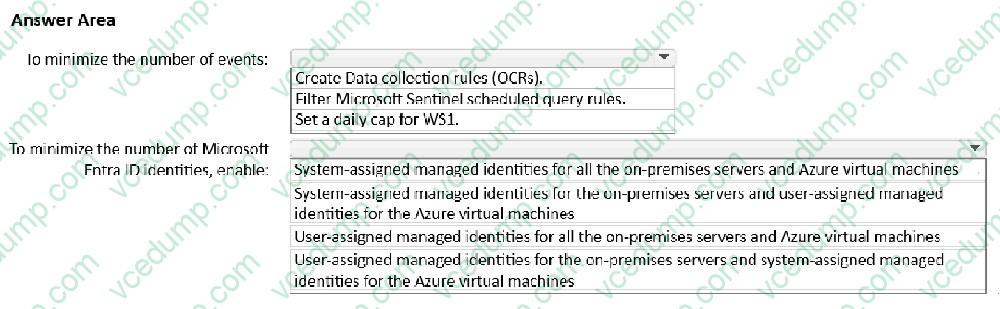
You have 1,000 on-premises servers that run Linux.
You have an Azure subscription that contains a Microsoft Sentinel workspace named WS1 and 1,000 virtual machines that run Linux.
All the on-premises Linux servers are onboarded to Azure Arc.
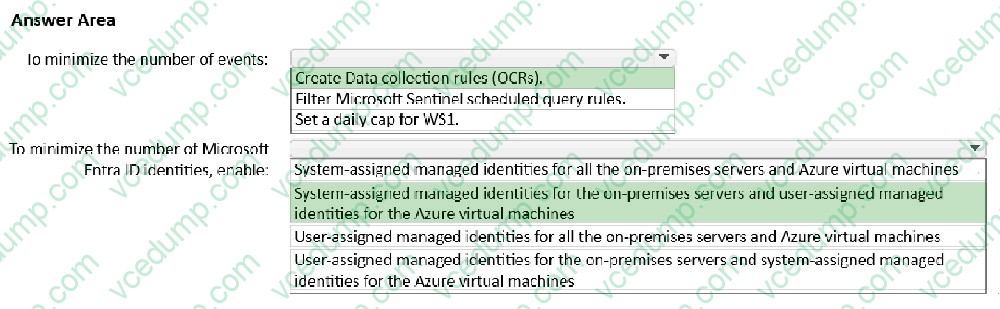
You plan to collect Common Event Format (CEF) logs by using the Azure Monitor Agent connector in Microsoft Sentinel.
You need to design a solution for collecting specific events from the logs. The solution must meet the following requirements:
1. Minimize the number of Microsoft Entra ID identities required.
2. Minimize the number of events delivered to WS1.
3. Ensure that all the required events are ingested.
4. Minimize administrative effort.
What should you include in the solution? To answer, select the options in the answer area.
NOTE: Each correct answer is worth one point.
-
Question 232:
You have a Microsoft 365 subscription that contains 1,000 users and a group named Group1. All the users have Windows 11 devices. The users sign in to their devices by using their Microsoft Entra account. The users do NOT have administrative rights to their devices.
The members of Group1 remotely assist the users by taking control of user sessions. The remote control sessions run in the security context of the users they are assisting.
You need to recommend a solution that will enable the Group1 members to run apps that require administrative rights to the users' devices. The solution must ensure that the apps are run in the context of each signed-in standard user.
What should you include in the recommendation?
A. Windows Local Administrator Password Solution (Windows LAPS)
B. Microsoft Entra Permissions Management
C. Microsoft Intune Endpoint Privilege Management
D. Privileged Identity Management (PIM) in Microsoft Entra ID -
Question 233:
Your network contains an Active Directory Domain Services (AD DS) domain.
You need to ensure that the built-in administrator account for the domain can be used only for interactive sign-ins to domain controllers.
What should you configure?
A. the Protected Users group
B. authentication policies
C. the User Rights Assignment security policy settings
D. an authentication policy silo -
Question 234:
HOTSPOT
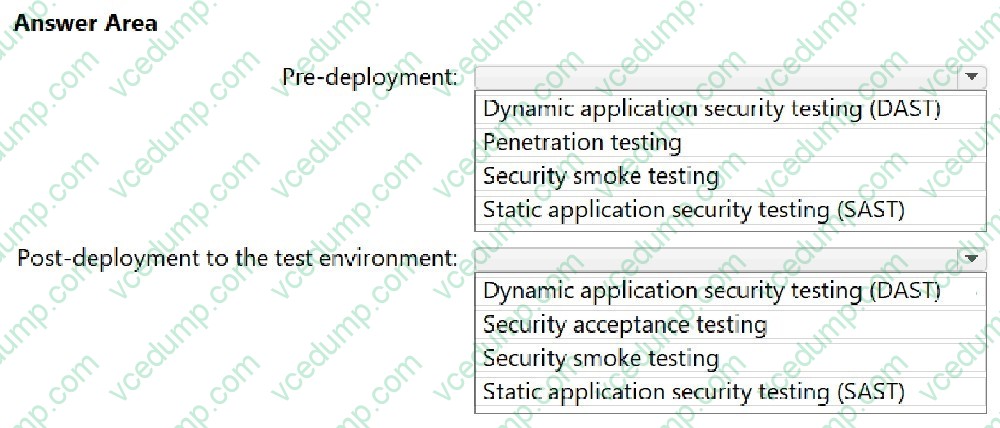
You have an Azure subscription that contains Azure App Service apps. The apps have the following characteristics:
1. The apps are deployed by using continuous integration and continuous deployment (CI/CD) pipelines in Azure DevOps.
2. The apps are deployed to a test environment first, and then to a production environment.
3. The source code for the apps is stored in Azure Repos.
You plan to implement DevSecOps controls based on the Microsoft Cloud Adoption Framework for Azure.
You need to recommend testing controls to meet the following requirements:
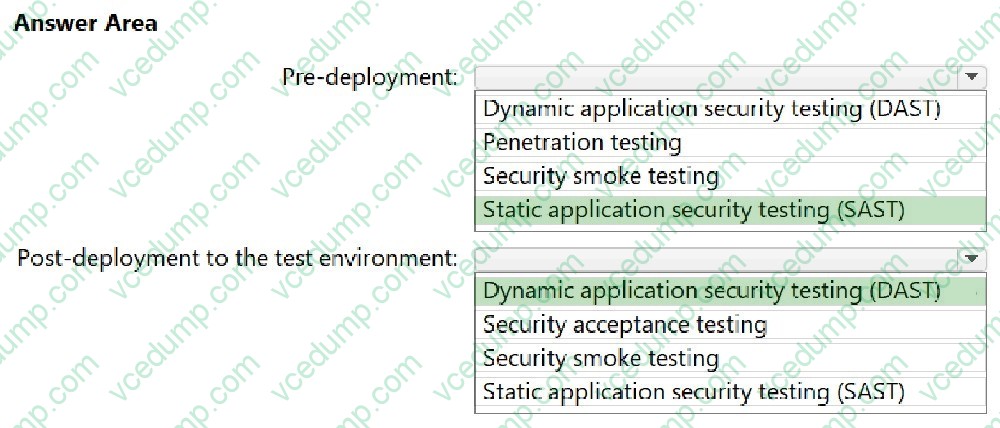
1. All the source code must be tested for security vulnerabilities in Azure Repos before deploying the apps.
2. Once the apps are deployed to the test environment, they must be tested for security vulnerabilities.
Which testing method should you recommend for each stage? To answer, select the options in the answer area.
NOTE: Each correct answer is worth one point.
-
Question 235:
You have an Azure subscription.
You have a subscription to a third-party cloud provider. The subscription contains 100 virtual machines.
You manage cloud security for both subscriptions from the Azure subscription.
You need to recommend a solution to validate the security posture of the virtual machines.
Which two services should you include in the recommendation? Each correct answer presents part of the solution.
A. Microsoft Defender for Cloud
B. Microsoft Defender for Endpoint
C. Azure Lighthouse
D. Microsoft Sentinel
E. Azure Arc -
Question 236:
You need to recommend a solution to scan the application code. The solution must meet the application development requirements.
What should you include in the recommendation?
A. Azure Key Vault
B. GitHub Advanced Security
C. Application Insights in Azure Monitor
D. Azure DevTest Labs -
Question 237:
HOTSPOT
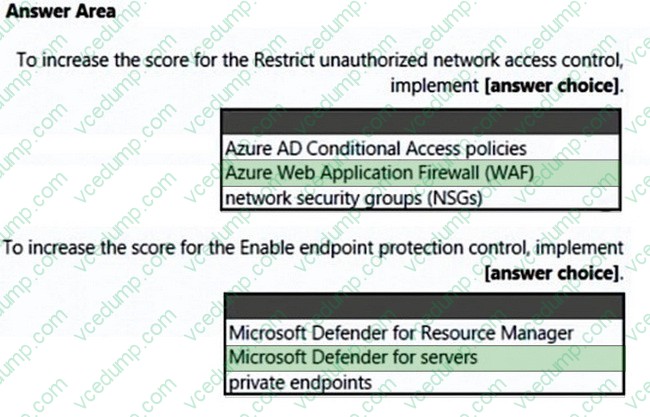
You open Microsoft Defender for Cloud as shown in the following exhibit.
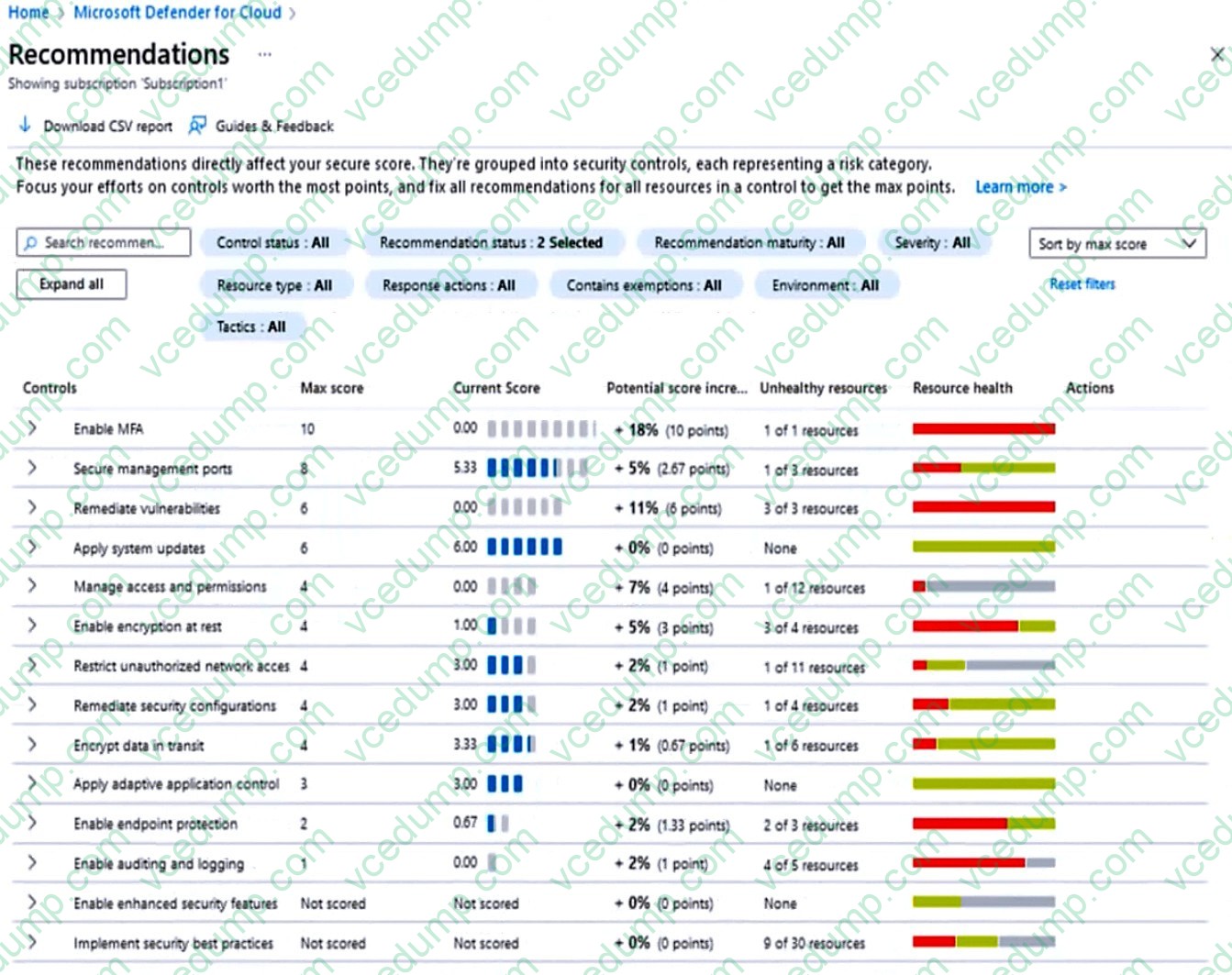
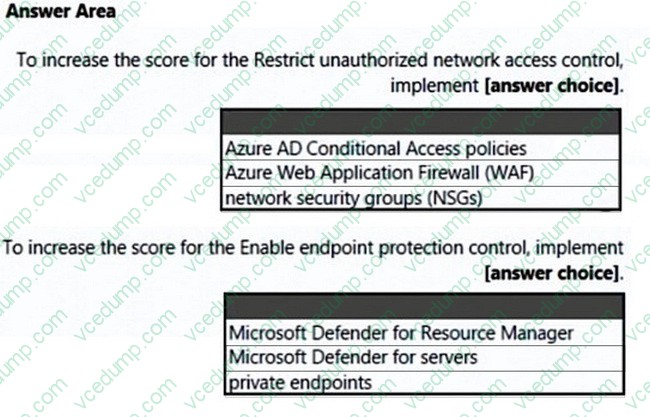
Use the drop-down menus to select the answer choice that completes each statement based on the information presented in the graphic.
NOTE: Each correct selection is worth one point.
-
Question 238:
You have a multicloud environment that contains an Azure subscription, an Amazon Web Services (AWS) subscription, and a Google Cloud Platform (GCP) subscription.
You plan to implement Cloud Security Posture Management (CSPM) by using Microsoft Defender for
You need to design a solution that will provide attack path analysis functionality for each subscription.
What should you include in the solution?
A. regulatory compliance
B. Microsoft Defender External Attack Surface Management (Defender EASM)
C. agentless scanning
D. Microsoft Cloud Security Benchmark (MCSB) -
Question 239:
HOTSPOT
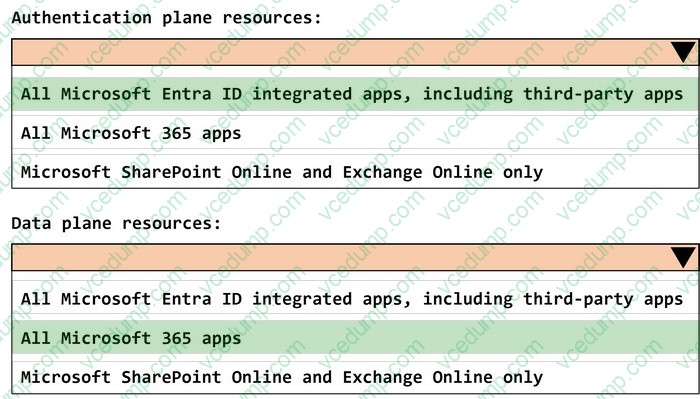
You have a Microsoft 365 E5 subscription.
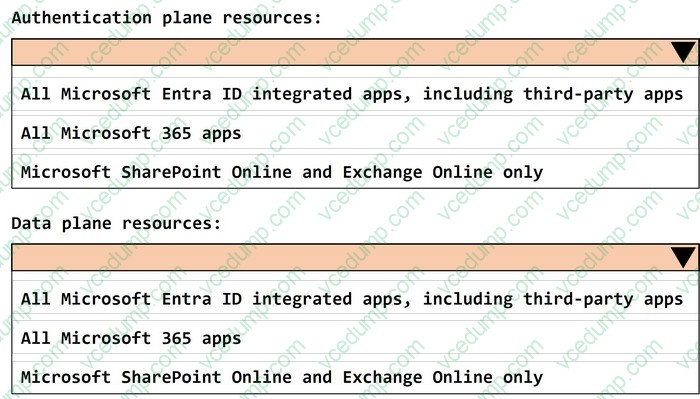
You plan to deploy Global Secure Access universal tenant restrictions v2.
Which authentication plane resources and which data plane resources will be protected? To answer, select the appropriate options in the answer area.
NOTE: Each correct selection is worth one point.
-
Question 240:
Your company is developing a new Azure App Service web app.
You are providing design assistance to verify the security of the web app.
You need to recommend a solution to test the web app for vulnerabilities such as insecure server configurations, cross-site scripting (XSS), and SQL injection.
What should you include in the recommendation?
A. dynamic application security testing (DAST)
B. static application security testing (SAST)
C. interactive application security testing (IAST)
D. runtime application self-protection (RASP)
Related Exams:
-
62-193
Technology Literacy for Educators -
70-243
Administering and Deploying System Center 2012 Configuration Manager -
70-355
Universal Windows Platform – App Data, Services, and Coding Patterns -
77-420
Excel 2013 -
77-427
Excel 2013 Expert Part One -
77-725
Word 2016 Core Document Creation, Collaboration and Communication -
77-726
Word 2016 Expert Creating Documents for Effective Communication -
77-727
Excel 2016 Core Data Analysis, Manipulation, and Presentation -
77-728
Excel 2016 Expert: Interpreting Data for Insights -
77-731
Outlook 2016 Core Communication, Collaboration and Email Skills
Tips on How to Prepare for the Exams
Nowadays, the certification exams become more and more important and required by more and more enterprises when applying for a job. But how to prepare for the exam effectively? How to prepare for the exam in a short time with less efforts? How to get a ideal result and how to find the most reliable resources? Here on Vcedump.com, you will find all the answers. Vcedump.com provide not only Microsoft exam questions, answers and explanations but also complete assistance on your exam preparation and certification application. If you are confused on your SC-100 exam preparations and Microsoft certification application, do not hesitate to visit our Vcedump.com to find your solutions here.