NSE6_FWF-6.4 Exam Details
-
Exam Code
:NSE6_FWF-6.4 -
Exam Name
:Fortinet NSE 6 - Secure Wireless LAN 6.4 -
Certification
:Fortinet Certifications -
Vendor
:Fortinet -
Total Questions
:32 Q&As -
Last Updated
:Jul 08, 2026
Fortinet NSE6_FWF-6.4 Online Questions & Answers
-
Question 11:
When configuring Auto TX Power control on an AP radio, which two statements best describe how the radio responds? (Choose two.)
A. When the AP detects any other wireless signal stronger that -70 dBm, it will reduce its transmission power until it reaches the minimum configured TX power limit.
B. When the AP detects PF Interference from an unknown source such as a cordless phone with a signal stronger that -70 dBm, it will increase its transmission power until it reaches the maximum configured TX power limit.
C. When the AP detects any wireless client signal weaker than -70 dBm, it will reduce its transmission power until it reaches the maximum configured TX power limit.
D. When the AP detects any interference from a trusted neighboring AP stronger that -70 dBm, it will reduce its transmission power until it reaches the minimum configured TX power limit. -
Question 12:
You are investigating a wireless performance issue and you are trying to audit the neighboring APs in the PF environment. You review the Rogue APs widget on the GUI but it is empty, despite the known presence of other APs. Which configuration change will allow neighboring APs to be successfully detected?
A. Enable Locate WiFi clients when not connected in the relevant AP profiles.
B. Enable Monitor channel utilization on the relevant AP profiles.
C. Ensure that all allowed channels are enabled for the AP radios.
D. Enable Radio resource provisioning on the relevant AP profiles. -
Question 13:
Refer to the exhibits. Exhibit A.
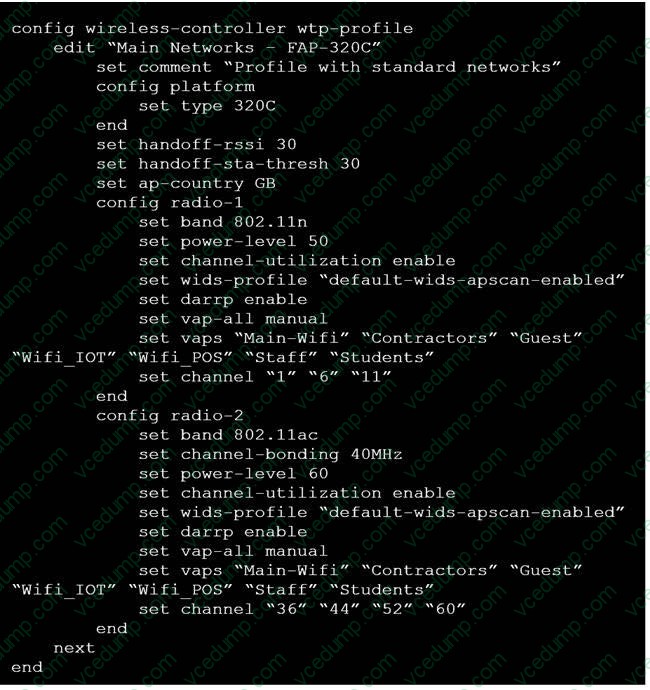
Exhibit B.
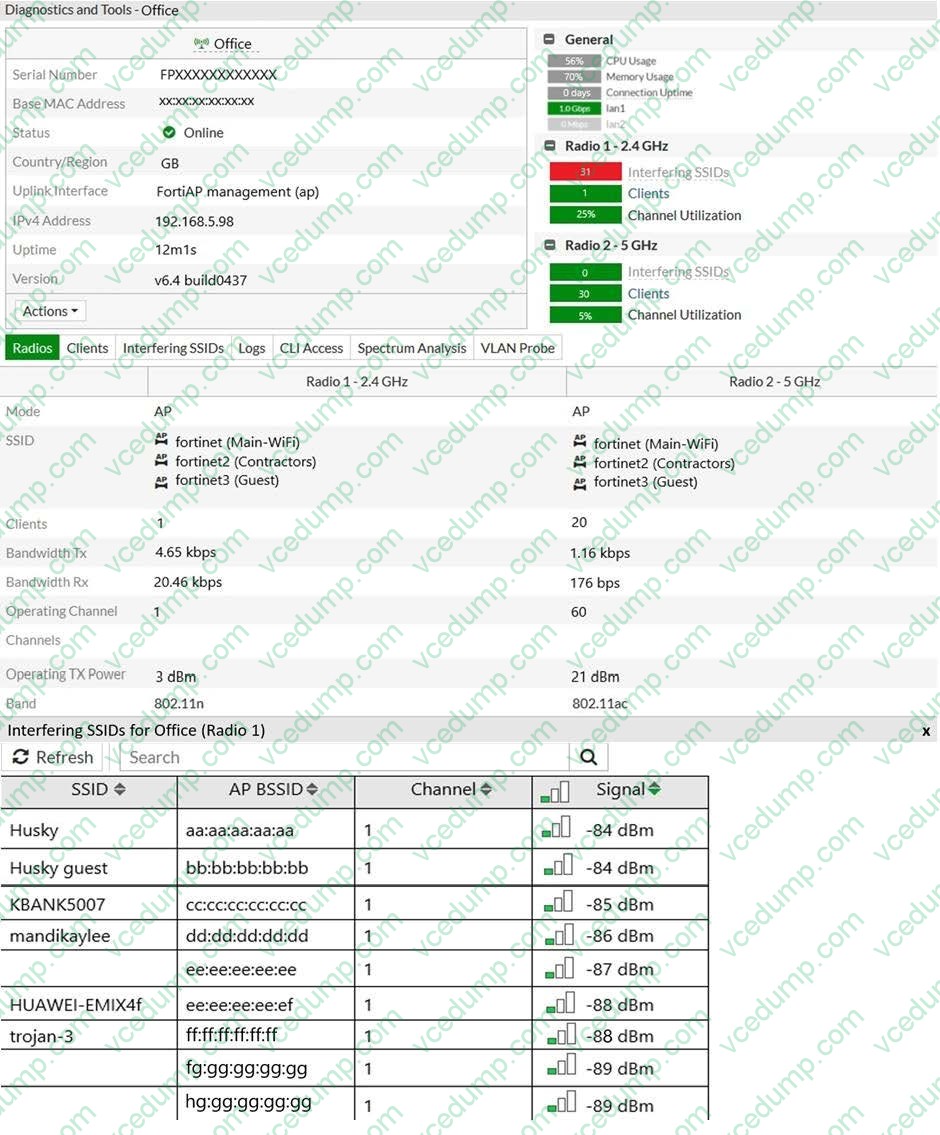
Exhibit C.
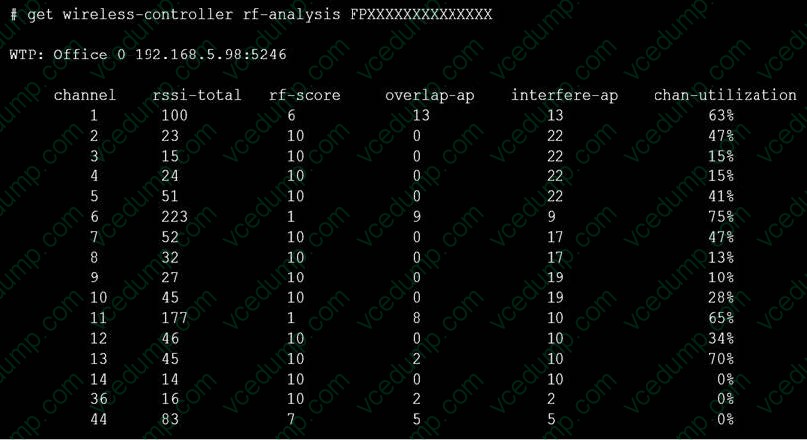
A wireless network has been installed in a small office building and is being used by a business to connect its wireless clients. The network is used for multiple purposes, including corporate access, guest access, and connecting point-of-sale and IoТ devices.
Users connecting to the guest network located in the reception area are reporting slow performance. The network administrator is reviewing the information shown in the exhibits as part of the ongoing investigation of the problem. They show the profile used for the AP and the controller RF analysis output together with a screenshot of the GUI showing a summary of the AP and its neighboring APs.
To improve performance for the users connecting to the guest network in this area, which configuration change is most likely to improve performance?
A. Increase the transmission power of the AP radios
B. Enable frequency handoff on the AP to band steer clients
C. Reduce the number of wireless networks being broadcast by the AP
D. Install another AP in the reception area to improve available bandwidth -
Question 14:
Refer to the exhibits. Exhibit A
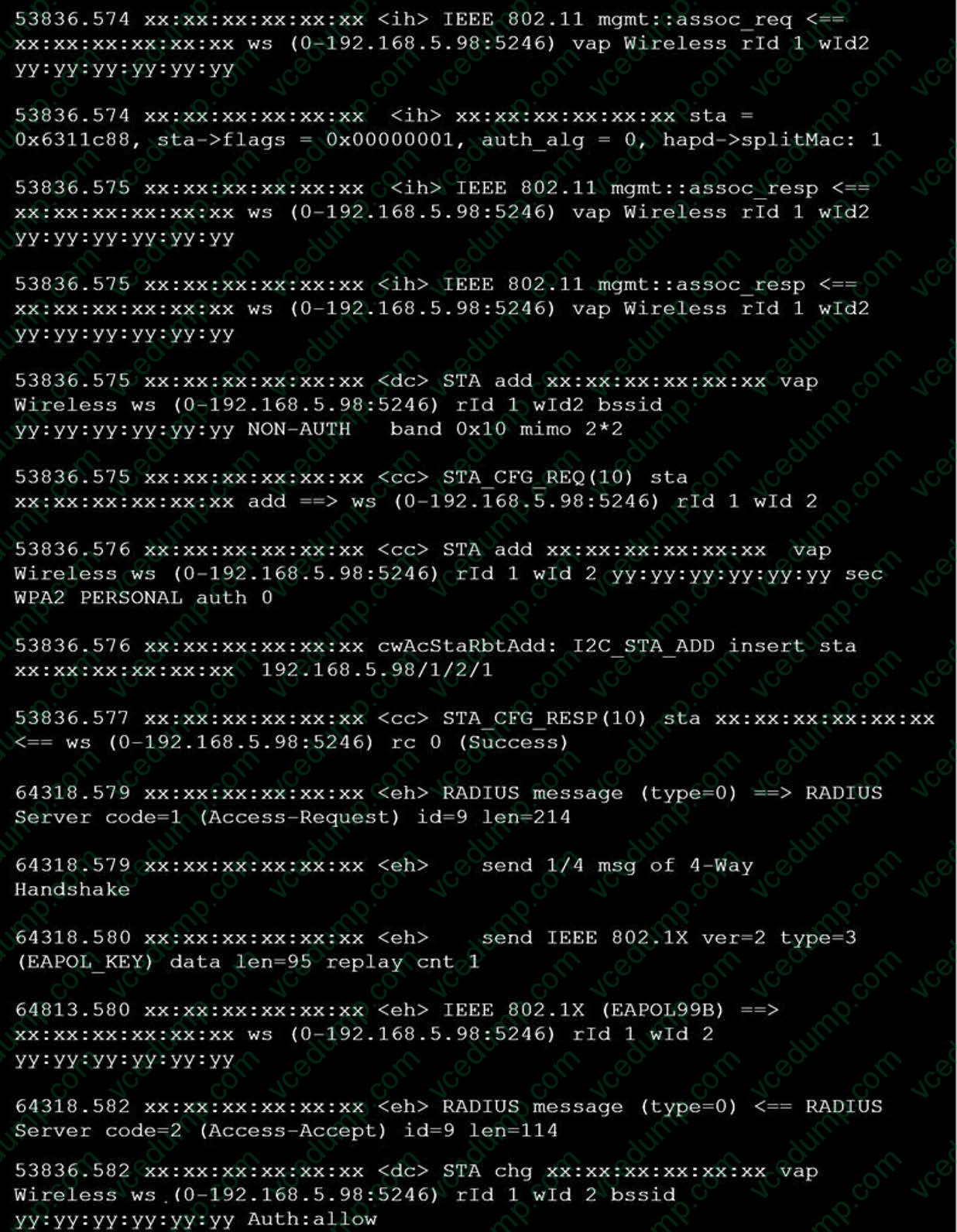
Exhibit B
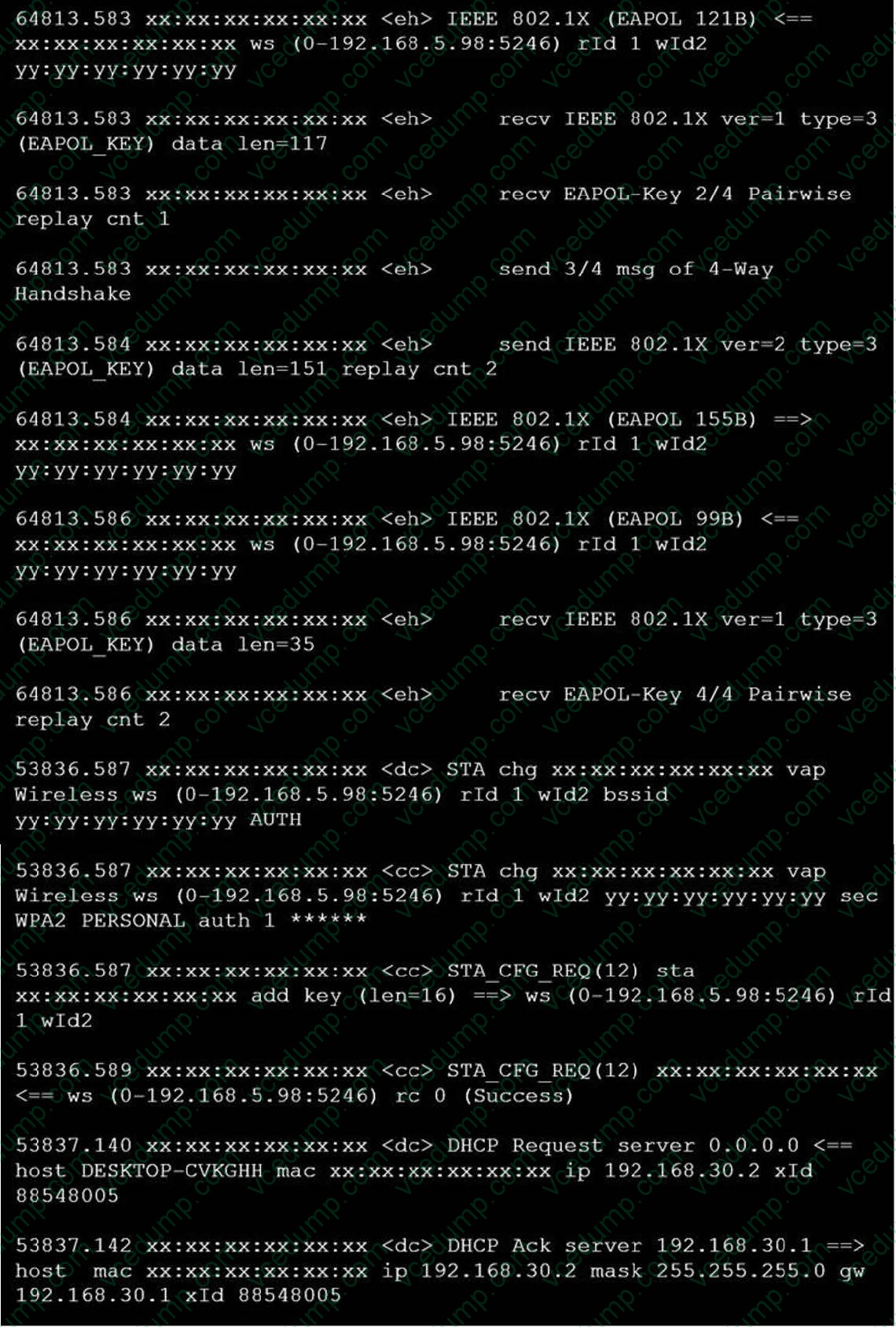
The exhibits show the diagnose debug log of a station connection taken on the controller CLI. Which security mode is used by the wireless connection?
A. WPA2 Enterprise
B. WPA3 Enterprise
C. WPA2 Personal and radius MAC filtering
D. Open, with radius MAC filtering -
Question 15:
Which of the following is a requirement to generate analytic reports using on-site FortiPresence deployment?
A. SQL services must be running
B. Two wireless APs must be sending data
C. DTLS encryption on wireless traffic must be turned off
D. Wireless network security must be set to open -
Question 16:
Which statement is correct about security profiles on FortiAP devices?
A. Security profiles on FortiAP devices can use FortiGate subscription to inspect the traffic
B. Only bridge mode SSIDs can apply the security profiles
C. Disable DTLS on FortiAP
D. FortiGate performs inspection the wireless traffic -
Question 17:
Which administrative access method must be enabled on a FortiGate interface to allow APs to connect and function?
A. Security Fabric
B. SSH
C. HTTPS
D. FortiTelemetry -
Question 18:
When deploying a wireless network that is authenticated using EAP PEAP, which two configurations are required? (Choose two.)
A. An X.509 certificate to authenticate the client
B. An X.509 to authenticate the authentication server
C. A WPA2 or WPA3 personal wireless network
D. A WPA2 or WPA3 Enterprise wireless network -
Question 19:
When configuring a wireless network for dynamic VLAN allocation, which three IETF attributes must be supplied by the radius server? (Choose three.)
A. 81 Tunnel-Private-Group-ID
B. 65 Tunnel-Medium-Type
C. 83 Tunnel-Preference
D. 58 Egress-VLAN-Name
E. 64 Tunnel-Type -
Question 20:
How are wireless clients assigned to a dynamic VLAN configured for hash mode?
A. Using the current number of wireless clients connected to the SSID and the number of IPs available in the least busy VLAN
B. Using the current number of wireless clients connected to the SSID and the number of clients allocated to each of the VLANs
C. Using the current number of wireless clients connected to the SSID and the number of VLANs available in the pool
D. Using the current number of wireless clients connected to the SSID and the group the FortiAP is a member of
Related Exams:
-
EMEA-ADVANCED-SUPPORT
Fortinet EMEA Advanced Support -
FCP_FAC_AD-6.5
FCP - FortiAuthenticator 6.5 Administrator -
FCP_FAZ_AD-7.4
FCP - FortiAnalyzer 7.4 Administrator -
FCP_FAZ_AN-7.4
FCP - FortiAnalyzer 7.4 Analyst -
FCP_FAZ_AN-7.6
Fortinet NSE 5 - FortiAnalyzer 7.6 Analyst -
FCP_FCT_AD-7.2
FCP - Forti Client EMS 7.2 Administrator -
FCP_FCT_AD-7.4
Fortinet NSE 6 - FortiClient EMS 7.4 Administrator -
FCP_FGT_AD-7.4
FCP - FortiGate 7.4 Administrator -
FCP_FGT_AD-7.6
FortiGate 7.6 Administrator FCP_FGT_AD-7.6 -
FCP_FMG_AD-7.4
FCP - FortiManager 7.4 Administrator
Tips on How to Prepare for the Exams
Nowadays, the certification exams become more and more important and required by more and more enterprises when applying for a job. But how to prepare for the exam effectively? How to prepare for the exam in a short time with less efforts? How to get a ideal result and how to find the most reliable resources? Here on Vcedump.com, you will find all the answers. Vcedump.com provide not only Fortinet exam questions, answers and explanations but also complete assistance on your exam preparation and certification application. If you are confused on your NSE6_FWF-6.4 exam preparations and Fortinet certification application, do not hesitate to visit our Vcedump.com to find your solutions here.