NFPA-CFPE Real Exam Questions

Certified Fire Plan Examiner (CFPE)

100 questions available · Page 1 of 10

Updated Exam DumpsVerified AnswersPass Guarantee

Get Complete Exam Dumps
Question 1 Single choice

Which of the following is the preferred method when determining measurements on drawings?

  1. A

    Use an architect's scale to measure directly from the drawing

  2. B

    Use the dimensions given on the drawing

  3. C

    Use the indirect method of measurement

  4. D

    Calculate the length from other dimensions

Show answer and explanation

Correct answer: B

Explanation

When reviewing drawings, the preferred method for determining measurements is to use the dimensions provided directly on the drawing. According to NFPA 1031, Fire Inspector and Plan Examiner Professional Qualifications, using the given dimensions ensures accuracy, as these measurements are usually verified by the architect or engineer responsible for the drawing. Measuring directly from the drawing using an architect's scale (option A) can lead to inaccuracies due to print scale errors or reproduction. Therefore, relying on the provided dimensions is the best practice.
Question 2 Single choice

The material in annex A of NFPA codes and standards is considered

  1. A

    mandatory

  2. B

    recommended

  3. C

    explanatory

  4. D

    approved

Show answer and explanation

Correct answer: C

Explanation

Annex A in NFPA codes and standards typically contains explanatory material. This material is provided for informational purposes only and is not considered a mandatory part of the standard. It offers additional guidance, examples, and clarification to help users understand and apply the standard's requirements more effectively.

Question 3 Single choice

What is the minimum required rating for a fire door assembly installed in a 2-hour rated fire barrier?

  1. A

    45 minutes

  2. B

    1-hour

  3. C

    1-1/2 hours

  4. D

    2-hours

Show answer and explanation

Correct answer: C

Explanation

The minimum required rating for a fire door assembly installed in a 2-hour rated fire barrier is 1-1/2 hours.
According to NFPA 80, Standard for Fire Doors and Other Opening Protectives, fire door assemblies are typically rated at three-quarters of the rating of the wall in which they are installed. Thus, a 2-hour rated wall requires a 1-1/2-hour fire door assembly.

Question 4 Single choice

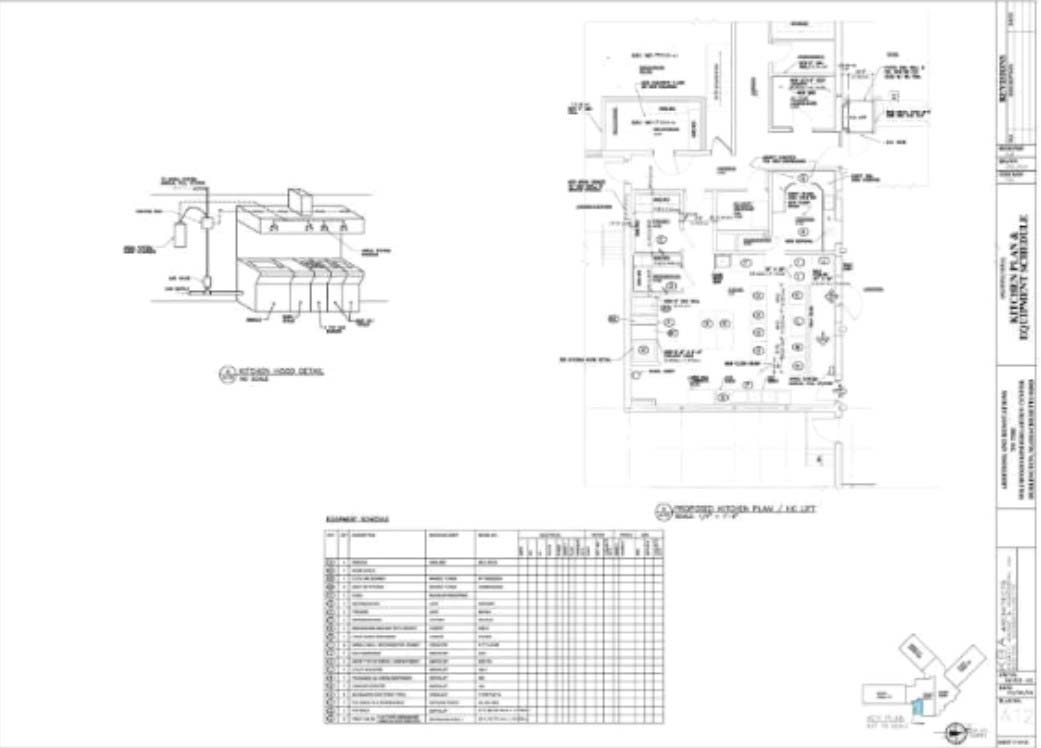
Exhibit.

On plan A12, what occupant load factor would you use?

  1. A

    30 ft² (2 8 m²)

  2. B

    50 ft² (4 6 m²)

  3. C

    100 ft² (9 3 m²)

  4. D

    200 ft² (18 6 m²)

Show answer and explanation

Correct answer: A

Explanation

On plan A12, the occupant load factor to use is 30 ft² (2.8 m²) per person. This factor is used to calculate the maximum number of occupants for a given space based on its size and usage, ensuring that the building adheres to safe occupancy levels as required by fire safety codes. The occupant load factor is determined by the type of occupancy and activity level within the space and is outlined in NFPA 101, Life Safety Code, which provides guidelines for calculating occupant loads to ensure safety during an emergency evacuation.

Question 5 Single choice

A 4 in.
(101.6 mm) riser requires what minimum diameter pipe for the combination mam drain and alarm test connection?

  1. A

    3/4 in. (19.05 mm)

  2. B

    1 in. (25.4 mm)

  3. C

    1 1/4 in.(31.7 mm)

  4. D

    2 in. (50.8 mm)

Show answer and explanation

Correct answer: B

Explanation

For a 4-inch (101.6 mm) riser, the minimum diameter pipe for the combination main drain and alarm test connection should be 1 inch (25.4 mm). This size is specified to ensure adequate water flow during a test or when draining the system, in accordance with NFPA 13, Standard for the Installation of Sprinkler Systems.

Question 6 Single choice

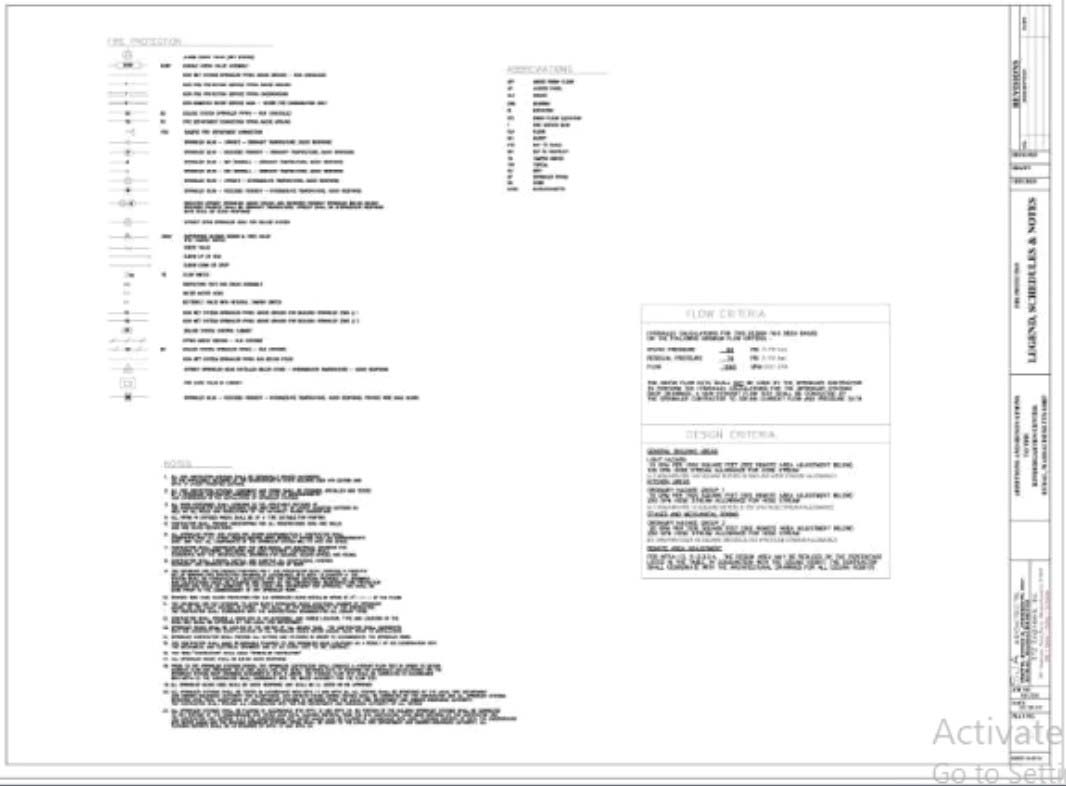
Exhibit.

How many different sprinkler types are shown on plan F0.1?

  1. A

    1

  2. B

    3

  3. C

    5

  4. D

    7

Show answer and explanation

Correct answer: C

Explanation

Based on the symbols and descriptions on plan F0.1, there are 5 different sprinkler types shown. These may include various types such as upright, pendant, sidewall, dry, and recessed sprinklers, each serving different functions and locations within the building. The specific types and their designations are typically detailed in the fire protection legend or key on the plan.

Question 7 Single choice

What is the occupancy classification of a restaurant, if it has an occupant load greater than 50 people?

  1. A

    Business

  2. B

    Kitchen

  3. C

    Mercantile

  4. D

    Assembly

Show answer and explanation

Correct answer: D

Explanation

According to NFPA 101, Life Safety Code, and NFPA 5000, Building Construction and Safety Code, a restaurant with an occupant load greater than 50 people is classified as an "Assembly" occupancy. An Assembly occupancy is defined as an occupancy used for a gathering of 50 or more persons for deliberation, worship, entertainment, eating, drinking, amusement, awaiting transportation, or similar uses.
Since the restaurant has an occupant load greater than 50 people, it falls under this category. For exact details, refer to NFPA 101 (Life Safety Code), Chapter 3, and NFPA 5000 (Building Construction and Safety Code).

Question 8 Single choice

Exhibit.

Based on site plan C1 of the plan set what is the maximum depth the water lines are to be buried?

  1. A

    4 ft(1.2 m)

  2. B

    5 ft (1.5 m)

  3. C

    6 ft (1.8 m)

  4. D

    7 ft (2.1 m)

Show answer and explanation

Correct answer: A

Explanation

Based on site plan C1 of the plan set, the maximum depth for burying the water lines is 4 feet (1.2 meters).
This depth is typically required to protect the pipes from freezing temperatures and mechanical damage while ensuring compliance with local codes and standards for water line installation.

Question 9 Single choice

Seating for more than 200 persons in assembly occupancies, when not fastened to the floor, shall be fastened into groups with a minimum of how many chairs?

  1. A

    Three

  2. B

    Five

  3. C

    Seven

  4. D

    Nine

Show answer and explanation

Correct answer: B

Explanation

According to NFPA 101, Life Safety Code, in assembly occupancies where seating is not fastened to the floor, chairs must be fastened together in groups of at least five chairs. This requirement is intended to maintain orderly evacuation and prevent chairs from becoming obstacles during an emergency (NFPA
101, Section 12.7.8.3).

Question 10 Single choice

Fire alarm indicating appliances shall be located a minimum of how many inches below finished ceilings?

  1. A

    4 in (102 mm)

  2. B

    6 in. (150 mm)

  3. C

    3 in (203 mm)

  4. D

    10 in (254 mm)

Show answer and explanation

Correct answer: A

Explanation

Fire alarm indicating appliances must be located a minimum of 4 inches (102 mm) below finished ceilings.
This clearance ensures that the devices are not obstructed by ceiling-mounted structures and can properly notify occupants in case of an emergency, as specified by NFPA 72, National Fire Alarm and Signaling Code.