NCLEX-PN Exam Details
-
Exam Code
:NCLEX-PN -
Exam Name
:National Council Licensure Examination (NCLEX-PN) -
Certification
:NCLEX Certifications -
Vendor
:NCLEX -
Total Questions
:1015 Q&As -
Last Updated
:Jul 31, 2026
NCLEX NCLEX-PN Online Questions & Answers
-
Question 881:
Number the choices below to reflect the correct sequence for using a fire extinguisher.
A. D, A, B, C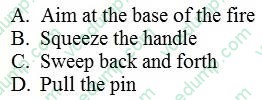
B. D, B, A, C
C. D, A, C, B
D. A, D, B, C -
Question 882:
When caring for a patient with known IV drug use, which statement should the nurse discuss to highlight the risk factors of this behavior?
A. The use of these drugs can increase the risk of contracting diseases due to immunosuppression.
B. The risk of contracting and/or spreading blood borne pathogens such as HIV, which can progress to AIDS, is a huge risk factor with this activity.
C. Drug use can lead to unsafe sex practices, increasing the risk of the transmission of sexually transmitted diseases.
D. IV drug use can lead to skin infections at the injection sites and poor health. -
Question 883:
Which of the following is best for a client who has difficulty swallowing and chokes frequently?
A. A liquid diet.
B. Tilting the head back when swallowing.
C. Tucking the chin in when swallowing.
D. Following each bite with a drink of water. -
Question 884:
Which of the following healthcare providers can legally have access to all, or part, of a patient's medical record because they have a "need to know"? (Choose all that apply.)
A. Student nurses caring for a particular patient.
B. Registered nurses when they are not caring for a particular patient.
C. The Vice President for Nursing who is investigating a patient fall.
D. Licensed practical nurses caring for a particular patient.
E. A quality assurance nurse collecting data for a performance improvement activity. -
Question 885:
A 64-year-old Alzheimer's patient has exhibited excessive cognitive decline resulting in harmful behaviors. The physician orders restraints to be placed on the patient. Which of the following is the appropriate procedure?
A. Secure the restraints to the bed rails on all extremities.
B. Notify the physician that restraints have been placed properly.
C. Communicate with the patient and family the need for restraints.
D. Position the head of the bed at a 45-degree angle. -
Question 886:
The NSAID that is comparable to morphine in efficacy is __________.
A. Feldene
B. Stodal
C. Toradol
D. Elavil -
Question 887:
Which of the following motions is identified with the corresponding action?
(Action ?Turning palm of hand over to face in the anterior direction, dorsum of the hand is pointed downward toward the floor.)
A. Pronation
B. Supination
C. Abduction
D. Adduction -
Question 888:
Diabetes insipidus is the result of __________.
A. a diet high in sugar and carbohydrates
B. a complicated pregnancy
C. a disorder of the pancreas
D. a disorder of the pituitary gland -
Question 889:
Which of these is not one of the items in the APGAR Score?
A. skin color
B. muscle tone
C. respiratory rate
D. reflex irritability -
Question 890:
When discussing possible complications of pregnancy with a client, the nurse should explain that all of the following are symptoms of urinary tract infection (UTI). Which of the following is least indicative of UTI during pregnancy?
A. low-back pain
B. urinary frequency
C. GI distress
D. malaise
Tips on How to Prepare for the Exams
Nowadays, the certification exams become more and more important and required by more and more enterprises when applying for a job. But how to prepare for the exam effectively? How to prepare for the exam in a short time with less efforts? How to get a ideal result and how to find the most reliable resources? Here on Vcedump.com, you will find all the answers. Vcedump.com provide not only NCLEX exam questions, answers and explanations but also complete assistance on your exam preparation and certification application. If you are confused on your NCLEX-PN exam preparations and NCLEX certification application, do not hesitate to visit our Vcedump.com to find your solutions here.