H12-831 Exam Details
-
Exam Code
:H12-831 -
Exam Name
:HCIP-Datacom-Advanced Routing & Switching Technology V1.0 -
Certification
:Huawei Certifications -
Vendor
:Huawei -
Total Questions
:421 Q&As -
Last Updated
:May 30, 2026
Huawei H12-831 Online Questions & Answers
-
Question 211:
There is the concept of forwarding equivalence class FEC in MPLS. The following description is wrong:
A. MPLSGrouping packets with the same forwarding processing method is calledFEC
B. a forwarding equivalence classFECA unique label value is assigned on all routers
C. sameFECgrouped inMPLSThere will be different processing in the network
D. FECThe division is very flexible. Can be the source address, and the address, source port, destination port, protocol type or VPNEqual to any combination of division basis -
Question 212:
On the OSPFv3 network shown in the figure, area 1 is an NSSA. R1 imports the external route 2000::1/128 to OSPFv3. Which of the following LSAs does not exist in area 1?
A. Inter-Area-Prefix-LSA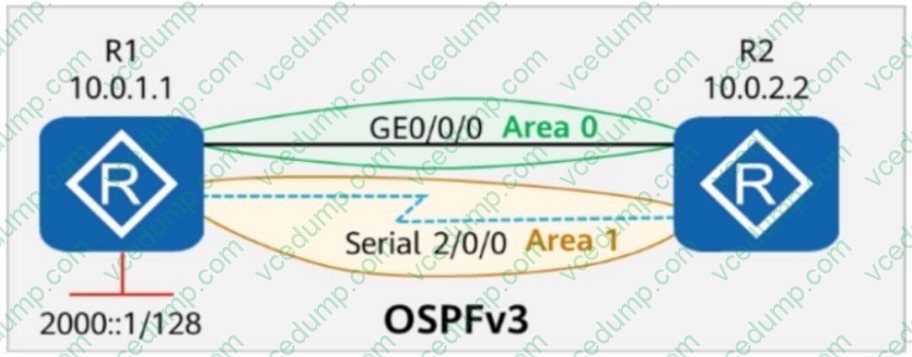
B. NSSA LSA
C. Intra-Area-Prefix-LSA
D. AS-External-LSA -
Question 213:
In an MPLS network, functions such as neighbor discovery, session establishment and maintenance, and label management are implemented by exchanging LDP messages between SRs running the DP protocol. To ensure the reliability of message delivery, all LDP messages are sent and received based on TCP connections.
A. True
B. False -
Question 214:
As shown in the figure, in a medium-sized network, BGP generally deploys dual RRs to improve R reliability. When deploying dual RRs, the Cluster IDs of the two RRs are generally set to be the same. The reason for this is
A. Prevent RR from receiving too many routes and causing insufficient memory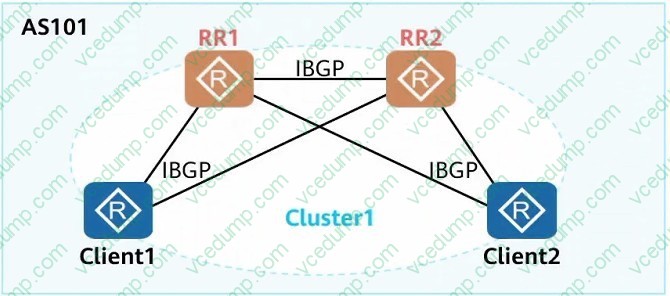
B. prevent suboptimal
C. prevent loops
D. Prevent the client from receiving too many routes and causing it to run out of memory -
Question 215:
The default MPLS label publishing mode, label distribution control mode and label retention mode of Huawei routers are respectively
A. Label release method - downstream autonomous methoD. label distribution control method - free methoD. label retention method - independent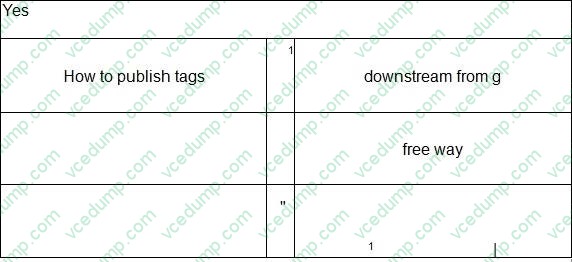
B. Label release method - free methoD. label distribution control method - independent methoD. label retention method - downstream autonomous method
C. Label release method - downstream autonomous methoD. label distribution control method - independent methoD. label retention method - free method
D. Label release method-independent methoD. label distribution control method-free methoD. label retention method-downstream autonomy -
Question 216:
As shown, all routers run OSPF. Which of the following statements is correct?
A. R2in the area1and area0will generateRouter LSA
B. R2WillR3GeneratedRouter LSAforward toR1
C. R2WillR1GeneratedRouter LSAforward toR3
D. R2only in area0generated inRouter LSA -
Question 217:
In the topology shown in the figure, the entire network runsOSPFv3agreement inNoIn the case of attracting external routes,R1which type ofLAS?
A. Intra-Area-Prefix-LSA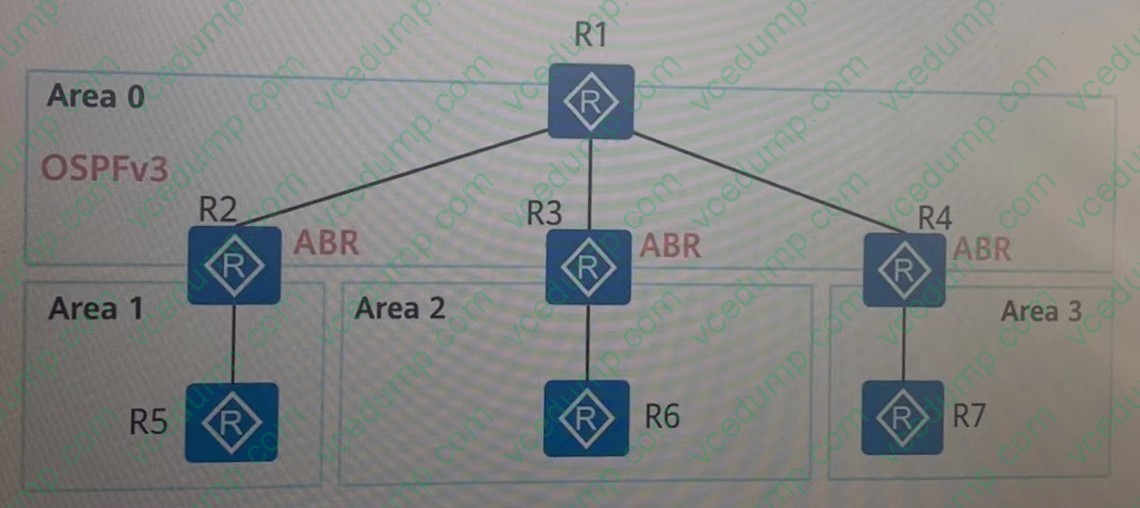
B. Link-LSA
C. Inter-Area-Router LSA
D. Inter-Area-Prefix-LSA -
Question 218:
In the VLAN aggregation technology, multiple Sub-VLANs are used to isolate wide-open domains, and these Sub-VLANs are aggregated.
Synthesizing a logical Super-VLAN, a company divides different departments into different Sub-VLANs, because Sub-VL AN not only includes physical connection, but also can establish three-layer VLAN ANIF interface, which can directly carry out three-layer communication with external network.
A. True
B. False -
Question 219:
Regarding the BGPI MPLS IPVPN network architecture, which of the following descriptions is wrong?
A. PThe device only needs to have the basicM PLSForwarding capability, not maintainedVPNRelated Information
B. between sites viaVPNMutual visits, a site can only belong to1indivualVPN
C. In general,CEThe device does not perceiveVPNexistence, andCEDevice does not require supportMPLS,MP-BGP Wait
D. BGP/MPLS IP VPNnetwork architecture byCE(CustomerEdge).PE(ProviderEdge)and P( Provider)consists of three parts, includingPEandPis operator equipment,CEYesBGP/MPLS IPVPNUser settings prepare -
Question 220:
On the OSPFv3 network shown in the figure, OSPFv3 is enabled on the interfaces connecting R1, R2, and R3. The router ID of each router is 10.0.X.X, where X is the number of the router.
If you check detailed information about an LSA on R3, the command output shows that R1 and R2 are DRs on the network.
Options:
A. TRUE B. FALSE
Related Exams:
-
H11-821
HCNP-UC-HIPT (Implementing Huawei IP Telephony Solutions) -
H11-828
HCNP-UC(Fast Track)(Unified Communication (Fast Track)) -
H11-851
HCIA-Video Conference V3.0 -
H11-861
HCIP-Video Conference V2.0 -
H11-868
HCNP- VC(Fast Track)-(Video Conference (Fast Track)) -
H12-111
HCIA-IoT V3.0 -
H12-224
HCIP-Routing & Switching (Fast Track) V2.0 -
H12-311
HCIA-WLAN V3.0 -
H12-351
HCIE-WLAN (Written) V1.0 -
H12-411
HCIA-Data Center Facility V2.0
Tips on How to Prepare for the Exams
Nowadays, the certification exams become more and more important and required by more and more enterprises when applying for a job. But how to prepare for the exam effectively? How to prepare for the exam in a short time with less efforts? How to get a ideal result and how to find the most reliable resources? Here on Vcedump.com, you will find all the answers. Vcedump.com provide not only Huawei exam questions, answers and explanations but also complete assistance on your exam preparation and certification application. If you are confused on your H12-831 exam preparations and Huawei certification application, do not hesitate to visit our Vcedump.com to find your solutions here.