CCRN-ADULT Exam Details
-
Exam Code
:CCRN-ADULT -
Exam Name
:CCRN (Adult) - Direct Care Eligibility Pathway -
Certification
:AACN Certifications -
Vendor
:AACN -
Total Questions
:150 Q&As -
Last Updated
:May 25, 2026
AACN CCRN-ADULT Online Questions & Answers
-
Question 81:
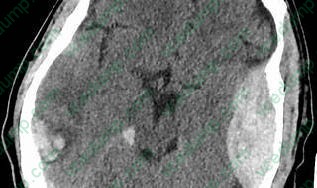
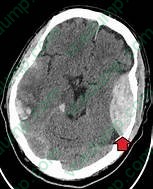
A patient who sustained acute head trauma exhibited intermittent unconsciousness prior to admission. The patient is disoriented initially and exhibits rapid deterioration in neurological status shortly after admission. X-rays reveal a right temporal bone fracture, and a diagnosis of epidural hematoma is made. The deterioration in the patient's condition is most likely associated with
A. arterial bleeding.
B. venous bleeding.
C. clot formation.
D. intracranial aneurysm. -
Question 82:
Appropriate outcomes for a patient with status asthmaticus include
A. increased PaCO2 and decreased FEV1.
B. decreased peak flow rates and decreased wheezing.
C. paradoxical breathing and increased FEV1.
D. normal PaCO2 and increased FEV1. -
Question 83:
A patient is admitted for hypertensive crisis. As a nurse is starting a peripheral IV, the patient appears increasingly anxious as the catheter is about to be inserted. The patient threatens to harm the nurse if the catheter insertion causes pain. Which of the following is the nurse's best action?
A. Engage the patient in a conversation and encourage him to verbalize his feelings.
B. Physically restrain the patient during the performance of the procedure.
C. Ask another staff member to distract the patient during insertion.
D. Tell the patient to remain still in a stern, authoritative voice. -
Question 84:
Patients in end-stage cardiomyopathy often exhibit which of the following symptoms of right-sided heart failure?
A. hypotension and oliguria
B. JVD and hepatomegaly
C. hypertension and polyuria
D. pulmonary edema and restlessness -
Question 85:
There is an increase in catheter-associated urinary tract infections (CAUTIs) following a change in urinary catheter insertion trays. After conducting a literature review of evidence- based practices regarding indwelling catheter insertion and care, the nurse should
A. locate a unit in the facility that still has the original trays in stock and restock the supply closet with these.
B. contact the materials coordinator and request that the previous trays be re-ordered.
C. share the results of the literature review with the physician team.
D. lead a meeting in which the results of the literature review are presented, and staff input is obtained. -
Question 86:
A patient who was admitted after an open aortofemoral bypass for claudication at rest has a hemoglobin A1C of 8.9. The patient admits having poor control of blood glucose levels and is scared to use insulin as directed because of a few episodes of hypoglycemia. Which of the following should the nurse initially request to be consulted?
A. endocrinology
B. diabetes educator
C. hospital pharmacist
D. vascular surgeon -
Question 87:
An unconscious patient presents with the following laboratory values:
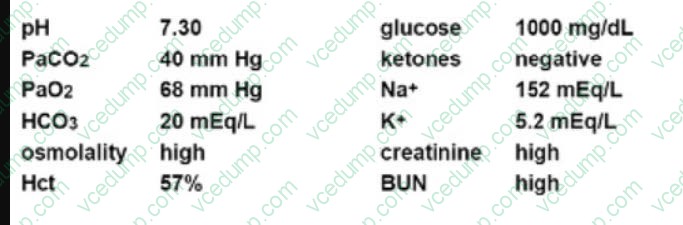
Appropriate management of this patient should include
A. IV hydration.
B. hemodialysis.
C. intubation.
D. osmotic diuresis. -
Question 88:
A patient is experiencing lower left quadrant pain with guarding, as well as abdominal distention and rigidity. KUB reveals free air in the abdominal cavity. Vital signs are: BP76/40 HR130 RR32 T101.7°F (38.7°C) A nurse would suspect
A. perforated bowel.
B. paralytic ileus.
C. appendicitis.
D. acute pancreatitis. -
Question 89:
The intended effects of medications for a patient in acute CHF are to
A. reduce CVP and increase SVR.
B. reduce CVP and reduce SVR.
C. increase CVP and reduce SVR.
D. increase CVP and increase SVR. -
Question 90:
Which of the following intubated patients is most at risk for developing ventilator-associated pneumonia (VAP)?
A. 68-year-old patient, 142 kg, from an assisted living facility with COPD and dialysis- dependent renal disease
B. 84-year-old patient, 38 kg, from a skilled nursing facility receiving chemotherapy for colorectal cancer
C. 91-year-old patient, 54 kg, from home with osteoporosis and hypothyroidism
D. 72-year-old patient, 81 kg, from a nursing home with heart failure and chronic bronchitis
Tips on How to Prepare for the Exams
Nowadays, the certification exams become more and more important and required by more and more enterprises when applying for a job. But how to prepare for the exam effectively? How to prepare for the exam in a short time with less efforts? How to get a ideal result and how to find the most reliable resources? Here on Vcedump.com, you will find all the answers. Vcedump.com provide not only AACN exam questions, answers and explanations but also complete assistance on your exam preparation and certification application. If you are confused on your CCRN-ADULT exam preparations and AACN certification application, do not hesitate to visit our Vcedump.com to find your solutions here.