HOTSPOT
For each of the following statements, select Yes if the statement is true. Otherwise, select No.
NOTE: Each correct selection is worth one point.
Show answer and explanation
Single sign-on is an authentication method that allows users to sign in using one set of credentials to login across applications. Single sign-on makes it easier to manage passwords and increases security capabilities.
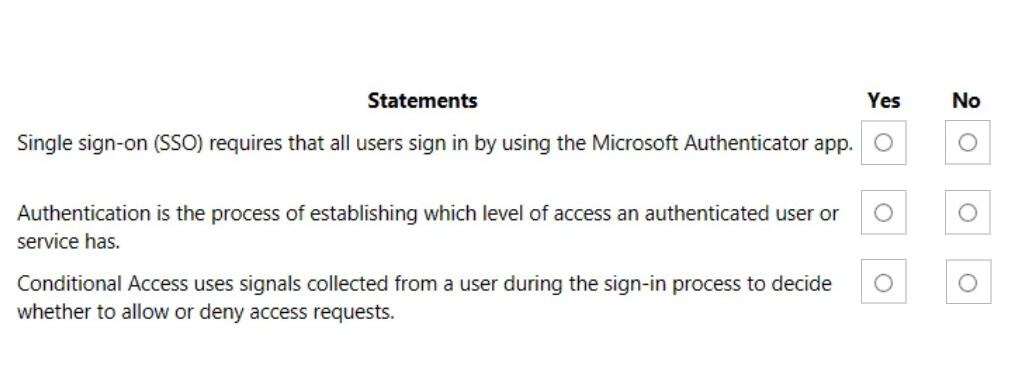
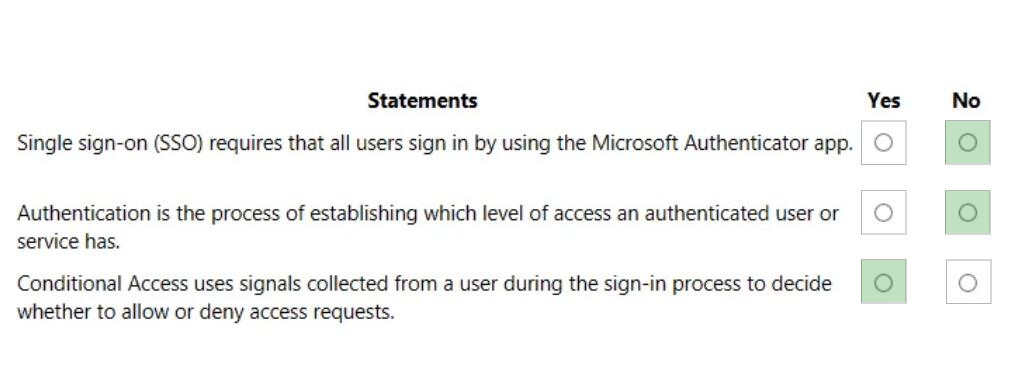
Single sign-on requires that all users sign in by using the microsoft authenticator app. No
Authorization is the process of establishing what level of access a legitimate user or service should have.
During sign-in, Conditional Access collects signals from the user, makes decisions based on those signals, and then enforces that decision by allowing or denying the access request or challenging for a multifactor authentication response.
Single sign-on (SSO) requires that all users sign in by using the Microsoft authenticator app. No
Authentication is the process of establishing which level of access an authenticated user or service has. No
Conditional access uses signals collected from a user during the sign-in process to decide whether to allow or deny access requests. Yes
References:
https://docs.microsoft.com/learn/modules/secure-access-azure-identity-services/3-what-is-azure-active-directory
https://docs.microsoft.com/learn/modules/secure-access-azure-identity-services/2-compare-authentication-authorization
https://docs.microsoft.com/learn/modules/secure-access-azure-identity-services/4-what-are-mfa-conditional-access