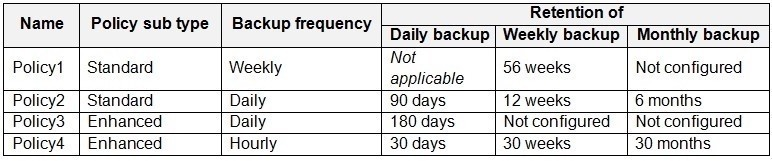
Policy1 - No
Policy1 has a weekly backup frequency, and retention of 56 weeks. There is no retention policy for monthly or yearly backups.
Policy2 - Yes
Policy1 has a daily backup frequency, and retention of 90 weeks for daily backups, and 6 months for monthly backups.
Policy3 - No
Policy3 has a daily backup frequency, and retention of 180 days. Policy1 has a weekly backup frequency, and retention of 56 weeks. There is no retention policy for monthly or yearly backups.
Policy4 - Yes
Nore:
What are the possible reasons if my VM recovery point was not moved to archive? Before you move VM recovery points to archive tier, ensure that the following criteria are met:
The recovery point should be a monthly or yearly recovery point. The age of the recovery point in standard tier needs to be >= 3 months.
The remaining retention duration should be >= 6 months.
There should be no unexpired daily or weekly recovery point between the recovery point in consideration and the next monthly or yearly recovery point.
Note 2: In Azure VM backup policies, tiering refers to a strategy of storing different recovery points in different storage tiers to optimize cost and performance. Typically, recent, frequently accessed recovery points are stored in a Standard Tier (also called the "instant recovery tier" or "snapshot tier") for rapid restores, while older data is moved to a lower-cost Archive Tier for long-term retention. This allows you to meet compliance needs and reduce costs by keeping less critical, older backups in cheaper, slower storage.
References:
https://learn.microsoft.com/en-us/azure/backup/archive-tier-support