AZ-700 Exam Details
-
Exam Code
:AZ-700 -
Exam Name
:Designing and Implementing Microsoft Azure Networking Solutions -
Certification
:Microsoft Certifications -
Vendor
:Microsoft -
Total Questions
:452 Q&As -
Last Updated
:Jul 16, 2026
Microsoft AZ-700 Online Questions & Answers
-
Question 131:
You need to provide VMware SD-WAN connectivity to your clients.
Which Azure resource should you deploy?
A. Network Virtual Appliance (NVA).
B. Point-to-site VPN Gateway
C. Local network gateway -
Question 132:
HOTSPOT
You have an Azure subscription that contains an app named Appl. App1 is hosted on the Azure App Service instances shown in the following table.
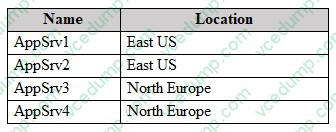
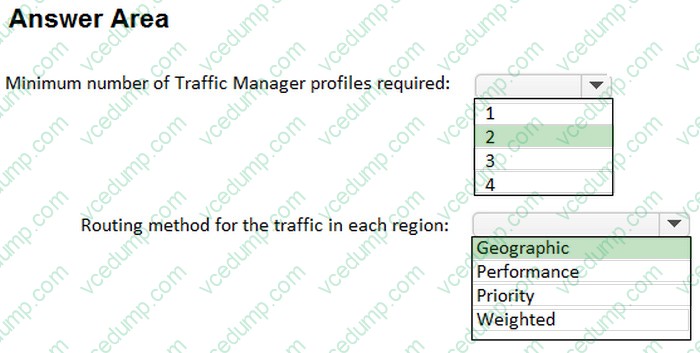
You need to implement Azure Traffic Manager to meet the following requirements:
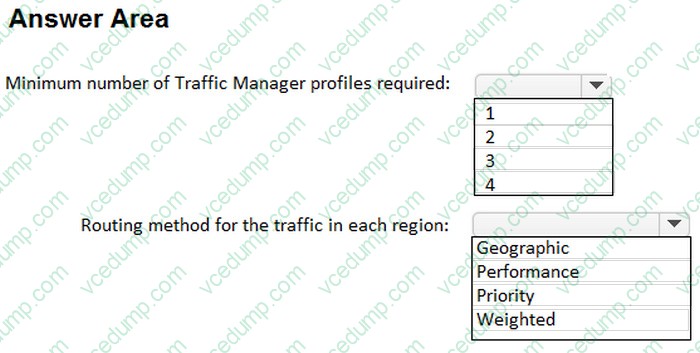
1. App1 traffic must be assigned equally to each App Service instance in each Azure region.
2. App1 traffic from North Europe must be routed to the Appl instances in the North Europe region.
3. App1 traffic from North America must be routed to the Appl instances in the East US Azure region.
4. If an App Service instance fails, all the traffic for that instance must be routed to the remaining instances in the same region.
How should you configure the Traffic Manager profiles? To answer, select the appropriate options in the answer area.
NOTE: Each correct selection is worth one point.
-
Question 133:
Note: This question is part of a series of questions that present the same scenario. Each question in the series contains a unique solution that might meet the stated goals. Some question sets might have more than one correct solution, while others might not have a correct solution.
After you answer a question in this section, you will NOT be able to return to it. As a result, these questions will not appear in the review screen.
You have an Azure subscription that contains the following resources:
1. A virtual network named Vnet1
2. A subnet named Subnet1 in Vnet1
3. A virtual machine named VM1 that connects to Subnet1
4. Three storage accounts named storage1, storage2, and storage3
You need to ensure that VM1 can access storage1. VM1 must be prevented from accessing any other storage accounts.
Solution: You configure the firewall on storage1 to only accept connections from Vnet1.
Does this meet the goal?
A. Yes
B. No -
Question 134:
HOTSPOT
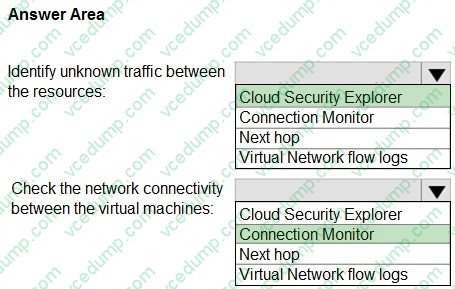
You have an Azure subscription that contains virtual networks, network security groups (NSGs), and virtual machines.
You need to perform the following actions:
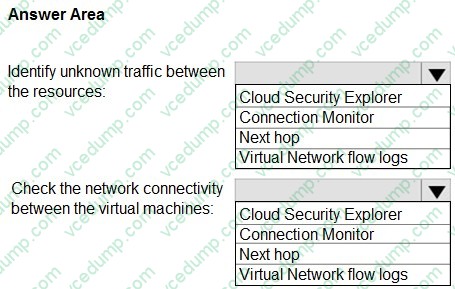
1. Identify unknown traffic between the resources.
2. Check the network connectivity between the virtual machines.
What should you use to perform each action? To answer, select the appropriate options in the answer area.
NOTE: Each correct selection is worth one point.
-
Question 135:
You have an Azure Virtual Desktop deployment that has 500 session hosts.
All outbound traffic to the internet uses a NAT gateway.
During peak business hours. some users report that they cannot access internet resources. In Azure Monitor, you discover many failed SNAT connections.
You need to increase the available SNAT connections.
What should you do?
A. Bind the NAT gateway to another subnet.
B. Add a public IP address.
C. Deploy Azure Standard Load Balancer that has outbound rules. -
Question 136:
You have an Azure subscription.
You plan to deploy Azure Firewall Premium, enable all the Premium features, and configure both network and application rules.
Which type of rule will the firewall process first?
A. infrastructure
B. network
C. threat intelligence
D. application -
Question 137:
SIMULATION
Username and password
Use the following login credentials as needed:
To enter your username, place your cursor in the Sign in box and click on the username below.
To enter your password, place your cursor in the Enter password box and click on the password below.
Azure Username: [email protected] Azure Password: xxxxxxxxxx
If the Azure portal does not load successfully in the browser, press CTRL-K to reload the portal in a new browser tab.
The following information is for technical support purposes only:
Lab Instance: 12345678
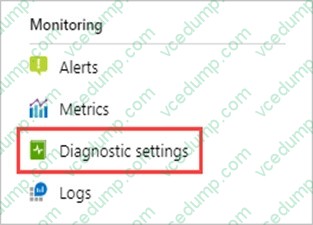
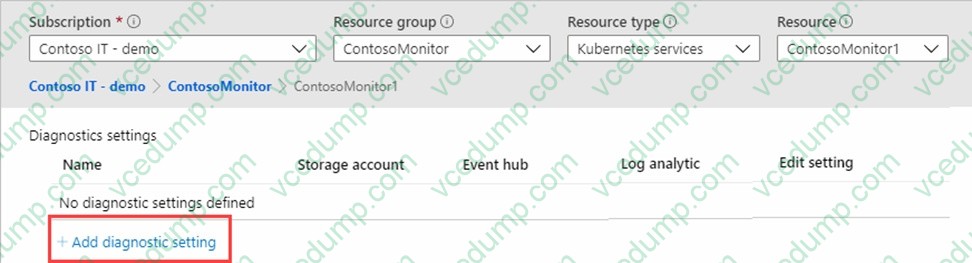
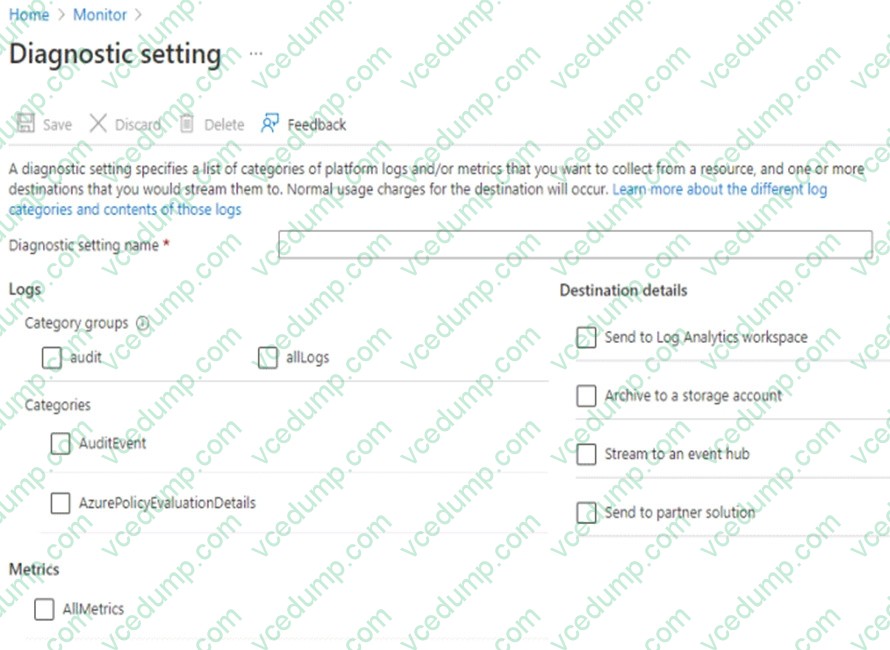
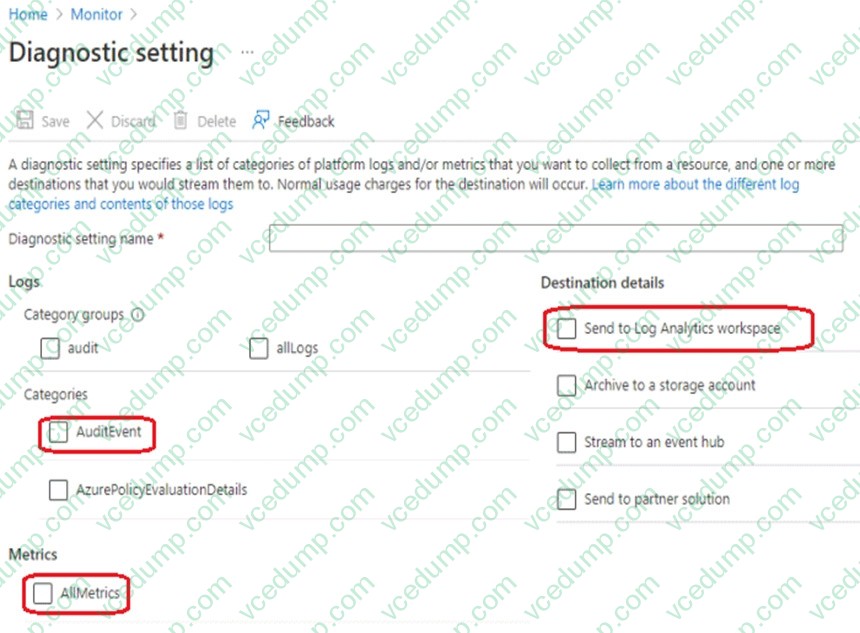
You need to configure VNET1 to log all events and metrics. The solution must ensure that you can query the events and metrics directly from the Azure portal by using KQL.
To complete this task, sign in to the Azure portal.
A. See explanation below.
B. Placeholder
C. Placeholder
D. Placeholder -
Question 138:
You have 10 Azure App Service instances. Each instance hosts the same web app. Each instance is in a different Azure region.
You need to configure Azure Traffic Manager to direct users to the instance that has the lowest latency.
Which routing method should you use?
A. geographic
B. weighted
C. performance
D. priority -
Question 139:
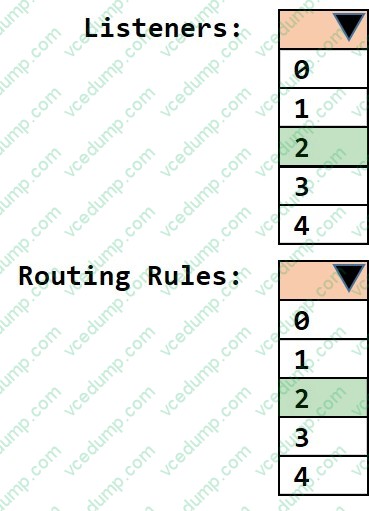
HOTSPOT
You have two Azure App Service instances that host the web apps shown the following table.
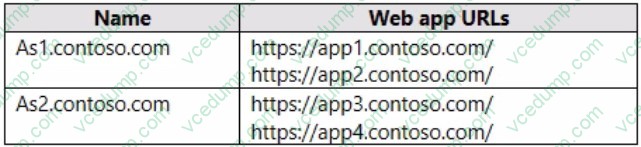
You deploy an Azure 2 that has one public frontend IP address and two backend pools.
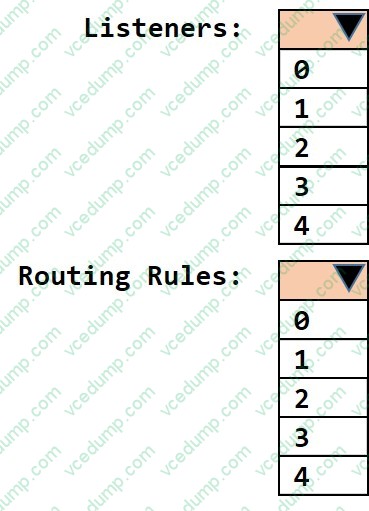
You need to publish all the web apps to the application gateway. Requests must be routed based on the HTTP host headers.
What is the minimum number of listeners and routing rules you should configure? To answer, select the appropriate options in the answer area.
NOTE: Each correct selection is worth one point.
-
Question 140:
You have an Azure subscription that contains the following resources:
A virtual network named Vnet1
A subnet named Subnet1 in Vnet1
A virtual machine named VM1 that connects to Subnet1
Three storage accounts named storage1, storage2, and storage3
You need to ensure that VM1 can access storage1. VM1 must be prevented from accessing any other storage accounts.
To achieve the requirement, you configure the firewall on storage1 to only accept connections from Vnet1.
Did you achieve the requirement?
A. Yes
B. No
Related Exams:
-
62-193
Technology Literacy for Educators -
70-243
Administering and Deploying System Center 2012 Configuration Manager -
70-355
Universal Windows Platform – App Data, Services, and Coding Patterns -
77-420
Excel 2013 -
77-427
Excel 2013 Expert Part One -
77-725
Word 2016 Core Document Creation, Collaboration and Communication -
77-726
Word 2016 Expert Creating Documents for Effective Communication -
77-727
Excel 2016 Core Data Analysis, Manipulation, and Presentation -
77-728
Excel 2016 Expert: Interpreting Data for Insights -
77-731
Outlook 2016 Core Communication, Collaboration and Email Skills
Tips on How to Prepare for the Exams
Nowadays, the certification exams become more and more important and required by more and more enterprises when applying for a job. But how to prepare for the exam effectively? How to prepare for the exam in a short time with less efforts? How to get a ideal result and how to find the most reliable resources? Here on Vcedump.com, you will find all the answers. Vcedump.com provide not only Microsoft exam questions, answers and explanations but also complete assistance on your exam preparation and certification application. If you are confused on your AZ-700 exam preparations and Microsoft certification application, do not hesitate to visit our Vcedump.com to find your solutions here.