ASVAB-SECTION-3 Exam Details
-
Exam Code
:ASVAB-SECTION-3 -
Exam Name
:ASVAB Section Three : Mechanical Comprehension -
Certification
:ASVAB Certifications -
Vendor
:ASVAB -
Total Questions
:188 Q&As -
Last Updated
:Jul 09, 2026
ASVAB ASVAB-SECTION-3 Online Questions & Answers
-
Question 31:
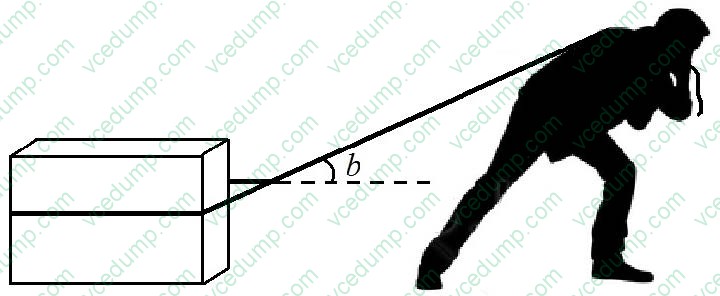
In the figure, the angle b is important, since when it is __________.
A. 0 degrees the entire force is dragging the box
B. 90 degrees the entire force is lifting the box
C. both lifting and dragging between 10 degrees and 90 degrees
D. all of the above -
Question 32:
The wheels below are connected by a belt as shown.
If the larger wheel makes two revolutions, how many revolutions will the smaller wheel make?
A. Less than one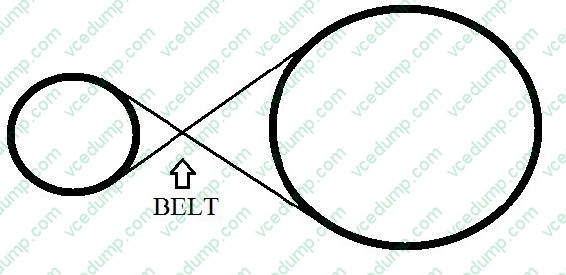
B. One
C. Two
D. More than two -
Question 33:
If you want to hammer in a heavy nail, it might be a good idea to use a hammer with a __________.
A. lighter head
B. heavy head
C. longer handle
D. shorter handle -
Question 34:

If Gear A is revolving in a clockwise manner, as seen in the figure above, Gear B ___________.
A. remains stationary
B. revolves in a clockwise manner
C. revolves in a counterclockwise manner
D. turns more slowly than Gear A -
Question 35:
The amount that a machine (simple or complex) multiplies your force or effort is called __________.
A. load distance
B. mechanical advantage
C. resistance effect
D. acceleration -
Question 36:
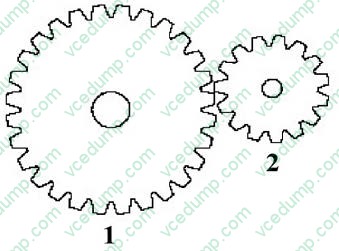
In the figure above, if Gear 1 has 25 teeth and Gear 2 has 15 teeth, how many revolutions does Gear 2 make for every 10 revolutions Gear 1 makes?
A. about 16 2/3
B. 12
C. about 1/3 more
D. about 20 -
Question 37:
Which of the following will happen when a mass of air contracts?
A. The air remains at the same temperature
B. The air gets colder
C. The air gets warmer
D. The air moves faster -
Question 38:
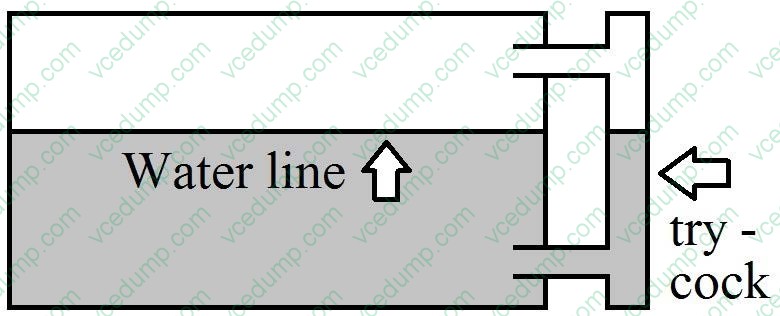
The try-cock in the schematic above measures ___________.
A. temperature of water
B. pressure of water
C. pressure of steam buildup
D. level of water -
Question 39:
How can a gear system derive the greatest amount of mechanical advantage when a seven-tooth gear drives a ___________?
A. 29-tooth gear
B. 5-toothgear
C. 24-tooth gear
D. 17-tooth gear -
Question 40:
Which of the following would feel hottest at one end if the other end were placed over a fire?
A. A metal skewer
B. A wooden stick
C. A plastic rod
D. A rubber stick
Related Exams:
-
ASVAB-SECTION-1
ASVAB Section One : Word Knowledge -
ASVAB-SECTION-2
ASVAB Section two : Arithmetic Reasoning -
ASVAB-SECTION-3
ASVAB Section Three : Mechanical Comprehension -
ASVAB-SECTION-4
ASVAB Section Four : Automotive & Shop Information -
ASVAB-SECTION-5
ASVAB Section Five : Electronic Information -
ASVAB-SECTION-6
ASVAB Section Six : Mathematics Knowledge -
ASVAB-SECTION-7
ASVAB Section Seven: General Science -
ASVAB-SECTION-8
ASVAB Section Eight : Paragraph comprehension -
ASVAB-SECTION-9
ASVAB Section Nine : Assembling Objects
Tips on How to Prepare for the Exams
Nowadays, the certification exams become more and more important and required by more and more enterprises when applying for a job. But how to prepare for the exam effectively? How to prepare for the exam in a short time with less efforts? How to get a ideal result and how to find the most reliable resources? Here on Vcedump.com, you will find all the answers. Vcedump.com provide not only ASVAB exam questions, answers and explanations but also complete assistance on your exam preparation and certification application. If you are confused on your ASVAB-SECTION-3 exam preparations and ASVAB certification application, do not hesitate to visit our Vcedump.com to find your solutions here.