ASCP-MLT Exam Details
-
Exam Code
:ASCP-MLT -
Exam Name
:MEDICAL LABORATORY TECHNICIAN - MLT(ASCP) -
Certification
:ASCP Certifications -
Vendor
:ASCP -
Total Questions
:572 Q&As -
Last Updated
:Jul 14, 2026
ASCP ASCP-MLT Online Questions & Answers
-
Question 461:
MCH is the average weight of hemoglobin in the average red blood cell. The value is expressed in picograms (10-12 grams).
Hematology
Hemoglobin (g/100ml) x 10 / RBC count (millions/mm3) is the formula for calculating:
A. MCHC
B. MCV
C. MCH
D. RDW -
Question 462:
Transpeptidase enzymes catalyze the final stage of peptidoglycan synthesis during cell wall formation. Beta-lactam antibiotics bind with these enzymes, interfering with their function. The transpeptidase enzymes are also referred to as PBP's, or penicillin-binding proteins.
Beta-lactam antibiotics interfere with cell wall synthesis by:
A. Binding with a transpeptidase
B. Preventing the final stage of peptidoglycan synthesis
C. Interfering with PBPs
D. All of the above -
Question 463:
Bacitracin susceptibility is a presumptive test for the identification of Lancefield group A Streptococcus.
Which of the following is a presumptive test for the identification of Lancefield group A Streptococcus:
A. Bacitracin susceptibility
B. Positive coagulase
C. Hippurate hydrolysis
D. Gram stain -
Question 464:
Provide the equivalent measurement for 4 milligrams.
A. 7500 micrograms
B. 4,000 micrograms
C. 750 micrograms
D. 750,000 -
Question 465:
Calculation:
Cells Counted (in this case the average of both sides) X dilution factor (in this case 100) / # of squares counted (in this case 9) X area of each square (1mm2) X 0.1mm (depth factor)
So, in this problem:
158 x 100 / 9 x 1 x 0.1mm = 17555.55/mm3 (can be converted to 17.5 x 10⁹/L*)
*There are 1,000,000 mm3 in a liter (L). So 17555.55 X 1,000,000 = 17.5 x 10⁹/L
A manual white blood cell count was performed by the hematology technologist. The cell counts for both sides were 152 and 164 respectively. All nine large squares were counted on each side. The dilution for this kit was pre-measured at
1:100.
What should the technologist report as the white cell count?
A. 177.5 x 10^9/L
B. 17.5 x 10^9/L
C. 1.75 x 10^9/L
D. 175 x 10^9/L -
Question 466:
Hives and rash usually indicate an allergic reaction. Hematuria is due to a variety of causes. Fever and chills usually indicate a febrile reaction. Positive DAT due to conditions other than sensitization to red cell alloantigens is not uncommon. Therefore a positive DAT in the posttransfusion specimen with a negative DAT in the pretransfusion specimen is more likely to indicate alloimmunization.
The most definite indication that a patient has been sensitized to a specific red cell antigen is:
A. Hives and rash
B. A positive posttransfusion DAT in a patient with a previously negative DAT
C. A positive posttransfusion DAT in a patient with a previously positive DAT
D. Hemoglobinuria -
Question 467:
Streptococcus pyogenes is the correct answer. Streptococcus pneumoniae is alpha- hemolytic which demonstrate a green area of partial hemolysis around the colonies. Staphylococcus aureus will produce complete hemolysis but is catalase positive. Streptococcus agalactiae is beta-hemolytic but only produces a partial clearing of the red blood cells in sheep blood agar.
Complete hemolysis of sheep blood agar as demonstrated by the image below would be seen in which of the following catalase-negative isolates?
A. Streptococcus pneumoniae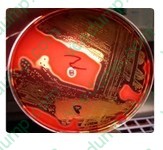
B. Streptococcus pyogenes
C. Staphylococcus aureus
D. Streptococcus agalactiae -
Question 468:
Which of the following Rh antigens is found the highest frequency in the Caucasian population:
A. C
B. E
C. c
D. e -
Question 469:
These are tyrosine crystals

Urinalysis and Other Body Fluids
True or false? Cystine crystals are present on this slide.
A. True
B. False -
Question 470:
Which advancement in clinical science occurred during the second half of the twentieth century?
A. invention of the microscope
B. identification of the smallpox virus
C. replacement with tedious tests with more efficient and sophisticated testing technology
D. addition of protective clothing to daily requirements for staff
Related Exams:
Tips on How to Prepare for the Exams
Nowadays, the certification exams become more and more important and required by more and more enterprises when applying for a job. But how to prepare for the exam effectively? How to prepare for the exam in a short time with less efforts? How to get a ideal result and how to find the most reliable resources? Here on Vcedump.com, you will find all the answers. Vcedump.com provide not only ASCP exam questions, answers and explanations but also complete assistance on your exam preparation and certification application. If you are confused on your ASCP-MLT exam preparations and ASCP certification application, do not hesitate to visit our Vcedump.com to find your solutions here.