640-875 Exam Details
-
Exam Code
:640-875 -
Exam Name
:Building Cisco Service Provider Next-Generation Networks -
Certification
:Cisco Certifications -
Vendor
:Cisco -
Total Questions
:257 Q&As -
Last Updated
:Dec 14, 2021
Cisco 640-875 Online Questions & Answers
-
Question 201:
Refer to the exhibit.

Which configuration is necessary to support this output?
A. interface Ethernet0ip address 192.168.3.1 255.255.255.0ip nat outside!interface Ethernet1ip address 192.168.4.1 255.255.255.0ip nat outside!interface Serial0ip address 172.17.38.1 255.255.255.0ip nat inside!ip nat inside source list 1 interface Serial0 overload!access-list 1 permit 192.168.3.0 0.0.0.255access-list 1 permit 192.168.4.0 0.0.0.255
B. interface Ethernet0ip address 192.168.3.1 255.255.255.0ip nat inside!interface Ethernet1ip address 192.168.4.1 255.255.255.0ip nat inside!interface Serial0ip address 172.17.38.1 255.255.255.0ip nat outside!ip nat inside source list 1 interface Serial0 overload!access-list 1 permit 172.17.38.0 0.0.0.255
C. interface Ethernet0ip address 192.168.3.1 255.255.255.0ip nat inside!interface Ethernet1ip address 192.168.4.1 255.255.255.0ip nat inside!interface Serial0ip address 172.17.38.1 255.255.255.0ip nat outside!ip nat inside source list 1 static 172.17.38.1!access-list 1 permit 192.168.3.0 0.0.0.255access-list 1 permit 192.168.4.0 0.0.0.255
D. interface Ethernet0ip address 192.168.3.1 255.255.255.0ip nat inside!interface Ethernet1ip address 192.168.4.1 255.255.255.0ip nat inside!interface Serial0ip address 172.17.38.1 255.255.255.0ip nat outside!ip nat inside source list 1 interface Serial0 overload!access-list 1 permit 192.168.3.0 0.0.0.255access-list 1 permit 192.168.4.0 0.0.0.255 -
Question 202:
How many bits of an 802.1Q header are allocated for a VLAN identifier?
A. 8
B. 12
C. 24
D. 32 -
Question 203:
With a distance vector routing protocol like RIPv1, when is a route in the routing table placed in the "possibly down" state?
A. When a router receives an update from its neighbor router about a network in its routing table but with a worse metric
B. When a router receives an update from its neighbor router about a network in its routing table but with a better metric
C. When a router receives an update from its neighbor router indicating that a previously accessible network is now inaccessible
D. Whenever the router receives an update from its neighbor about a newly learned network
E. Whenever the router interface that is used to reach the remote network goes down -
Question 204:
Which three statements about the ARP function are true? (Choose three.)
A. ARP is used to determine an IP address.
B. An ARP request is broadcast at Layer 3.
C. An ARP response is broadcast at Layer 2.
D. ARP tables are maintained on Layer 3 devices.
E. The destination MAC address of an ARP request is that of the ARP responder.
F. ARP requests are broadcast at Layer 2.
G. ARP resolves MAC addresses to NET addresses.
H. ARP uses 0x0806 as the Type field in an Ethernet frame. -
Question 205:
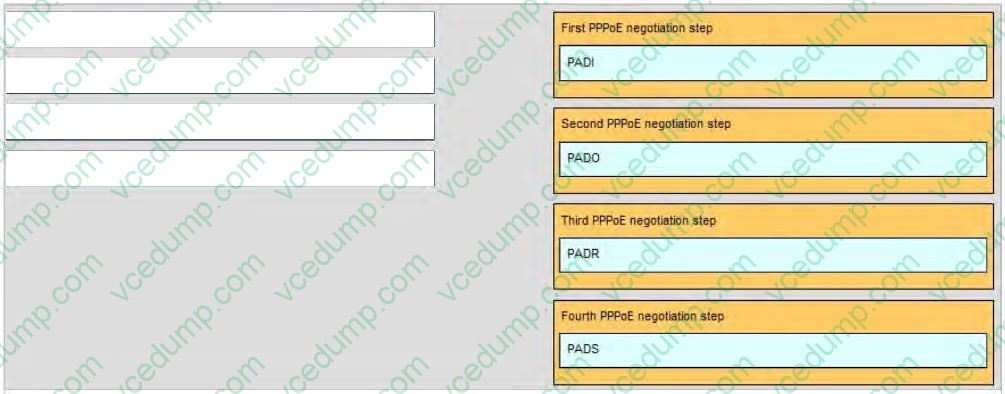
DRAG DROP
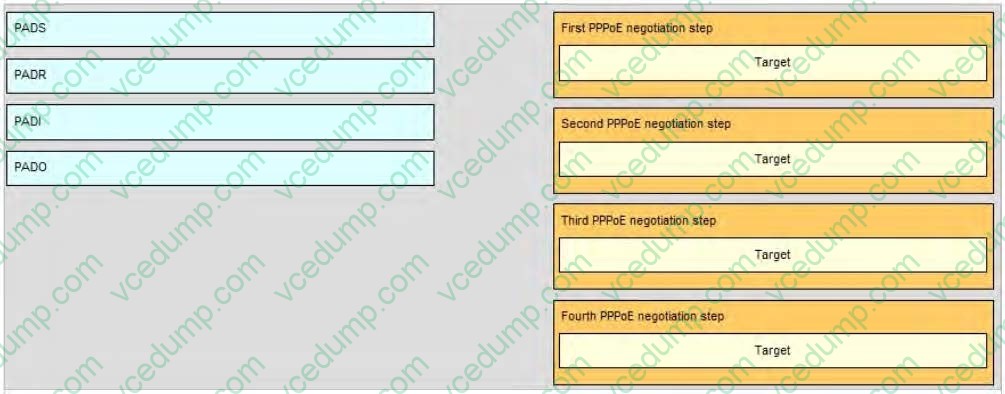
Drag the PPPoE negotiation steps from the left and drop them in order on the right.
Select and Place:
-
Question 206:
Refer to the exhibit.

R1 and R2 are running RIPv1 for the 10.0.0.0 and 192.168.1.0 networks. No default or static routes have been configured on the routers. Which two statements about this topology are true? (Choose two.)
A. R1 summarizes the 10.1.1.0/24 subnet to 10.0.0.0/8 when it sends its RIPv1 routing updates to R2. R2 summarizes the 10.2.2.0/24 subnet to 10.0.0.0/8 when it sends its RIPv1 routing updates to R1.
B. To support this topology, R1 and R2 must be configured so that RIPv1 auto-summary is disabled.
C. R1 sends information about the 10.1.1.0/24 subnet when it sends its RIPv1 routing updates to R2. R2 sends information about the 10.2.2.0/24 subnet when it sends its RIPv1 routing updates to R1. Example of RIPv1 update from R1 to R2:RIP: build update entriesnetwork 10.1.1.0/24 metric 1
D. Hosts on the 10.1.1.0/24 subnet are unable to communicate with hosts on the 10.2.2.0/24 subnet.
E. R1 accepts the 10.2.2.0/24 RIPv1 routing updates from R2 and installs the 10.2.2.0/24 route in its routing table. R2 accepts the 10.1.1.0/24 RIPv1 routing updates from R1 and installs the 10.1.1.0/24 route in its routing table. -
Question 207:
You are configuring manual route summarization in EIGRP. Which two networks are summarized into 10.134.17.64/27? (Choose two.)
A. 10.134.17.64 255.255.255.240
B. 10.134.17.100/30
C. 10.134.17.0 255.255.255.128
D. 10.134.17.92/30 -
Question 208:
An engineer's supervisor sees manual route summarization as complex and unnecessary. Which two arguments can be made for route summarization? (Choose two.)
A. It advertises detailed routing tables
B. It reduces routing table size
C. It reduces the upstream impact of a flapping interface
D. It increases security by advertising fake networks
E. It utilizes the full CPU performance capacity on the routers -
Question 209:
Which two statement about A records and AAAA records in DNS are true? (Choose two.)
A. A records can be returned in IPv6 packets only
B. AAAA records can be returned in IPv6 packets only
C. AAAA records can be returned in either IPv4 packets or IPv6 packets
D. A records can be returned in either IPv4 packets or IPv6 packets
E. A records and AAAA records can be used interchangeable -
Question 210:
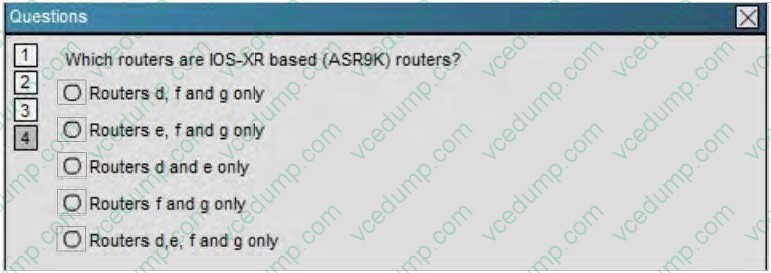
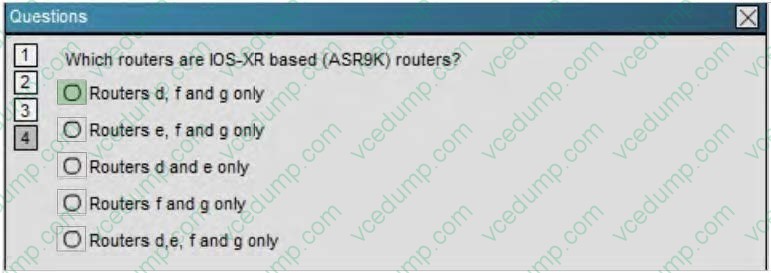
HOTSPOT
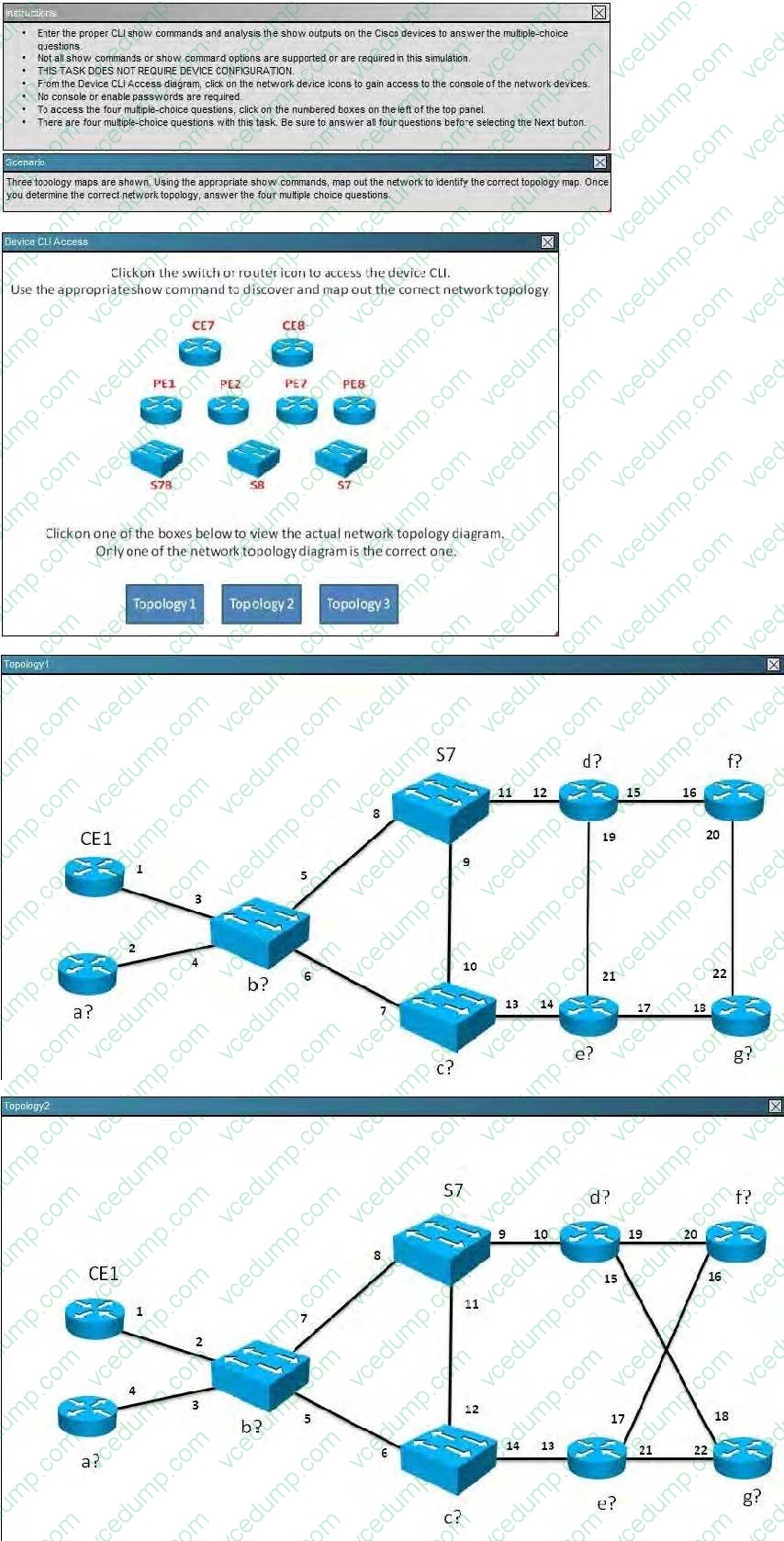
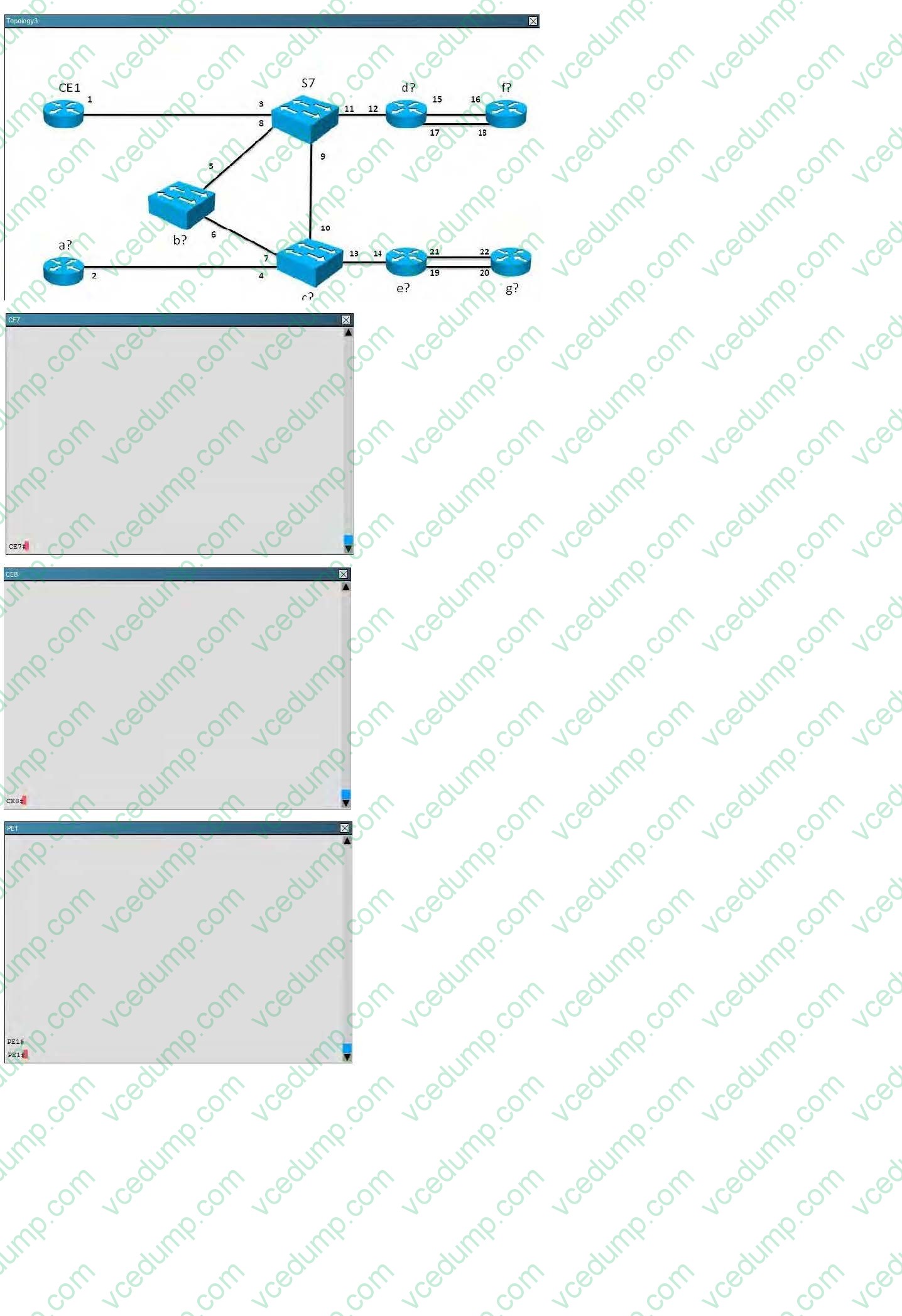
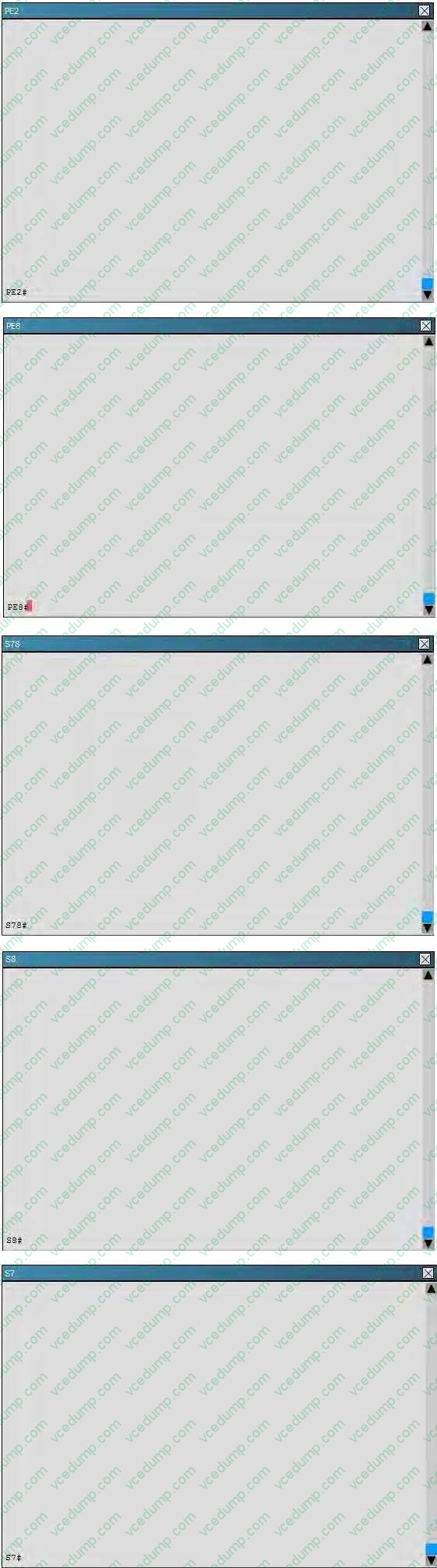
Hot Area:
Related Exams:
-
300-745
Designing Cisco Security Infrastructure (300-745 SDSI) v1.0 -
350-101
Implementing and Operating Cisco Wireless Core Technologies (350-101 WLCOR)v1.0 -
352-011
Cisco Certified Design Expert Practical -
500-052
Cisco Unified Contact Center Express -
500-173
Designing the FlexPod Solution (FPDESIGN) -
500-201
Deploying Cisco Service Provider Mobile Backhaul Solutions -
500-210
SP Optical Technology Field Engineer Representative -
500-220
Engineering Cisco Meraki Solutions (ECMS) v2.2 -
500-230
Cisco Service Provider Routing Field Engineer -
500-240
Cisco Mobile Backhaul for Field Engineers
Tips on How to Prepare for the Exams
Nowadays, the certification exams become more and more important and required by more and more enterprises when applying for a job. But how to prepare for the exam effectively? How to prepare for the exam in a short time with less efforts? How to get a ideal result and how to find the most reliable resources? Here on Vcedump.com, you will find all the answers. Vcedump.com provide not only Cisco exam questions, answers and explanations but also complete assistance on your exam preparation and certification application. If you are confused on your 640-875 exam preparations and Cisco certification application, do not hesitate to visit our Vcedump.com to find your solutions here.