200-201 Exam Details
-
Exam Code
:200-201 -
Exam Name
:Understanding Cisco Cybersecurity Operations Fundamentals (CBROPS) -
Certification
:CyberOps Associate -
Vendor
:Cisco -
Total Questions
:543 Q&As -
Last Updated
:May 24, 2026
Cisco 200-201 Online Questions & Answers
-
Question 411:
What does the SOC metric MTTC provide in incident analysis?
A. average time it takes to recognize and stop the incident
B. average time it takes to fix the issues caused by the incident
C. average time it takes to detect that the incident has occurred
D. average time the attacker has access to the environment -
Question 412:
What describes the impact of false-positive alerts compared to false-negative alerts?
A. A false negative is alerting for an XSS attack. An engineer investigates the alert and discovers that an XSS attack happened A false positive is when an XSS attack happens and no alert is raised
B. A false negative is a legitimate attack triggering a brute-force alert. An engineer investigates the alert and finds out someone intended to break into the system A false positive is when no alert and no attack is occurring
C. A false positive is an event alerting for a brute-force attack An engineer investigates the alert and discovers that a legitimate user entered the wrong credential several times A false negative is when a threat actor tries to brute-force attack a system and no alert is raised.
D. A false positive is an event alerting for an SQL injection attack An engineer investigates the alert and discovers that an attack attempt was blocked by IPS A false negative is when the attack gets detected but succeeds and results in a breach. -
Question 413:
An analyst is exploring the functionality of different operating systems.
What is a feature of Windows Management Instrumentation that must be considered when deciding on an operating system?
A. queries Linux devices that have Microsoft Services for Linux installed
B. deploys Windows Operating Systems in an automated fashion
C. is an efficient tool for working with Active Directory
D. has a Common Information Model, which describes installed hardware and software -
Question 414:
Which evasion method involves performing actions slower than normal to prevent detection?
A. timing attack
B. traffic fragmentation
C. resource exhaustion
D. tunneling -
Question 415:
Which type of evidence directly proves a fact without inference?
A. circumstantial evidence
B. indirect evidence
C. direct evidence
D. corroborative evidence -
Question 416:
Refer to the exhibit.
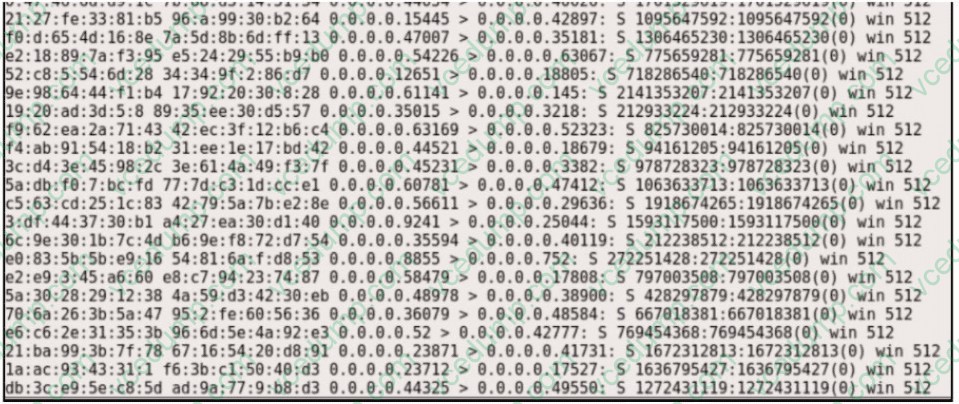
Which type of attack is represented?
A. TCP/SYN flooding
B. UDP flooding
C. IP flooding
D. MAC flooding -
Question 417:
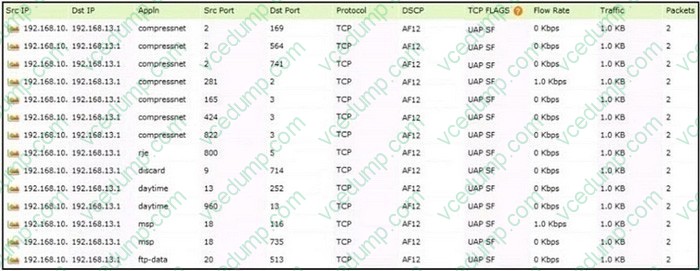
Refer to the exhibit.
Which tool was used to generate this data?
A. NetFlow
B. dnstools
C. firewall
D. tcpdump -
Question 418:
Which type of data is used to monitor and detect anomalies within the organization's network?
A. statistical
B. metadata
C. transaction
D. alert -
Question 419:
Refer to the exhibit.
Which type of evidence is this file?
A. direct evidence
B. corroborating evidence
C. best evidence
D. circumstantial evidence -
Question 420:
An engineer received a ticket to investigate a potentially malicious file detected by a malware scanner that was trying to execute multiple commands. During the initial review, the engineer discovered that the file was created two days prior.
Further analyses show that the file was downloaded from a known malicious domain after a successful phishing attempt on an asset owner.
At which phase of the Cyber Kill Chain was this attack mitigated?
A. reconnaissance
B. exploitation
C. installation
D. delivery
Tips on How to Prepare for the Exams
Nowadays, the certification exams become more and more important and required by more and more enterprises when applying for a job. But how to prepare for the exam effectively? How to prepare for the exam in a short time with less efforts? How to get a ideal result and how to find the most reliable resources? Here on Vcedump.com, you will find all the answers. Vcedump.com provide not only Cisco exam questions, answers and explanations but also complete assistance on your exam preparation and certification application. If you are confused on your 200-201 exam preparations and Cisco certification application, do not hesitate to visit our Vcedump.com to find your solutions here.