200-105 Exam Details
-
Exam Code
:200-105 -
Exam Name
:Interconnecting Cisco Networking Devices Part 2 (ICND2) -
Certification
:Cisco Certifications -
Vendor
:Cisco -
Total Questions
:709 Q&As -
Last Updated
:Dec 12, 2021
Cisco 200-105 Online Questions & Answers
-
Question 11:
Which three protocols does APIC-EM support with Path Trace? (Choose three.)
A. HSRP
B. ECMP
C. WLC
D. SNMP
E. SMTP
F. ECMP/TR -
Question 12:
Refer to the exhibit. The user at Workstation B reports that Server A cannot be reached. What is preventing Workstation B from reaching Server A?
A. The IP address for Server A is a broadcast address.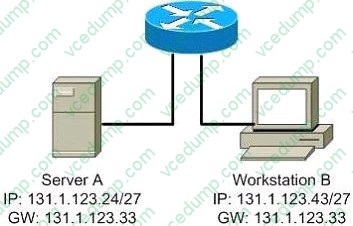
B. The IP address for Workstation B is a subnet address.
C. The gateway for Workstation B is not on the same subnet.
D. The gateway for Server A is not on the same subnet. -
Question 13:
Which three states are the HSRP stages for a router? (Choose three.)
A. standby
B. speak
C. secondary
D. listen
E. learn
F. primary -
Question 14:
Instructions:
Enter IOS commands on the Dubai router to verify network operation and answer for multiple-choice questions. THIS TASK DOES NOT REQUIRE DEVICE CONFIGURATION.
Click on the Console PC to gain access to the console of the router. No console or enable passwords are required.
To access the multiple-choice questions, click of the numbered boxes on the left of the top panel.
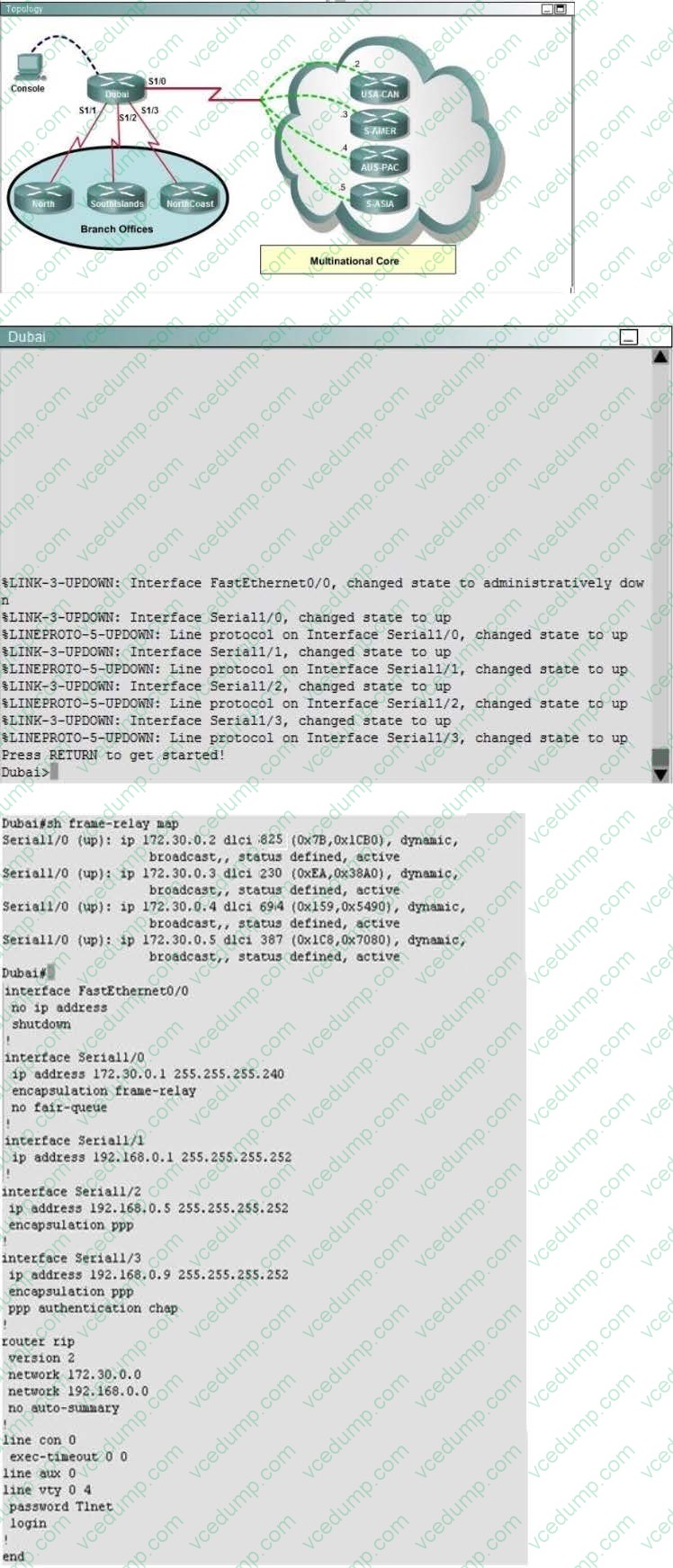
If required, what password should be configured on the DeepSouth router in the branch office to allow a connection to be established with the MidEast router?
A. No password is required.
B. Enable
C. Secret
D. Telnet
E. Console -
Question 15:
Which two are features of IPv6? (Choose two.)
A. anycast
B. broadcast
C. multicast
D. podcast
E. allcast -
Question 16:
Refer to the exhibit.
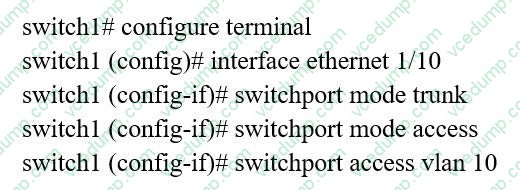
Which option is the effect of this configuration?
A. It configures the switch port for trunk only.
B. It configures the switch port for voice traffic.
C. It configures the switch port for access and trunk.
D. It configures the switch port for access only. -
Question 17:
How does using the service password-encryption command on a router provide additional security?
A. by encrypting all passwords passing through the router
B. by encrypting passwords in the plain text configuration file
C. by requiring entry of encrypted passwords for access to the device
D. by configuring an MD5 encrypted key to be used by routing protocols to validate routing exchanges
E. by automatically suggesting encrypted passwords for use in configuring the router -
Question 18:
What authentication type is used by SNMPv2?
A. HMAC-MD5
B. HMAC-SHA
C. CBC-DES
D. community strings -
Question 19:
Refer to the exhibit. What statement is true of the configuration for this network?
A. The configuration that is shown provides inadequate outside address space for translation of the number of inside addresses that are supported.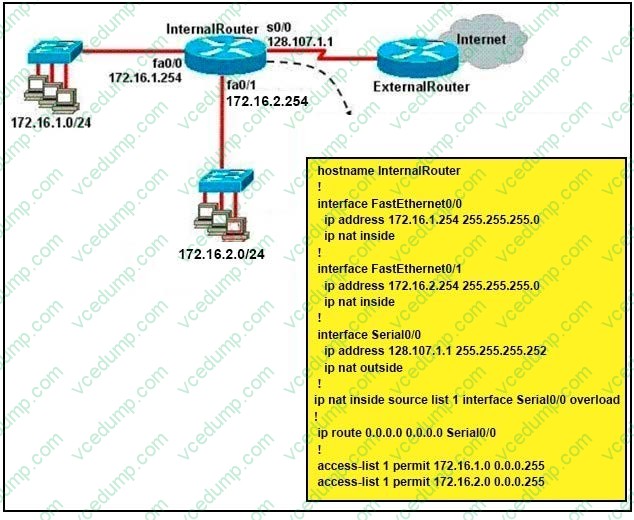
B. Because of the addressing on interface FastEthernet0/1, the Serial0/0 interface address will not support the NAT configuration as shown.
C. The number 1 referred to in the ip nat inside source command references access-list number 1.
D. ExternalRouter must be configured with static routes to networks 172.16.1.0/24 and 172.16.2.0/24. -
Question 20:
If primary and secondary root switches with priority 16384 both experience catastrophic losses, which tertiary switch can take over?
A. a switch with priority 20480
B. a switch with priority 8192
C. a switch with priority 4096
D. a switch with priority 12288
Related Exams:
-
300-745
Designing Cisco Security Infrastructure (300-745 SDSI) v1.0 -
350-101
Implementing and Operating Cisco Wireless Core Technologies (350-101 WLCOR)v1.0 -
352-011
Cisco Certified Design Expert Practical -
500-052
Cisco Unified Contact Center Express -
500-173
Designing the FlexPod Solution (FPDESIGN) -
500-201
Deploying Cisco Service Provider Mobile Backhaul Solutions -
500-210
SP Optical Technology Field Engineer Representative -
500-220
Engineering Cisco Meraki Solutions (ECMS) v2.2 -
500-230
Cisco Service Provider Routing Field Engineer -
500-240
Cisco Mobile Backhaul for Field Engineers
Tips on How to Prepare for the Exams
Nowadays, the certification exams become more and more important and required by more and more enterprises when applying for a job. But how to prepare for the exam effectively? How to prepare for the exam in a short time with less efforts? How to get a ideal result and how to find the most reliable resources? Here on Vcedump.com, you will find all the answers. Vcedump.com provide not only Cisco exam questions, answers and explanations but also complete assistance on your exam preparation and certification application. If you are confused on your 200-105 exam preparations and Cisco certification application, do not hesitate to visit our Vcedump.com to find your solutions here.