What would be the number of bits in the SSH key generated by using the ssh-keygen tool, which is used to connect to Oracle Cloud?
Show answer and explanation
Correct answer: C
1Z0-160 Real Exam Questions
86 questions available · Page 1 of 9
Updated Exam DumpsVerified AnswersPass Guarantee
What would be the number of bits in the SSH key generated by using the ssh-keygen tool, which is used to connect to Oracle Cloud?
Correct answer: C
Which two must be true when you migrate an Oracle Database 12.1.0.2 non-CDB to a database that is running in a Database as a Service (DBaaS) instance on Oracle Cloud by using the Remote Cloning method?
Correct answers: E, F
Explanation:
To migrate an Oracle Database 12c non-CDB database to a Database Cloud Service database deployment using the remote cloning method, you perform these tasks:
1. On the on-premises database host, invoke SQL*Plus and set the on-premises database to READ
ONLY mode.
2. On the Database Cloud Service compute node, invoke SQL*Plus and create a database link that enables a connection to the on-premises database.
3. On the Database Cloud Service compute node, execute the CREATE PLUGGABLE DATABASEcommand to clone the on-premises non-CDB database.
4. On the Database Cloud Service compute node, execute the $ORACLE_HOME/rdbms/admin/ noncdb_to_pdb.sql script.
5. On the Database Cloud Service compute node, open the new PDB by executing the ALTER
PLUGGABLE DATABASE OPEN command.
6. Optionally, on the on-premises database host invoke SQL*Plus and set the on-premises database back to READ WRITE mode.
You can use this method only if the on-premises platform is little endian, the on-premises database release is 12.1.0.2 or higher, and the on-premises database and Database Cloud Service database have compatible database character sets and national character sets.
References:
https://docs.oracle.com/en/cloud/paas/database-dbaas-cloud/csdbi/mig-remote-cloning-non-cdb.html
Which two statements are true about controlling traffic among Database Deployments using a security list?
Correct answers: B, E
You are on the Database Cloud Service Instance View page.
Which three consoles can you open?
Correct answers: D, E, F
Explanation:
The menu for each deployment that provides the following options:
1. Open DBaaS Monitor Console - Open the Oracle Cloud Database Monitor for the deployment.
2. Open Application Express Console - Open the Oracle Application Express home page for the deployment.
3. Open EM Console - Open the database console, either Enterprise Manager Database Express 12c or Enterprise Manager 11g Database Control.
References:
https://docs.oracle.com/en/cloud/paas/database-dbaas-cloud/csdbi/service-console-services-page.html
You created a Database Deployment. This action also created a virtual machine and configured it for the Database Deployment. It also created two user accounts. One of the users is opc.
Which three functions can the opc user perform?
Correct answers: D, E, F
Explanation:
Opc is the system administrator account you use to connect to the compute node using SSH. This user can use the sudo command to perform operations that require root-user access.
Connect as the user opc to perform operations that require root access to the compute node, such as backing up or patching; this user can use the sudo command to gain root access to the compute node.
Incorrect Answers:
B: The root user is the root administrator for the system. You do not have direct access to this account. To perform operations that require root-user access, use the sudo command as the opc user.
References:
https://docs.oracle.com/en/cloud/paas/database-dbaas-cloud/csdbi/linux-user-accounts-rac.html
Using Oracle Database Cloud Service (February 2017), page 5-3 (https://docs.oracle.com/en/cloud/paas/database-dbaas-cloud/csdbi/using-oracle-database-cloud-service.pdf)
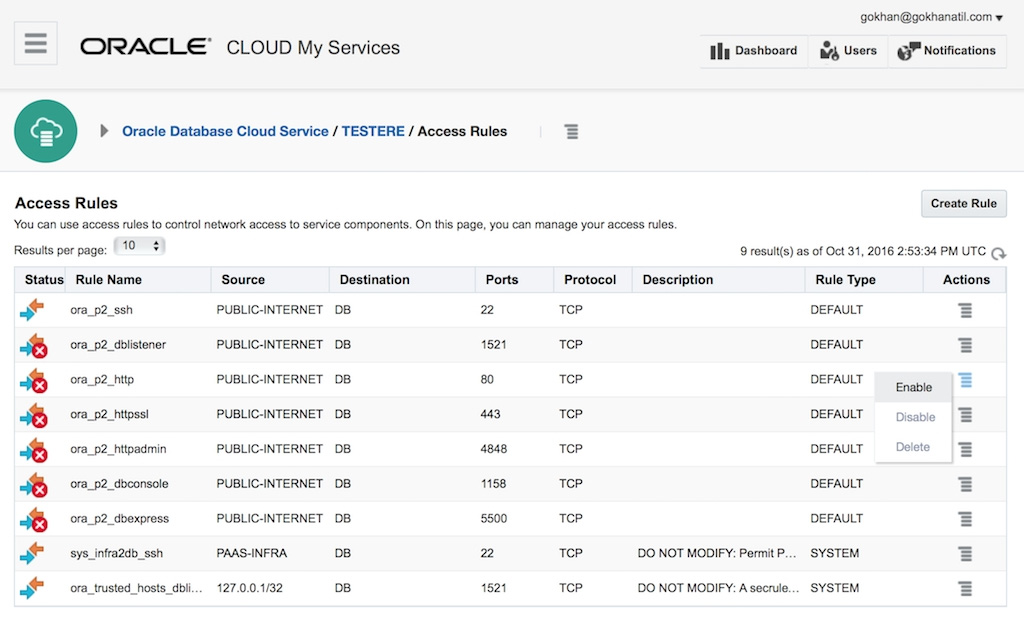
When you are using Oracle Compute Service Console and reviewing the network configuration of your database instance, what do the arrows that are shown within the security rules define?
Correct answer: B
Explanation:
The arrows indicate if the access rule is enabled or not.
Example:
References:
https://docs.oracle.com/en/cloud/paas/database-dbaas-cloud/csdbi/service-console-access-rules-page.html
Which statement is true about security rules for Database Deployments?
Correct answer: B
Explanation:
On the Access Rule you can define the following: Source Hosts from which traffic is allowed. Possible values are DB, PUBLIC-INTERNET, or a custom value in the form of an IP address.
Destination
Security list to which traffic is allowed. This will be DB, the ora_db security list for the deployment.
Ports
Port or range of ports for the rule.
References:
https://docs.oracle.com/en/cloud/paas/database-dbaas-cloud/csdbi/service-console-access-rules-page.html
Which two statements are true about a Database Deployment in Oracle Public Cloud?
Correct answers: A, E
Explanation:
E: Onwizard Software Release page page to select the Oracle Database software release that you want to run on your instance.
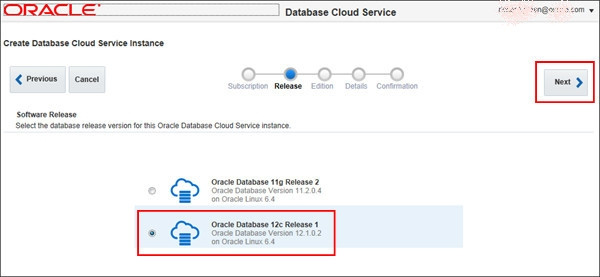
Note: When you create a database instance, you use the Create Database Cloud Service wizard, which steps you through the process of making the choices that produce a service instance tailored to your needs. These choices include:
1. Service Level
2. Billing Frequency
3. Oracle Database Release Version
4. Oracle Database Edition
5. Computing Power
6. Database Storage
7. Backup and Recovery Configuration
Incorrect Answers:
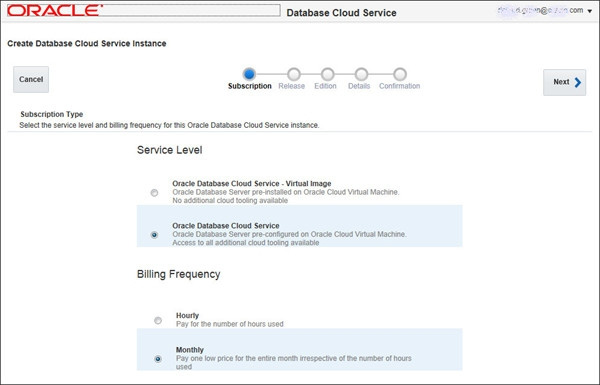
B: Use the Subscription Type page, of the Create Database Cloud Service wizard, to select the service level and billing frequency.
D: Storage is not configured. You configure the Instance, the Database, and Backup and recovery.
References:
http://www.oracle.com/webfolder/technetwork/tutorials/obe/cloud/dbaas/obe_dbaas_creating_an_instance/obe_dbaas_creating_an_instance.html
You are migrating an Oracle Database 11.2.0.2 on-premise database to an Oracle Database Cloud Service (Database as a Service) that provides a pre-created Oracle Database 11.2.0.4 database.
Which two migration methods are possible?
Correct answers: C, D
Explanation:
You can migrate an on-premises source database to the database deployment on Oracle Database Cloud
Service using the Data Pump Transportable Tablespace (TTS) method.
You can migrate an on-premises source database to a database deployment on Oracle Database Cloud Service using the RMAN Transportable Tablespace (TTS) with Data Pump method.
Incorrect Answers:
A: Data Pump Transportable Database is not possible.
B: Remote cloning is not possible.
References:
https://docs.oracle.com/en/cloud/paas/database-dbaas-cloud/csdbi/mig-11g-11g.html
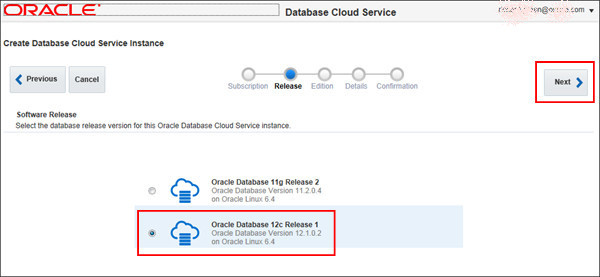
Which statement is true about the Oracle software releases that are currently supported in a Database as a Service (DBaaS) instance in Oracle Public Cloud?
Correct answer: C
Explanation:
Release 2 and 12c Release 1 (and 2) are supported.
References:
http://www.oracle.com/webfolder/technetwork/tutorials/obe/cloud/dbaas/obe_dbaas_creating_an_instance/obe_dbaas_creating_an_instance.html